[Update: More details on ship date, international pricing, Oculus Ready PCs, and exclusive games are now in the below story]
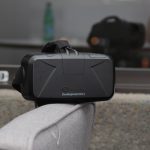
After dozens of trade-show demos, two publicly available development kits, a $2 billion buyout, and nearly four years of speculation, Oculus has finally locked down the release details for the first consumer version of the Rift virtual reality headset. The $599 VR unit is now available for preorder ahead of expected shipments starting in March (though the shop page had some major loading problems right after pre-orders went live). Oculus says the headset will be available at “limited retail locations” starting in April.
[Update: Within 15 minutes of pre-orders going up, online orders were being told to expect a ship date of April. After an hour, the expected ship date was back to May. This suggests some combination of either limited initial supplies or very robust sales for the Rift.
Here are the international prices listed on the Oculus Shop: £499 in the UK, €699 in mainland Europe, AUS$649 in Australia, NZ$699 in New Zealand, CDN$849 in Canada, ¥83800 in Japan, KOR$649 in South Korea.]
That price will get users the headset, a head-tracking camera, an Xbox One controller, the media-focused “Oculus remote,” connection cables, a carrying case, and two included games: space shooter Eve Valkyrie and third-person platform game Lucky’s Tale. It does not include tax, roughly $30 in shipping, or the promising Oculus Touch hand-tracking controllers, which were recently delayed to the second half of 2016. Oculus founder Palmer Luckey tweeted yesterday that those who preorder the Rift would also be first in line to preorder the Touch controllers later in the year.

The Rift package also doesn’t include the relatively powerful Windows PC that will be required to use the device. Oculus recommends a rig with an Nvidia GTX 970 (or equivalent), an Intel i5 processor, and at least 8GB of RAM. Ars commenter chip_1 points out that you can build an extremely bare bones system with those specs for about $655, though more robust components could easily kick that up to $800 or more.




 Loading comments...