Skip to content
The road to 100 million

Zuckerberg sees “50 to 100 million” Oculus units sold in next decade

Facebook head envisions long-term path to VR becoming “a new major computing platform.”

Kyle Orland | 60
Those that this early development kit will soon get the consumer version of the Rift for free.
Story text

As a rule, you don’t spend $2 billion on a company like Oculus without expecting the technology to eventually reach some kind of world-changing scale. In an earnings call earlier this week, though, Facebook founder and CEO Mark Zuckerberg said it could take a little bit of time before virtual reality becomes a market force that could represent the kind of “new major computing platform” that only comes around once every ten or 15 years.

“[Oculus] needs to reach a very large scale, 50 million to 100 million units, before it’ll really be a very meaningful thing as a computing platform,” Zuckerberg said during the call to investors and analysts. “So I do think it’s going to take a bunch of years to get there. … That’ll take a few cycles of the device to get there, and that’s kind of what I’m talking about. And then when you get to that scale, that’s when it starts to be interesting as a business in terms of developing out the ecosystem.”

Even with 100,000 development kits already distributed worldwide, Zuckerberg sees the first few consumer iterations of the Rift, expected in the next few years, to merely be the tip of the spear for VR as a platform, so to speak. “So when I’m talking about that as a 10-year thing, it’s building the first set of devices and building the audience and the ecosystem around that until it eventually becomes a business.”
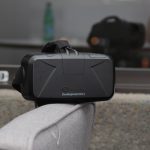
In an interview with Ars back in June, Oculus CEO Brendan Iribe said he expects the first consumer version of the Rift to sell “north of a million units.” He also presaged Zuckerberg’s comments by saying that the second version of the consumer unit, coming a year or two after the first, would represent a real scalable moment. “Hopefully you’ll get many millions of people into VR, playing great games and other stuff.”

Elsewhere in that interview, Iribe said he thinks virtual reality could become “the final compute platform… this collaborative social experience where my brain truly believes we’re in a virtual place together and that you’re right here in front of me even if you’re not, this is the ultimate platform and this is what we’ve been imagining for so many years. The Holy Grail.”

Photo of Kyle Orland
Kyle Orland Senior Gaming Editor
Kyle Orland has been the Senior Gaming Editor at Ars Technica since 2012, writing primarily about the business, tech, and culture behind video games. He has journalism and computer science degrees from University of Maryland. He once wrote a whole book about Minesweeper.
60 Comments