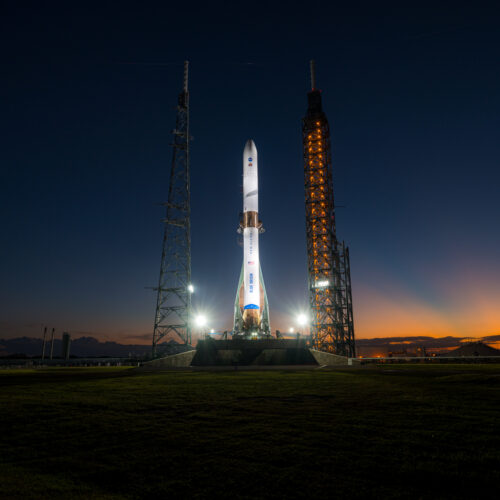
Thursday night’s detonation of Blue Origin’s New Glenn rocket during a static-fire test produced a spectacular fireball over Florida, sending shards of the rocket flying far and wide, into the sea and across the coastal scrubland nearby.
With sunrise on Friday teams from Blue Origin, the US Space Force, and NASA will be able to begin more thoroughly assessing the damage to Blue Origin’s facilities and begin picking up pieces of the rocket.
— Nick Johnson (@NickJohnson315) May 29, 2026
Metaphorically, the effort to pick up pieces will extend far beyond Blue Origin. This launch failure will be devastating not just for Blue Origin but also NASA and broad segments of the US space industry. Here’s a look at some of the major issues that will stem from the explosion.
No launch pad
There’s a reason why, before the very first launch of the Falcon Heavy rocket in 2018, SpaceX founder Elon Musk defined success as the vehicle clearing the launch pad. “I hope that it makes it far enough away from the pad that it does not cause pad damage,” he said. “I would consider even that a win to be honest.” Musk had similar thoughts about the first Starship launch, saying he would consider anything that did not destroy the launch mount a “win.”
Big rockets produce big explosions. And ground infrastructure is a challenging and underrated component of a rocket launch.
Multiple sources have confirmed that there is significant damage to Blue Origin’s launch site in Florida, LC-36A. The company invested years and at least hundreds of millions of dollars in this facility. The scale of the massive lightning towers is difficult to comprehend unless one has climbed one of them.
The company does not have another launch site for New Glenn. It has begun preliminary work on a nearby pad, LC-36B, and has plans to develop another site at Vandenberg Space Force Base in California. But these projects are just getting started.

 Loading comments...