
Renewables, environmental, and efficiency industries grew 3x faster than fossil fuels.
Read the whole story
Read the whole story
And I bet there's 10x the owners in the companies too, distributing the wealth a bit more. Which is why they're so against it.Our analysis also suggests that in the US, nearly ten times more people were employed in the green economy and its supply chains (9.5 million) than employed directly in the fossil fuel industry (roughly 1 million)
In the US, the Bureau of Labor Statistics stopped measuring jobs in the green economy in March 2013 due to budget cuts.

And I bet there's 10x the owners in the companies too, distributing the wealth a bit more. Which is why they're so against it.Our analysis also suggests that in the US, nearly ten times more people were employed in the green economy and its supply chains (9.5 million) than employed directly in the fossil fuel industry (roughly 1 million)
Fun fact: The number of coal miners in the US is miniscule. 50,000.
Fun fact: The number of coal miners in the US is miniscule. 50,000.
It doesn't matter what the manpower cost of renewables is. In the end, power is sold to the grid at a negotiated rate. The manpower cost is built into that market. Traditional fossil fuel plants are more capital expensive so power costs must include amortization. That's built into the market too. The only thing that isn't built into the market are the externalized costs of environmental impacts. If they were properly factored into the energy market, traditional fossil fuel power would be very expensive indeed.And I bet there's 10x the owners in the companies too, distributing the wealth a bit more. Which is why they're so against it.Our analysis also suggests that in the US, nearly ten times more people were employed in the green economy and its supply chains (9.5 million) than employed directly in the fossil fuel industry (roughly 1 million)
I’m in favor of clean energy, but all this language is misleading.
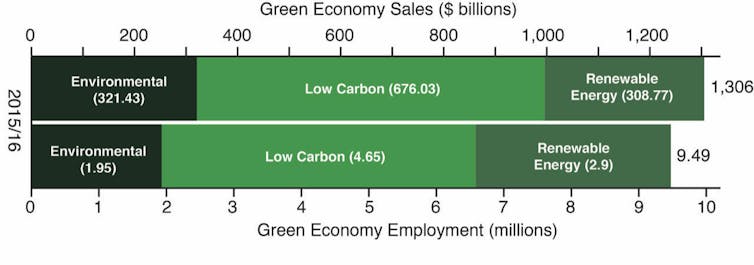
The correct way to view it that it costs nearly ten times as much manpower to generate our clean energy as our traditional energy requires.
This language of referring to the $1.3 trillion as a benefit and not a cost is straight out of pork barrel politics. “My projects (diversions of resources) generated thousands of jobs (unnecessary politically appointed work)”
We need clean energy, but let’s not fool ourselves about the costs by using misleading language. The costs are worth because they slow glisbal warming and provide a clean environment.
Courting "green power" doesn't endear Trump to disenfranchised middle-class white men in rust belt and coal-producing states. Higher growth in renewables is of no political advantage for him.
We’ve heard for decades that going green will destroy the economy and jerbs. Here we see that it does not and can create more jerbs whilst being sustainable on the environment and the balance sheet. Your post sounds like a well veiled concern troll.... just saying.And I bet there's 10x the owners in the companies too, distributing the wealth a bit more. Which is why they're so against it.Our analysis also suggests that in the US, nearly ten times more people were employed in the green economy and its supply chains (9.5 million) than employed directly in the fossil fuel industry (roughly 1 million)
I’m in favor of clean energy, but all this language is misleading.
The correct way to view it that it costs nearly ten times as much manpower to generate our clean energy as our traditional energy requires.
This language of referring to the $1.3 trillion as a benefit and not a cost is straight out of pork barrel politics. “My projects (diversions of resources) generated thousands of jobs (unnecessary politically appointed work)”
We need clean energy, but let’s not fool ourselves about the costs by using misleading language. The costs are worth because they slow glisbal warming and provide a clean environment.
Disenfranchised steel or coal worker doesn't want to learn to code. That's for them odd folks in California. He wants to do what he used to do and feel proud about continuing to do so.Courting "green power" doesn't endear Trump to disenfranchised middle-class white men in rust belt and coal-producing states. Higher growth in renewables is of no political advantage for him.
But it should. Unlike "teaching coal miners to code" retraining those disenfranchised blue-collar workers for jobs in the green energy industry would be more viable due to; greater availability of jobs in this sector across the nation (everyone needs electricity whereas tech hubs tend to be in coastal blue states), skills are more translatable/equivalent than coding, (you're already working with your hands), not to mention, being energy independent is good for national security. Also, as mentioned in the article, it's great for the economy, along with the world at large.
That being said, I do realize that the reason many of these environmental initiatives were rolled back is due to lobbying money. Also not naive enough that the current administration would do an about-face regarding green policy v fossil fuel policy.
The above if the messaging future candidates of both parties should adopt. This is why the green-new-deal is so appealing. Democrats are finally tweaking their marketing in the right direction, although they do have some more work to do to appeal to a wider base of swing voters.
more nurses in West Virginia alone than coal miners in the entire country ...Fun fact: The number of coal miners in the US is miniscule. 50,000.
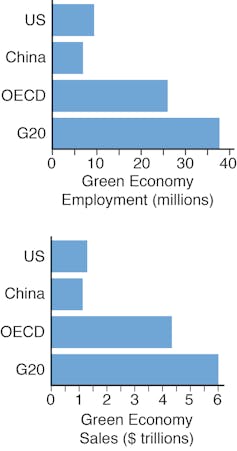
Our analysis also suggests that in the US, nearly ten times more people were employed in the green economy and its supply chains (9.5m) than employed directly in the fossil fuel industry (roughly 1m) – that is, miners, electricity grid workers, infrastructure manufacturers and construction workers.
Come for the promise of technology journalism
LEAVE because of the endless tedious politics.
I have strong doubts that you actually read the article.New growth industry outgrowing established legacy industry! What a shocking revelation.
It's easy to grow fast in percentage terms when you're tiny and relatively young.
And I bet there's 10x the owners in the companies too, distributing the wealth a bit more. Which is why they're so against it.Our analysis also suggests that in the US, nearly ten times more people were employed in the green economy and its supply chains (9.5 million) than employed directly in the fossil fuel industry (roughly 1 million)
I’m in favor of clean energy, but all this language is misleading.
The correct way to view it that it costs nearly ten times as much manpower to generate our clean energy as our traditional energy requires.
This language of referring to the $1.3 trillion as a benefit and not a cost is straight out of pork barrel politics. “My projects (diversions of resources) generated thousands of jobs (unnecessary politically appointed work)”
We need clean energy, but let’s not fool ourselves about the costs by using misleading language. The costs are worth because they slow glisbal warming and provide a clean environment.
And I bet there's 10x the owners in the companies too, distributing the wealth a bit more. Which is why they're so against it.Our analysis also suggests that in the US, nearly ten times more people were employed in the green economy and its supply chains (9.5 million) than employed directly in the fossil fuel industry (roughly 1 million)
Publicly traded companies have lots of owners. Almost all traditional energy generating companies are publicly traded.
It doesn't matter what the manpower cost of renewables is. In the end, power is sold to the grid at a negotiated rate. The manpower cost is built into that market. Traditional fossil fuel plants are more capital expensive so power costs must include amortization. That's built into the market too. The only thing that isn't built into the market are the externalized costs of environmental impacts. If they were properly factored into the energy market, traditional fossil fuel power would be very expensive indeed.And I bet there's 10x the owners in the companies too, distributing the wealth a bit more. Which is why they're so against it.Our analysis also suggests that in the US, nearly ten times more people were employed in the green economy and its supply chains (9.5 million) than employed directly in the fossil fuel industry (roughly 1 million)
I’m in favor of clean energy, but all this language is misleading.
The correct way to view it that it costs nearly ten times as much manpower to generate our clean energy as our traditional energy requires.
This language of referring to the $1.3 trillion as a benefit and not a cost is straight out of pork barrel politics. “My projects (diversions of resources) generated thousands of jobs (unnecessary politically appointed work)”
We need clean energy, but let’s not fool ourselves about the costs by using misleading language. The costs are worth because they slow glisbal warming and provide a clean environment.

What is the subsidy size of the Green Economy? Serious question, seems like something a thorough analysis would cover.
Disenfranchised steel or coal worker doesn't want to learn to code. That's for them odd folks in California. He wants to do what he used to do and feel proud about continuing to do so.
Disenfranchised steel or coal worker doesn't want to learn to code. That's for them odd folks in California. He wants to do what he used to do and feel proud about continuing to do so.Courting "green power" doesn't endear Trump to disenfranchised middle-class white men in rust belt and coal-producing states. Higher growth in renewables is of no political advantage for him.
But it should. Unlike "teaching coal miners to code" retraining those disenfranchised blue-collar workers for jobs in the green energy industry would be more viable due to; greater availability of jobs in this sector across the nation (everyone needs electricity whereas tech hubs tend to be in coastal blue states), skills are more translatable/equivalent than coding, (you're already working with your hands), not to mention, being energy independent is good for national security. Also, as mentioned in the article, it's great for the economy, along with the world at large.
That being said, I do realize that the reason many of these environmental initiatives were rolled back is due to lobbying money. Also not naive enough that the current administration would do an about-face regarding green policy v fossil fuel policy.
The above if the messaging future candidates of both parties should adopt. This is why the green-new-deal is so appealing. Democrats are finally tweaking their marketing in the right direction, although they do have some more work to do to appeal to a wider base of swing voters.
Functionally, yes it would be a better investment to provide retraining. But that doesn't get you electoral college votes.
We seem to be veering off topic. The post wick wick quoted mentioned that it would make far more sense for “coal workers” to be retrained in green energy stuff. I think we can all agree to that, apart from wickwick who appears to have not fully read the post he quoted.Disenfranchised steel or coal worker doesn't want to learn to code. That's for them odd folks in California. He wants to do what he used to do and feel proud about continuing to do so.
That's not entirely fair. That disenfranchised steel or coal worker might be smart enough to know that a 40yo with a two year 'certificate' behind them is not going to land a job in Software Engineering, and even if it could, they'd likely need to uproot their entire family, and get crushed on property value differentials.
US green economy’s growth dwarfs the fossil fuel industry’s
US green economy’s growth rate dwarfs the fossil fuel industry’s
Our analysis also suggests that in the US, nearly ten times more people were employed in the green economy and its supply chains (9.5 million) than employed directly in the fossil fuel industry (roughly 1 million)
