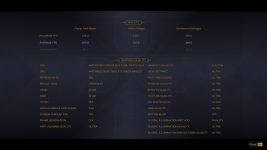
Lenovo Legion Go S gets better frame rates running Valve's free operating system.
See full article...
See full article...

[Obligatory "Scam Citizen won't run on Linux because it's not real" joke here]Star Citizen… I won't even bother checking
Phoronix does a lot of Linux testing, and in some games, Linux was faster even for nvidia (I think one of the F1 games was such a case).I've seen this in other Linux testing even non-steam, for AMD HW.
For NVidia HW Windows was still faster.
Depends on what specific games you're playing. I predominantly play single-player games, but still play more than a few multiplayer and co-op games (most recently Helldivers and Baldur's Gate 3) and haven't had any issues running them on Linux. ProtonDB has a pretty thorough database showing what games are and are not compatible, as of today 79% of the top 100 games by player count are rated Gold or above (run perfectly), that goes up to 87% if you include games rated Silver (run but have minor issues). The numbers are basically the same if you expand to the top 1000 games; 79% Gold or better and 88% Silver or better.Depends on the type of games you play. If you like mostly single player games then SteamOS is fantastic. If you love multiplayer games, even ones strictly co-op with no direct competitive component, then you will have to stick to windows for the foreseeable future still.
Nothing stopping you from dual boot those two, so why not both? Heck, throw another drive in the box and try them out. Make a gradual switch from Win10. If it's a desktop there's not much of a hurdle to try them out, while maintaining your active rig on the same hardware.I'm Win10 until I can't, and then it's a question of Mint or SteamOS.
This extends to my corporate life. Switched my workstation to linux a few years back, missing nothing. Thanks to Microsoft migrating to the web, nowadays i can even use the entire office 365 in the browser.In my personal life, Windows is only useful for gaming and it seems like pretty soon I won't even need it for that.
Plasma isn't an operating system, it's a desktop environment. SteamOS doesn't boot into Plasma, it boots into what's essentially a Steam Big Picture Mode session. One of the major advantages of Linux is that your user session can boot into whatever shell/DE/window manager you want. In Windows everything you run is going to be within the Windows Desktop as a fullscreen application, with all the overhead and jank that entails. Only when you expressly switch into Desktop Mode, it'll log you out of your Big Picture Mode Session and then start up a Plasma session.I was about to say, isn't SteamOS just Plasma? And don't linux nerdz love to whine about how bloated Plasma is?
Granted, nothing can be more bloated than win11...
Just did that, no it's not the same. 4 processes are using time > 0.Yeah, but run "top" or "ps aux" as root on any modern "desktop" Linux distro. There is a lot of shit running as well. systemd, chrony, journalctl, auditd, cups, kde connect, etc...
I tested this by building a Windows 11 image that has just about everything stripped out (used the Titus WinUtl) for my ROG ally. I then ran a bunch of benchmarks using the stripped down Win 11 and Bazzite. They were close enough that I kept win11. That said, its kind of a nightmare to keep the dang thing up to date and not have Windows just download everything. So maintenance might actually be easier with Linux, my only gripe is 3rd party launchers not being so seamless.Windows 11 by default is just too fat for such devices:
Microsoft has been working on a lean gaming Windows 11 edition that doesn't even boot you into Explorer.exe but they are yet to release it officially.
- 4GB of RAM consumption on boot, not counting Steam itself. I guess it's way below 1GB for SteamOS, which means a lot fewer hard faults and SWAP use.
- VBS/HVCI/Memory integrity on by default
- Virtualized full screen ("Full screen optimizations") by default
This extends to my corporate life. Switched my workstation to linux a few years back, missing nothing. Thanks to Microsoft migrating to the web, nowadays i can even use the entire office 365 in the browser.
I'd bet a ton of money nobody at my company (<1k employees) actually needs windows anymore. >99% of the work is done in either web applications, microsoft office or cross-platform developer tools. Certainly nobody at the government level (>100K employees) actually needs windows, i know because we provision these with super heavily locked down windows, office and practically nothing else.
There's a lot of stuff running, but most of it isn't consuming any CPU at all. Most of it is idle, waiting for the kernel to hand it a TCP connection. On my Linux server (with a desktop installed), there are 5-10 processes consuming CPU at any given time, and two of them are MineCraft and Plex. (I don't have a SteamDesk to check what it's doing.)Yeah, but run "top" or "ps aux" as root on any modern "desktop" Linux distro. There is a lot of shit running as well. systemd, chrony, journalctl, auditd, cups, kde connect, etc...
Most of what you mention should be "user space" and on a multi-core system really should just "get out of the way" of your game doing whatever it's doing when talking to NT kernel and the core "NT system". If it's not, then that's the NT kernel's problem. Most games are GPU bound anyway and most often are single threaded (ie: they're using, at best, a couple of CPU cores), so having a couple of random "user space" processes running around isn't that big of a deal on any decent system. Yes, those processes take up RAM, so if you're running on a potato then Linux probably will work better just because it has a smaller footprint, but most decent gaming rigs are 16GB+ of RAM, SSDs and a 8core+ CPU. A couple of user space processes sitting around with a couple hundred MB of RAM and <5% CPU on 1 core is / should be nothing.
Yes, if you start talking AV and "kernel" level processes then it gets more iffy.
If you take the extra steps to switch into "desktop mode" only at that point does it load up plasma.
In fact, people have reported significant speedups on Windows using DXVK (which is used in Proton) for DirectX 11 and lower games.The Proton translation not being a huge performance sink is only counterintuitive if you know nothing about reasonably recent game and graphics tech. Yes, the function calls have to be translated, but then the majority of the work is done by the CPU and GPU in relatively large chunks and relatively independently, without need for the translation layers to intervene until it's time for the next batch of work. And yes of course there are exceptions, but the vast majority of hot loops in a game have to do with graphics, and the actual data doesn't require much translation since it's still going to the same hardware no matter the software in front.
The irony is, by ignoring the gamers, they have also ignored improving their hardware, which in the next generation, MAYBE two if they are lucky, means that AMD will overtake them and regain the performance crowd.NVIDIA is deep into AI, so they barely care about consumer GPUs any more. Consumer Blackwell uses the exact same node that Ada used more than 2.5 years prior. That has never happened before.
AMD on the other hand is getting help from ... Valve to optimize its hardware for Linux (DXVK and VKD3D to be more specific).
Different priorities.
Sadly NVIDIA is so entrenched they are unlikely to wake up any time soon and then they have big fat margins to care about Linux gaming.
Nope. Steam only loads the Steam interface at launch, and only loads the desktop UI when it's needed. Windows HAS to load the desktop UI, then overlays whatever gaming interface they have OVER that...which is why they are now scrambling to develop a "slimmed down" version for gaming handhelds now for the new ROG Ally X handhelds.Oh, I see.
I don't actually have a steamdeck, I was sent one of those lenovo things (which was... very large) which just booted into windows, and just assumed the steam one did the same thing.
I did a bit of messing around on Bazzite and Windows 10, with the Dune benchmark demo when it came out. I have a high end PC, but there was still a performance improvement using Bazzite.It would be nice to see if this holds up in Linux (when configured for gaming) generally or is exclusive to SteamOS supported devices. Testing Bazzite vs Windows 11 on a gaming desktop with supported hardware would be an appreciated followup.
You just gave me the image of enterprises mass-deploying locked down SteamOS with nothing but Office 365 and Chrome on it. And Microsoft and Google wouldn't mind one bit.Guys...I see tons of conversations here talking about the finer points of linux, different distributions, configurations etc...and this misses the point entirely.
We are finally getting an OS that is noob friendly. Friendly enough that Levono (and Valve) ship products that use it OUT OF THE BOX and don't require getting a training guide from a local bookstore in order to use it!
When ANY customer, regardless of how technical they are or if they have any experience with computers whatsoever, can install SteamOS on their machine FOR FREE, and get better performance (and also eliminate Microsoft's spying/data collection!) and better reliability...and can spend more time playing games and less time tweaking and futzing with tuning the OS to run properly, well, that's game over for Windows!
Those that don't have experience with it should download it and try it on your system at home. It's NOT perfect...but for a consumer that just wants to play games on their PC and do other "light" computing tasks (like web browsing/streaming) it's perfect, with the caveat that it works much better using AMD hardware right now.
MS SHOULD feel threatened, because if things dont change with Windows, SteamOS WILL eat their lunch! Bet on it.
As for the article, I do have to wonder if the hardware plays the greater role here in gaming frame rate. Comparing a dedicated "handheld" between two different OS's that was originally designed for only one seems... uneven. The handheld's hardware can be optimized for for one OS, and not the other.
What I'd love to see is the same test done, swapping hard drives in a desktop (or laptop, as long as all the other factors are the same except the OS), using the exact same hard drive model in both. That evens the playing field and removes any doubt about why there's a difference.

There hasn't been any need for it. It's really not long ago where Linux gaming was Tuxracer. I remember even how nervous Microsoft was when puny Be, Inc got games ported to BeOS before Microsoft had Windows 2000 out, and Microsoft wanted none of it.I've always wondered why Microsoft hasn't done much to improve the efficiency of gaming on Windows, when it's been one of the main gaming platforms, and one of the reasons for it's continued existence has been gaming.
I hate to rain on your parade, but this is exctly oposite of what SteamOS is. Valve is very clear about their intentions. SteamOS is a hand-held gaming OS for supported hand-helds. Not a general purpose OS.Guys...I see tons of conversations here talking about the finer points of linux, different distributions, configurations etc...and this misses the point entirely.
We are finally getting an OS that is noob friendly. Friendly enough that Levono (and Valve) ship products that use it OUT OF THE BOX and don't require getting a training guide from a local bookstore in order to use it!
When ANY customer, regardless of how technical they are or if they have any experience with computers whatsoever, can install SteamOS on their machine FOR FREE, and get better performance (and also eliminate Microsoft's spying/data collection!) and better reliability...and can spend more time playing games and less time tweaking and futzing with tuning the OS to run properly, well, that's game over for Windows!
Those that don't have experience with it should download it and try it on your system at home. It's NOT perfect...but for a consumer that just wants to play games on their PC and do other "light" computing tasks (like web browsing/streaming) it's perfect, with the caveat that it works much better using AMD hardware right now.
MS SHOULD feel threatened, because if things dont change with Windows, SteamOS WILL eat their lunch! Bet on it.
Users should not consider SteamOS as a replacement for their desktop operating system.
While there is quite a bit of bloat and inefficiency in Windows, it's not really that shocking that "someone emulating your OS can run games faster through emulation than Windows does natively" if you think about how modern games (and software in general) are structured. Wine/Proton is not really "emulation" in the sense that people think of in terms of emulating old consoles like NES or SNES, where you're using software to emulate the behavior of a very foreign hardware architecture.I've always wondered why Microsoft hasn't done much to improve the efficiency of gaming on Windows, when it's been one of the main gaming platforms, and one of the reasons for it's continued existence has been gaming.
How inefficient do you have to be, before someone emulating your OS can run games faster through emulation than Windows does natively?
I really wonder what is going on with their jumbled next Xbox marketing. Some people seem to be assuming the next Xbox is just going to run full Windows, and that just doesn't make any sense.
If you have the hardware (i.e. pretty much any spare desktop PC with an SSD and AMD graphics) then probably the best introduction to Linux gaming is to run SteamOS on it, hooked up to your living room TV, as a “home console” setup. SteamOS “just works” the vast majority of the time* and it’s a lot more pleasant than trying to use Windows for the same task.Impressive. I have not made the jump yet, but I plan to jump into Linux gaming at some point soon. This is very encouraging.
I'd point to Bazzite instead. It has everything to get you started out of the box. Steam? Check. Proton? Check. Lutris? Check. Firefox? Check. Flatpaks manager? Check. Text editor, media player (VLC, halu). Check.If you have the hardware (i.e. pretty much any spare desktop PC with an SSD and AMD graphics) then probably the best introduction to Linux gaming is to run SteamOS on it, hooked up to your living room TV, as a “home console” setup. SteamOS “just works” the vast majority of the time* and it’s a lot more pleasant than trying to use Windows for the same task.
(* the main pain point for SteamOS on desktops is that it’s designed for handhelds with a single SSD and getting it to remember secondary hard drives can be annoying.)
Didn't you see the other Ars article recently? 10 is good for support til late 2026 now, by which time Windows 12 will be out or right around the corner.Looks like I need to switch my PC since 11 is not an option.
Do it. I did, but chose Pop OS because the Steam OS news hadn't happened yet.Looks like I need to switch my PC since 11 is not an option.