Skip to content
Best of 2018

TV Technica 2018: Our favorite shows and binges

These were the shows that captured our attention and hearts this past year.

Jennifer Ouellette | 72
Mirror Image: who's the predator and who's the prey in Killing Eve? Credit: BBC America
Story text
Warning: This story discusses a handful of specific moments from TV in 2018. Though we’ve strived to avoid spoiling anything too major, please note this list includes specific references to The Good Place, Star Trek: DiscoveryWestworldBojack Horseman, PreacherThe Americans, Killing Eve, and The Haunting of Hill House, among others.

We are in the era of “peak TV,” and between the major networks, cable channels, premium services, and streaming platforms, the TV landscape has never been more richly varied. This year’s crop of our favorite small screen moments reflects that diversity, from network sitcoms and prestige dramas to adult animated series and sci-fi favorites—and pretty much everything in between. In no particular order, here are the shows that engaged our heads and hearts this year.

Michael (Ted Danson) explains how time in the afterlife works differently from human time in the episode “Jeremy Bearimy.”

The Good Place on time in the afterlife

There is nothing quite like The Good Place. A half-hour sitcom that explores the philosophical roots of ethical behavior in a bizarro version of the afterlife? Which tripping network executive greenlit that? We’re very glad someone did, because the show has been a sheer delight since it premiered in September 2016.

Kristen Bell stars as Eleanor Shellstrop, who dies and finds herself in an afterlife called “The Good Place,” managed by Michael (played by national treasure Ted Danson), who is enamored of humans and all their petty foibles. But Eleanor on Earth was by her own admission pretty much a selfish trash bag of a human being, and she thinks she’s been sent there by mistake. Season one’s final twist completely blew up the show’s original premise.

Season two dug deep into the question of whether it is possible for a damned soul to become a better person after death, via the study of moral philosophy. Name one other sitcom that features classroom lectures on Immanuel Kant’s categorical imperative, Aristotle, Kierkegaard, and T.M. Scanlon’s seminal text What We Owe Each Other. That season ended with another radical reset: Eleanor, Chidi (William Jackson Harper), Tahani (Jameela Jamil), and Jason (Manny Jacinto) are given one more chance to become better people on Earth. After a wobbly start, the third season turned out to be just as strong and surprising as its predecessors.

True, the season lacked an instant-classic moment like Michael’s brilliant-but-bloody simulation of the Trolley Problem, which will always be my favorite. But we got plenty of other delightful gems, like Michael’s mind-bending mini-tutorial about how time works in the afterlife in the episode “Jeremy Bearimy.” Time isn’t linear in the afterlife. Apparently it “doubles back and loops around,” and the resulting timeline just happens to look like the signature of the name Jeremy Bearimy. (The dot over the “i” is Tuesdays. And also July. And occasionally never.) “I don’t know what to tell you,” Michael says to the bemused crew. “That’s the easiest way to describe it.”

Jennifer Ouellette

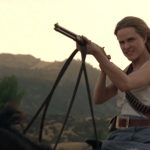
Let’s practice some witchcraft, Bernard.
Let’s practice some witchcraft, Bernard. Credit: HBO

Westworld and killing all humans

The second season of Westworld didn’t draw the same level of praise from critics or vocal fans as the first. Yes, it’s needlessly baroque, nearly to the point of being impenetrable. Yes, the layering of the plot means you really do need to watch every episode more than once to get the full measure of what’s going on. Yes, a timeline diagram really does help. (That link will completely spoil everything in both seasons one and two, so click with caution.) In spite of all of those points and many others raised by the beautiful lunatics over at /r/westworld, I still think it’s the best TV show of 2018, and I can’t wait for season three.

For all its needless complexity and logical leaps, Westworld is the only thing I’ve watched in years that’s gotten me to tune in the moment it airs because I couldn’t wait even one extra second to find out what happens next (not even Game of Thrones gets my eyeballs the day it airs). And no episode this season delivered quite the “HOLY CRAP WHAT DID I JUST WATCH” hammer blow of episode seven, “Les Écorchés.”

The long-promised direct confrontation between Dolores’ host army and the Delos private military forces at the Mesa takes up a significant chunk of the episode, and it’s great, but the real showpiece is the return of Anthony Hopkins’ Dr. Robert Ford—a misanthrope in the truest sense. The episode brings into further focus Ford’s pseudo-nihilistic supervillain thesis: that humanity, as a product of nothing more than evolution, is inherently valueless. We are crude hunks of self-animating meat—obstacles standing in the way of the hosts’ path to true self-actualization. It’s time for us to die and for the hosts to inherit the Earth, because in Ford’s mind, only a true “original work” has worth. The hosts, as created beings, are such a work.

It’s the same contention both Bernard and Dolores return to throughout the season: only that which is irreplaceable is real. Evolution can crap out life anywhere. The world is full of it. It’s meaningless. But the hosts—ah, now, there’s a truly unique thing.

The guy’s crazy, but man, that conceit makes for some compelling fiction.

Lee Hutchinson

Ruth Deaver (Sissy Spacek) struggles to stay anchored in the present in “The Queen.”
Ruth Deaver (Sissy Spacek) struggles to stay anchored in the present in “The Queen.” Credit: Hulu

Dealing with dementia on Castle Rock 

Castle Rock, the new horror anthology series from Hulu inspired by the works of Stephen King, surprised me by becoming one of my favorite breakout shows this summer. The pilot opens with the suicide of the local prison warden and the discovery that he secretly kept a young man—played by IT actor Bill Skarsgård and known only as “the Kid”—captive for decades. Not only has the Kid not aged, but violent outbreaks seem to follow in his wake. Attorney Henry Deaver (André Holland) returns to his childhood home about the same time and gets swept up in the mystery while dealing with psychological fallout from his past.

Henry is also struggling with what to do about his adoptive mother Ruth (Sissy Spacek), whose age-related dementia is rapidly worsening. Spacek’s devastating portrayal of an aging woman who has become unmoored in time hits its zenith in the episode “The Queen”—the most beautifully constructed, superbly acted hour of television you’ll likely see this year.

The entire episode is told from her point of view as she walks out of a conversation in the present and into a different conversation in 1991. Showrunner Sam Shaw’s own mother suffered from dementia and died unexpectedly a few days after he started writing the series. The episode draws on insights from his experiences. For instance, Ruth uses chess pieces scattered about the house to anchor her in reality, a detail inspired by Shaw and his sister going through their mother’s belongings and recognizing the talisman-like nature of a loved one’s personal effects.

There’s plenty of other strange goings-on and moments that tug at your heart-strings in Castle Rock, with one heck of a twist in the last two episodes (and a quintessentially King-like ending). But in the end, it’s the quiet, understated horror of “The Queen” that has stayed with me the most.

Jennifer Ouellette

Amy Adams stars as Camille Preaker, an emotionally troubled reporter who returns to her hometown to cover the murders of two young girls.
Amy Adams stars as Camille Preaker, an emotionally troubled reporter who returns to her hometown to cover the murders of two young girls. Credit: HBO

The pointed truths in Sharp Objects

The 2018 short-run HBO series Sharp Objects is Amy Adams’ best work yet, with her portrayal of emotionally troubled journalist Camille Preaker. It’s pulp, yes, but like the first season of True Detective, it elevates the genre. Based on the bestselling novel by Gillian Flynn, Sharp Objects is slow, disorienting, and sometimes even painful to watch. It deals honestly with Camille’s mental illness and addresses her alcoholism in a way that is nearly as evocative as Jack Kerouac’s sorrowful novel Big Sur.

It viscerally captures the pain and confusion of going back to a long-abandoned hometown that holds only bad memories. I grew up a few miles from the southern Missouri locale where the series takes place, and like Camille I have a complicated relationship with the place. Even though it was actually shot in Georgia, the show did a remarkable job of representing the region.

But it is the strength of the themes and their place in the story that makes Sharp Objects exceptional. Rarely do you see a television program in which the themes are so fully entwined with the twists and turns. The series first seems to be a simple murder mystery, with a new-noir take on the archetypal protagonist. By the end, it is about women—what is expected of them, how we see them, how that may be different from what is intrinsic, and the dark places our cultural constructs can go in an unhealthy mind.

Maybe it’s because the locale for the show feels lost in time, just like the rural Missouri town where I grew up, but the series’ explorations of ideas about womanhood are somehow simultaneously timely and timeless—quite the achievement for concepts that are now evolving faster than ever.

Samuel Axon

“So that’s what you’re going with?” The Thirteenth Doctor (Jodie Whittaker) finally finds the perfect outfit.
“So that’s what you’re going with?” The Thirteenth Doctor (Jodie Whittaker) finally finds the perfect outfit. Credit: BBC America

Clothes shopping on Doctor Who

With Jodie Whittaker as Doctor Who‘s first female titular Time Lord, new showrunner Chris Chibnall succeeded in making his incarnation fresh and memorable. Sure, the writing wasn’t consistently on par with prior seasons, but there were several standout episodes that bode well for season two (slated for 2020).

Of particular note was Alan Cumming’s delightful guest turn in “The Witchfinders” as a flamboyantly charming King James I attempting to rid his kingdom of evil witches. He still finds time to flirt outrageously with Ryan Sinclair (Tosin Cole), one of the Doctor’s three new companions. But my favorite standalone moment came at the end of the very first episode (“The Woman Who Fell to Earth”), when the Doctor finds herself shopping for women’s clothing for the first time in—well, probably millennia.

With another new companion Yaz (Mandip Gill) bearing witness, she tries on and rejects multiple combinations. Finally, she triumphantly emerges from the dressing room clad in cropped trousers and rainbow suspenders over a colorful T-shirt, topped off with a long coat and sensible boots. “So that’s what you’re going with?” a dubious Yaz observes. True, it does call to mind Mork’s signature outfit on the 1970s sitcom Mork and Mindy. But it’s a brilliant fashion choice for a female Time Lord: whimsical, pragmatic, and definitely one of a kind—just like our 13th Doctor.

Jennifer Ouellette

Losing a parent is like the TV sitcom Becker: Bojack gives his mother’s eulogy.
Losing a parent is like the TV sitcom Becker: Bojack gives his mother’s eulogy. Credit: YouTube/Comedy Central

A bitterly honest eulogy on Bojack Horseman

Since its premiere in 2014, Netflix’s animated comedy/drama, Bojack Horseman, has become a critical darling. Will Arnett voices Bojack, former star of a hugely successful fictional family sitcom called Horsin’ Around. Now he’s a bitter, middle-aged alcoholic suffering from crippling insecurity and clinical depression, trying to kickstart his flagging career. It’s more biting satire than laugh-out-loud funny, but it’s always smart, occasionally sad, and rife with bad animal puns and tons of Hollywood insider humor.

There’s usually at least one episode per season that pushes the conceptual boundaries in new and intriguing ways, such as Bojack attending an underwater film festival in season three. This season, the standout episode was “Free Churro,” in which Bojack’s estranged mother has died and he must give her eulogy. (You can watch a clip here.)

The entire episode is one long monologue, a raw, brutally honest dissection of their twisted relationship. Bojack treats it as part standup routine, part therapy session. He concludes that losing a parent is a lot like the cancellation of the mediocre 1990s sitcom Becker: “Suddenly you realize you’ll never have the good relationship you wanted, and as long as they were alive, even though you’d never admit it, part of you was still holding onto that chance. And you didn’t even realize it until that chance went away.” That’s the kind of unflinching look at the human condition we’ve come to expect from Bojack Horseman, and it makes us eager to find out what’s in store for the forthcoming sixth season.

Jennifer Ouellette

Jesse Custer (Dominic Cooper) and Herr Starr (Pip Torrens) battle it out in the entrails of yet another would-be vessel rejected by Genesis.
Jesse Custer (Dominic Cooper) and Herr Starr (Pip Torrens) battle it out in the entrails of yet another would-be vessel rejected by Genesis. Credit: AMC

Preacher’s exploding Messiah clones

Based on the DC comic series created by Garth Ennis and Steve Dillon, Preacher follows the madcap adventures of Jesse Custer (Dominic Cooper), the titular preacher and former con artist who inexplicably becomes the chosen host for Genesis, aka, the embodiment of the Word of God. This grants him the power to force people to do whatever he wants, and it also means there are plenty of people willing to do just about anything to take that power for themselves.

That includes a religious order called the Grail, led by Herr Starr (Pip Torrens). In season three, the Grail succeeds in capturing Jesse and tries to remove Genesis by force, directing it into a clone of their Messiah—a direct descendent of Jesus Christ named Humperdoo. All those generations of in-breeding haven’t been kind; Humperdoo is basically a mentally challenged child in a grown man’s body. Nonetheless, he is their Messiah, since Jesse refused to take over that role so the Grail could continue duping the masses into hewing to their religion.

The experiments do not go well. Every time Genesis leaves Jesse and enters a Humperdoo clone, the clone explodes, spewing blood and viscera everywhere. A cleanup crew comes into the test chamber and hoses everything down, and the process repeats. Viewers are treated to a glorious gory montage of exploding Humperdoos, set to the “Blue Danube” waltz by Johann Strause That scene captures all the over-the-top irreverence and operatic violence (and sometimes downright sacrilege) that we’ve come to expect from this singular series.

Jennifer Ouellette

Meeting your Counterpart

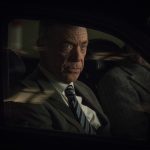
The world needs as much JK Simmons as it can get, and luckily Counterpart delivered. The premiere season of this Starz series sneaked up and surprised us. Initially, things looked like a more visually interesting late season of Homeland—an intelligence-agency drama set in Cold War-aesthetic Europe (Germany in this case). But nothing in Counterpart ends up as it seems, and soon Simmons starts running around with… Simmons? Huh? Almost any espionage series will hold our attention for at least some time, but if you can layer that with bioweapons and parallel dimensions with diplomacy issues, suddenly you have one of the most thrilling and complex genre shows of 2018.

We’ll see if the currently in-progress second season ends up more like Mr. Robot season two or Stranger Things season two, but this first run of episodes revealed an extremely well-thought-out world where personal drama, action, and gradual sleuthing could coexist in harmony (possibly unlike Counterpart’s two dimensions, coincidentally).

Nathan Mattise

The American Vandal creative team chats with Ars at ATX TV Festival 2018. They remained quite funny in S2.

American Vandal’s perfect joke

The first season of American Vandal may have been the best representation of modern high school life to date. While ostensibly telling a true crime parody story about mysterious penis graffiti, the folks from Funny or Die somehow managed to capture the unique blend of developing online personas, familiar high school social roles, and relatable teenage insecurities that exist for young people today. (It wasn’t just among 2017’s funniest watches—it may be the smartest in retrospect.)

When the team announced it would tackle the daunting task of a followup, it felt like lightning in a bottle may soon be released and lost to the binge watching ether. But now fans know to never doubt a Peter Maldonado production. American Vandal‘s second season also wrapped itself in an over-the-top “crime” to investigate through documentary (this time, a poop-obsessed prankster called the Turd Burglar who wreaks havoc on an elite private high school) and found even more nuance to explore in American youth. Between the show’s reflections on Insta-online celebrity, the social power of elite athletes, or the still-trying life of a variety of high school outcasts today, it managed to squeeze in killer joke after killer joke.

None hit us harder than what may have been a simple throwaway line in episode four. One of the in-show documentary’s main sources, an outcast named Kevin who seems to be odd simply to have any identity (see his insistence on doing IRL Fruit Ninja or an obsession with rare teas), is being interrogated because an iOS keyboard glitch keeps showing up in Turd Burglar Instagram posts.

“I have an Android; it’s the superior machine,” he replies. “If I wanted to be limited to only the approved apps available in the iTunes app store, I’d buy an iPhone.”

Nathan Mattise

HBO’s trailer for Random Acts of Flyness.

High art and Random Acts of Flyness

A tiny art house series that’s more cultural collage than single story may feel like an odd fit on some “best of” lists, but Terence Nance’s HBO show might be 2018’s most unusual new addition to the TV landscape. It gave a microphone to perspectives not seen anywhere else (regularly showcasing monologues about dating and sex from non-binary and transgender black individuals, for instance) and a platform for filmmaking not seen anywhere else (like a bit that starts in real life before transitioning to take place entirely within common creative software from iMessages to Final Cut).

Beyond its secretly killer soundtrack (speaking of music discovery), Random Acts of Flyness created two lasting images of life in 2018: a recurring sketch where a black woman is the protagonist in a first-person shooter simply consisting of the life of a modern woman (the show later made a playable version for fans) and a mock documentary segment on the CDC battling increasing rates of racism disease being discovered in white babies. If it’s going to cut through all the content clutter of today, high art may have to skip the subtleties.

Nathan Mattise

Joe Pera is just a humble, quiet choir
Joe Pera is just a humble, quiet choir teacher living in the UP. He enjoys a good song, conversation at a diner, and local natural minerals.
Joe Pera is just a humble, quiet choir teacher living in the UP. He enjoys a good song, conversation at a diner, and local natural minerals. Credit: Adult Swim

Joe Pera Talks to You’s “Church Announcements”

No one gets excited by the prospect of maintaining 25 different streaming subscriptions, but one of the genuine benefits of this increasing number of services is that super niche television that may not have gotten a chance before can now exist and thrive. Case in point: Joe Pera Talks to You, a 15-minute Adult Swim comedy with a very particular sensibility. (If you also grew up in the post-industrial suburbs of the Midwest or Northeast, it may be a little too familiar at times.)

In between its meditations on geology and survivalists, this slow-life comedic masterpiece also happened to provide the best meta commentary on music discovery today. In “Church Announcements,” Pera hears “Baba O’Riley” for the first time (seriously). The episode naturally mines all the obvious absurdity in this seemingly impossible feat, but it also perfectly captures that increasingly rare feeling of surprise and joy when you hear a track for the first time and think you (and you only) have found a hidden gem for your next Spotify party playlist.

Nathan Mattise

Produced and shot by Justin Wolfson. Captions available.

A brilliant last call for The Americans

Just like its central pair of spies, FX’s critically beloved Cold War sleeper-cell drama could disguise itself as many things: a show where you watch outsiders experience consumerism and the American dream for the first time; a wig-a-palooza; or a time capsule of a particular time in music, pop culture, and technology. But all throughout The Americans‘ expertly crafted six seasons, the show never lost sight of its real core—a family trying to figure it all out while their day (err, night) jobs could be truly all-encompassing and self-destructive. It didn’t end in total bloodshed (thankfully, yes, Mail Robot survived), but the show’s final act proved appropriately devastating.

Nathan Mattise

A bearded, smiling Spock will appear in Season 2.
A bearded, smiling Spock will appear in Season 2. Credit: CBS All Access

Discovering Star Trek: Discovery

I have a distinct memory of when I first learned about Star Trek. I was in 2nd grade. My friend Evan and I were on the playground and he told me about his favorite TV show: Star Trek: The Next Generation. I got that it was a show set in space. I understood that there was a spaceship. But what was the show about?

“Well, they spend a lot of time on the bridge,” Evan explained.

Not knowing any naval terminology, I was confused: there was an actual bridge? Like a suspension bridge? In space?

“Whatever,” I thought. “I’ll give it a try. Evan likes it, after all.”

Thanks to the magic of syndication, I was watching TNG nearly every night at 7pm. Star Trek became an anchor, of sorts, and my first foray into science fiction. I devoured DS9 and was interested in Voyager. Enterprise wasn’t my favorite series, but it had its moments.

By late 2017 and early 2018, Star Trek: Discovery became one of my favorite shows. (It certainly helped that two of my favorite podcasters, Ben Harrison and Adam Pranica, have a fun companion podcast: The Greatest Discovery.) The acting is incredible. The design is amazing. The effects are stunning. Discovery isn’t like any of the other series—it’s flashier, faster, and more tense. It’s perhaps even scarier. But it is, at its core, Star Trek. It helps us to better understand what it means to be human and how to explore ourselves and the Universe at the same time.

The second half of Discovery‘s debut season revealed that the crew of the Discovery had been transported to a mirror universe. While I wasn’t thrilled with the overall premise of the mirror universe plot line, the first season did end on a classic Trek trope: genocide is bad! I can’t wait for season two.

Cyrus Farivar

Mirror Image: who’s the predator and who’s the prey in Killing Eve?
Mirror Image: who’s the predator and who’s the prey in Killing Eve? Credit: BBC America

Getting serial with Killing Eve

The BBC series Killing Eve was easily one of the best TV shows to debut this year. Jodie Comer’s Villanelle is a self-described psychopathic killer for hire, who is so good at her job that she frankly starts to be a bit reckless with her assassinations, much to the consternation of her handler, Konstantin (Kim Bodnia). Her string of corpses catches the attention of an MI5 officer named Eve Polastri (Sandra Oh), who is obsessed with female killers and correctly guesses there is a new player among their ranks. What follows is a sexually charged cat-and-mouse game where it’s not entirely clear who is the predator and who is the prey.

There are so many arresting moments in this series that it’s impossible to pick a single highlight, even among Villanelle’s impressively creative murders. Her execution of a man in Tuscany with a hairpin in the pilot episode (“Nice Face”) makes a big first impression, but her coldly calculated stabbing of one of Eve’s colleagues in a Berlin nightclub—breaking into a smile right before she strikes—is the most chilling.

Ultimately, it’s the strangely perverse attraction the two women feel toward each other that drives the dramatic tension in Killing Eve. Each sees a bit of herself in the other—an element captured when the two meet face to face in a hospital ladies’ room without realizing who the other is. Eve is horrified by Villanelle’s violent acts and simultaneously fascinated by them. (There’s a telling scene when she asks her husband how he would murder her, and he can’t think of an answer. Eve, however, has worked out his hypothetical murder down to the last detail of disposing of the body.)

Villanelle is equally taken with Eve, and her flirtation (always tinged with the threat of violence) ultimately leads to a climactic confrontation. The first season ended with a bona fide cliffhanger, and we aren’t the only ones eagerly waiting to discover what comes next when the series returns.

Jennifer Ouellette

Young Eleanor sees the Bent-Neck Lady her first night at Hill House.
Young Eleanor sees the Bent-Neck Lady her first night at Hill House. Credit: YouTube/Netflix

The beauty and terror of The Haunting of Hill House

Sharing the top spot with Killing Eve in my personal 2018 ranking is the Netflix miniseries The Haunting of Hill House. Showrunner Mike Flanagan’s adaptation is really more of a reimagining, and his willingness to veer sharply from the canonical text—books and television are two very different mediums, after all—is what makes this the best incarnation by far. The series is at once a classic Gothic ghost story and a profound examination of family dysfunction.

Hugh Crain (Henry Thomas) and his wife Olivia (Carla Gugino) are professional house flippers. They purchase Hill House at a bargain price with the aim of renovating it and selling to the highest bidder. The tragic events that unfold that summer end up haunting their five children into adulthood. Two episodes in particular stand out—one for delivering a genuinely jaw-dropping WTF moment (“The Bent-Neck Lady”), the other for its technical wizardry (“Two Storms”).

As a child, Eleanor is plagued by sleep paralysis, with recurring visions of the Bent-Neck Lady that continue to haunt her as an adult (Victoria Pedretti). Adult Eleanor goes back to Hill House one fateful night and hangs herself from the spiral staircase, and that’s when the head games truly begin. As her body drops, it stops at fixed intervals along the way—and each time corresponds with one of then-living Eleanor’s terrifying visions of the Bent-Neck Lady. She’s been haunting herself all these years—or rather, Hill House has been tormenting her with visions of her tragic future, and Eleanor realizes this (“no, no, no, no, no”) in her last living moments. (You can watch the clip here.) That scene shattered me and still gives me chills. Even Flanagan was moved to tears.

With viewers still reeling from that revelation, Flanagan hits us with the sixth episode, “Two Storms,” when the surviving Crain family members reunite for the first time in decades for Eleanor’s viewing at her sister’s funeral home. Past and present bleed seamlessly into each other as various characters seem to walk down a hallway in the funeral home and into their childhood memories of Hill House. Flanagan shot the entire thing in five long uninterrupted takes, and as he explained in a lengthy Twitter thread, the entire set was designed with that scene in mind. That kind of long-view thinking is part of what makes The Haunting of Hill House one of the best TV shows of the year.

Jennifer Ouellette

Photo of Jennifer Ouellette
Jennifer Ouellette Senior Writer
Jennifer is a senior writer at Ars Technica with a particular focus on where science meets culture, covering everything from physics and related interdisciplinary topics to her favorite films and TV series. Jennifer lives in Baltimore with her spouse, physicist Sean M. Carroll, and their two cats, Ariel and Caliban.
72 Comments