As someone who reviews games for a living, I’d like to think that the critical consensus on a game has some correlation with that title’s success in the market. That would imply that we critics are pushing consumers to buy games that we consider worthy and to stay away from those we don’t like. Alternatively, it could mean that we’re simply good at identifying with our audience’s tastes, predicting through our reviews which games will appeal to the gaming audience and which ones won’t.
Proving this kind of correlation is generally pretty tough, though, thanks to limited public sales data in the gaming space. But that hasn’t stopped some from trying. At the 2008 DICE summit, Activision Vice President of Marketing Robin Kaminsky went so far as to suggest that “For every additional five points over an 80 percent average review score, sales may as much as double.” (Though some have questioned that statement’s accuracy.) Video game market research firm EEDAR tried tying Metacritic averages for the top 10 games by publisher to financial performance back in 2009 and found mixed results. Individual developers have gone so far as to blame Metacritic for their financial problems following troubled game launches.
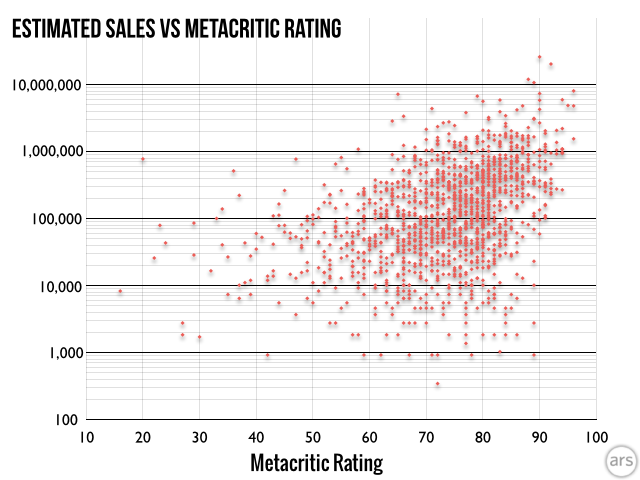
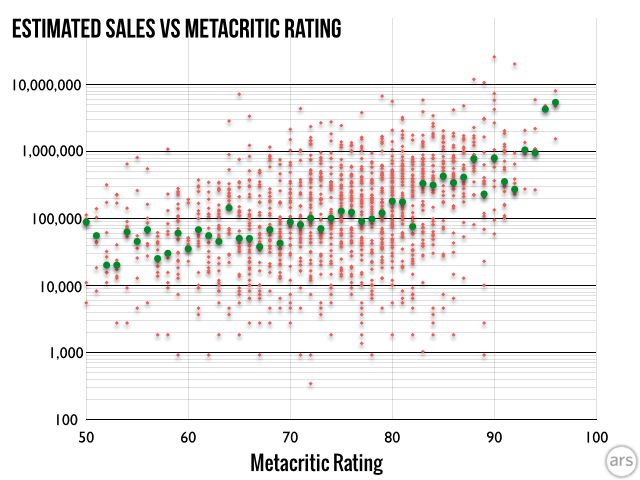
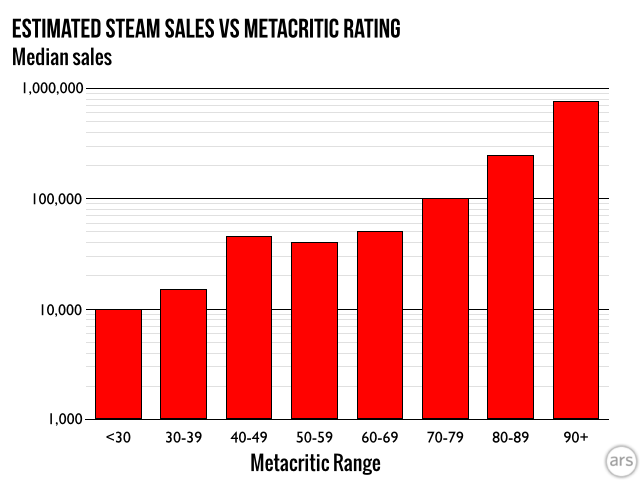
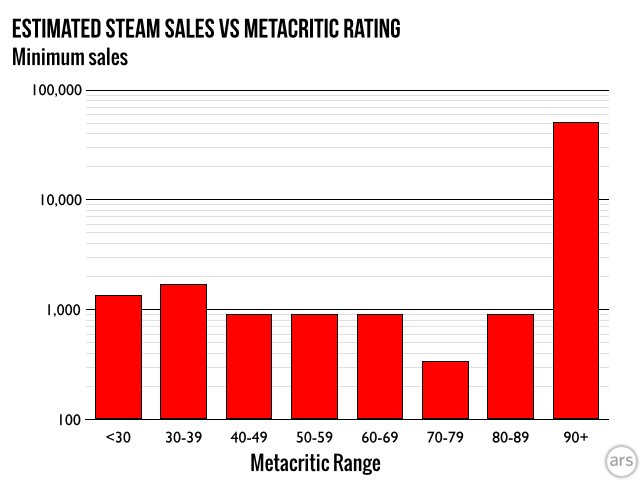
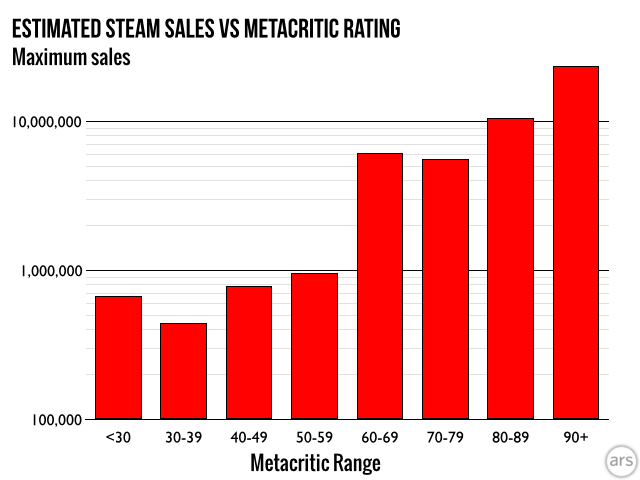
Now, thanks to our recently unveiled Steam Gauge project, we have another way to try to tie down the relationship between a game’s critical reception and its sales success. In comparing estimates of sales on Steam to aggregate review score averages, we found that better reviews do generally translate to more sales for games, especially at the top end of the critical spectrum. That said, there is a lot of variability in the performance of individual games, and a prevalence of good or bad reviews is far from a guarantee of sales success or failure, respectively.


 Loading comments...