Skip to content
Ups and downs

Our favorite (and least favorite) tech of 2018

Every member of the Ars reviews team shares their picks.

The Apple Watch Series 4 on a wooden table.
The Apple Watch series 4 running watchOS 5. Credit: Valentina Palladino
Story text

Farewell, 2018. You brought us Facebook scandal after Facebook scandal, vastly more devices with Alexa and Google Assistant than anyone needs, a nosedive for net neutrality, endless political and regulatory challenges for Chinese smartphone makers, and oh so many notch-equipped smartphones.

We’re ready for about two months of accidentally writing “2018” every time we’re supposed to write 2019 in our first drafts—the adjustment always takes a while. And since our minds aren’t quite out of 2018 yet, let’s take this opportunity to look back on the year—specifically, our favorite and least-favorite products from the year.

Every member of the Ars Technica reviews team—Ron Amadeo, Peter Bright, Jeff Dunn, Valentina Palladino, and Samuel Axon—chimed in with personal picks and a little bit of explanation for why we picked what we did.

One of those words is key—these are our personal picks. Sometimes there is a difference between the objective best for most people and what we like the most ourselves. And that’s OK. They might overlap sometimes, anyway.

Let’s begin!

Ron Amadeo

Favorite: All Nokia smartphones

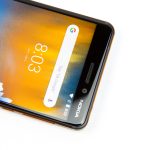
A picture of the Nokia 6.1.
This is a budget phone, and you get a pretty standard smartphone design.
A picture of the Nokia 6.1.
The back is all metal.

Last year I picked the OnePlus 5T as my favorite device thanks to the slick design and aluminum, and while I could easily pick the OnePlus 6T this year as one of the best Android phones, I have to give a shout out to HMD’s Nokia smartphones.

HMD—a Finnish company created specifically to be “the home of Nokia phones”—started producing smartphones about two years ago. At first I was reluctant to recommend a brand-new company with no track record, but over the last two years HMD has proven itself to be, hands down, the best Android OEM. HMD has been such a breath of fresh air—it regularly pumps out devices with stock Android, no crapware, fast updates, handsome designs, and at a range of price points that no one else in the industry will touch.

HMD has phones that feel like they would wipe the floor with the competition, but oftentimes there just isn’t any competition! The Nokia 6.1, which MSRPs at $269, is the best $269 phone you can buy. The Nokia 7.1 at $349 is the best $349 phone you can buy. I don’t think I would recommend a sub-$200 smartphone, but if you really need one, the Nokia 3.1 at $140 is the one you want.

HMD should be commended for tackling the sub-$500 market, but if I have any criticism for the company, it’s that I would like to see higher-end devices, too. Internationally, there’s a Nokia 8.1 that goes up to $477, but that’s not available in the US. Really, I would love to see what the company could do if it tried to make a real flagship smartphone. There are continual rumors of a crazy five-camera “Nokia 9” out there, but a product has never materialized. Nokia phones are awesome, and I just want more.

It’s only been two years, though, and while other companies crash and burn in the market in that amount of time, HMD has made incredible progress. HMD is my favorite Android OEM, and any time it announces anything, you should be paying attention.

Least favorite: Google’s Wear OS

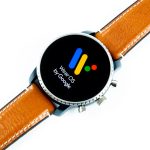
Wear OS seems nice, but it lacks apps and decent hardware.
Wear OS seems nice, but it lacks apps and decent hardware. Credit: Ron Amadeo

My least favorite product would have to be Google’s smartwatch platform Android Wear—excuse me, “Wear OS.” That new name still hasn’t stuck with me. Wear OS is a dead, stagnant platform on pretty much every front. Qualcomm refuses to make a good smartwatch chip, so all the hardware is thick and slow, and it has poor battery life. Google’s recent release of Wear OS 2.0 seems like an improvement, but a lot of the basic functionality—like voice commands—is too slow to be useful, probably thanks to the awful hardware it has to run on. The app ecosystem is dying, too, with little support from Google or third parties.

Wear OS is my “least favorite” piece of tech this year not just because it’s really bad, but also because I want a good smartwatch, and Wear OS doesn’t fit the bill. It would be fine if Wear OS was just bad and there was some other competitor I could pick from. But it’s not like you can be an Android and Google ecosystem user and use an Apple Watch. The problem starts with Qualcomm, but it’s a chicken-and-egg scenario: Qualcomm won’t invest in Wear OS because there isn’t much of a market, and there isn’t much of a market because Wear OS devices are terrible, mainly thanks to the obsolete SoCs Qualcomm is saddled with. This situation doesn’t look likely to ever improve. If an Apple Watch worked with Android, I would buy one and never look back.

Samuel Axon

Favorite: Apple silicon

Geekbench scores comparing the iPad Pro and recent MacBook Pro models.

Apple’s A12 system-on-a-chip for iPhones and its A12X for the iPad Pro aren’t just fast and efficient—they are the fastest, most efficient mobile chips on the market by a huge margin.

When I reviewed the new iPad Pro, it outperformed every MacBook Pro I tested except for the very latest model with the highest-end, Intel Core i9 CPU. That’s just remarkable. And with the A12, the A12X, and the T2 chip introduced late last year in the iMac Pro (which is now making its way into all kinds of new Macs), Apple has developed some elegant architectures not just for the central processing unit but for things like SSD controllers and security. No one else in the market is even close to what Apple has accomplished in mobile devices, and the early efforts on the Mac are promising, too.

There are sometimes debates in the Ars team Slack about Apple’s likely switch to making its own CPUs for Macs. Some feel it would be catastrophic for Apple to leave Intel. For a lot of us—like Lee Hutchinson and myself—the switch to Intel was the catalyst for our fully buying into the Mac ecosystem.

But when I benchmarked the iPad Pro and examined its architecture to learn Apple’s priorities, it became clear to me that Intel cannot possibly give Apple what it needs to satisfy users and developers moving forward. Macs need to switch to Apple silicon, and the iPad Pro’s A12X shows that it’s not just possible but desirable.

If only the iPad Pro had the software to match its internal hardware in the meantime.

Least favorite: PlayStation Classic

Screenshot from PSClassic.
*Chime sound*
Screenshot from PSClassic.
The menu screen is about as basic as they come.

When the SNES Classic was announced, my Twitter feed devoted to games- and tech-loving friends went bonkers. People’s nostalgia for the Super Nintendo (and Nintendo platforms in general) is fierce. But as much as I appreciate Nintendo today, I don’t have those feelings, because I did not grow up on Nintendo. For the first decade-and-change of my life, I was strictly a PC gamer.

That changed on one of my birthdays in the mid ’90s when the Sony PlayStation came out. The PS1 became my platform of choice, followed by the PS2, up through college. So when Sony announced the PlayStation Classic this year, I finally understood the feelings SNES fans had with their classic console.

Then it came out. The PlayStation Classic’s quality of emulation left something to be desired. That’s an understatement, really; several of the games were the 50Hz PAL versions, but they shipped on a console for US TVs. That was the biggest of many problems, and everything about the experience suffered.

I’m not as critical of the games lineup as some folks were—I think that criticism is just inevitable, since the PlayStation was such a dynamic console with an extraordinarily wide range of games. The Classic would have needed to include at least 100 games to fully represent the breadth of what the original offered.

But it has become clear, with discovery after discovery, that Sony gave the PlayStation Classic the bare minimum of effort. Fans deserved better. The PlayStation deserved better.

Peter Bright

Favorite: Nvidia’s ridiculous new video cards

Screenshot of graphics demonstration.
That’s the “$60,000 GPU” Star Wars demo from March 2018, running on our own testing rig with an RTX 2080 Ti attached. 4K resolution; roughly 38-frames-per-second performance.
Screenshot of graphics demonstration.
To appreciate what’s happening with the real-time ray tracing in this scene, flip back and forth between these images. So many light sources, including ones hidden from this perspective, account for the intensity and color of this elevator’s reflections and soft shadows. That’s a monster workload for a standard GPU to render.

OK, I haven’t actually used these cards. They’re expensive, and since I still game at 1080p, they’re for the most part overkill for my gaming needs. But what they represent—well, that’s something a little special. 2018 marked the year that real-time raytracing made its way into commodity consumer hardware. Granted, it’s early days yet. These cards aren’t being used to provide all-raytraced graphics—rather, they’re just being used to provide additional lighting effects on top of traditionally rendered images. Sometimes these effects can be quite subtle, too. But the promise, at least, of vastly more realistic and varied lighting, shadows, reflections, and more? It’s now tantalizingly close.

Least favorite: The SESTA/FOSTA Act

For all its dysfunction, the US Congress managed to come together to pass a bipartisan bill. It was called the “Stop Enabling Sex Traffickers Act” (SESTA) in the Senate and the “Allow States and Victims to Fight Online Sex Trafficking Act” (FOSTA) in the House. The alleged purpose of these bills: to enable prosecutors to go after websites that “knowingly” assist, facilitate, or support sex trafficking and to remove Section 230 safe-harbor protection (which protects online services from being prosecuted for the actions of users of those services) in cases involving sex trafficking.

The problem? It’s terrible law. To be clear, I am not in favor of sex trafficking. Transporting adults and children so that they can be forced to work as prostitutes is a bad thing. The traffickers should face criminal charges and receive jail time for their involvement in such schemes, and law enforcement officers should work to disrupt and destroy the criminal gangs that perform such trafficking.

SESTA/FOSTA has had a chilling effect on free speech. Sites such as Craigslist completely killed off their personals sections because the risk of operating those sections—containing, as they did, a mix of paid sex workers and entirely legal, unpaid, would-be daters—became too great.

Many other discussion forums and classified ads sites made the same decision; with SESTA/FOSTA, it was no longer sufficient that such ads were banned (and routinely removed). Online services could still be claimed to “knowingly” allow such activity. The ads for legal hookups, dates, one-night stands, and relationships that sites like Craigslist enabled have all been silenced.

The law has also put a group already operating at the margins of society—full-service sex workers—at further risk. Backpage allowed a certain safety; it allowed sex workers to perform some level of vetting of their customers, for example. Robbed of this advertising, many have been forced into street prostitution—a much riskier activity, as there’s no vetting possible when getting into a client’s car. Around the country, pimps are reported to be taking advantage of the situation: they promise some level of “protection” on the street, in return for taking the lion’s share of the money. Traffickers are continuing to traffic, but they now do so without any of the visibility that Backpage previously gave them.

And perhaps the most fundamental flaw of all: a law that was passed to make prosecuting sex traffickers easier has had the reverse effect. SESTA-FOSTA does not aid in such police work. In fact, it has already been found to greatly hinder it: it makes sex traffickers harder to find and arrest and their victims harder to rescue.

Jeff Dunn

Favorite: Sony WH-1000XM3

sony wh-1000xm3
Sony’s WH-1000XM3 noise-cancelling headphones.
Sony’s WH-1000XM3 noise-cancelling headphones. Credit: Jeff Dunn

There’s nothing profound to say about the Sony WH-1000XM3—they’re just noise-cancelling headphones that are really good at being noise-cancelling headphones. They look sharp, they’re comfortable, they get close to 30 hours of battery life, and they have a USB-C port, which should be a mandate for any tech product that costs more than $300 in 2018 and beyond.

In my testing, the WH-1000XM3 actually came out ahead of Bose’s QuietComfort 35 II in terms of pure noise-cancelling strength—the difference is barely perceptible outside of a test lab, but Bose has dominated this category for so long that it’s an achievement nonetheless. To my ears, the Sony headphones also sound better. Again, nothing fancy here: Sony just put its head down and made a product that is technically proficient and presents immediately obvious benefits to consumers. What a concept!

Least favorite: Facebook Portal

Facebook's Portal smart display.
The $199 Portal has a 10-inch, 1280×800 touchscreen.
Facebook's Portal smart display.
Both Portals use AI technology to make video chatting better.

In truth, I didn’t test any gadget this year that deserves to be called “The Worst.” In general, I think singling out a gadget like that is a bit harsh. So when I say Facebook’s Portal smart display is the worst gadget of the year, I don’t mean it fails the hardest at what it tries to do: in fact, I haven’t even used it. Devoid of context, it actually seems like a pretty decent video-conferencing device.

But it is the 2018 product that I am least likely to buy. That all comes down to Facebook’s ongoing quest to be the biggest PR disaster in the tech industry. Between the carelessness toward its users’ personal data, the massive data breaches, the providing an ongoing platform for hate speech and misinformation—including an implicated role in a literal genocide—the being one half of a duopoly in digital advertising (and the dumbing down of online media that it’s helped foster, intentional or not), the fact that some advertisers say it has “absolutely no morals,” and the likelihood that it makes you and your children less happy, it’s difficult to directly support a company like that with a hardware sale.

Lord knows Google and Amazon, who also sell smart displays, have their own issues with abusing user data. (Looking at you, YouTube.) But a device like this comes down to trust. And I do not trust Facebook—a company whose business is based on ingesting all it can see about me in order to serve up potentially insane ads and articles designed to keep me in a personalized-engagement thought bubble—to put a mic and video camera in my living room.

Valentina Palladino

Favorite: Apple Watch Series 4

The Apple Watch Series 4 on a wooden table.
The digital crown now has an electrode on its flat edge.
The Apple Watch Series 4 on a wooden table.
The mic was moved, and the speaker has been improved so sound coming from the Watch is louder and clearer.

The first true redesign of the Apple Watch wasn’t the most noticeable, but it was substantial. Apple packed a bunch of new features into the Series 4 Watch. Physically, the Watch’s larger display stood out and made everything that appeared on it look impressive, including new watch faces, workout profiles, heart-rate graphs, and podcast art in watchOS 5.

But two of the most important new features of the Apple Watch Series 4 are ones that I, personally, won’t use often right now. With its embedded electrodes, the Watch measures and reports ECGs, or electrocardiograms, to tell you if your heart rhythm is healthy or abnormal. The improved accelerometer inside the Watch also detects when you fall and alerts your loved ones and emergency services in the most dire situations.

While those features may seem niche, each Apple Watch wearer could use them at one point or another in their lives. The Watch isn’t a medical device, and it can’t diagnose atrial fibrillation, but it can help users recognize signs of potentially life-threatening problems. Fall detection speaks for itself—you may not think you need it, but you’ll be grateful for it if you ever fall and can’t get up.

Apple impressed me with the amount of thought it put into this iteration of the Apple Watch. Not only do the ECG and fall-detection features help Apple further realize its goal of creating a device that truly helps users to be healthier and safer, but the Series 4 improves upon everything that the Series 3 did right. If you’ve been on the fence about buying an Apple Watch since it was released back in 2015, now’s the time to jump.

Least favorite: Samsung Notebook 9 Pen

Clunky hinges.
Large back edge with vent.

Samsung wanted to make a two-in-one that could compete with the likes of the Dell XPS 13 and the HP Spectre x360. Instead, it made the Notebook 9 Pen. While the device seems like it would give those aforementioned ultrabooks a run for their money, the reality is quite different. The Notebook 9 Pen suffers from a boring, hefty design that gives it the look and feel of a budget device. Its hidden quirks—like the odd fingerprint sensor placement, the too-short included stylus, and lack of USB-C charging—also don’t help its case.

While its performance was OK, its battery life was a deal-breaker. It lasted just 7.5 hours on our Wi-Fi test and only four hours on our WebGL test—abysmal for ultrabook standards, especially those that start at $1,399. The Notebook 9 Pen’s only saving graces were key pieces of Samsung software, including Air Command, that made the device similar to using a Samsung smartphone or tablet when flipped 360 degrees. But you don’t need to get the Notebook 9 Pen for that software, and you shouldn’t—save the cash and invest in either a stronger two-in-one or a different, properly priced Samsung device.

Listing image: Valentina Palladino

Samuel Axon is the editorial lead for tech and gaming coverage at Ars Technica. He covers AI, software development, gaming, entertainment, and mixed reality. He has been writing about gaming and technology for nearly two decades at Engadget, PC World, Mashable, Vice, Polygon, Wired, and others. He previously ran a marketing and PR agency in the gaming industry, led editorial for the TV network CBS, and worked on social media marketing strategy for Samsung Mobile at the creative agency SPCSHP. He also is an independent software and game developer for iOS, Windows, and other platforms, and he is a graduate of DePaul University, where he studied interactive media and software development.
113 Comments