
You are using an out of date browser. It may not display this or other websites correctly.
You should upgrade or use an alternative browser.
You should upgrade or use an alternative browser.
Why people keep falling for viral hoaxes
- Thread starter JournalBot
- Start date
Post content hidden for low score.
Show…
tryggerone
Smack-Fu Master, in training
... I think they fall for it because they're stupid and too lazy to read the TOS...
https://help.instagram.com/478745558852511/
mumbleTOSmumble
Thanks for your keen insight. Were you too stupid and too lazy to read this article? Because literally the entire point of it is that overlooking the *actual* reason (which you are doing) is problematic.
Upvote
118
(134
/
-16)
It seems like they still have the idea that they own the stuff they put on these platforms. Someone needs to explain to them that unless it's in a server you have access to, you don't really own it. As well as that they're probably doing scarier things with it than making your dms public haha.
Upvote
34
(35
/
-1)

... I think they fall for it because they're stupid and too lazy to read the TOS...
https://help.instagram.com/478745558852511/
mumbleTOSmumble
Thanks for your keen insight. Were you too stupid and too lazy to read this article? Because literally the entire point of it is that overlooking the *actual* reason (which you are doing) is problematic.
I read the article and disagree with its conclusion. The article quotes for example:
The brain is set up to give us easy answers … so if there's a hoax that appeals to people's emotions or intuition, it's going to trick people, because a lot of people just don't spend that much time thinking about the things that they see on social media
This pretty much sounds like humans are stupid to check and instead rely on "intuition". And don't spend much time thinking. Of course, one can disagree with my conclusion, that people are stupid because they don't think... but then I wonder what their definition of "stupid" is.
Upvote
-3
(60
/
-63)
Make no mistake, it’s not because people are stupid, says Whitney Phillips, a professor at Syracuse University who studies misinformation and how it is amplified online. These sorts of hoaxes have staying power because of the peculiar way people process information and arrive at beliefs. When confronted with new information, humans don’t always do the logical thing and evaluate it on its own merits, Phillips says. Instead, we often make snap decisions based on how the information adheres with our existing worldviews.
So she says it's not because people are stupid, then proceeds to describe that it's because people are acting stupid. Or, a nice a way of saying, people are not critically thinking, or even thinking enough to verify something, in the age of Google even, before sharing it.
I mean, 3-5 year olds do that all the time, like the time I told my 4 year old cousins that we celebrate New Year's because of the Christmas Dodo, and during this day of the year they come out from underground to lay eggs, and if they wait outside very still and quietly, maybe they'll see it. And they believed it and then told others about the Christmas Dodo.
And last I checked, we don't consider 3-5 year olds not dumb either.
I wonder now if these sort of chains gain more traction in countries in which the population has lower quality/less education and vice versa.
Upvote
21
(58
/
-37)
So you lied to someone who trusts you and your take away from them believing you is that they're dumb? I think you learnt the wrong lesson here.Make no mistake, it’s not because people are stupid, says Whitney Phillips, a professor at Syracuse University who studies misinformation and how it is amplified online. These sorts of hoaxes have staying power because of the peculiar way people process information and arrive at beliefs. When confronted with new information, humans don’t always do the logical thing and evaluate it on its own merits, Phillips says. Instead, we often make snap decisions based on how the information adheres with our existing worldviews.
So she says it's not because people are stupid, then proceeds to describe that it's because people are acting stupid. Or, a nice a way of saying, people are not critically thinking, or even thinking enough to verify something, in the age of Google even, before sharing it.
I mean, 3-5 year olds do that all the time, like the time I told my 4 year old cousins that we celebrate New Year's because of the Christmas Dodo, and during this day of the year they come out from underground to pay eggs, and if they wait outside very still and quietly, maybe they'll see it. And they believed it and then told others about the Christmas Dodo.
And last I checked, we don't consider 3-5 year olds not dumb either.
I wonder now if these sort of chains gain more traction in countries in which the population has lower quality/less education and vice versa.
Upvote
119
(128
/
-9)
She's not saying they're being stupid, she says they're not acting logical. Intelligence and rationality aren't the same thing.Make no mistake, it’s not because people are stupid, says Whitney Phillips, a professor at Syracuse University who studies misinformation and how it is amplified online. These sorts of hoaxes have staying power because of the peculiar way people process information and arrive at beliefs. When confronted with new information, humans don’t always do the logical thing and evaluate it on its own merits, Phillips says. Instead, we often make snap decisions based on how the information adheres with our existing worldviews.
So she says it's not because people are stupid, then proceeds to describe that it's because people are acting stupid. Or, a nice a way of saying, people are not critically thinking, or even thinking enough to verify something, in the age of Google even, before sharing it.
Anyway, the snap decision to re-share has a certain logic to it when you think about the amount of mental effort to do so vs. independently verifying the info, and the potential downside if the meme's wrong. It's really quick and easy to just re-share, while trying to verify it takes a lot more effort, and the only downside is that you may look silly if it's wrong, but not any sillier than the person who shared it with you in the first place.
That's not stupidity, that's gullibility. It's not surprising they fell for it, considering that you're an adult they implicitly trust. Plus, your lie isn't really any more outlandish than the stories of Santa Claus and the Easter Bunny that we already tell kids. There's a reason why Peanuts went with the story of the Great Pumpkin for its Halloween special.I mean, 3-5 year olds do that all the time, like the time I told my 4 year old cousins that we celebrate New Year's because of the Christmas Dodo, and during this day of the year they come out from underground to lay eggs, and if they wait outside very still and quietly, maybe they'll see it. And they believed it and then told others about the Christmas Dodo.
Edit, fixed misspelling of Santa Claus as Santa Clause. I blame Tim Allen.
Upvote
61
(70
/
-9)
tryggerone
Smack-Fu Master, in training
... I think they fall for it because they're stupid and too lazy to read the TOS...
https://help.instagram.com/478745558852511/
mumbleTOSmumble
Thanks for your keen insight. Were you too stupid and too lazy to read this article? Because literally the entire point of it is that overlooking the *actual* reason (which you are doing) is problematic.
I read the article and disagree with its conclusion. The article quotes for example:
The brain is set up to give us easy answers … so if there's a hoax that appeals to people's emotions or intuition, it's going to trick people, because a lot of people just don't spend that much time thinking about the things that they see on social media
This pretty much sounds like humans are stupid to check and instead rely on "intuition". And don't spend much time thinking. Of course, one can disagree with my conclusion, that people are stupid because they don't think... but then I wonder what their definition of "stupid" is.
Then, by your own summation you are "stupid" for the arrogance you display in arriving at your fallacious conclusion (please note: that's not *my* conclusion, nor that of the author of this article who argues that you are making a poor choice because of your emotionally impaired judgement).
Making a choice that is incorrect is not inherently "stupid" (i.e: a lack of intelligence or impaired intelligence) when the *actual* reason for making that choice is some other motivation (such as emotions). Conflating every poor choice as "stupidity" prevents us from addressing the roots of the problem. Take heart though friend! Very intelligent people can (and do) make mistakes for these sorts of reasons, as you are demonstrating here today.
Upvote
16
(31
/
-15)

Plus, your lie isn't really any more outlandish than the stories of Santa Clause...
Fiorello: Hey, wait, wait. What does this say here, this thing here?
Driftwood: Oh, that? Oh, that's the usual clause that's in every contract. That just says, uh, it says, uh, if any of the parties participating in this contract are shown not to be in their right mind, the entire agreement is automatically nullified.
Fiorello: Well, I don't know...
Driftwood: It's all right. That's, that's in every contract. That's, that's what they call a sanity clause.
Fiorello: Ha-ha-ha-ha-ha! You can't fool me. There ain't no Sanity Clause!
Upvote
41
(41
/
0)
Post content hidden for low score.
Show…
Make no mistake, it’s not because people are stupid, says Whitney Phillips, a professor at Syracuse University who studies misinformation and how it is amplified online. These sorts of hoaxes have staying power because of the peculiar way people process information and arrive at beliefs. When confronted with new information, humans don’t always do the logical thing and evaluate it on its own merits, Phillips says. Instead, we often make snap decisions based on how the information adheres with our existing worldviews.
So she says it's not because people are stupid, then proceeds to describe that it's because people are acting stupid. Or, a nice a way of saying, people are not critically thinking, or even thinking enough to verify something, in the age of Google even, before sharing it.
I mean, 3-5 year olds do that all the time, like the time I told my 4 year old cousins that we celebrate New Year's because of the Christmas Dodo, and during this day of the year they come out from underground to lay eggs, and if they wait outside very still and quietly, maybe they'll see it. And they believed it and then told others about the Christmas Dodo.
And last I checked, we don't consider 3-5 year olds not dumb either.
I wonder now if these sort of chains gain more traction in countries in which the population has lower quality/less education and vice versa.
3-5 yo kids have pretty much zero capacity for critical thinking and analysis. They operate on instinct, trust of adults who care for them, and feel-good endorphins.
But adults, with their mature brains are different. It's not they they all lack lack critical thinking skill, though some certainly do, but as the article points out, they become victim to the particular hoax that tricks their particular brain. Like an infection that finds the right cell on which to bind.
Being an opsec minded IT geek I'm a highly suspicious person (probably too much) so I'm not prone to such hoaxes -- so far. But sometimes even for me an incoming hoax requires actual conscious processing, they are that good.
Upvote
18
(27
/
-9)
... I think they fall for it because they're stupid and too lazy to read the TOS...
https://help.instagram.com/478745558852511/
We do not claim ownership of your content, but you grant us a license to use it.
Nothing is changing about your rights in your content. We do not claim ownership of your content that you post on or through the Service. Instead, when you share, post, or upload content that is covered by intellectual property rights (like photos or videos) on or in connection with our Service, you hereby grant to us a non-exclusive, royalty-free, transferable, sub-licensable, worldwide license to host, use, distribute, modify, run, copy, publicly perform or display, translate, and create derivative works of your content (consistent with your privacy and application settings). You can end this license anytime by deleting your content or account.
If the TOS was partially all caps and/or bolded, had heightened language, was riddled with typos, and sounded super scary with a hint of conspiracy then I bet more people would read it.
Upvote
48
(48
/
0)
Yes. Well. Isn't that what not being stupid means? Actually using your intelligence to make not-stupid decisions?But sometimes even for me an incoming hoax requires actual conscious processing, they are that good.
I don't know why the researchers here try so hard to not call people stupid when they do stupid things. That seems to be some sort of political correctness or maybe some psychological scheme to not have people dismiss what they read because they don't like the implications (i.e that they, themselves, are stupid).
Personally, I maintain the notion, that people that do stupid things are stupid. And that includes myself. It's not like stupid or intelligent are absolutes; there's a grade here, and the more stupid things you do the more stupid you are.
Upvote
1
(27
/
-26)
Post content hidden for low score.
Show…
... I think they fall for it because they're stupid and too lazy to read the TOS...
https://help.instagram.com/478745558852511/
mumbleTOSmumble
Thanks for your keen insight. Were you too stupid and too lazy to read this article? Because literally the entire point of it is that overlooking the *actual* reason (which you are doing) is problematic.
I read the article and disagree with its conclusion. The article quotes for example:
The brain is set up to give us easy answers … so if there's a hoax that appeals to people's emotions or intuition, it's going to trick people, because a lot of people just don't spend that much time thinking about the things that they see on social media
This pretty much sounds like humans are stupid to check and instead rely on "intuition". And don't spend much time thinking. Of course, one can disagree with my conclusion, that people are stupid because they don't think... but then I wonder what their definition of "stupid" is.
Your "conclusion" is making the same mistake that you are accusing others of. Your brain set you up and gave you an easy answer and you are relying on "intuition" rather than science.
Well done.
Upvote
15
(30
/
-15)
Post content hidden for low score.
Show…
cl114c0777498d
Seniorius Lurkius
I'm not saying it's because people are dumb, but...
Upvote
21
(27
/
-6)
... I think they fall for it because they're stupid and too lazy to read the TOS...
https://help.instagram.com/478745558852511/
We do not claim ownership of your content, but you grant us a license to use it.
Nothing is changing about your rights in your content. We do not claim ownership of your content that you post on or through the Service. Instead, when you share, post, or upload content that is covered by intellectual property rights (like photos or videos) on or in connection with our Service, you hereby grant to us a non-exclusive, royalty-free, transferable, sub-licensable, worldwide license to host, use, distribute, modify, run, copy, publicly perform or display, translate, and create derivative works of your content (consistent with your privacy and application settings). You can end this license anytime by deleting your content or account.
If the TOS was partially all caps and/or bolded, had heightened language, was riddled with typos, and sounded super scary with a hint of conspiracy then I bet more people would read it.
This instagram TOS seems to be quite a bit more readable than others I looked at. It had titles and sections that made sense for example. And it's much shorter than other EULAs. I still wouldn't use that thing, but the terms seem to be on the readable side.
Edit: Maybe that's a more recent industry shift. Twiter's, Google's and Facebook's don't seem too hard to understand either... If they'd only follow their own TOS / Privacy guidelines

Upvote
8
(8
/
0)
Post content hidden for low score.
Show…
I'm sorry I hurt your feelings. I made no moral judgement on lying to kids, I was expressing surprise that you don't understand the nature of a trusting child.So you lied to someone who trusts you and your take away from them believing you is that they're dumb? I think you learnt the wrong lesson here.Make no mistake, it’s not because people are stupid, says Whitney Phillips, a professor at Syracuse University who studies misinformation and how it is amplified online. These sorts of hoaxes have staying power because of the peculiar way people process information and arrive at beliefs. When confronted with new information, humans don’t always do the logical thing and evaluate it on its own merits, Phillips says. Instead, we often make snap decisions based on how the information adheres with our existing worldviews.
So she says it's not because people are stupid, then proceeds to describe that it's because people are acting stupid. Or, a nice a way of saying, people are not critically thinking, or even thinking enough to verify something, in the age of Google even, before sharing it.
I mean, 3-5 year olds do that all the time, like the time I told my 4 year old cousins that we celebrate New Year's because of the Christmas Dodo, and during this day of the year they come out from underground to pay eggs, and if they wait outside very still and quietly, maybe they'll see it. And they believed it and then told others about the Christmas Dodo.
And last I checked, we don't consider 3-5 year olds not dumb either.
I wonder now if these sort of chains gain more traction in countries in which the population has lower quality/less education and vice versa.
Oh noes! They be scarred for life! How DARE someone lie to a little kid about a made up thing for them to have some fun! What will they ever do when they find out Santa isn't real!
THINK OF THE CHILDREN!
(PS I think you missed the part where they were 4 year olds. I mean, maybe you're just surrounded by genius 4 year old engineers and physicians, but last I checked most children who are barely starting school aren't that smart yet because, you know, they literally still lack education. I think you also missed the point that one should expect more out of an adult, especially if they went to school, than acting like said 4 year old who still lack knowledge in general to things seen on the internet.)
As for you further comment, I simply don't equate knowledge with intelligence. Nobody is knowledgable in every area of life. Even some of the most technically competent people I know have massive blind spots.
Upvote
50
(54
/
-4)
Post content hidden for low score.
Show…
Post content hidden for low score.
Show…
I'm sorry I hurt your feelings. I made no moral judgement on lying to kids, I was expressing surprise that you don't understand the nature of a trusting child.So you lied to someone who trusts you and your take away from them believing you is that they're dumb? I think you learnt the wrong lesson here.Make no mistake, it’s not because people are stupid, says Whitney Phillips, a professor at Syracuse University who studies misinformation and how it is amplified online. These sorts of hoaxes have staying power because of the peculiar way people process information and arrive at beliefs. When confronted with new information, humans don’t always do the logical thing and evaluate it on its own merits, Phillips says. Instead, we often make snap decisions based on how the information adheres with our existing worldviews.
So she says it's not because people are stupid, then proceeds to describe that it's because people are acting stupid. Or, a nice a way of saying, people are not critically thinking, or even thinking enough to verify something, in the age of Google even, before sharing it.
I mean, 3-5 year olds do that all the time, like the time I told my 4 year old cousins that we celebrate New Year's because of the Christmas Dodo, and during this day of the year they come out from underground to pay eggs, and if they wait outside very still and quietly, maybe they'll see it. And they believed it and then told others about the Christmas Dodo.
And last I checked, we don't consider 3-5 year olds not dumb either.
I wonder now if these sort of chains gain more traction in countries in which the population has lower quality/less education and vice versa.
Oh noes! They be scarred for life! How DARE someone lie to a little kid about a made up thing for them to have some fun! What will they ever do when they find out Santa isn't real!
THINK OF THE CHILDREN!
(PS I think you missed the part where they were 4 year olds. I mean, maybe you're just surrounded by genius 4 year old engineers and physicians, but last I checked most children who are barely starting school aren't that smart yet because, you know, they literally still lack education. I think you also missed the point that one should expect more out of an adult, especially if they went to school, than acting like said 4 year old who still lack knowledge in general to things seen on the internet.)
As for you further comment, I simply don't equate knowledge with intelligence. Nobody is knowledgable in every area of life. Even some of the most technically competent people I know have massive blind spots.
I equate good education with intelligence, because good education will teach you strong critical thinking skills.
Knowledge and education level isn't everything to intelligence, but it's still a very big part of it. If it wasn't, there wouldn't be a need for schools to exist.
To be intelligent means to think in a logical way, to be able to acquire and process information. To be knowledgeable means to know a lot of facts, to already have a lot of information. To be educated means to have had some kind of education of some type, maybe increasing knowledge or intelligence, but maybe not.
Those are all related a bit but they aren't the same.
The people in this story were either lazy (and didn't bother to verify the facts because of that), or stupid (they were incapable of sufficient critical thinking to verify the facts). Humans often are.
Upvote
-1
(14
/
-15)
Modern education is an epic fail.
My wife did 25 years teaching and at least in K-12, it’s a joke.
Watch a family with kids at a restaurant or on a plane or church; virtually every child that can walk has a phone or tablet.
That’s the engagement today. Parents cede their fucking responsibility to raise a child and are somehow amazed when they move back home at 30, or shoot people.
And that very scenario means intelligence plunged over a cliff and Superman isn’t going to catch and save.
Lemmings rule...literally.
Edit: Fixed Quote.
Upvote
24
(30
/
-6)
Upvote
-9
(0
/
-9)
3-5 year olds are performing incredible amounts of critical thinking and analysis, given the fact that they have to learn how an entire world works, from language, social cues, how to walk, etc. What they lack is a breadth of experience to compare against and think 'hang on, what he just said contradicts something else I know about'. It's easy to get kids to believe in Santa Claus, because they don't know enough about the world yet to instinctively know why he shouldn't exist.Make no mistake, it’s not because people are stupid, says Whitney Phillips, a professor at Syracuse University who studies misinformation and how it is amplified online. These sorts of hoaxes have staying power because of the peculiar way people process information and arrive at beliefs. When confronted with new information, humans don’t always do the logical thing and evaluate it on its own merits, Phillips says. Instead, we often make snap decisions based on how the information adheres with our existing worldviews.
So she says it's not because people are stupid, then proceeds to describe that it's because people are acting stupid. Or, a nice a way of saying, people are not critically thinking, or even thinking enough to verify something, in the age of Google even, before sharing it.
I mean, 3-5 year olds do that all the time, like the time I told my 4 year old cousins that we celebrate New Year's because of the Christmas Dodo, and during this day of the year they come out from underground to lay eggs, and if they wait outside very still and quietly, maybe they'll see it. And they believed it and then told others about the Christmas Dodo.
And last I checked, we don't consider 3-5 year olds not dumb either.
I wonder now if these sort of chains gain more traction in countries in which the population has lower quality/less education and vice versa.
3-5 yo kids have pretty much zero capacity for critical thinking and analysis. They operate on instinct, trust of adults who care for them, and feel-good endorphins.
But adults, with their mature brains are different. It's not they they all lack lack critical thinking skill, though some certainly do, but as the article points out, they become victim to the particular hoax that tricks their particular brain. Like an infection that finds the right cell on which to bind.
Being an opsec minded IT geek I'm a highly suspicious person (probably too much) so I'm not prone to such hoaxes -- so far. But sometimes even for me an incoming hoax requires actual conscious processing, they are that good.
And really, for adults, most normal skepticism is an instinctual response, built upon years of experience. There's no way to independently verify all the thousands of new bits of information we take in every day, so we develop heuristics to quickly triage what's important enough to be skeptical about, and then further drill down what agrees with our past experience and what doesn't. For example, when you read about a new 0-day on Ars, do you independently write up code to test each exploit on your system before patching, or do you instead trust that you've been given reliable enough information that it's not worth spending your valuable time verifying it before patching?
What I think this article is getting at is that those heuristics for people is breaking down at the triage stage, because the action to take (sharing a social media post) is trivial compared to the effort of verification, so enough people's brains come to the conclusion that the energy/attention cost of investigating the claims are higher than the cost of just doing the action.
Upvote
59
(60
/
-1)
orangpelupa
Ars Praefectus
Maybe related to the reality that many people doesn't know how to Google?
In university, in workplace, it's baffling to see so many people doesn't know how to Google.
Sure they know Google. But they can't use it properly. They even need awhile just to think what to type.
Edit:
When they do able to Google, they'll happily believe anything in the result, including from dubious blog source
Edit2:
Unrelated but now I remembered that people also easily believe anything they saw including from dubious ads.
There's a "medicine", expensive "medicine" that claims to be able to heal all kinds of diseases (low blood pressure, high blood pressure, etc). People believe that that it's selling like hotcakes
There's also so many Juice that labeled as "made from real fruit" and people think it means they are drinking healthy drinks, just like making a juice yourself. Despite in reality, the fruit is only a fraction (forgot how many percent, it's labeled in small prints) and it's full of sugar.
Similar case with "reality show" and "prank videos". People thinks it's real....
In university, in workplace, it's baffling to see so many people doesn't know how to Google.
Sure they know Google. But they can't use it properly. They even need awhile just to think what to type.
Edit:
When they do able to Google, they'll happily believe anything in the result, including from dubious blog source
Edit2:
Unrelated but now I remembered that people also easily believe anything they saw including from dubious ads.
There's a "medicine", expensive "medicine" that claims to be able to heal all kinds of diseases (low blood pressure, high blood pressure, etc). People believe that that it's selling like hotcakes
There's also so many Juice that labeled as "made from real fruit" and people think it means they are drinking healthy drinks, just like making a juice yourself. Despite in reality, the fruit is only a fraction (forgot how many percent, it's labeled in small prints) and it's full of sugar.
Similar case with "reality show" and "prank videos". People thinks it's real....
Upvote
0
(6
/
-6)
readykilowatt
Ars Scholae Palatinae
Why do people gamble? Everyone knows the house has an advantage that means no matter what over time you'll loose. Yet people still play (and continue to play even when they're ahead) despite knowing the odds.
Why do people watch magic shows? Your eyes are deceiving you. You know they are deceiving you, yet you continue to watch. Of course the same thing could be said about all entertainment, since the people on stage don't actually want to kill their fathers or sleep with their mothers (who probably aren't on stage with them), and for that matter the box in the living room isn't populated with tiny people performing for your amusement...
All our perceptions are filtered by our brains attempting to make sense of the world. We get positive feedback from things that confirm our world view. In time we'll learn that hoaxes are just another form of entertainment, as is most of the Internet, but it might take a generation or two.
Why do people watch magic shows? Your eyes are deceiving you. You know they are deceiving you, yet you continue to watch. Of course the same thing could be said about all entertainment, since the people on stage don't actually want to kill their fathers or sleep with their mothers (who probably aren't on stage with them), and for that matter the box in the living room isn't populated with tiny people performing for your amusement...
All our perceptions are filtered by our brains attempting to make sense of the world. We get positive feedback from things that confirm our world view. In time we'll learn that hoaxes are just another form of entertainment, as is most of the Internet, but it might take a generation or two.
Upvote
2
(4
/
-2)
It might be because I've been doing internet searches since AltaVista, but my Google-Fu is apparently much stronger than most. I think most people don't know about putting quotes around words/phrases to get exact matches, the filter options, or search operators. I'll also revise my searches using different words and word order. I think most people never got any training in Google and/or learned anything more than "type what you want to find into the search bar."Maybe related to the reality that many people doesn't know how to Google?
In university, in workplace, it's baffling to see so many people doesn't know how to Google.
Sure they know Google. But they can't use it properly. They even need awhile just to think what to type.
When they do able to Google, they'll happily believe anything in the result, including from dubious blog source

The FDA is supposed to stamp down unsubstantiated claims.Unrelated but now I remembered that people also easily believe anything they saw including from dubious ads.
There's a "medicine", expensive "medicine" that claims to be able to heal all kinds of diseases (low blood pressure, high blood pressure, etc). People believe that that it's selling like hotcakes..
In the US, only 100% fruit juice can be called "juice." If it's less than that, it can be called "juice drink," "juice coctail," or "nectar" depending on the juice content.There's also so many Juice that labeled as "made from real fruit" and people think it means they are drinking healthy drinks, just like making a juice yourself. Despite in reality, the fruit is only a fraction (forgot how many percent, it's labeled in small prints) and it's full of sugar...
https://en.wikipedia.org/wiki/Juice#Terminology
https://www.law.cornell.edu/cfr/text/21/101.30
"Reality" shows are sometimes more accurately referred to as "unscripted," although it'd be even more accurate to say "not scripted beforehand." They're not dictating how people behave or what they'll say, but they'll manipulate people and situations to create tension and conflict. And if that conflict doesn't happen, they'll make it up in the edit via suggestive cuts and talking heads/narration. Often the talking head segments will have the people repeating dialogue prompts the producers have written to fit the narrative they're editing together.Similar case with "reality show" and "prank videos". People thinks it's real....
Prank shows, like on actual TV, from my knowledge use actual unaware people, since it's easier to capture genuine surprise than to get actors good enough to fake it, and they're setting up and shooting the prank dozens of times. Some "prank" videos online are fake though, and typically it's because the "prank" relies on a very specific reaction that isn't likely to happen in real life with a stranger.
Upvote
15
(17
/
-2)

By ridiculing those who were duped instead of examining why it is that such a broad swath of people were primed to readily accept and amplify this misinformation, she says, we are missing the forest for the trees. And that doesn't bode well for any of the more serious disinformation challenges yet to come.
The comments got kind of toxic and it appears to be a RTFA fail for some there.
Stupidity isn't the problem. Distractions play into it to a very large degree - especially when "engaging" with other people.
It's the classic distraction of rapid fire questions asked verbally with some kind of very short time limit on the answers.
- What does P O T S spell?
- What does T O P S spell?
- What do you do when you come to a green light?
Most people say "STOP". They were primed to think that word and distracted by the time constraint and speed at which the questions were asked. This bit that went around has a lot of the same qualities - no paragraphs, squished together and hard to read, lots of distractions in bold and exclamation marks and caps at the end.
It's not that they were stupid. It's because they were set up to think something. That's the process here.
Looking at the thing that went around, it's full of distractions that draw the eye away from salient information and toward the scare tactics, along with appeals to authority fallacies and other nonsense of the same kind (like the "it was reported by channel 13", which sounds like someone reported it, but you'd never find that story if you went looking for it), and lots of exclamation marks here and there.
It uses a lot of the tactics propaganda uses. Propaganda works mostly because it engages human nature, and very few people are taught what to look for in propagandist (or human nature manipulating) things.
It's very easy to spot, IF you know what to look for, and that can take some time to learn. Failing formal lessons, just throw out the word "bullshit" to EVERYTHING - even the stuff you think is true (actually, ESPECIALLY the stuff you think is true) - and go check it out before making any conclusions.
Your conclusion might still be wrong (because confirmation bias is a thing and a lot of people's sources aren't reliable to begin with), but you'll have a better chance at spotting the real bullshit out there.
That doesn't take intelligence to do, just enough persistence to make it a habit.
And if you see something written like that image above, it's always bullshit on a fundamental level and you can safely regard it as such.
Upvote
30
(32
/
-2)
Post content hidden for low score.
Show…
Post content hidden for low score.
Show…
Modern education is an epic fail.
My wife did 25 years teaching and at least in K-12, it’s a joke.
Watch a family with kids at a restaurant or on a plane or church; virtually every child that can walk has a phone or tablet.
That’s the engagement today. Parents cede their fucking responsibility to raise a child and are somehow amazed when they move back home at 30, or shoot people.
And that very scenario means intelligence plunged over a cliff and Superman isn’t going to catch and save.
Lemmings rule...literally.
But... Smartphones and tablets haven't even existed for 30 years... How are they moving back home at 30 as users of that technology when it hasn't even existed that long?...
Not to mention most of the most corrupt politicians are actually from the older generations.
Upvote
13
(15
/
-2)

"The act of sharing something is often performative.”
I learned a new word today.
Upvote
-1
(1
/
-2)
NinjaNerd56
Ars Praefectus
Modern education is an epic fail.
My wife did 25 years teaching and at least in K-12, it’s a joke.
Watch a family with kids at a restaurant or on a plane or church; virtually every child that can walk has a phone or tablet.
That’s the engagement today. Parents cede their fucking responsibility to raise a child and are somehow amazed when they move back home at 30, or shoot people.
And that very scenario means intelligence plunged over a cliff and Superman isn’t going to catch and save.
Lemmings rule...literally.
But... Smartphones and tablets haven't even existed for 30 years... How are they moving back home at 30 as users of that technology when it hasn't even existed that long?...
Not to mention most of the most corrupt politicians are actually from the older generations.
Indeed yes.
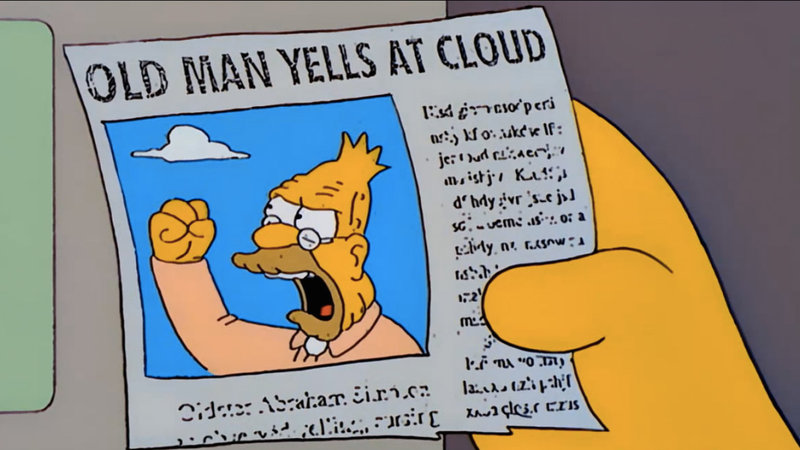
While I am the old white guy yelling at a cloud, I am also an old white guy who helped build the Cloud.
Absolutely agree that a little reverse iceberg is in order; flip the beast, scrape the 90% shit layer and keep the remaining 10% on a short leash.
Upvote
-10
(2
/
-12)
While not incorrect, that's also not useful. Humans are inherently biased based on background, current status, and pretty much everything else.Don't expect serious news from social media publishers.
Don't expect truthful news from right or left-wing media.
Pick your news sources from those with the least bias.
If you want gossip, that's perfect for social media.
The issue arises when someone assumes they don't have bias.
Upvote
11
(11
/
0)
Make no mistake, it’s not because people are stupid, says Whitney Phillips, a professor at Syracuse University who studies misinformation and how it is amplified online. These sorts of hoaxes have staying power because of the peculiar way people process information and arrive at beliefs. When confronted with new information, humans don’t always do the logical thing and evaluate it on its own merits, Phillips says. Instead, we often make snap decisions based on how the information adheres with our existing worldviews.
So she says it's not because people are stupid, then proceeds to describe that it's because people are acting stupid. Or, a nice a way of saying, people are not critically thinking, or even thinking enough to verify something, in the age of Google even, before sharing it.
I mean, 3-5 year olds do that all the time, like the time I told my 4 year old cousins that we celebrate New Year's because of the Christmas Dodo, and during this day of the year they come out from underground to lay eggs, and if they wait outside very still and quietly, maybe they'll see it. And they believed it and then told others about the Christmas Dodo.
And last I checked, we don't consider 3-5 year olds not dumb either.
I wonder now if these sort of chains gain more traction in countries in which the population has lower quality/less education and vice versa.
Well at least you're very proud of your conscious mind's singular ability to overpower all of the foolish automatic things humans do all the time.
Upvote
4
(6
/
-2)