

Quite right!With some of the salty old chiefs I'd be shocked if it made it to the skipper's attention in the first place, the goat locker would have dealt with it long since.
Quite right!With some of the salty old chiefs I'd be shocked if it made it to the skipper's attention in the first place, the goat locker would have dealt with it long since.
Apparently not enough -Makes me wonder how much of that is actually going on... and how many Captains are pretending to not know about it.
And send them to Leavenworth!IP protections on an oven?
Someone needs to hunt down whomever signed off on that contract.
Those types of contracts seem to be the norm after the Cold War ended. The issues that Germany had with Puma recently really brought the issue to light. The German army was not allowed to conduct the repairs and they had to be done by the manufacturer.IP protections on an oven?
Someone needs to hunt down whomever signed off on that contract.
The only thing surprising about this is that it isn't more prevalent.IP protections on an oven?
Someone needs to hunt down whomever signed off on that contract.
I don't know, while I understand the grift for the industrials, there seems to be very real, significant operational downsides for the military here. Considering the leverage they have in these negotiations, I don't understand why they would agree to it. Especially for something as low tech as an oven.The only thing surprising about this is that it isn't more prevalent.
I'm probably being cynical here, but the phrase "Why do we need all these support troops?" keeps popping into my head.I don't know, while I understand the grift for the industrials, there seems to be very real, significant operational downsides for the military here. Considering the leverage they have in these negotiations, I don't understand why they would agree to it. Especially for something as low tech as an oven.
Have you met the F 35?The only thing surprising about this is that it isn't more prevalent.
In the mid 2000s "headcount" was a primary metric for everything. Government and business.I'm probably being cynical here, but the phrase "Why do we need all these support troops?" keeps popping into my head.
If you want to cut the military budget (because it's free money; the Cold War is over haven't you heard?), but not lose "front line" units, cutting the logistics and maintenance corps and outsourcing the maintenance to contractors probably sounds attractive.
Plus the manufacturer said they'd lower the up-front unit cost if we sign up for a maintenance contract...
IIRC, there are legal reasons for it too with Congress setting personnel size limits for the services. So, outsourcing to contractors saves headcount that can be used for say, ship crew.I'm probably being cynical here, but the phrase "Why do we need all these support troops?" keeps popping into my head.
If you want to cut the military budget (because it's free money; the Cold War is over haven't you heard?), but not lose "front line" units, cutting the logistics and maintenance corps and outsourcing the maintenance to contractors probably sounds attractive.
Plus the manufacturer said they'd lower the up-front unit cost if we sign up for a maintenance contract...
You're out of date my friend! I've spent the last year harping about that nonsense. Congress already overrode the Pentagon on that and mandated that licensing/contractual obligations trump feeding US navy sailors, or having a functional air force.
It's funny how that works, though. People scream that private enterprise can always do it better than an inefficient government running anything. Yet private enterprise can't even manage to stay in business without ripping off the government, and there's no other businesses to pick from? What happened to those capitalists starting new businesses to fill the need? That's the kind of logic loop that guarantees the US will eventually topple. Ours certainly would not be the first world-leading military force to topple because of creeping systemic rot or logistical failings.Part of it is that contracts with full IP rights cost more, so the DoD says - we aren't paying for that. Then complain when they don't have the right. Why does it cost more, because if the govt gets full IP rights, they can issue the contract to anyone to build or repair it. Sometimes no big deal, sometimes it means the contractor has a negative ROI. Enough negative ROI and they are out of business.
Who said anything about anyone ripping anyone off? If the company spends $100million of it's own profit (and DoD contractor profits are restricted) to develop something valuable, why should they at least get their money back? If they didn't develop it on their own dollars, then it should literally be the government's property - but that's not how any of this works. Every company uses IRAD to develop something valuable to help win contracts, but the government rarely does not want to "own" that IRAD developed software because it might cost them $110 million.Yet private enterprise can't even manage to stay in business without ripping off the government, and there's no other businesses to pick from?
I think you'd be hard-pressed to find any procurement system that isn't some combination of public and private whether that's Daewoo and Hyundai for South Korea, or Mitsubishi, Kawasaki, IHI, and JMU for Japan. Even CSSC, Jiangnan, etc. in China are SOEs, so separate organizations from the navy unlike the Royal Navy Dockyard or the US Navy's Navy Yards.It's funny how that works, though. People scream that private enterprise can always do it better than an inefficient government running anything. Yet private enterprise can't even manage to stay in business without ripping off the government, and there's no other businesses to pick from? What happened to those capitalists starting new businesses to fill the need? That's the kind of logic loop that guarantees the US will eventually topple. Ours certainly would not be the first world-leading military force to topple because of creeping systemic rot or logistical failings.
It wasn't a big deal 30 years ago, but it's become one today. It wasn't just six of the eight ovens on a year-long cruise, the actual ship elevators they use to move aircraft between decks were also breaking and they weren't supposed to repair those either. The toilet system on the Ford class is simply a broken design that can't be fixed, no amount of right to repair will solve that one without ripping it out. I facepalmed when I realized the Kennedy has the same system and exact same problems necessitating $400,000 acid flushes every few months just like the Ford. They're building the same vacuum design right into the Enterprise too, because why not. Clearly ship's personnel are just cogs and combat effectiveness doesn't matter an iota if the crew lives at an acceptable 1800's standard of living with no indoor plumbing, cold showers, and cold food served every day. And don't forget the ~50% availability uptime on the aircraft that is the entire reason they're out there in the first place.
Because outside their narrow specialty many troops like many civilians are fucking lost. Non-technical people should not be making technical choices because they lack the enthusiastic self-immersion of many years to be good at that.Considering the leverage they have in these negotiations, I don't understand why they would agree to it.
I remember learning about something similar going way back - thinking 1990s, before perpetual war on terror - that Army doctors would work in hospital ERs and get all kinds of experience they were not getting in the Army - like treating gunshots. Not to mention other trauma cases like vehicle crashes and workplace accidents. All those years in Afghanistan and Iraq may have changed that.Today USNI publish a longish article on Navy partnership with hospitals for training of its corpsman. Absolutely fascinating, and the programs are worth doing. I wonder are other services doing the same things.
It's still a thing. The navy has Navy Trauma Training Center to give USN surgeons trauma-response training at LA General for example. And HMs get trauma rotations in a bunch of big cities around the country too.I remember learning about something similar going way back - thinking 1990s, before perpetual war on terror - that Army doctors would work in hospital ERs and get all kinds of experience they were not getting in the Army - like treating gunshots. Not to mention other trauma cases like vehicle crashes and workplace accidents. All those years in Afghanistan and Iraq may have changed that.
That's how it works, it's the Mcdonalds flurry machine situation just in military form. Either the US military pays more for the "right" to fix what they're buying, or they pay on the backend every time they call out the repair techs, but either way we pay for it. It's not like the US military doesn't end up paying for the fixes when the hardware's design flaws come through regardless, like the F-22 hololens, or stealth coatings that require considerably more frequent reapplications as was advertised.Who said anything about anyone ripping anyone off?
This is part of the problem to some extent. I used to work for one of the American contractors, albeit not in the US, and one of our annual goals was double digit ROI on systems developed for contracts that mandated middling single digit profits. You either accepted you couldn't achieve your goals that year which was reflected in your review, or, if you're a careerist manager type who couldn't accept that, you started coming up with 'clever' ways to achieve them.[...] (and DoD contractor profits are restricted) [...]
I’ve seen total fees go up to 12%, but not much more than that, and usually a chunk is award fee or incentive fee based (I.e. you NEVER get a 100% award). While I was working on a contract with Boeing (not at), they got an award fee of 50%. 3 VPs were fired on the spot. Usually award fees range from 85% - 95% of the award fee pool (NOT contract value). 50% is pretty damning as the project office hates giving awards that low because it indicates failure on their part as well.This is part of the problem to some extent. I used to work for one of the American contractors, albeit not in the US, and one of our annual goals was double digit ROI on systems developed for contracts that mandated middling single digit profits. You either accepted you couldn't achieve your goals that year which was reflected in your review, or, if you're a careerist manager type who couldn't accept that, you started coming up with 'clever' ways to achieve them.
Having said that, unlimited profits is clearly not the answer to the problem.
I wonder what it would be like to authorize only government employees to do the work, without allowing any other contractors.Why does it cost more, because if the govt gets full IP rights, they can issue the contract to anyone to build or repair it.

"Only" a training centre just doing rotations at civ hospitals? Here we got several DoD‑run and staffed hospitals with a Col. M.D. as their chief ;-)It's still a thing. The navy has Navy Trauma Training Center to give USN surgeons trauma-response training at LA General for example. And HMs get trauma rotations in a bunch of big cities around the country too.
[crossposted from the Ukraine war thread because it's also relevant here]
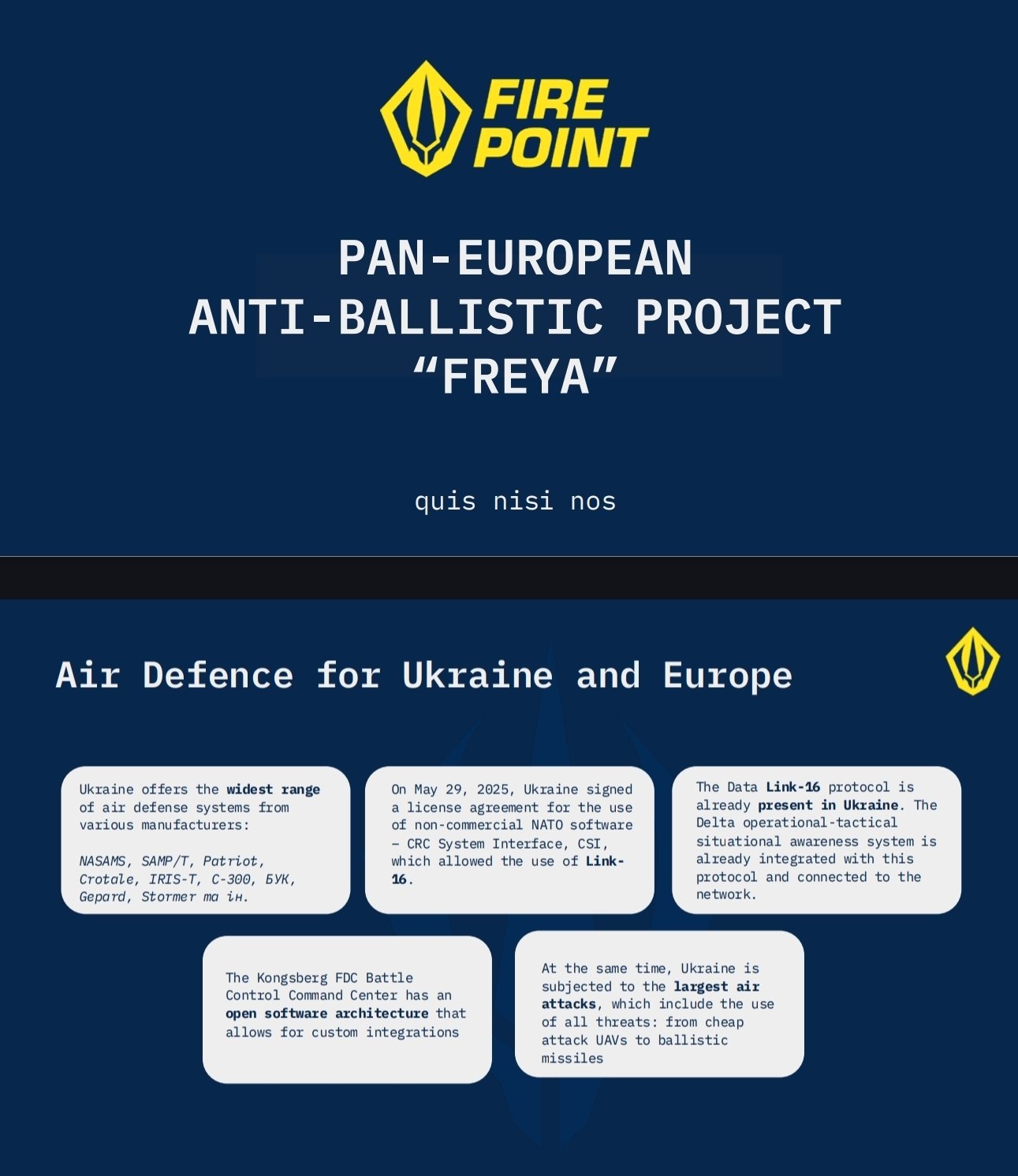
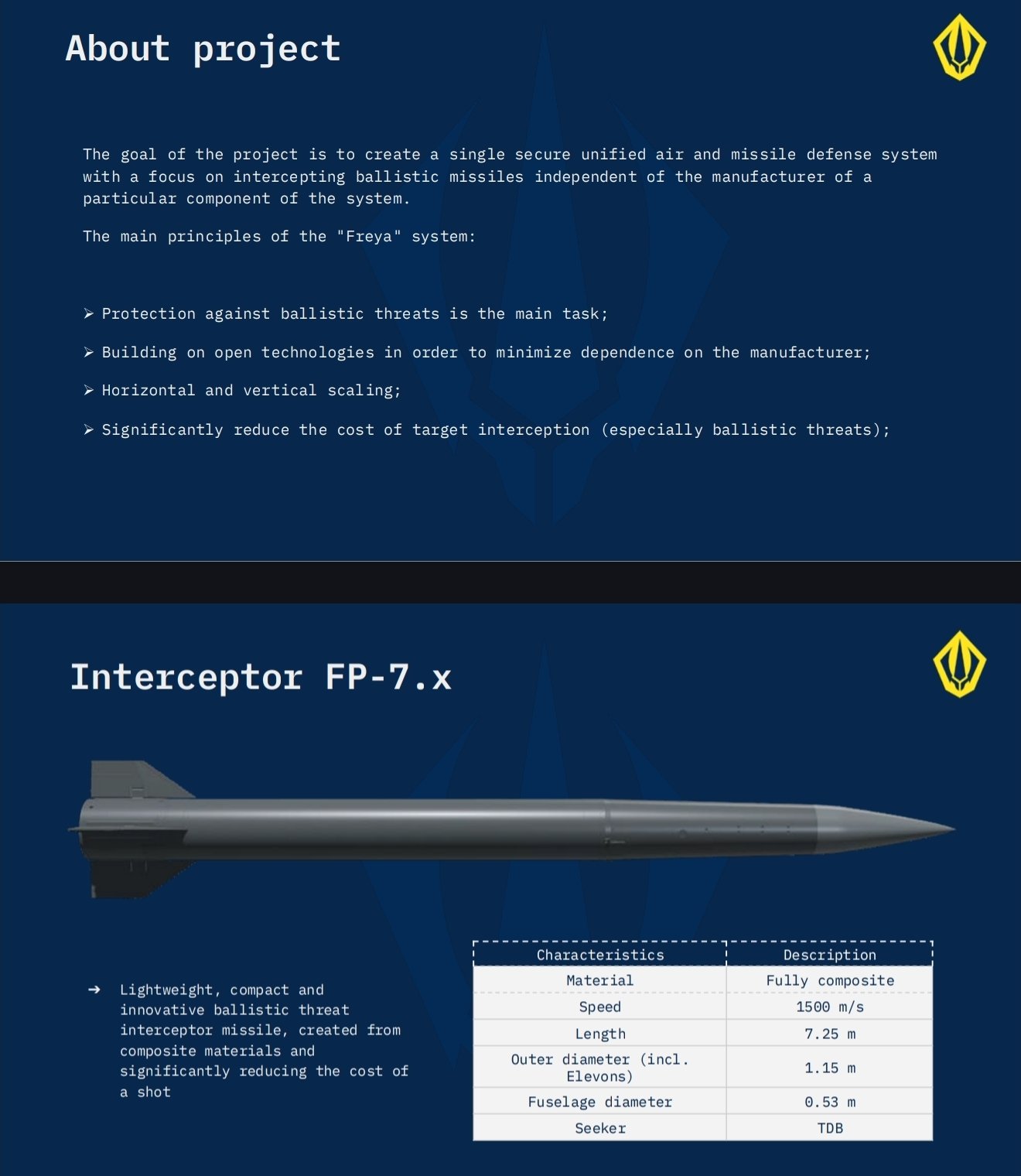
Ukraine have unveiled some more details of their plan for an indigenous anti-ballistic missile system
View: https://x.com/DenShtilierman/status/2054847010650439809
The plan is to use either a Saab Giraffe 8a or Thales GF-300/GM-400 surveillance radar, and a Wiebel GFTR 2100/80 or Leonardo KRONOS LAND tracking radar, coupled with a Ukrainian-made TEL carrying FP-7 interceptors, all interconnected with the wider air defence network through NATO Link 16.
Interesting that they are going with an IIR seeker (like THAAD or SM-3) rather than an active radar seeker like Patriot PAC 3
C2 system is listed as a modified Kongsberg FDC, presumably because Ukraine are familiar with it's capabilities as part of their NASAMS systems2 color or 1 color.
What C2 system? Wider air defense network isn't it. A poor C2 system can tank a missile defense system.
Unless it's WWIII, US isn't going to jettison anything political. It's gotten MUCH worse over the last 18 months.When you're fighting an actual war, you get to jettison the political considerations of design / procurement and focus on what's actually going to work.
[crossposted from the Ukraine war thread because it's also relevant here]
Ukraine have unveiled some more details of their plan for an indigenous anti-ballistic missile system
View: https://x.com/DenShtilierman/status/2054847010650439809
The plan is to use either a Saab Giraffe 8a or Thales GF-300/GM-400 surveillance radar, and a Wiebel GFTR 2100/80 or Leonardo KRONOS LAND tracking radar, coupled with a Ukrainian-made TEL carrying FP-7 interceptors, all interconnected with the wider air defence network through NATO Link 16.
Any source on that? The slides seemed to say that the actual seeker is still TBD...Interesting that they are going with an IIR seeker (like THAAD or SM-3) rather than an active radar seeker like Patriot PAC 3
Bottom of the 5th slide - "Seeker - Image Infra-Red advanced seeker developed together with Diehl Defence"[snip]
Any source on that? The slides seemed to say that the actual seeker is TBD...
Sorry about that, let me see if I can embed images via nitter.net[snip]
The chart is an eye chart and I can't get it to blow up, so I'm having to rely on others posting to see full details on what it says.
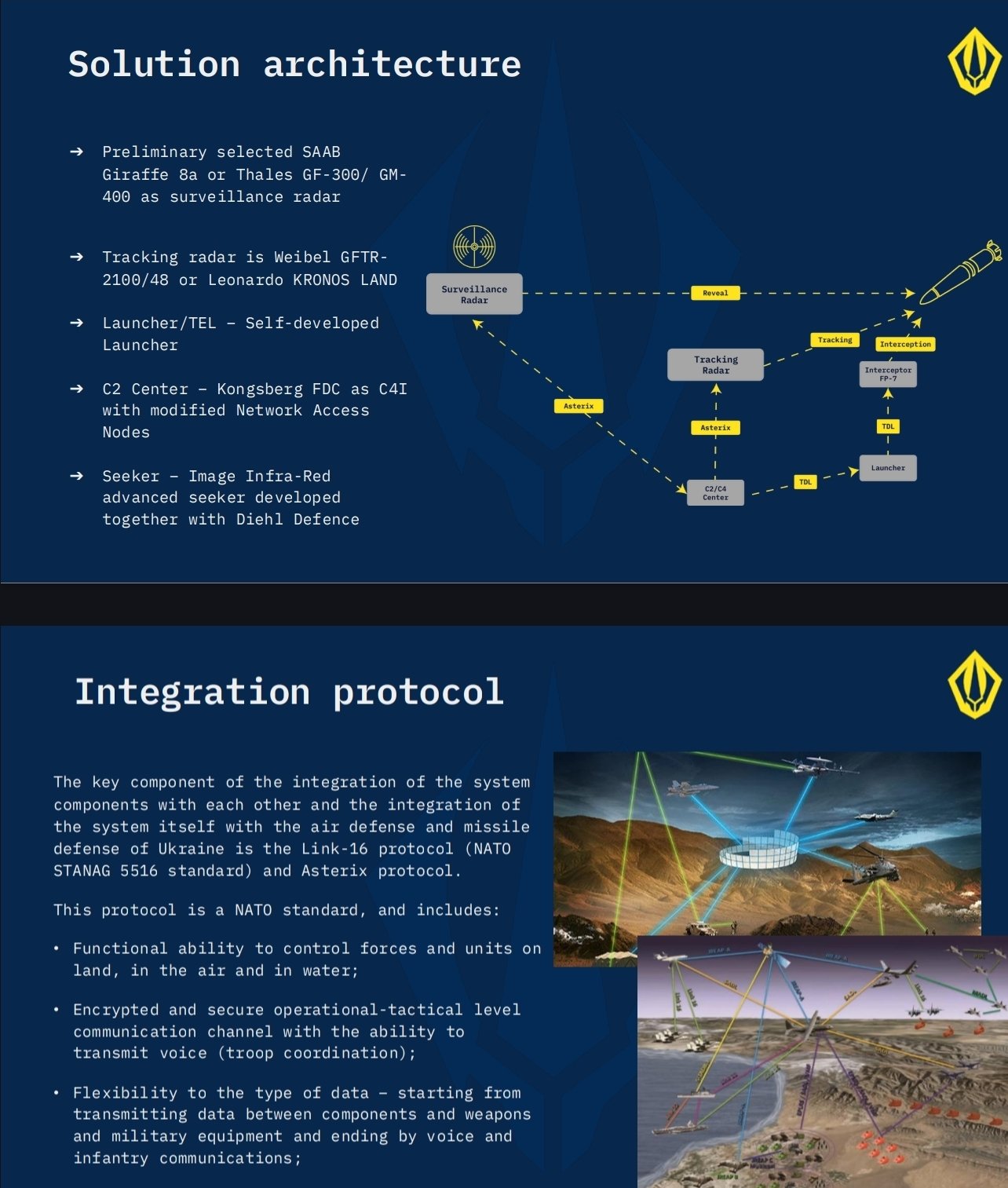
There is an upgrade to Link 16 designed for network enabled weapons. Called (cleverly enough) “Link 16 NEW”. It includes J-series messages tagged to have priority on the network.It says TDL from Launcher to Interceptor. Normally that is Tactical Data Link (i.e. Link 16/Link 22, etc). I sure the hell hope not. IME, that would be terrible. Link 16 barely sufficies to get a search queue over to meet timing and precision requirements. It's ill suited to an IFTU. Hopefully they are using that term generically. It's not the data sharing aspect, but TADIL links typically (especially 16) work similarly to token ring, i.e. you have to wait for your slot on the network to talk. Now it's been 2 decades since I worked directly on Link 16, but I'm pretty sure the architecture is the same.
I think, not sure, that we have access to Jane's at work. It's too damn expensive ($2K for ONE book) for individuals, but it is open sourced data - not classified. I'll see if I can find any relevant, sourced data. No promises though.
Makes sense, and I agree that selecting an existing one makes sense, it was just my prior experience with Link-16 did not seem to indicate it was an appropriate selection.There is an upgrade to Link 16 designed for network enabled weapons. Called (cleverly enough) “Link 16 NEW”. It includes J-series messages tagged to have priority on the network.
The full frame cycle on Link 16 takes 12 seconds, but “NEW” can allow for jumping into the network and getting updates through the network faster than that. Not sure I’ve ever seen reference to how fast, but the IFF subsystem on Link 16 — which is also prioritized — operates on something like a one to three second latency (depending on total traffic).
There are also systems which use proprietary waveforms to talk to inflight weapons and then connect to the broader network over Link 16. And those variously get marketed as Weapons Data Link (Collins) or Advanced Tactical Data Link (L3Harris), so I’m not sure how well the nomenclature is even nailed down at this point.
I guess the most important factor is that there are a number of off-the shelf options for how to communicate with a missile while also having the whole operation connected to a broader battle network. They’ve just got to source an appropriate one.
Yeah. The most relevant part of my post might be that the terminology for these mixed-protocol/mixed-waveform systems is all over the place, so the use of the abbreviation “TDL” might mean just about anything, as long as it’s got one Tx/Rx that can talk to the battle network.Makes sense, and I agree that selecting an existing one makes sense, it was just my prior experience with Link-16 did not seem to indicate it was an appropriate selection.
Then again, it could be something like TADIL J (Link 16 over ethernet).
PS - I once worked a program that was mandated to support the entire message set. Now understand - this was an AD system. The entire message set includes things specific to submarines as well, so unless we were going to put the AD system on the ocean floor and shoot down torpedoes, it didn't make a whole lot of sense.
I inquired. It requires a charge number and I'm about to spend program dollars on a personal question. Got asked why I wanted Janes when most of what we really used was classified. I just said I wanted an unclassified reference.I think, not sure, that we have access to Jane's at work. It's too damn expensive ($2K for ONE book) for individuals, but it is open sourced data - not classified. I'll see if I can find any relevant, sourced data. No promises though.


