
You are using an out of date browser. It may not display this or other websites correctly.
You should upgrade or use an alternative browser.
You should upgrade or use an alternative browser.
New data shows which states were more deadly for pedestrians in 2023
- Thread starter JournalBot
- Start date
Dark Jaguar
Ars Legatus Legionis
This obsession with homeless people seems to be hiding the actual cause. You don't need to be homeless to be a pedestrian, so why focus on it? This affects everyone trying to just walk to the other side.The worst pedestrian death rates are in the states that are warm enough for homeless people to live outdoors on the street all year long.
Upvote
22
(24
/
-2)
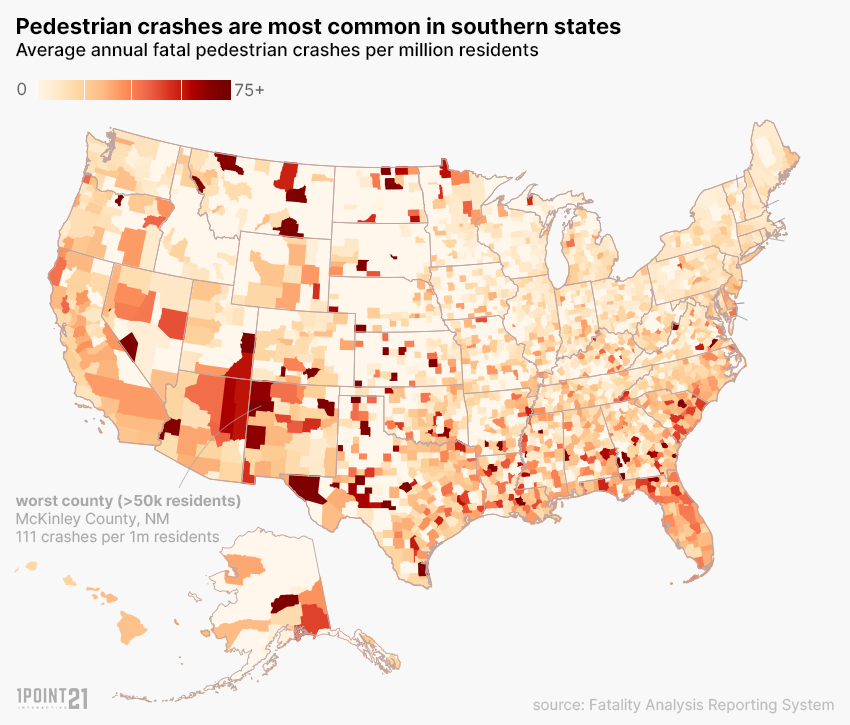
Late to the conversation. But if you separate things out by county. You'll see that pedestrian deaths still tend to happen more in "lower traffic regulation areas" of "blue states" such as California which "might lean political in one direction. That's not to say the "sun belt" mentioned in the article isn't also a major factor...Not quite the red & blue state graphic we're used to.
Upvote
1
(2
/
-1)
In cities with infrastructure built for cycling and pedestrians (meaning sidewalks and cycle paths, but also a lot of design features like raised crossings, continuous sidewalks, chicanes, modal filters, pedestrian islands and whatnot) and with good public transport (meaning frequent, punctual and extensive, and preferably rail-based or at least with dedicated bus lanes), people tend to use the car much less. This is especially true if the cities are built in such a way that there are many places nearby that you can get to without a car, meaning often mixed-use zoning, relatively dense housing, an abundance of small shops and other services and so on. You can see this all over the world.This is hyperbole. I live in Lancaster, OH (population around 40k) and while owning a car (and managing not to hate it) I bike all over the city for groceries, getting food to go, swinging by the library, visiting friends, grabbing coffee, etc and it works fine. During some dire years where I had less money and very unreliable transport, we went spans of time without a running car and just relied on walking and bikes and stuff.
Sure, some cities are just impossible to functionally bike in, but the US is rife with plenty of 'not-Manhattan' cities that are bikeable (and I've stayed extended periods of time in Manhattan so it's not like I haven't experience living completely without a car), but anti-car people just don't like the fact that plenty of people live in bikeable locations but prefer to drive cars, even for things they can easily bike to.
Your hometown (which I didn't know and just looked up) doesn't seem to have any of that infrastructure, and seems rather sprawling for its population... So maybe getting around not by car there isn't all that nice, is it? I mean, I don't doubt it's doable and you do it, but if other people don't it's probably not just because they like driving.
Also, if you can commute to work easily without a car, owning a car becomes a rather unnecessary luxury and often a burden more than a pleasure, given the costs involved. If a significant chunk of the population of your hometown sees driving as a luxury, the city's businesses and services will likely be less accommodating to driving. On the other hand, if you already have a car you've paid or are paying for (and insurance for it a place to park it), and the place you're going to has free parking, then the the marginal cost (in terms of both money and effort) of taking it on one more trip is low. So, do people in your hometown really prefer driving, or is it that they have to drive to work and thus have a car at home, and everything in the town caters to driving, and at that point they think they might as well drive to other places too?
Upvote
9
(11
/
-2)
Actually I was listening to NPR the other day and they had an investigative journalist make a strong case that it's more likely to be touch screens controlling everything in your car so you have to take your eyes off the road to do anything, and also pedestrians distracted by their phones walking into traffic. Traffic fatalities have gone up almost completely at night as well, so there could be a connection to night-vision being spoiled by in car displays and those crazy new bluish headlights blinding everyone.One important thing not mentioned here - vehicle size and weight. Smaller, lighter vehicles both have better ability to spot pedestrians, and are less likely to kill them when there's a collision.
Upvote
6
(6
/
0)
Post content hidden for low score.
Show…

Climate change is going to solve that problem soon enough. Walking outside will require protective gear.the report points out that these states have both warmer climates, which prompt more people to walk
Upvote
-6
(0
/
-6)
truth serum
Ars Tribunus Militum
This obsession with homeless people seems to be hiding the actual cause. You don't need to be homeless to be a pedestrian, so why focus on it? This affects everyone trying to just walk to the other side.
Because the areas with the most homeless.are pushing for the surveillance systems the hardest. (eg. The Bay Area)
Upvote
-15
(1
/
-16)
Its a simple statistic. How likely are you to die from human-caused violence based on where you live. Often the rural and suburban areas are selected as winners in this metric because traffic fatalities are usually ignored in favor of reporting crime."* I understand that these are all motor vehicle-caused fatalities, not just pedestrian fatalities as described in the article. But it is still a relevant metric."
It's less than relevant. It's misleading. ... Comparing snowy mountainous roads to urban driving. Yeah no.
But statistically speaking, the more car-dominated a place is, the more likely there are to be fatalities caused by motor vehicles. It makes perfect sense... more miles driven per capita is going to lead to more deaths per capita. The statistics that I pointed out show that it is not always better to avoid urban areas in favor of rural ones if safety is your primary decision making metric.
It doesn't matter why a person died due to a motor vehicle if the metric is safety. You can list "mitigating" factors all you want... but if you drive more miles, you are more likely to be a victim of traffic violence. Plain and simple. And if you live someplace where driving is an absolute necessity, then you are, by necessity, putting yourself at greater risk of being involved in a fatal crash.
This does not mean people should necessarily live in an urban environment. People should live someplace that appeals to them and works for their best lives. For many that is a suburban lifestyle. For many that is a rural lifestyle. And that is fantastic. Find your happy place and make yourself at home there for as long as possible.
But don't hand wave away traffic fatalities as though they were "excused". Living someplace that is dominated by car oriented land use planning is a significant threat to the health and safety of people who choose to live there. It may be a choice that people will make regardless - that is entirely fine - but it should be a choice. Not some "hidden secret" that we pretend does not exist.
Upvote
11
(13
/
-2)
jessedouglas
Wise, Aged Ars Veteran
You've obviously never driven in a pickup truck where visibility is greatly improved over passenger vehicles. You can literally see over the tops of passenger vehicles.
Lot of good that does for pedestrians you can't even see in the blindspot in front of your own grill.
Upvote
14
(15
/
-1)
Paying attention goes both ways. At some point after that many issues, did you not consider also checking to see if the road was safe to cross?As a kid growing up in the South Bay Area of California, I just assumed getting hit by cars was normal. Up through college until I started driving and not walking or riding a bike so much, I think I've been hit by no less than 10 cars. Majority of them from someone turning right from a light that just turned green while I began walking in a crosswalk, but probably a 1/3 of them being hit while I was on my bike. I'd say about 1/2 of them actually checked if I was OK, with the other 1/2 just driving off like nothing ever happened or they just stole something.
People simply don't look or they just don't care. They're 100% fixated on traffic from the left, then just blindly turn. I learned to minimize it as much as I could by going out of my way to walk behind a vehicle rather than in front of it. But even then, I had a car back into me. ¯\(ツ)/¯
Upvote
-12
(3
/
-15)
stormspace9
Ars Praetorian
Not surprised at all about this. I am surprised that my state isn't higher in the list, mainly due to the stupid "squat" that seems to be very popular with kids and their SUV's and Trucks. Fortunately it's been outlawed even though I still see them on the road.How this has played out is now other people will get vehicles that are higher off the ground and bigger to feel "safer". And thus you have this spiral where we get bigger and bigger vehicles that are worse and worse for pedestrians. On top of that, these cars are even less efficient since you're packing less people into more space, which in aggregate makes traffic worse.
So it's just worse for everyone.
Upvote
-2
(0
/
-2)
Post content hidden for low score.
Show…
cyberpenguin
Ars Praetorian
At least here in Albuquerque one significant issue are addicts oblivious to their surroundings and walking, running, or stumbling regularly into traffic. This is backed by statistics of incidents clustered around the worst fentanyl campsites like the now-closed Coronado park area.This obsession with homeless people seems to be hiding the actual cause. You don't need to be homeless to be a pedestrian, so why focus on it? This affects everyone trying to just walk to the other side.
A prevalence of these incidents occurred as people would camp on 2 foot medians in the middle of traffic, which led to the city ordinance that you can't hang out on center medians 4 feet or less in width. It also led to the closure of lanes next to sidewalks (Central from Eubank to Tramway) to allow drivers more time to respond to people suddenly running off the sidewalk and into 40mph traffic.
This isn't a "homeless" issue as much as it is a fentanyl encampment issue.
Additionally, as noted in the article New Mexico was the leader in pedestrian death rates nationally. New Mexico's rates are driven by Albuquerque, and Albuquerque's rates statistically are very much driven by the fentanyl encampments.
Last edited:
Upvote
0
(8
/
-8)
truth serum
Ars Tribunus Militum
At least here in Albuquerque one significant issue are addicts oblivious to their surroundings and walking, running, or stumbling regularly into traffic. This is backed by statistics of incidents clustered around the worst fentanyl campsites like the now-closed Coronado park area.
A prevalence of these incidents occurred as people would camp on 2 foot medians in the middle of traffic, which led to the city ordinance that you can't hang out on center medians 4 feet or less in width. It also led to the closure of lanes next to sidewalks (Central from Eubank to Tramway) to allow drivers more time to respond to people suddenly running off the sidewalk and into 40mph traffic.
This isn't a "homeless" issue as much as it is a fentanyl encampment issue.
Additionally, as noted in the article New Mexico was the leader in pedestrian death rates nationally. New Mexico's rates are driven by Albuquerque, and Albuquerque's rates statistically are very much driven by the fentanyl encampments.
This right here.
If I could upvote this twice I would.
Upvote
-11
(1
/
-12)
I'll be honest, I have no idea what you are trying to say. You throw out a lot of words that don't really manage to convey even a single coherent idea.That's all just noise regarding the subject matter of the Ars article above. It does more harm than good. By obfuscating what's really going on and what's really happening with regards to pedestrian deaths and what the government response is to the matter.
Death by a thousand cuts. Overload the subject with so much irrelevant information one just throws up their hands and walks away. Meanwhile the corrupt local governments continue doing what they are doing. All hidden behind an impenetrable wall of white noise.
What exactly is going on that I am obfuscating?
You mention "the government response" to the matter. What is that (that I am obfuscating) in your opinion?
What are the other thousand cuts, and what kind of a death are they creating? Is it the death of discourse on the subject of motor vehicle violence? Or something else that is being killed? The phrase is not connected to anything. It's just a sound bite until you elaborate.
As far as overloading "the subject"... Are you saying that talking about fatalities due to motor vehicles is so wildly distinct from pedestrian fatalities due to motor vehicles that we should never utter both in the same breath? Do you think they are unrelated?
And I have no idea what "corruption" you are fighting against. Specify what you mean instead of throwing out catch-phrases. Better yet, substantiate what you are talking about with some numbers or - at the very least - anecdotes so that we at least have some idea. Right now you could be a right-wing conspiracy theorist (statistically more likely) or a left-wing one (less likely, but not impossible). Or you could have a legitimate case... but just throwing out jargon and catchphrases is just "noise" (to use your own term).
Upvote
13
(13
/
0)
truth serum
Ars Tribunus Militum
I'll be honest, I have no idea what you are trying to say. You throw out a lot of words that don't really manage to convey even a single coherent idea.
What exactly is going on that I am obfuscating?
You mention "the government response" to the matter. What is that (that I am obfuscating) in your opinion?
What are the other thousand cuts, and what kind of a death are they creating? Is it the death of discourse on the subject of motor vehicle violence? Or something else that is being killed? The phrase is not connected to anything. It's just a sound bite until you elaborate.
As far as overloading "the subject"... Are you saying that talking about fatalities due to motor vehicles is so wildly distinct from pedestrian fatalities due to motor vehicles that we should never utter both in the same breath? Do you think they are unrelated?
And I have no idea what "corruption" you are fighting against. Specify what you mean instead of throwing out catch-phrases. Better yet, substantiate what you are talking about with some numbers or - at the very least - anecdotes so that we at least have some idea. Right now you could be a right-wing conspiracy theorist (statistically more likely) or a left-wing one (less likely, but not impossible). Or you could have a legitimate case... but just throwing out jargon and catchphrases is just "noise" (to use your own term).
The guy above from New Mexico is the hero of this thread. Saying like it is. 100% relevant to what is happening and what I have been talking about in my posts.
You want to know what I mean in my posts? Read Cyberpenguins post and put 3 and 2 together.
Upvote
-19
(1
/
-20)

IPunchCholla
Ars Scholae Palatinae
Well the worst counties in the nation are coincident with the Navajo Nation and El Paso. Those are atypical of most rural and urban settings. The Navajo Nation is due to people being struck while walking on the verge of highways, often by drunk drivers, as they walk to and from border towns. The issue there is a complete lack of pedestrian infrastructure, poverty, and alcoholism (Basically the legacy of colonialism). In El Paso, I believe the issue is migrants and the highway/freeways they are crossing to get into the US.Late to the conversation. But if you separate things out by county. You'll see that pedestrian deaths still tend to happen more in "lower traffic regulation areas" of "blue states" such as California which "might lean political in one direction. That's not to say the "sun belt" mentioned in the article isn't also a major factor...
Pedestrian deaths in rural areas are likely to have different causes than in urban areas and solutions will have little to do with red state/blue state differences.
Upvote
8
(8
/
0)
I'm not a road safety expert (nor am I really local politics across the US) I'm guessing the lack of sidewalks and traffic calming features (medians, chicanes, etc) is probably a big issue in both "urban" (not talking dense urban core more like smaller urban areas and suburban) and sparse rural areas (driving through the mountains the US state road is also basically the primary road in many towns), and lack of funding is probably a issue everywhere... although I in rural areas there might be more social/political resistance to say intentionally adding curves to a road to prevent people from blasting down them at high speed.Well the worst counties in the nation are coincident with the Navajo Nation and El Paso. Those are atypical of most rural and urban settings. The Navajo Nation is due to people being struck while walking on the verge of highways, often by drunk drivers, as they walk to and from border towns. The issue there is a complete lack of pedestrian infrastructure, poverty, and alcoholism (Basically the legacy of colonialism). In El Paso, I believe the issue is migrants and the highway/freeways they are crossing to get into the US.
Pedestrian deaths in rural areas are likely to have different causes than in urban areas and solutions will have little to do with red state/blue state differences.
Upvote
5
(5
/
0)
IPunchCholla
Ars Scholae Palatinae
This is a real problem in Albuquerque. My wife cam within a beard-second of hitting someone who just stumbled into traffic on Louisiana (a 6 lane arterial with a 40 MPH speed limit).At least here in Albuquerque one significant issue are addicts oblivious to their surroundings and walking, running, or stumbling regularly into traffic. This is backed by statistics of incidents clustered around the worst fentanyl campsites like the now-closed Coronado park area.
A prevalence of these incidents occurred as people would camp on 2 foot medians in the middle of traffic, which led to the city ordinance that you can't hang out on center medians 4 feet or less in width. It also led to the closure of lanes next to sidewalks (Central from Eubank to Tramway) to allow drivers more time to respond to people suddenly running off the sidewalk and into 40mph traffic.
This isn't a "homeless" issue as much as it is a fentanyl encampment issue.
Additionally, as noted in the article New Mexico was the leader in pedestrian death rates nationally. New Mexico's rates are driven by Albuquerque, and Albuquerque's rates statistically are very much driven by the fentanyl encampments.
However, The worst counties for pedestrian collisions (as posted in the map upthread) are the counties that encompass the Navajo Nation. The underlying issue is still poverty and drugs (including alcohol).
The fentanyl addiction crises is terrifying. I don’t have any great solutions, but managing the encampments differently (location/sanitation) might be a place to start. I understand the sanitation issues, violence, and maintenance issues, but just closing the parks to the encampments seems to move the people who had been there to the arterials. The one that really struck me was the closure of Phil Chacon. Now all of those people seem to be on Central, San Mateo, or Louisiana. At least at the park they were away from arterials.
Edit:FUAC
Upvote
3
(4
/
-1)
Got it.The guy above from New Mexico is the hero of this thread. Saying like it is. 100% relevant to what is happening and what I have been talking about in my posts.
You want to know what I mean in my posts? Read Cyberpenguins post and put 3 and 2 together.
Pedestrians are killed because they are at fault. Nothing to do with cars driving at 40+ mph where people are. Nothing to do with a city designed so that you need to be in a car to engage in every day life. Nothing to do with traffic engineers designing cities to speed up traffic. Nothing to do with mixing human activities and roads designed for high speeds. Nothing to do with automobile manufacturers selling larger and larger vehicles with bigger blindspots and worse pedestrian safety features. Nothing to do with a lack of regulations as to what a car or truck is allowed to do to a human body when they inevitably come together. Nothing to do with drunk driving, or speeding, or turning right on red when not looking or coming to a complete stop, or sweeping corners that allow higher speed turns, or shortened walk timing, or lack of signals, or lack of proper driver training, or anything like that.
It's the pedestrians. Homeless, drug using, immigrant pedestrians.
Got it.
Upvote
19
(24
/
-5)
IPunchCholla
Ars Scholae Palatinae
Nor am I. I spend a lot of time walking in Albuquerque. It is safest where traffic calming has been implemented. Walking along any of the arterials is pretty terrifying. Making it so one didn’t HAVE to walk along/cross arterials for basic necessities would go a long way to improving things. But I think some of it is just cultural. I spent a month walking at night in rural Wales on narrow roads with absolutely no pedestrian infrastructure. It felt much safer than in the US since drivers slowed down significantly as soon as they saw a pedestrian and gave plenty of room when passing (even is it meant waiting for oncoming traffic to pass. In Albuquerque at least, it always feels like people view having to slow down at all a punishment worse than death. Stop lights? Forget about it.I'm not a road safety expert (nor am I really local politics across the US) I'm guessing the lack of sidewalks and traffic calming features (medians, chicanes, etc) is probably a big issue in both "urban" (not talking dense urban core more like smaller urban areas and suburban) and sparse rural areas (driving through the mountains the US state road is also basically the primary road in many towns), and lack of funding is probably a issue everywhere... although I in rural areas there might be more social/political resistance to say intentionally adding curves to a road to prevent people from blasting down them at high speed.
Upvote
10
(10
/
0)
stormspace9
Ars Praetorian
Sigh. Unless someone lays down in front of any vehicle while it's stopped, you have plenty of time to react when they step out in front of your moving vehicle. You can clearly see them in the road or at the roadside and anticipate their suicidal move at city or highways speeds. In fact, as a previous poster mentioned, you can even see them beyond the car in front of you. As for being behind a large vehicle, yes it does suck, but you are supposed to be watching it's brake lights, not seeing what's in front of it. You should also be following at a safe distance so you have time to stop should it come to an abrupt stop. As for tint, I've only driven in a compact car with tint and you can see out of it just fine even if those outside can't see in.Yes, you can.
Sadly those passenger vehicles, along with pedestrians and cyclists, can no longer see anything.
Apart from increased ride height, see also the very negative visibility effects of default-dark-tint windows and the prevalent SUV designs no longer having having a trunk/boot that you can see over. The modern vehicle landscape is so opaque!
The only issue with size I'm aware of is when backing in an older car without a camera, trucks especially so. Even small cars have problems in that regard with their small rear windows.
Upvote
-18
(2
/
-20)
stormspace9
Ars Praetorian
So it was fiction.As always, Arthur C. Clarke has been there before!
In his short story "History Lesson", venusian archeologists explore the Earth 5.000 years after mankind has perished in the 20th century..
They are only able to retrieve a single artifact that gives them a deeper understanding on how humans looked and acted: A film reel!
After they figure out how to project it onto a screen, here's how Clarke describes what they see:
"Then came a furious drive over miles of country in a four wheeled mechanical device which was capable of extraordinary feats of locomotion. The ride ended in a city packed with other vehicles moving in all directions at breathtaking speeds. No one was surprised to see two of the machines meet head-on with devastating results."
Unfortunately, the reel ends with a line of text they are never able to decipher:
"............. A Walt Disney Production ............"

Upvote
-9
(0
/
-9)
stormspace9
Ars Praetorian
At 20mph, you are driving down the street in 1st or 2nd gear with a manual transmission. That's not going to be very fuel efficient.Or, you know.,. don't jaywalk?
20mph is absolutely ridiculous.. and contrary to good engineering practice which is to set the speed limit at the 85th percentile.
Upvote
-17
(4
/
-21)
This. Trucks are murder machines. WAY more likely to kill someone with your giant ass 4 foot high grill than driving a car. Yet both are basically commuting vehicles....One important thing not mentioned here - vehicle size and weight. Smaller, lighter vehicles both have better ability to spot pedestrians, and are less likely to kill them when there's a collision.
Upvote
9
(11
/
-2)
stormspace9
Ars Praetorian
I also like the way he equated 1 Homicide to 1 Traffic Fatality. I have control over where I walk, I don't have control of a nut out to kill someone.….you’re completely ignoring that the total fatalities in Wyoming occurred over an area roughly 730x larger than the city of Portland.
Upvote
-14
(2
/
-16)
None of this is true.Sigh. Unless someone lays down in front of any vehicle while it's stopped, you have plenty of time to react when they step out in front of your moving vehicle. You can clearly see them in the road or at the roadside and anticipate their suicidal move at city or highways speeds. In fact, as a previous poster mentioned, you can even see them beyond the car in front of you. As for being behind a large vehicle, yes it does suck, but you are supposed to be watching it's brake lights, not seeing what's in front of it. You should also be following at a safe distance so you have time to stop should it come to an abrupt stop. As for tint, I've only driven in a compact car with tint and you can see out of it just fine even if those outside can't see in.
The only issue with size I'm aware of is when backing in an older car without a camera, trucks especially so. Even small cars have problems in that regard with their small rear windows.
Higher hood heights mean you can see less in front of your car.
https://www.consumerreports.org/car-safety/the-hidden-dangers-of-big-trucks/https://www.indiatimes.com/auto/cur...his-highlights-a-disturbing-issue-504387.html
Higher hood heights mean when you collide with a pedestrian, worse injuries are sustained.
https://www.theautopian.com/full-si...it found that pickups,of 30 inches and below.
Heavier cars take a longer distance to stop. Faster cars take a longer distance to stop.
https://sgi.sk.ca/air-brake/-/knowledge_base/air-brake/speed-weight-distance
Ultimately the reality is that as cars have gotten bigger, pedestrian and cyclist injuries have gotten worse. It isn't surprising. A bigger car with a bigger blind spot will do more damage (and be more likely to be involved in an accident).
Upvote
18
(21
/
-3)
Argue with statistics all you want. Traffic fatalities per 100K are greater in rural areas than in urban ones.I also like the way he equated 1 Homicide to 1 Traffic Fatality. I have control over where I walk, I don't have control of a nut out to kill someone.
If you are concerned about safety, you have to consider traffic safety as well. Simple as that.
Upvote
15
(18
/
-3)
artvandelayIIII
Ars Tribunus Militum
And daylighting. You need a certain distance from the crosswalk kept clear of parked cars (and especially trucks) so people can see cars and vice-versa.But with tall vehicles often parked close to the lines, midblock crossings do need to be equipped with some form of signaling (says Captain Obvious), and hopefully a curb bulb to punish the 1:10 drivers who didn't get good parenting.
Upvote
11
(12
/
-1)
stormspace9
Ars Praetorian
Are you walking in the middle of the street? Stepping out in front of moving vehicles? If the car drives over the curb or onto the shoulder, then fine, but I'm looking out for those 1 ton death machines when I'm crossing the road.It's appalling how far behind Europe the US has fallen on this.
It's especially bad when you consider that Americans don't walk very much compared to Europeans, and yet still get killed at a far higher rate.
In fact, on a "per mile walked" basis, you are 5 to 10 times more likely to be killed in a collision as a pedestrian compared to the United Kingdom, Germany, Denmark, and the Netherlands. (see here).
Upvote
-18
(2
/
-20)
IPunchCholla
Ars Scholae Palatinae
The biggest problem with big trucks is they are far more likely to kill somone, if there is a collision.Sigh. Unless someone lays down in front of any vehicle while it's stopped, you have plenty of time to react when they step out in front of your moving vehicle. You can clearly see them in the road or at the roadside and anticipate their suicidal move at city or highways speeds. In fact, as a previous poster mentioned, you can even see them beyond the car in front of you. As for being behind a large vehicle, yes it does suck, but you are supposed to be watching it's brake lights, not seeing what's in front of it. You should also be following at a safe distance so you have time to stop should it come to an abrupt stop. As for tint, I've only driven in a compact car with tint and you can see out of it just fine even if those outside can't see in.
The only issue with size I'm aware of is when backing in an older car without a camera, trucks especially so. Even small cars have problems in that regard with their small rear windows.
The visibility issue is almost always with children, hundreds of whom have been killed because the driver couldn’t see them. Often these are the driver’s children playing in the driveway, when the driver starts their vehicle.
It’s why I call those trucks with really aggressive hoods, progeny juicers.
https://www.theverge.com/2023/11/14/23960624/truck-suv-hood-height-pedestrian-death-report-iihs
Last edited:
Upvote
9
(11
/
-2)
I lived in Las Vegas for 3 years in the late '90s. I was shocked, (well, not that shocked) that there had to be a Public Service Announcement on TV telling drivers that they should stop for red lights.I started walking to school in 1st grade, crossing 2 busy streets with no crosswalks. Most kids in my school did the same. It's really not that hard if you look both ways before crossing.
Why I was able to do this at age 7 while the grown-ass adults I see every day dodging traffic -- instead of using a crosswalk or waiting for a lull -- can't do the same will forever remain a mystery to me. Today I live in Vegas and the things I see pedestrians do even when they have a DO NOT CROSS sign is ridiculous.
Stupidity kills.
Upvote
5
(5
/
0)
artvandelayIIII
Ars Tribunus Militum
Tinting is shit for that exact reason. Other road users can't see whether you're looking their direction, or the other way, or just dicking around on your phone. I would love to see laws against tinted windows strengthened and vigorously enforced. It also happens (big surprise) that the people who tint their windows heavily are often the biggest assholes on the road.As for tint, I've only driven in a compact car with tint and you can see out of it just fine even if those outside can't see in.
Upvote
15
(16
/
-1)
Post content hidden for low score.
Show…
stormspace9
Ars Praetorian
You are completely ignoring the fact that at road speeds someone would have to literally step out directly in front of you, from hiding, for you not to see them in the 10' or so space in front of a high profile vehicle. I can clearly see people from as far away as 100 yards on the side of the road and if they step out onto the road I have plenty of time to slow down or stop.None of this is true.
Higher hood heights mean you can see less in front of your car.
https://www.consumerreports.org/car-safety/the-hidden-dangers-of-big-trucks/https://www.indiatimes.com/auto/cur...his-highlights-a-disturbing-issue-504387.html
Higher hood heights mean when you collide with a pedestrian, worse injuries are sustained.
https://www.theautopian.com/full-si...it found that pickups,of 30 inches and below.
Heavier cars take a longer distance to stop. Faster cars take a longer distance to stop.
https://sgi.sk.ca/air-brake/-/knowledge_base/air-brake/speed-weight-distance
Ultimately the reality is that as cars have gotten bigger, pedestrian and cyclist injuries have gotten worse. It isn't surprising. A bigger car with a bigger blind spot will do more damage (and be more likely to be involved in an accident).
Upvote
-17
(2
/
-19)
artvandelayIIII
Ars Tribunus Militum
Challenge yourself to consider a scenario where you are "looking out" but get hit anyway by a driver making a reckless maneuver that puts you in their path. Happens fucking constantly.Are you walking in the middle of the street? Stepping out in front of moving vehicles? If the car drives over the curb or onto the shoulder, then fine, but I'm looking out for those 1 ton death machines when I'm crossing the road.
Upvote
13
(14
/
-1)
Dark Jaguar
Ars Legatus Legionis
Let me add to that. The new LED headlights aren't blinding in proper receptacles, that is cars actually designed for them, but when someone buys them as replacements for cars with headlights positioned and set with incandescent in mind, that's when they end up blinding us all like they've got high beams on. People need to learn to buy the proper lights for the car they have.Actually I was listening to NPR the other day and they had an investigative journalist make a strong case that it's more likely to be touch screens controlling everything in your car so you have to take your eyes off the road to do anything, and also pedestrians distracted by their phones walking into traffic. Traffic fatalities have gone up almost completely at night as well, so there could be a connection to night-vision being spoiled by in car displays and those crazy new bluish headlights blinding everyone.
Upvote
7
(8
/
-1)
because libertarians/republikkkans love to blame the homeless and the poor for problems. Its their fault they are homless afterall. They like to pretend homelessness rates are metric for why blue states are bad. Which ignores the fact that red states produce alot of homeless people - who then flee to blue states for the saftey net. Red states are openly hostile to homeless people, even though they are the environments that encourage and produce poor people.This obsession with homeless people seems to be hiding the actual cause. You don't need to be homeless to be a pedestrian, so why focus on it? This affects everyone trying to just walk to the other side.
Note - they also ignore homeless in red states, because fox news doesn't have endless stories about those
edit: There seems to be alot of posts here where they think its the responsibility of pedestrians to make sure a truck driver doesn't murder them. Shouldn't the person driving the huge vehicle be responsible for thier actions? I know the gop has been actively fleeing from the idea of personal responsibility lately, but still!
Last edited:
Upvote
8
(10
/
-2)
Dark Jaguar
Ars Legatus Legionis
Good, you're a safe driver, but some of the drivers on the road are not safe. Or to put it another way:You are completely ignoring the fact that at road speeds someone would have to literally step out directly in front of you, from hiding, for you not to see them in the 10' or so space in front of a high profile vehicle. I can clearly see people from as far away as 100 yards on the side of the road and if they step out onto the road I have plenty of time to slow down or stop.
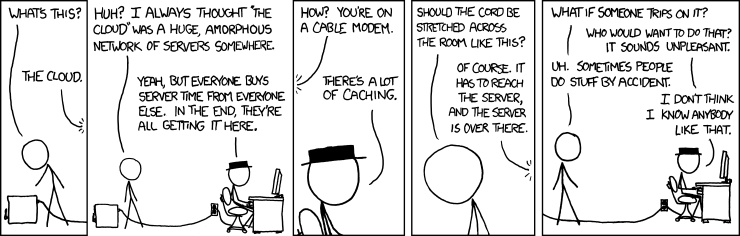
Sometimes people do stuff by accident. Should someone have to die for that?
Upvote
9
(11
/
-2)