
You are using an out of date browser. It may not display this or other websites correctly.
You should upgrade or use an alternative browser.
You should upgrade or use an alternative browser.
Feds indict a leading Bitcoin exchange for money laundering
- Thread starter JournalBot
- Start date
- Status
- You're currently viewing only Nowicki's posts. Click here to go back to viewing the entire thread.
- Not open for further replies.
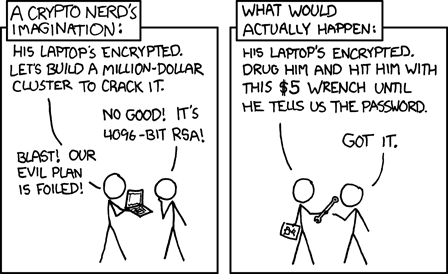
Sending money overseas is a market that overcharges a ton, and the big players they push out smaller players in the market. Crypto currencies have saved a lot of money for poor families sending money to poorer families in other countries. There are legitimate markets that benefit from these types of decentralized currencies, but they are not very obvious to a lot of people.I always get hate about it, but virtual currency really is nothing more than a haven for criminals and investors with more money than sense.
I get that people don't like having the government tracking their purchases and such, but currency rules exist not JUST for the convenience of the government, but to help control this kind of thing. Given the nature of virtual currency, it just way too easily lends itself to both attracting the criminal elements, and being targeted by the government (name any government) for much closer scrutiny for even relatively minor activity that would otherwise have gone under the radar.
I mean, people are entitled to do what they want with respect to using this kind of stuff, but when you wrap yourself up in a cloak of invisibility in order to give a gigantic, invisible, up-right middle finger to the government, it's difficult for any person to imagine that your intentions are always going to be perfectly legal and honorable. And in a scheme like this, where criminals are along side non-criminals in using the services, YOUR "money" is in as much danger of seizure or loss as theirs.
Where will that fine come from to be paid? Transaction fees? And what will this rather huge amount do to impact the value of bitcoins that will hit people NOT involved in crimes?
As a risk venture, bitcoins are probably a decent investment if you can afford to lose it (either by devaluation or straight-up loss). But I sure as hell wouldn't use them for purchases, nor put my life savings into them. YMMV on that, but for me, it's too fraught with risk with no actual advantage I can see.
Upvote
29
(36
/
-7)
unless they spent the money when it was received because it was needed at that time, thus saving more money by offsetting the transactional fees, and or gaining money by its upward trend.If you were sending money to your poor family, you would be criminally stupid to use any cryptocurrency that can lose its value because the wrong person sneezed at the wrong time.Sending money overseas is a market that overcharges a ton, and the big they push out smaller players in the market. Crypto currencies have saved a lot of money for poor families sending money to poorer families in other countries. There are legitimate markets that benefit from these types of decentralized currencies, but they are not very obvious to a lot of people.I always get hate about it, but virtual currency really is nothing more than a haven for criminals and investors with more money than sense.
I get that people don't like having the government tracking their purchases and such, but currency rules exist not JUST for the convenience of the government, but to help control this kind of thing. Given the nature of virtual currency, it just way too easily lends itself to both attracting the criminal elements, and being targeted by the government (name any government) for much closer scrutiny for even relatively minor activity that would otherwise have gone under the radar.
I mean, people are entitled to do what they want with respect to using this kind of stuff, but when you wrap yourself up in a cloak of invisibility in order to give a gigantic, invisible, up-right middle finger to the government, it's difficult for any person to imagine that your intentions are always going to be perfectly legal and honorable. And in a scheme like this, where criminals are along side non-criminals in using the services, YOUR "money" is in as much danger of seizure or loss as theirs.
Where will that fine come from to be paid? Transaction fees? And what will this rather huge amount do to impact the value of bitcoins that will hit people NOT involved in crimes?
As a risk venture, bitcoins are probably a decent investment if you can afford to lose it (either by devaluation or straight-up loss). But I sure as hell wouldn't use them for purchases, nor put my life savings into them. YMMV on that, but for me, it's too fraught with risk with no actual advantage I can see.
There were homeless people who regretted buying food with it when it jumped to $300 a coin, i bet they are kicking themselves with steel boots now.
Upvote
-14
(4
/
-18)
My point is, if you can't afford to lose the money you don't deal with BTC. You don't use it to send money "to your poor family". There have been severe crashes in the past where BTC has lost over 80% of its value over a period of minutes. If you ask me, anyone sending indispensable funds over BTC has very little sense. Anyone investing sums they can't afford to lose in BTC has very little sense.unless they spent the money when it was received because it was needed at that time, thus saving more money by offsetting the transactional fees, and or gaining money by its upward trend.If you were sending money to your poor family, you would be criminally stupid to use any cryptocurrency that can lose its value because the wrong person sneezed at the wrong time.Sending money overseas is a market that overcharges a ton, and the big they push out smaller players in the market. Crypto currencies have saved a lot of money for poor families sending money to poorer families in other countries. There are legitimate markets that benefit from these types of decentralized currencies, but they are not very obvious to a lot of people.I always get hate about it, but virtual currency really is nothing more than a haven for criminals and investors with more money than sense.
I get that people don't like having the government tracking their purchases and such, but currency rules exist not JUST for the convenience of the government, but to help control this kind of thing. Given the nature of virtual currency, it just way too easily lends itself to both attracting the criminal elements, and being targeted by the government (name any government) for much closer scrutiny for even relatively minor activity that would otherwise have gone under the radar.
I mean, people are entitled to do what they want with respect to using this kind of stuff, but when you wrap yourself up in a cloak of invisibility in order to give a gigantic, invisible, up-right middle finger to the government, it's difficult for any person to imagine that your intentions are always going to be perfectly legal and honorable. And in a scheme like this, where criminals are along side non-criminals in using the services, YOUR "money" is in as much danger of seizure or loss as theirs.
Where will that fine come from to be paid? Transaction fees? And what will this rather huge amount do to impact the value of bitcoins that will hit people NOT involved in crimes?
As a risk venture, bitcoins are probably a decent investment if you can afford to lose it (either by devaluation or straight-up loss). But I sure as hell wouldn't use them for purchases, nor put my life savings into them. YMMV on that, but for me, it's too fraught with risk with no actual advantage I can see.
There were homeless people who regretted buying food with it when it jumped to $300 a coin, i bet they are kicking themselves with steel boots now.
A lot of the reason that bitcoin jumped into the 4 figures is because a lot of retail outlets and businesses are investing in it, and making it not only more valuable, but more stable. These growths are capping out the number of transactions per minute, and forcing questions to the growth of the platform, but this is a good problem to have for a cryptocurrency, as it shows both growth, and desire for more use.
Upvote
-5
(5
/
-10)
No one is investing in it. Purchasing a crypto isn't an investment, it is a speculation at best, but really no more than a gamble.
If you go to google, and search "Bitcoin ATM" then go to the news feed. Look at the timeline of stories, and what is happening, there is a lot of growth for companies accepting bitcoin directly, and many bitcoin ATM's popping up. This is financial infrastructure growth that is being invested in.
It doesnt have to mean the business is buying bitcoin, but rather is accepting it, or facilitating the trade to US dollars. There is growth, and it is gaining a lot of traction.
Do you not count this as growth or do you purely look at the mining, and purchase of cryptocurrency?
Upvote
2
(5
/
-3)
Nonsense. It's going up in value because of ransomware causing people to need some.
Businesses taking bitcoin in exchange for goods had better be careful, it's easy to get caught up in money laundering that way.
That is likely a good factor to consider, but completely dismissing real market factors is not going to give you an accurate perspective. Japan formally recognized the cryptocurrency in April. These types of things are more likely to push not only a higher value, but longer term stability. If the ransomeware subsides with OS updates, and other methods of deterring it, and the price drops below pre 2016 levels id concede that point, but I doubt that will be the case.
Upvote
0
(2
/
-2)
more often than you'd think. Sometimes a family sends one person to america to work for better wages, and send money home to raise and feed the family. This happens from our neighbor to the south as well as from other African, Asian, and to a lesser extent European countries. It happens in India to pay for prepaid cellphone services to call back home, and in many other circumstances. There are a lot of countries that have businesses that do this because it makes good money undercutting the finance industry, and those countries have fewer regulations, and or more lax enforcement.Sending money overseas is a market that overcharges a ton, and the big players they push out smaller players in the market. Crypto currencies have saved a lot of money for poor families sending money to poorer families in other countries. There are legitimate markets that benefit from these types of decentralized currencies, but they are not very obvious to a lot of people.
How often does this actually happen? I feel like extremely poor countries would be difficult places to spend bitcoins or even cash them out.
Upvote
1
(2
/
-1)
- Status
- You're currently viewing only Nowicki's posts. Click here to go back to viewing the entire thread.
- Not open for further replies.