
You are using an out of date browser. It may not display this or other websites correctly.
You should upgrade or use an alternative browser.
You should upgrade or use an alternative browser.
Headlamp tech that doesn’t blind oncoming drivers—where is it?
- Thread starter JournalBot
- Start date
FlippedBit
Wise, Aged Ars Veteran
Exactly. I've been blinded just walking at night. I really don't see how active-matrix technology is going to fix this kind of problem.It's gotten worse over the last 5 years or so. "Low" beams are the "high beams" of old...and everyone has the standard lights, fog lights, roof rack lights and some sort of ornamental lights all on...all the time.
"I wear my sunglasses at night..." takes on a whole new meaning.
Allegedly, the NHTSA never published a rule allowing automakers to equip vehicles with LED headlights, nor has the NHTSA ever published rules taking into account LED's unique characteristics. The most the NHTSA ever allegedly issued was a vague letter on the matter, which is all the auto manufacturers have used as justification for running ahead with LED headlights.
I've also read that even when it comes to the few existing light measurements LED headlights are subject to, headlight engineers have allegedly figured out how to disable a portion of the LED headlight in the part of the beam subject to measurement, allowing them to skirt the brightness limitations of the test.
Beyond this, I also think we're dealing with issues stemming from fundamentally different lighting technologies in LED/laser.
LED/laser are flat surface emitters that emit light in a very intense, focused beam which is naturally hard on the eyes. Combined with that, LED/laser are naturally more efficient blue light emitters, a portion of the spectrum which is also harsher on the eyes.
In contrast, incandescent is a spherical type emitter that naturally disperses light evenly in every direction. Incandescent is also balanced towards the warm end of the visible light spectrum, which is also easier on the eyes.
All one has to do nowadays to see the difference is look at the headlights of oncoming traffic while out and about at night. You'll instantly see the difference between incandescent vs LED headlights, and how much harsher and hard on the eyes the LED headlights (blindingly so, too often) are vs incandescent headlights.
It's not just a matter of comfort. Your eyes' rods (the part responsible for low light vision) is more sensitive to light in the blue part of the spectrum (the part LEDs naturally emit more of, in contrast to tungsten-based sources). Your rods are also subject to "bleaching" when overloaded (like being blasted in the face with a seeringly bright LED headlight), with recovery taking up to 45 minutes for your low-light senstive rods, imparing your night vision in the meantime.
Upvote
0
(4
/
-4)
artvandelayIIII
Ars Tribunus Militum
Also let's remember that alongside all the new cars with their banks of eye-fucking laser lights, it seems like every turd with a 10 year-old vehicle out there has kitted it out with blinding aftermarket LEDs because they don't want to be left out of the fun.
And because of all this extra intense light, it becomes that much harder to see other things on the road because your night vision is completely shot.
And to think, I used to actually love driving at night.
And because of all this extra intense light, it becomes that much harder to see other things on the road because your night vision is completely shot.
And to think, I used to actually love driving at night.
Upvote
10
(10
/
0)
I drive for a living, 10 hours a day and I will tell you what the real problem is. Super bright headlights are designed to illuminated the road ahead by focusing intense light on the road only, lower than the oncoming drivers eyes so as not to blind oncoming drivers ON A FLAT ROAD only. When a Tesla comes over a rise in the road the intensly bright lower area that normally, on a flat road is aimed below oncoming drivers is aimed RIGHT IN THEIR EYES. You cannot control headlights based on light patterns designed using flat roads as a model.
Upvote
17
(19
/
-2)
I’m pretty sure Tesla owners are supposed to self-calibrate their headlights when they first take possession of the car. Wouldn’t surprise of me if most don’t and that’s why their beams are all over the place.
The customer being required to calibrate their headlights on delivery seems wild to me.
Not that the other manufacturers always get it right with their own LEDs, but there isn’t some expectation of the customer to calibrate the lights themselves.
Upvote
28
(28
/
0)

I got a new car this year. First with LED headlights. I've noticed that mine are engineered to cut their light off maybe an inch or so below the driver side window of oncoming cars. Hopefully this is translating into not blasting you in the face. Its staring to be dark on my commute now so I guess I'll find out if people start flashing their brights at me.
I am however unhappy with the layout on my stock it goes; off>auto>interior only>low on. Or off>on>off>on Why? my previous car was; off>interior>low on>low on+fog. Just such a strange configuration. I cycle all the through to just low on as I'm city driving with zero reason for the high beams to ever be on.
I am however unhappy with the layout on my stock it goes; off>auto>interior only>low on. Or off>on>off>on Why? my previous car was; off>interior>low on>low on+fog. Just such a strange configuration. I cycle all the through to just low on as I'm city driving with zero reason for the high beams to ever be on.
Upvote
2
(2
/
0)

The US is a bit of a backwater for automotive lighting technology.
LOL. Just lighting technology. Might I also counter argue pretty much anything related to automotive tech. Seriously the fact that we still require side mirrors instead of cameras still has me somewhat in a permanent WFT state. Admittedly the more I look into them the more I learn that the drag they impose isn't as bad as I was expecting. But still. Its a well this has always worked so why change it mentality that is nuts. More than anything I want to have a standard to indicate that an anonymous driving car is in operation. We should be getting ahead of the curve with things like this https://www.motor1.com/news/701691/mercedes-autonomous-cars-special-marker-lights/
Instead of being behind the curve on everything it would be nice if we as a nation got in front of something. Be it AI, or emerging automotive tech.
Upvote
-6
(2
/
-8)

almostinsane
Ars Praetorian
No automotive company is worse in this area than Tesla. Their headlamps are super blinding for oncoming cars and I have no idea how they were ever approved for use by NHTSA.
Upvote
3
(5
/
-2)
Feldercarb
Wise, Aged Ars Veteran
"I concur"I just want US cars to use Amber for the turn indicators - especially the rear ones.
but I am a little bit color blind, so some shades of amber vs red are hard to distinguish in a pinch.
How about for rear lights:
Arrow/Triangle for turns. Square or Round or X for Stop. Higher intensity or strobe for panic stop.
(like Quebec's sideways traffic lights have different shapes)
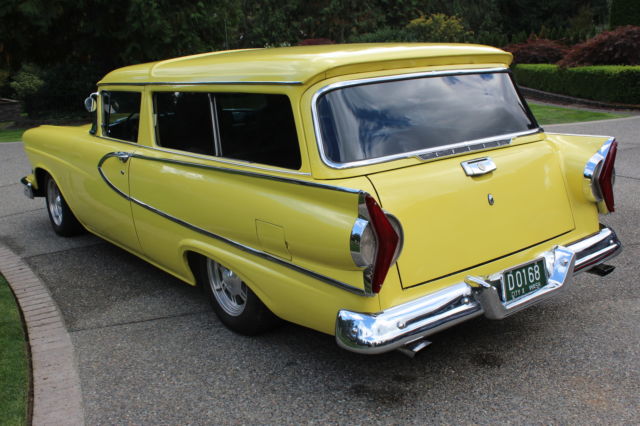
There is one model out their where the tailights look like arrows ( >>>>> <<<<< ) pointing the wrong way. I forget the brand.
Upvote
5
(5
/
0)
Hahahaha.Despite US dominance in so many different areas of technology
Upvote
0
(4
/
-4)
I did. It was pretty simple pull up to a white wall and select light calibration in service and it projected a pattern and uses the camera to adjust the alignment. But since MA checks alignment in inspection they were already within specIn my experience, the issue with Tesla's isn't that they are too bright, it's that Tesla pays zero attention to aligning them. I'm sure they would pass just fine when properly aimed. They are simply pointed up too high and were never calibrated correctly from the factory. From what I hear, you can actually calibrate them yourself, but how many people are actually going to know that, let alone do it?
Upvote
5
(5
/
0)
The DRLs are off whenever the headlamps are on.
The DRLs are supposed to aim sideways and up, because their purpose is to make the car more visible and more obviously an underway (not parked) car in daytime. Tesla's DRLs are actually pretty good.
Tesla's just sloppy about the aiming & alignment of the low-beam unit at the factory. You can achieve the same blinding effect with almost any other car and a screwdriver, just by turning the vertical aim adjustment screws a couple of turns the wrong way. And a Tesla's lights can be made to behave quite well if the alignment is re-aimed precisely per the spec & procedure.
As I said elsewhere - I haven't spent any time up close with a Tesla (had one ride to lunch in one, that's it), so I'm not sure if it's just DRLs being on and leaking, or actual low beams. I can accept either answer, however, when low beams are misaimed, I usually notice it way, way way in the distance - 100-200+ ft from the car (oncoming, obviously). With Teslas, I find it's worst when almost right beside the car within a few feet. There are 3 separate projectors it seems that are aimed almost right at my face when my front bumper is about even with theirs.
Upvote
0
(0
/
0)
Yep I have one of the new Y's with the Matrix LEDs. I got flashed constantly when I first got it, and I noticed the drivers side light was aimed very left and high. I fixed this in the service menu and haven't been flashed since.
I thank you for your kindness and service to humanity (and possibly saving my eyes).
If you want to earn my undying respect and admiration, write a DIY guide for the other 5 million or whatever owners of the same model(s) and spam Facebook, Instagram, TikTok, Twitter, heck even Truth / Parler / Gab / Ramble ad nauseum. Whatever it takes man, whatever it takes. Do not rest until you are done.

Upvote
8
(8
/
0)
I remember that.
But also it doesn't make any sense. In one scenario, you are blinded for the entire period of approach, and you try to mitigate that by not looking in the direction of the oncoming car, but you still are unlikely to see road hazards. In the other scenario, you flash your lights impairing the other driver for a brief instant but have a decent (maybe 50%?) chance of no longer being impaired during the closest part of your approach to the oncoming car.
The greater the distance between the two cars when you flash your brights, the better the trade-off works. They are impaired less due to the distance, and they are more likely to be able to respond and dim their brights before passing you.
You must live in dreamland. I used to have probably 10-20% success rate with such things in Canada, but here (Silicon Valley), it's like 3/4 of people are glued to their phones even while driving (I'm not kidding!) and wouldn't even notice.. I've flashed people like a hundred times over 20 years, and have gotten flashed back 5-10 times, but only like 1 or 2 times has someone actually realized what I meant and turned off high beams. I generally like people in CA and enjoy living here, but they are SOOOO clueless (on average) when it comes to this specific thing (proper light usage). I'm sure half of them driving with high beams on at all times don't even know they're doing it - they just think they have their low beams on or something. And don't even get me started on the huge percentage (compared to elsewhere) of people driving with only front lights no tail lights or without ANY lights on at all, even at night - with a dark/black car.
Upvote
2
(2
/
0)
I’m pretty sure Tesla owners are supposed to self-calibrate their headlights when they first take possession of the car. Wouldn’t surprise of me if most don’t and that’s why their beams are all over the place.
Oh really? Fucking seriously? That's why they're all screwed up? Because Tesla is too lazy to do it for them or something? I mean, why is this something the user has to do? Most Tesla drivers are less knowledgeable about cars than the average person, AFAICT. And even the average person would have no clue this is something they can even do with headlights.
(I've manually adjusted mine with a screwdriver in older cars when misaligned - and most people had no idea how to do that)
Upvote
14
(14
/
0)
I drive for a living, 10 hours a day and I will tell you what the real problem is. Super bright headlights are designed to illuminated the road ahead by focusing intense light on the road only, lower than the oncoming drivers eyes so as not to blind oncoming drivers ON A FLAT ROAD only. When a Tesla comes over a rise in the road the intensly bright lower area that normally, on a flat road is aimed below oncoming drivers is aimed RIGHT IN THEIR EYES. You cannot control headlights based on light patterns designed using flat roads as a model.
See other posts in this thread. Teslas are fundamentally broken from the factory unless the owner recalibrates (fat chance). They'll blind you even on a flat road.
Upvote
9
(9
/
0)
That's great for you. And per the videos that feature is cool. Meanwhile, I also have a C40 with the exact same "pixel" technology in my lamps but because I'm in 'Murica, I can't have that enabled. And I may never, if this article is implying that the NHTSA will require a different hardware spec when the time comes.I have a Volvo C40 with matrix LED lights, and they are great. The closest thing to technological magic I have seen. Even after 2 years seeing those notches appear in the high beam around vehicles in front is fascinatimg. I’m almost glad it is autumn now so that I can drive in the dark again. Finnish summer means months of not experiencing the joy of matrix lights.
That said, they do auto-dim with oncoming cars, but it's not all that accurate on corners and hills and it's still possible to blind drivers briefly. And it really does tend to mistake distant streetlights for oncoming headlights. Better for the AI to make THAT mistake than to guess wrong though, honestly.
Last edited:
Upvote
3
(3
/
0)
Don't forget emergency vehicles. Eye-searingly bright strobing LEDs at night make scenes far less safe, but the mindset of way too many in the emergency services community is that more and brighter lights = safer and nobody (in particular, NHTSA) has been the grown-up in the room to dial it back.I'm honestly not too impressed with the NHTSA here.
[...]
the NHTSA continues to allow conventional headlights with comically excessive glare.
(And I say this as a volunteer EMT who drives ambulances quite frequently, one of which has its own over-the-top LED problem.)
Upvote
14
(14
/
0)
Fernwaerme
Smack-Fu Master, in training
16k matrix headlights have been available in production cars since 2023.As for when the lights will start brightening up the roads at night, Magna says it's a few months from finishing the validation process, at which point they're ready for an OEM. And Magna is just one of a number of suppliers of advanced lighting to the industry. So another couple of years should do it.
https://www.wardsauto.com/porsche/porsche-reveals-new-hd-matrix-led-headlamp-technology
Upvote
0
(1
/
-1)
mpotter1024
Ars Praetorian
Why should they? Maybe your street needs brighter street lighting. My 5 year old Lexus UX 250h has auto brights. They stay on dim well lit urban neighborhood streets with the LED streetlights. Then there is a cross street with no streetlights except at both ends. So guess what auto high beams turn on. Low lit streets are a danger for everyone. Then us drivers get blamed if there is an accident. Some bicycles don’t have lights so high beams let us drivers see the idiot bicyclists who ride down the middle of the road at night or constantly swerving from side to side. Urban streets are not mountain bike trails.I wish to holy fuck that cars that automatically turn on the high beams would be required to notice pedestrians, bicyclists, horseback riders before blinding them with LED laser anything. Model 3's and recent Toyota products do this to me every damn night when I walk my dog.
Last edited:
Upvote
-19
(1
/
-20)
I modified the firmware on my Mercedes SUV to allow full European active matrix headlights, and it is a game changer. I never got flashed by anyone, and it does a wonderful job of real time boxing out oncoming traffic.
Upvote
3
(3
/
0)

This is the second or third time I've seen something about amber for turn indicators. I sincerely and honestly ask: What difference does it make? I am not being funny or dismissive; I honestly don't know but would like to.
View: https://www.youtube.com/watch?v=O1lZ9n2bxWA
Upvote
7
(7
/
0)

For what it's worth I drive in front of Subarus all the time in the PNW with their fog lights on and it's no problem at all. I've seen people hate on it endlessly but they've never bothered me. They're aimed at the ground (duh) and don't appear as anything other than two bright dots. Nothing at all like Pavement Princess Retina Burners in my rear view mirror.
It's rear fog lights that are the real problem. Searing bright red lights at the back of whatever vehicle you happen to be behind.
Upvote
-5
(2
/
-7)
A-fucking-men. Yet another reason for me to hate gigantic vehicles.Can we also please do something about high intensity lights on full sized trucks or their SUV equivalents. Allowing those to exist perfectly aligned with the rear view mirrors of normal sized passenger cars is just idiotic.
Upvote
8
(8
/
0)

DeathOfTime
Smack-Fu Master, in training
only thing i can think of is polarized light. or possibly spectrum shifting. no clue if its been looked into. the polarized light could just be filtered by a coating on the window. spectrum shifting i'm not to sure about. but basically light it up with something that isn't going to annoy the hell out of wildlife and humans then shift into something more visible to us
no clue. don't know much about the entire topic. does sound like a interesting puzzle. to bad there's no safety laws for safety laws though. that sounds like much more of a necessity. or are there and there just way out of date too?
no clue. don't know much about the entire topic. does sound like a interesting puzzle. to bad there's no safety laws for safety laws though. that sounds like much more of a necessity. or are there and there just way out of date too?
Upvote
-2
(0
/
-2)
Why would they assume pedestrians have EDS (Ehlers Danlos) with a zebra?
Would hope its more a zebra crossing with maybe movement to the zebra crossing to indicate something is moving across the road
Would hope its more a zebra crossing with maybe movement to the zebra crossing to indicate something is moving across the road
Upvote
0
(0
/
0)

Turn signals are worse than useless in the USA. I see turn signals on...for miles and miles with no turn or lane change. I also see rapid lane changes (often in very congestrd traffic) and turns with no hint of a signal. I seldom see people signalling the following the signal with the appropriate action.
Upvote
1
(2
/
-1)
Jonathan, while pickup trucks do tend to be major offenders, worse by far are motorcycles with aftermarket headlamps. The most egregareous example that I've encountered was a lighting rig a foot tall and wider than the windshield. Even in broad daylight it took five minutes for my vision to clear. While faster approval of factory headlights would be nice, regulation of aftermarket lighting has become the more immediate need.
Upvote
4
(7
/
-3)

ColdWetDog
Ars Legatus Legionis
The light bars on Colorado State Patrol vehicles has gone from strobing to just blinking when the vehicle is stopped. Makes a huge difference. You can still see the police car, you just don't get temporarily blinded after you pass it.Circa 2018-22 ish, the Ontario Provincial Police fell victim to this thinking..... someone sold them a batch of "the best, the brightest, the most visible cop cruiser lightbars ever made".
The damn things were so blinding that officers' lives were put at risk because passing traffic couldn't see the officer himself at all behind a red-and-blue glare field that, if subject to even the slightest hint of fog or haze, was two or three times larger than the cruiser itself.
I don't think they ever formally admitted the issue, but the newer cop cars are something like one-third to one-half as bright as they were during that period, and now you can actually see the officer well enough to avoid hitting him.
It must be done in software so hopefully other uses will figure this out.
Upvote
7
(7
/
0)
ColdWetDog
Ars Legatus Legionis
There is no aftermarket regulation of anything in the US. Lights, horns, exhausts, suspension, tinting. It is basically Mad Max.Jonathan, while pickup trucks do tend to be major offenders, worse by far are motorcycles with aftermarket headlamps. The most egregareous example that I've encountered was a lighting rig a foot tall and wider than the windshield. Even in broad daylight it took five minutes for my vision to clear. While faster approval of factory headlights would be nice, regulation of aftermarket lighting has become the more immediate need.
Upvote
11
(11
/
0)
However, note that the company described here wants to license to a single manufacturer, presumably so you pay more so they get more.I wouldn't mind seeing this tech, so long as the modules were manufacturer agnostic to help keep the price down. Paying a couple thousand dollars for parts and labor to replace a headlight because every manufacturer has to have their own unique modules which are buried deep inside the vehicle in unreachable places is becoming a tiring trend.
Upvote
0
(0
/
0)
Yeah, that is a fairly new term over here. I first saw it in articles from the U.K. So, of course, I also saw a funny British video of actual zebras crossing. (Making their own crossing?)Not quite on topic, but "zebra crossing" took a second to click in my head. I was visualizing an actual zebra being projected by the 16k projector.
Upvote
1
(1
/
0)
By "shoulder line" I hope you mean the white stripe on the right edge of the pavement. Where you will not see the deer. Or the bicyclist or the pedestrian.There is no LOW or HIGH. Its a shutter. VW has it, and its adaptive, and even cornering. EU has it right. US just slow, greedy fucks that "we should standardize on OUR patent, not yours" in the name of safety.
PS. if you paid attention in Driver's Ed, you'd know that when brights are approaching NOT TO FLASH but look down to your shoulder-line.
Most of the time when I flash my lights (not doing that was not taught in my driver's ed) they flick their REAL brights to show that theirs are just misaimed and too bright.
Upvote
0
(0
/
0)
Headlights seem to be a US regulatory soft spot, perhaps because we are so car dependent. In the 1960s, it was halogen headlights that people would smuggle in and use illegally on the road. Car magazines used to foam at the mouth about this.
P.S. Does anyone else remember tensor lamps? They used an automotive bulb and a 12V DC transformer/rectifier.
P.S. Does anyone else remember tensor lamps? They used an automotive bulb and a 12V DC transformer/rectifier.
Upvote
3
(3
/
0)
There is regulation of aftermarket lighting, but enforcement is the problem. Perhaps if states including legality checks for that lighting as part of annual inspections (if your state has any).While faster approval of factory headlights would be nice, regulation of aftermarket lighting has become the more immediate need.
Upvote
2
(2
/
0)

Some 1958 Edsel station wagons. Martha Stewart's summer-car is such, and I've seen it trucked onto the Island in late spring. Somebody did a lovely photo-spread of the car, the house, and the woman, but I forget who.There is one model out their where the tailights look like arrows ( >>>>> <<<<< ) pointing the wrong way. I forget the brand.
Does anyone else remember tensor lamps? They used an automotive bulb and a 12V DC transformer/rectifier.
Remember? I just threw mine out! (LEDs are that much better; and mine was not a Tensor Brand Mid-Century Collectable but one of the many cheap clones.) FWIW: no DC, no rectifier... raw 12V AC worked and the flicker was tolerable, just like all lamps of the time.
Last edited:
Upvote
0
(0
/
0)

Whoa! Smoking was banned from flights thanks to an Ars comment?...for years after smoking was banned from all flights (thanks to an Ars comment)...
Another reason to subscribe!
Upvote
10
(10
/
0)

leexgxreal
Ars Scholae Palatinae
Even though I do find it's very interesting and I've seen this type of technology active on some (3) vehicles around me and it does appear to work very well,, but do you really want to be spending £1000-2000 to replace one of your headlights because a non-replaceable led/laser or the driver has failed (it's a sealed unit)
And for cars without this technology please turn off "auto full beam" it rarely works correctly and takes peoples attention away to look why a car just did a pointless 1 second full beam (or going full beam off and on down the road) it's very distracting (makes people look in behind unnecessarily) and sometimes doesn't turn off fast enough and blinds people temporarily
and tesla needs to fix there stupid dipped lights that run like full beam is on (unsure if tesla has adjustment control on the lights settings page to get them to point down) I only noticed this on the newer smaller size lower to the ground Tesla vehicles (was never a problem on the larger/normal size teslas)
And for cars without this technology please turn off "auto full beam" it rarely works correctly and takes peoples attention away to look why a car just did a pointless 1 second full beam (or going full beam off and on down the road) it's very distracting (makes people look in behind unnecessarily) and sometimes doesn't turn off fast enough and blinds people temporarily
and tesla needs to fix there stupid dipped lights that run like full beam is on (unsure if tesla has adjustment control on the lights settings page to get them to point down) I only noticed this on the newer smaller size lower to the ground Tesla vehicles (was never a problem on the larger/normal size teslas)
Upvote
-1
(1
/
-2)

My 2024 Corolla Hatchback puts the auto highbeam button right at your left knee, because thats a great place to put a button at, right at a place where you are sure to smack it at some point and not notice its on.
Upvote
0
(1
/
-1)

Another example is the Mini Cooper and Mini Countryman. Below, the car is signaling a right turn while the arrow is pointing left.There is one model out their where the tailights look like arrows ( >>>>> <<<<< ) pointing the wrong way. I forget the brand.
Upvote
8
(9
/
-1)