
You are using an out of date browser. It may not display this or other websites correctly.
You should upgrade or use an alternative browser.
You should upgrade or use an alternative browser.
Ford reveals pricing for the F-150 Lightning Pro work truck
- Thread starter JournalBot
- Start date
Do we already know the battery capacity of these? I'm curious what the efficiency of a truck like the lightning is.
@Jonathan
Please add battery sizes for each trim, if that information was made available
So, as expected the 150kWh would be the higher range, as the cost/kWh did not add up for a base 39k model
Battery life should be ok. SKI used LG technology & was sued & settled for $1.4 billion
https://www.bloomberg.com/news/articles ... import-ban
I think Tesla uses a similar kind of pouch cell pack in their made in china Model 3 SR/SR+, so there should be some data there on pack life
Tesla using pouch cells in their made in China models? First I've seen of someone suggesting that, and doesn't seem like something they would do, considering their research and technological efforts with regard to cylindrical cells. Not to mention the idea of needlessly changing the battery pack form factor.
Sorry...mean to say prismatic cells in MIC Model 3
Ah, so the lower density but cheaper to produce tech can fit the use. Thanks for sharing.
Upvote
2
(2
/
0)
I think they were saying they want an even more stripped version than the XL. Honestly, for the very small number of customers who would opt for something even lower than the SYNC4 infotainment it would cost more to design, develop, test, and stock parts for a lower end system. I mean my '15 Sierra base has a simple AM/FM radio and it's still got a LCD screen and pretty much everything needed to run an infotainment system other than touch-screen controller which is a minimal cost.- AIR CONDITIONING
- power windows
- power locks/keyless entry
- power mirrors
throw in a percentage display on the dashboard of my battery life remaining and that is all the bells & whistles I need in a daily driver pickup.
if FORD can offer a Lightning model like that... I'd take it.
That's all standard.
Upvote
8
(8
/
0)
I think they were saying they want an even more stripped version than the XL. Honestly, for the very small number of customers who would opt for something even lower than the SYNC4 infotainment it would cost more to design, develop, test, and stock parts for a lower end system. I mean my '15 Sierra base has a simple AM/FM radio and it's still got a LCD screen and pretty much everything needed to run an infotainment system other than touch-screen controller which is a minimal cost.- AIR CONDITIONING
- power windows
- power locks/keyless entry
- power mirrors
throw in a percentage display on the dashboard of my battery life remaining and that is all the bells & whistles I need in a daily driver pickup.
if FORD can offer a Lightning model like that... I'd take it.
That's all standard.
Oh, then in which case, yeah, no. Features and luxury options are not a big part of the build cost of a vehicle like this. In an EV, you're largely paying for the battery. Ford could theoretically throw in the cheapest base-grade fleet interior, and it wouldn't cut the price any.
Upvote
16
(16
/
0)
230 miles. What's that actually going to be though with weight, towing, winter temperatures and maintaining what, 80 ish percent charge max to not kill the battery?
How close does that now get to their 170 Mile number?
Does it matter?
"the average American drives 16 miles to work each way"
Ok, add on a few dozen miles to a construction site....that still leaves plenty. Oh yea....how many construction sites do you know of that don't have electricity? They can top up when they get to work.
Yeah, most fleet trucks aren't being driven hundreds or even dozens of miles a day.
Upvote
10
(11
/
-1)
It's not bad for the toolbox/genset trucks that sits at the site or makes short runs.
Get there, do your work, back to depot (or employee's house).
Won't replace all the use cases. Really depends on how many partial capability trucks you need vs 'do it all' ones.
Get there, do your work, back to depot (or employee's house).
Won't replace all the use cases. Really depends on how many partial capability trucks you need vs 'do it all' ones.
Upvote
5
(7
/
-2)
lost_gweedo
Ars Centurion
I remember reading a couple years ago about a volvo (I think the xc90) that was electric, but had a tiny generator built in for those longer trips. It may seem counter-productive in an electric, but a 30 amp generator in the bed for long trips could offset the range limitation.Would they?230 miles. What's that actually going to be though with weight, towing, winter temperatures and maintaining what, 80 ish percent charge max to not kill the battery?
How close does that now get to their 170 Mile number?
About spot-on would be my guess. 170 miles is the 95th percentile....so even allowing for lets call it 70% range which is 161 miles, they'll still cover a massive proportion of the use cases.
Average job range is not the same as max job range in that year.
Apart from guys like me who have a vast territory to cover, and drive 200+ miles daily, the only other scenario I can think of where my company would run into problems is when we convoy out to other utilities to help with storm outages in the wake of disasters. We sent people from the midwest to the coasts for recent hurricanes, and I could see it complicating logistics a bit, both for the transit and then operating in the area on spotty power.
But I bet there's a way to deal with the latter, like bringing along a couple of diesels and adapters to slow charge the electric fleet overnight, or carry some equipment to to draw from the grid anywhere we can find 3-phase.
Upvote
0
(1
/
-1)
I remember reading a couple years ago about a volvo (I think the xc90) that was electric, but had a tiny generator built in for those longer trips. It may seem counter-productive in an electric, but a 30 amp generator in the bed for long trips could offset the range limitation.
i3 REX?
Upvote
3
(4
/
-1)
I remember reading a couple years ago about a volvo (I think the xc90) that was electric, but had a tiny generator built in for those longer trips. It may seem counter-productive in an electric, but a 30 amp generator in the bed for long trips could offset the range limitation.Would they?230 miles. What's that actually going to be though with weight, towing, winter temperatures and maintaining what, 80 ish percent charge max to not kill the battery?
How close does that now get to their 170 Mile number?
About spot-on would be my guess. 170 miles is the 95th percentile....so even allowing for lets call it 70% range which is 161 miles, they'll still cover a massive proportion of the use cases.
Average job range is not the same as max job range in that year.
Apart from guys like me who have a vast territory to cover, and drive 200+ miles daily, the only other scenario I can think of where my company would run into problems is when we convoy out to other utilities to help with storm outages in the wake of disasters. We sent people from the midwest to the coasts for recent hurricanes, and I could see it complicating logistics a bit, both for the transit and then operating in the area on spotty power.
But I bet there's a way to deal with the latter, like bringing along a couple of diesels and adapters to slow charge the electric fleet overnight, or carry some equipment to to draw from the grid anywhere we can find 3-phase.
This is apparently under discussion, and Ford has patented one that mounts in the bed, but honestly, my feeling is that most users are going to realize very quickly that they don't need it.
The XC90 can be had as a plugin hybrid, but it doesn't operate as a series hybrid, as you're describing.
Upvote
8
(8
/
0)

Yep, and that's a big cost driver all by itself. Standardizing things into trim packages lets them take advantage of economies of scale in purchasing components, and optimizing the production schedule.The bundling annoys me. If you want one with a nice stereo you also need to sit in seats made out of skin and ride around on much bigger wheels. The domestic manufacturers used to be all about ordering a car with exactly the options you wanted.
Upvote
10
(10
/
0)
Post content hidden for low score.
Show…
Like I said before, a 'full capability' truck would be a 100 mile pack PHEV. Minimally sized genset, tuned for constant operation, with enough of a battery pack to do the 'full normal workday' without issues on EV power only.
Brand it as the super duty or whatever, with appropriate springs, and charge superduty-ish prices.
That way - tow a loaded fifth wheel from say, pdx to eugene? no prob. Weekend horse trailer for the boss? no problem. Etc. Meanwhile you're only paying for the pack capacity you're actually using daily.
Brand it as the super duty or whatever, with appropriate springs, and charge superduty-ish prices.
That way - tow a loaded fifth wheel from say, pdx to eugene? no prob. Weekend horse trailer for the boss? no problem. Etc. Meanwhile you're only paying for the pack capacity you're actually using daily.
Upvote
-3
(4
/
-7)
Yeah, I was amazed to learn that crank windows actually cost the manufacturer MORE than power windows these days as the actuators are built in such large numbers and the number of buyers willing to go down to crank is so low that their cost to buy, stock, and account for the option is actually more than the savings in material costs. Basically if they offer crank windows it's just to dissuade people from actually buying the base model =)I think they were saying they want an even more stripped version than the XL. Honestly, for the very small number of customers who would opt for something even lower than the SYNC4 infotainment it would cost more to design, develop, test, and stock parts for a lower end system. I mean my '15 Sierra base has a simple AM/FM radio and it's still got a LCD screen and pretty much everything needed to run an infotainment system other than touch-screen controller which is a minimal cost.- AIR CONDITIONING
- power windows
- power locks/keyless entry
- power mirrors
throw in a percentage display on the dashboard of my battery life remaining and that is all the bells & whistles I need in a daily driver pickup.
if FORD can offer a Lightning model like that... I'd take it.
That's all standard.
Oh, then in which case, yeah, no. Features and luxury options are not a big part of the build cost of a vehicle like this. In an EV, you're largely paying for the battery. Ford could theoretically throw in the cheapest base-grade fleet interior, and it wouldn't cut the price any.
Upvote
15
(15
/
0)
Is it only the 5.5ft bed for commercial? I can't imagine that a bed that short would be particularly useful for real work.
So, first off, I don't understand why your concept of "real work" doesn't include, say, surveyors, geotech engineers, foremen, city parks rangers/maintainers, grounds maintenance, civil engineers, or natural resources managers like yours truly.
And all of the tradesmen, who generally have no need to often carry "long" things. My brother is an electrical contractor and they just need their beds to have room for some large tools, maybe a generator, spools of wire and such.
Anything really big would go on a trailer or get dropped off by their warehouse staff (or as mentioned in all of these threads, directly from the electrical supply houses).
Upvote
26
(26
/
0)
This is apparently under discussion, and Ford has patented one that mounts in the bed, but honestly, my feeling is that most users are going to realize very quickly that they don't need it.
Depends on your fleet and what you use it for. Just take whatever range it has and cut it in half if you're talking about towing (generally speaking).
Upvote
4
(4
/
0)
" will be supplied with an 240 V, 80 A"
An 80 Amp what?
If you have to ask you cant afford it.
Upvote
2
(7
/
-5)
Is it only the 5.5ft bed for commercial? I can't imagine that a bed that short would be particularly useful for real work.
So, first off, I don't understand why your concept of "real work" doesn't include, say, surveyors, geotech engineers, foremen, city parks rangers/maintainers, grounds maintenance, civil engineers, or natural resources managers like yours truly.
And all of the tradesmen, who generally have no need to often carry "long" things. My brother is an electrical contractor and they just need their beds to have room for some large tools, maybe a generator, spools of wire and such.
Anything really big would go on a trailer or get dropped off by their warehouse staff (or as mentioned in all of these threads, directly from the electrical supply houses).
'long things' .. they make racks for that.
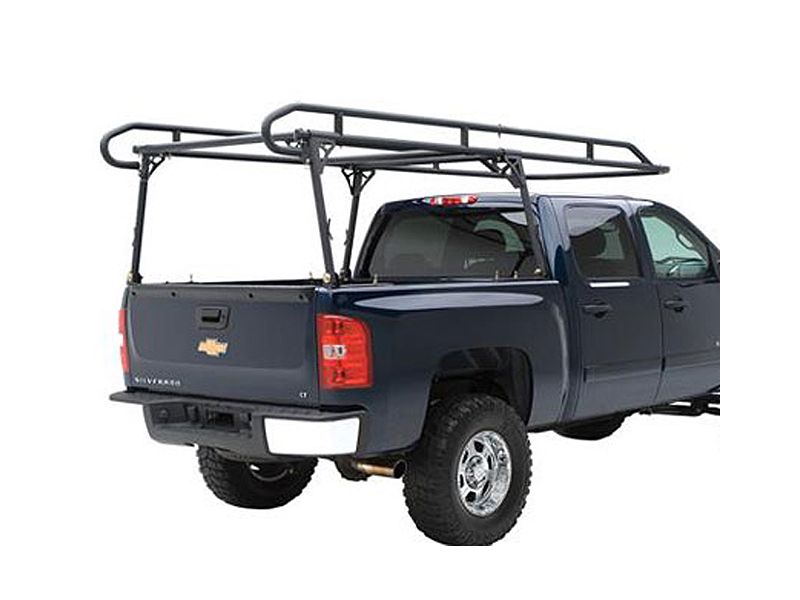
Upvote
44
(45
/
-1)
The bundling annoys me. If you want one with a nice stereo you also need to sit in seats made out of skin and ride around on much bigger wheels. The domestic manufacturers used to be all about ordering a car with exactly the options you wanted.
Yeah, decades ago. You can still get an F-150 in any of several million different configurations, but of course they can't possibly custom build you a truck to your specifications anymore; the cost of doing that is insanity, which is why it's not done anymore.
Upvote
4
(5
/
-1)
230 miles. What's that actually going to be though with weight, towing, winter temperatures and maintaining what, 80 ish percent charge max to not kill the battery?
How close does that now get to their 170 Mile number?
Does it matter?
"the average American drives 16 miles to work each way"
Ok, add on a few dozen miles to a construction site....that still leaves plenty. Oh yea....how many construction sites do you know of that don't have electricity? They can top up when they get to work.
Ummm...don't you need a special charge system for vehicles? This isn't a 120v system and I highly doubt construction companies are currently prepared to setup vehicle chargers for their employees....
EDIT: I sit corrected - rereading the original Ars article (https://meincmagazine.com/cars/2021/05/he ... ng-pickup/), "For AC charging, F-150 Lightnings will be supplied with a 240 V, 32 A mobile charger, which will just require a compatible socket. This will add 14 miles (22.5 km) of range to the standard battery in an hour and should charge the pack from 15-80 percent in 14 hours. For the extended-range pack, expect to add 13 miles (21 km) of range each hour, with a total charge time of 19 hours."
Thank you for pointing that out, Ars readers.
Upvote
-10
(1
/
-11)
Really looking forward to these. Shame they’re so supply constrained and they won’t sell more of them. 100k in two years is ok. But let’s go!! These things are going to sell like ice cream at the beach! i wonder if we’ll see them with higher resale prices (like PS5s).
Upvote
4
(4
/
0)
You can pull the 80% consideration off that list. Charging all the time to 90% is totally fine on every EV that I know of, and if you are regularly using the vehicle you can charge to 100% with no worries. You only want to avoid 100% if you are going to leave the car sitting at it all the time. With the big packs in these trucks Ford might have even hid a few percent of the battery from the user at the top, meaning you can charge to 100% without thinking about it. We won't know that until someone gets their hands on one though.230 miles. What's that actually going to be though with weight, towing, winter temperatures and maintaining what, 80 ish percent charge max to not kill the battery?
How close does that now get to their 170 Mile number?
Normally you don't charge above 90% or let the charge level drop below 15%, so you only have 75% usable.
The EPA range is more optimistic than people normal get, though it is achievable, so knock off another (say) 20%, so you are now down to 60%.
230 miles EPA => 138 miles usable
300 miles EPA => 180 miles usable
You'll lose another 20+% in freezing temperatures.
FWIW- 24,000 miles into their long-term test, they've averaged a 237 range on a vehicle with a 310 EPA range, which is a healthy bit better than the 60% figure you are using (76%).
And I'm guessing, being Car and Driver, that it includes a fair amount of spirited driving...
https://www.caranddriver.com/reviews/a3 ... intenance/
Upvote
8
(8
/
0)
The larger 240V/80A onboard charger adds 30 miles of range per hour, according to Ford. Assuming you can charge it while driving, you could theoretically put a 20 kW generator in the bed, but tossing a 600 lb generator plus fuel in there might cut down on your range…I remember reading a couple years ago about a volvo (I think the xc90) that was electric, but had a tiny generator built in for those longer trips. It may seem counter-productive in an electric, but a 30 amp generator in the bed for long trips could offset the range limitation.
Upvote
3
(3
/
0)
230 miles. What's that actually going to be though with weight, towing, winter temperatures and maintaining what, 80 ish percent charge max to not kill the battery?
How close does that now get to their 170 Mile number?
Does it matter?
"the average American drives 16 miles to work each way"
Ok, add on a few dozen miles to a construction site....that still leaves plenty. Oh yea....how many construction sites do you know of that don't have electricity? They can top up when they get to work.
Ummm...don't you need a special charge system for vehicles? This isn't a 120v system and I highly doubt construction companies are currently prepared to setup vehicle chargers for their employees....
It comes with a charger base station, which a construction company can install at employees' homes or at their business location, along with software and telematics to let the fleet manager reimburse for home charging, manage battery use, and so on. Plus which, it has an onboard charger that can be plugged into an outlet (preferably a 240v, but not necessarily).
That was all in the article.
Upvote
13
(13
/
0)
Ummm...don't you need a special charge system for vehicles? This isn't a 120v system and I highly doubt construction companies are currently prepared to setup vehicle chargers for their employees....
Yeah I don't think lots of sites are gonna have EVSE available. You could hypothetically L1 charge on 120, but that assumes you've got it run already and all the trucks are in a lot and not just haphazardly placed.
As for employee residence / yard charging? Definitely.
Upvote
1
(1
/
0)
PseudoNick
Ars Centurion
I gotta say the entry level prices for the Lightning are super impressive. The cheapest 230 mile and 300 mile version actually undercut the Mach E by $2000-3000. I wonder how they do that, as surely the Lightning needs quite a bit more battery capacity to offset the worse aerodynamics and increased size.
Probably less/cheaper features than vs the Mach E. As well, the margins on the F150 are probably a lot slimmer, as they I assume, hope to sell a lot of them
Upvote
0
(0
/
0)
You can pull the 80% consideration off that list. Charging all the time to 90% is totally fine on every EV that I know of, and if you are regularly using the vehicle you can charge to 100% with no worries. You only want to avoid 100% if you are going to leave the car sitting at it all the time. With the big packs in these trucks Ford might have even hid a few percent of the battery from the user at the top, meaning you can charge to 100% without thinking about it. We won't know that until someone gets their hands on one though.230 miles. What's that actually going to be though with weight, towing, winter temperatures and maintaining what, 80 ish percent charge max to not kill the battery?
How close does that now get to their 170 Mile number?
Normally you don't charge above 90% or let the charge level drop below 15%, so you only have 75% usable.
The EPA range is more optimistic than people normal get, though it is achievable, so knock off another (say) 20%, so you are now down to 60%.
230 miles EPA => 138 miles usable
300 miles EPA => 180 miles usable
You'll lose another 20+% in freezing temperatures.
FWIW- 24,000 miles into their long-term test, they've averaged a 237 range on a vehicle with a 310 EPA range, which is a healthy bit better than the 60% figure you are using (76%).
And I'm guessing, being Car and Driver, that it includes a fair amount of spirited driving...
https://www.caranddriver.com/reviews/a3 ... intenance/
Seems like you are confusing 100% to zero range, with usable 90% to 15% range.
Upvote
-1
(4
/
-5)
Nowadays the leather in cars is coated in plastic anyway.Anyone want to post on the difference in seating material ?
I've used a Prius with what they called SoftTex at the time
Now its a model 3 with "Vegan leather"
To my eyes, both look the same & are incredibly durable & this includes carting around a large dog.
Same same. "Vegan leather," "Softex," MB Tex, Sensatec, it's all just patterned vinyl. And yeah, it's insanely durable - I've got part cloth-part vinyl seats in my Forester and they've been fantastic for everything from spills to dogs to ice climbing gear.
Upvote
4
(4
/
0)

Economies of scale. It shares quite a bit (interior, body, etc.) with the ICE F-series, of which Ford makes almost a million a year. The new Rouge Electric Vehicle Center where it will be built is only the final assembly. It uses the same body and paint shops as the ICE F-150.I gotta say the entry level prices for the Lightning are super impressive. The cheapest 230 mile and 300 mile version actually undercut the Mach E by $2000-3000. I wonder how they do that, as surely the Lightning needs quite a bit more battery capacity to offset the worse aerodynamics and increased size.
There's a nice interview with Ford's CEO over on The Verge and yes, he basically confirms this. They're not doing this the "super fancy clever" way, they're doing the "lots all the same" way. Which is a very Ford way to do it.
Upvote
14
(14
/
0)
But, I would suspect that both the mach-e and lightning will be money losers for at least the first few years if you were to look at the whole cost vs net income spreadsheet, but they don't really have a choice as this is clearly where the market is heading and they can't afford to have Tesla eat into their major profit center.
I was just checking some websites for Tesla, Kia, Hyundai and Ford EVs, and was surprised to see a special financing option Ford has, apparently just for the Mach-E.
Besides financing and leasing, there is a balloon payment financing option, which allows you to return the car instead of making the final, balloon payment. (?????)
I need to go read that again, once I get home from work, because its not clear to me why they offer that option - as well as getting clarification on the details..
I didn't enter the website, but I know a few manufactures (in Brazil) that do something similar: You're virtually forever-renting new cars from them. They guarantee to buy back your vehicle at some percentage (let's say 80%) you paid, and the difference between this 80% and the last payment is something you can use to start financing another car from them.
If you're so vain you can't have a car that's over 3 years old.... it may be worth it? It didn't make sense to me, but someone else could see something in this.
Upvote
4
(4
/
0)
230 miles. What's that actually going to be though with weight, towing, winter temperatures and maintaining what, 80 ish percent charge max to not kill the battery?
How close does that now get to their 170 Mile number?
Does it matter?
"the average American drives 16 miles to work each way"
Ok, add on a few dozen miles to a construction site....that still leaves plenty. Oh yea....how many construction sites do you know of that don't have electricity? They can top up when they get to work.
Ummm...don't you need a special charge system for vehicles? This isn't a 120v system and I highly doubt construction companies are currently prepared to setup vehicle chargers for their employees....
Nope, you can plug it into regular domestic electricity. It's not *fast*, but it's fine for overnight.
Upvote
5
(5
/
0)
D
Deleted member 221201
Guest
Do we already know the battery capacity of these? I'm curious what the efficiency of a truck like the lightning is.
@Jonathan
Please add battery sizes for each trim, if that information was made available
So, as expected the 150kWh would be the higher range, as the cost/kWh did not add up for a base 39k model
Battery life should be ok. SKI used LG technology & was sued & settled for $1.4 billion
https://www.bloomberg.com/news/articles ... import-ban
I think Tesla uses a similar kind of pouch cell pack in their made in china Model 3 SR/SR+, so there should be some data there on pack life
Tesla using pouch cells in their made in China models? First I've seen of someone suggesting that, and doesn't seem like something they would do, considering their research and technological efforts with regard to cylindrical cells. Not to mention the idea of needlessly changing the battery pack form factor.
Sorry...mean to say prismatic cells in MIC Model 3
Ah, so the lower density but cheaper to produce tech can fit the use. Thanks for sharing.
I think the LFP's also hold out better for charge/discharge cycles
I would expect to see a similar approach in India as well
The reason for this simple. In those countries, the cities are extremely dense & distances are in km & when you grow up you think "ahh that a 2 hour train journey or a 1 hour taxi ride"
Then you move to the "Land of The Trombone Repairmen" & one look at California & the distances & everything else has now shrunk & your worldview has expanded quite a bit.
.... and you realize that everyone is driving somewhere & eventually after enough years you too succumb to this "Great Driving Mania" & somehow wind up with a truck.....
......because you can't show up to Home Depot's lumber section in small sedan

Upvote
2
(2
/
0)
230 miles. What's that actually going to be though with weight, towing, winter temperatures and maintaining what, 80 ish percent charge max to not kill the battery?
How close does that now get to their 170 Mile number?
Does it matter?
"the average American drives 16 miles to work each way"
Ok, add on a few dozen miles to a construction site....that still leaves plenty. Oh yea....how many construction sites do you know of that don't have electricity? They can top up when they get to work.
No construction sites have electricity, at least initially. There are also issues surrounding who's name the meter is in (new construction vs renovation and project phase all play a role in this). There's a reason why one of the big features of these trucks are the ability to charge and run your tools from the truck....the lack of power on job sites.
Upvote
16
(16
/
0)

any news or hints on there being a regular cab version any time soon? I'm not driving a whole bunch of people around.
Upvote
1
(1
/
0)

The bundling annoys me. If you want one with a nice stereo you also need to sit in seats made out of skin and ride around on much bigger wheels. The domestic manufacturers used to be all about ordering a car with exactly the options you wanted.
Or, you could install your own stereo that will be much better and less expensive than any OEM offering.
Crutchfield has guides and installation kits that make it a no-brainer operation for any Arsian-level person.
Upvote
-1
(4
/
-5)
For sure, you used to be able to order with an absurd level of detail. I'm thinking more like 'let me pick the reasonably sized wheels while still getting the nicer interior' which isn't even an option here. (earlier in the comments I linked the order sheets we have seen so far - base trim gets 18s, mid gets 20s with 22s as an option, high trim gets the 22s)The bundling annoys me. If you want one with a nice stereo you also need to sit in seats made out of skin and ride around on much bigger wheels. The domestic manufacturers used to be all about ordering a car with exactly the options you wanted.
Yeah, decades ago. You can still get an F-150 in any of several million different configurations, but of course they can't possibly custom build you a truck to your specifications anymore; the cost of doing that is insanity, which is why it's not done anymore.
Upvote
3
(3
/
0)
any news or hints on there being a regular cab version any time soon? I'm not driving a whole bunch of people around.
No indications as yet - my feeling is they're going to release one in the next several years, but not until they gauge demand and can supply both the crew cab and the regular cab in sufficient volume.
Upvote
3
(3
/
0)
Of course that is an option. Been there, done that. I'm not talking head unit features though, I'm talking speaker placement, EQ tuning, subwoofers. Nowadays I'd really rather tick the box and pay the $1500 so the car shows up with an already good stereo. My fab time is more happily spent working on hobby projects rather than sniffing fiberglass making custom stealth subwoofer housings.The bundling annoys me. If you want one with a nice stereo you also need to sit in seats made out of skin and ride around on much bigger wheels. The domestic manufacturers used to be all about ordering a car with exactly the options you wanted.
Or, you could install your own stereo that will be much better and less expensive than any OEM offering.
Crutchfield has guides and installation kits that make it a no-brainer operation for any Arsian-level person.
Upvote
11
(11
/
0)

I gotta say the entry level prices for the Lightning are super impressive. The cheapest 230 mile and 300 mile version actually undercut the Mach E by $2000-3000. I wonder how they do that, as surely the Lightning needs quite a bit more battery capacity to offset the worse aerodynamics and increased size.
Economies of Bubbas.
Upvote
2
(4
/
-2)
watermeloncup
Ars Tribunus Angusticlavius
230 miles. What's that actually going to be though with weight, towing, winter temperatures and maintaining what, 80 ish percent charge max to not kill the battery?
How close does that now get to their 170 Mile number?
Does it matter?
"the average American drives 16 miles to work each way"
Ok, add on a few dozen miles to a construction site....that still leaves plenty. Oh yea....how many construction sites do you know of that don't have electricity? They can top up when they get to work.
Ummm...don't you need a special charge system for vehicles? This isn't a 120v system and I highly doubt construction companies are currently prepared to setup vehicle chargers for their employees....
Nope, you can plug it into regular domestic electricity. It's not *fast*, but it's fine for overnight.
Yeah, EVs can recharge about 2-5 miles of range per hour from 120V depending on the model and conditions (need to devote energy to heating/cooling). The Lightning will undoubtedly be on the low end of that range, but even so it could be good enough for shorter commutes.
Upvote
2
(2
/
0)
This will work for businesses with limited miles of travel assuming the maintenance costs are lower (which they typically are for EV's) and the offset of costs of energy and fuel are cost-effective, I can see a lot of businesses ordering these for various kinds of uses.230 miles. What's that actually going to be though with weight, towing, winter temperatures and maintaining what, 80 ish percent charge max to not kill the battery?
How close does that now get to their 170 Mile number?
About spot-on would be my guess. 170 miles is the 95th percentile....so even allowing for lets call it 70% range which is 161 miles, they'll still cover a massive proportion of the use cases.
I don't see a lot of rank and file consumers doing it, though.
While pick-ups are the #1 selling vehicle in the U.S., I have strong reservations about how popular they'll be as EV's. I expect a few outlier folks will get one, especially if they have qualms about their environmental impact. But, TBH, I'm thinking that if someone bought a pickup in the first place - and had no need for one (which most people don't really have a compelling need for one) - then environmental concerns aren't likely a top motivator for buying a pickup EV.
I'd REALLY like to see some market studies done by independent researchers about the likely popularity of EV pickups. I have the strong suspicion that auto makers looked at the dismal EV sales (yes, they're still pretty dismal compared to ICE's in general, despite chatter from enthusiasts) and decided if they'd mate the EV to the pickup, then they'd sell more EV's.
It's probably true to a limited extent. Offering a favorite vehicle type usually brings in buyers, after all. But, sadly, I don't think they're going to sell nearly as many as they hope to. It'd be nice if they did, but people who buy pickups don't always do it for rational reasons. It's more rationalized than anything else for a huge number of them, and the rest likely want one that can go farther while carrying/pulling more weight. And I suspect the difference between the "advertised range" and "real life range" will come as an unpleasant, and highly vocalized, surprise to most buyers.
Just a thought. I know EV's are going to be bigger in the future than they are now, and most of the issues will be fixed and/or people will adapt. But until there's a mandate to cease all ICE sales, EV's aren't going to be best sellers. We don't, yet, live in a world where EV's can directly replace every ICE. That time's coming, and this is a good start, but I still think it's going to be slower than hoped for by the enthusiasts.
You are probably pretty close with your thinking here and I agree with much of it. Even for the non-professionals, a pickup is the occasional boat/camper towing “long haul” vehicle in the family, so range concerns will be high. Even if 95% of the time driving is “just around town” and not an issue for many people.
With that said, I would not discount 725lb-ft of torque and 0-60 in 4.4s aspect. It will take a test drive or some one leaving a buddies’ hopped up truck back at the previous stoplight to change some attitudes.
I’m guessing much of the pickup truck driving crowd has not ventured behind the wheel of a Tesla and experienced the exhilaration of having 100% torque from a stand still and the “effortless” acceleration therein.
For the non-commercial buyer take up will be a bit of a slow burn, but if the driving experience is what I’d expect from these numbers, it will catch on.
Upvote
13
(13
/
0)
Yes, that's exactly what I said and you quoted. Use 90% if you want long battery lifetime, 80% is an overkill level of caution.You can pull the 80% consideration off that list. Charging all the time to 90% is totally fine on every EV that I know of, and if you are regularly using the vehicle you can charge to 100% with no worries. You only want to avoid 100% if you are going to leave the car sitting at it all the time. With the big packs in these trucks Ford might have even hid a few percent of the battery from the user at the top, meaning you can charge to 100% without thinking about it. We won't know that until someone gets their hands on one though.230 miles. What's that actually going to be though with weight, towing, winter temperatures and maintaining what, 80 ish percent charge max to not kill the battery?
How close does that now get to their 170 Mile number?
Normally you don't charge above 90% or let the charge level drop below 15%, so you only have 75% usable.
The EPA range is more optimistic than people normal get, though it is achievable, so knock off another (say) 20%, so you are now down to 60%.
230 miles EPA => 138 miles usable
300 miles EPA => 180 miles usable
You'll lose another 20+% in freezing temperatures.
Upvote
2
(2
/
0)