Skip to content
pricing by yo-yo

Elon Musk doubles-down on Tesla robotaxis in TV interview

The Tesla CEO sat down with CNBC following the car company’s 2023 annual meeting.

Jonathan M. Gitlin | 598
The Tesla Cybertruck during a tour of the Elkhorn Battery Energy Storage System in Moss Landing, California, U.S., on Monday, June 6, 2022. PG&E and Tesla Inc. have built the 182.5-megawatt battery energy storage project at the utilitys Moss Landing substation near Monterey Bay.
The Tesla Cybertruck during a tour of the Elkhorn Battery Energy Storage System in Moss Landing, California, on Monday, June 6, 2022. This week, Musk said that it would go into production this year, with an annual rate of between 250,000-500,000 vehicles. Credit: Nic Coury/Bloomberg via Getty Images
Story text

On Tuesday afternoon, after the close of the stock market, Tesla held its annual meeting. Tesla CEO Elon Musk told rapturous attendees that 2023 would finally see the Cybertruck go into production and that an example of the angular stainless-steel pickup would be his daily driver. He also confirmed some previously reported facts, like a move to reduce silicon carbide power electronics in drive units, then gave a presentation on the company’s humanoid robotics program.

Following the annual meeting, Musk sat down for an interview with David Faber on CNBC. In the interview, Musk was questioned on several topics concerning Tesla.

TV spots for Tesla commercials?

During Tesla’s annual meeting and in response to shareholders, Musk conceded that perhaps Tesla should engage in more formal advertising.

“Perhaps there is some good logic to it in that if we’re simply saying, yeah, information bias, say that it has a Twitter account on my Twitter account or someone preaching to the converted. And, and not reaching people that are not already convinced, essentially. So I think they probably have a good point. Well, I mean, I think it’s worth a try, and we’ll see how effective it is,” Musk said.

When pressed to elaborate on what form Tesla advertising might take—Faber speculated whether he might see Tesla adverts played during NFL games—Musk admitted there was no prior thought or strategy behind the decision, the decision was taken on stage.

But the Tesla CEO did see some wisdom in advertising, noting that some people have false expectations of Tesla cars being very expensive. Then, on the topic of statistics, Musk repeated his claims that Tesla’s cars are the safest on the road.

“So I think you know the statistics speak for themselves,” he told CNBC, perhaps not referring to all the federal safety investigations into Tesla’s driver assists nor the statistic that Tesla cars have been subject to more official safety recalls than any other make or model by some margin. (The Tesla Model Y is 15.6 times more likely to be recalled than the industry average.)
Musk checks orders daily

Musk told Faber that he checks the volume of new orders daily to see what mix of cars needs to be built. This probably explains the erratic series of price decreases and increases we’ve seen since the beginning of the year. “We’re basically adjusting our pricing to match demand. And we obviously did a big price drop in Q1, but quickly, now January, it’s usually a terrible time for car buying. So there’s the seasonality to car purchases with January. January is often the worst month, so we did a big price drop and then recently, we did a price increase,” Musk said.

Despite this attention to detail, for the last few quarters, Tesla has consistently built thousands more cars than it can sell, ending Q1 2023 with a surplus of about 9,000 expensive and undesirable Models S and X, as well as a similar number of cheaper, more in-demand Models 3 and Y.

Breaking the laws of economics

Musk has repeatedly said that Tesla’s fate is tied to its driver-assistance features, and during the CNBC interview, he yet again repeated claims that Teslas would become appreciating assets, roaming the streets night and day earning money—split between Tesla and the car’s owner—as robotaxis.

“Well, the utility of a car, typically a passenger car, is going to be maybe 10, 10 hours a week, maybe 12. If you say like somebody’s going to drive an hour and a half a day, on average, so maybe an hour commute per day and then an occasional long trip but figure it’s like 10, 12 hours a week is typical for a passenger vehicle. And then you also have a lot of costs associated with parking. You need a garage, or you’ve got to buy a parking space, or you’ve got to get a parking ticket at the mall. There’s a lot of costs associated with cars. And now if you’ve got a car that’s autonomous, that can go around and essentially be like an autonomous Uber, the utility I think is going to be what’s gonna be much higher perhaps, you know, and this again, there’s so much speculative,” he told Faber.

Despite Musk then saying that the terms and conditions of using one’s Tesla as a robotaxi have been set for some time—stating that this is only permissible through an official Tesla robotaxi network—Musk could not tell Faber how much of a cut his company would demand. Musk then went on to quote industry analysis by the firm Ark Invest, which repeatedly publishes outlandish predictions about Tesla’s future share price.

Autopilot—real soon now (fr fr no cap)

When asked about a timeline for fully autonomous-driving Teslas, Musk told Faber that “it does look like it’s gonna happen this year.”

“We’re now at the point where the car can drive on highways and in cities with and where a human dimension is extremely rare. So I mean, just—I was able to drive for several days, just dropping a navigation pin in random locations in the greater Austin area with no interventions. And the same in San Francisco, which is a very difficult place to drive. So I mean, it’s—you’ve got bus lanes, one-way streets. You know, it’s quite a challenging homeless situation,” Musk said.

However, Tesla has taken a very different tone when talking with regulators as opposed to journalists, telling the California Department of Motor Vehicles that, despite the name “Full Self-Driving,” Tesla does not consider the software capable of autonomous driving and that it did not expect to make “significant enhancements” to the system, which “will continue to be an SAE Level 2, advanced driver-assistance feature,” always requiring the driver to maintain control and, significantly, liability.

Listing image: Nic Coury/Bloomberg via Getty Images

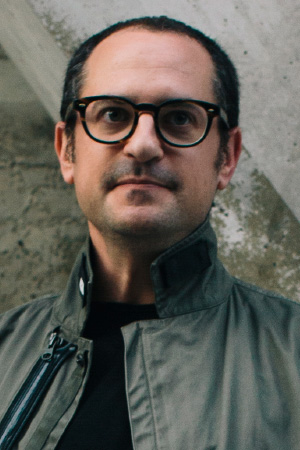
Photo of Jonathan M. Gitlin
Jonathan M. Gitlin Automotive Editor
Jonathan is the Automotive Editor at Ars Technica. He has a BSc and PhD in Pharmacology. In 2014 he decided to indulge his lifelong passion for the car by leaving the National Human Genome Research Institute and launching Ars Technica's automotive coverage. He lives in Washington, DC.
598 Comments