In recent years, a number of car companies have—like Tesla—begun offering driver assistance systems that offer lane-keeping as well as adaptive cruise control. This might seem like a big step toward a “self-driving car,” since a system like this can travel down the freeway for miles without human intervention. But a new report from AAA underscores the limitations of these systems.
Its most dramatic finding: the advanced driver-assistance systems (ADAS) on the latest cars still struggle to avoid collisions with parked vehicles. They tested cars from BMW, Kia, and Subaru; none consistently avoided running into a fake car partially blocking the travel lane.
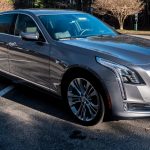
The researchers also examined the ADAS in the Cadillac CT6 and the Ford Edge, but these cars’ systems weren’t included in the parked-vehicle test because their driver assistance systems wouldn’t engage on AAA’s closed course. They were included in other tests conducted on public highways.
“All test drivers reached a general consensus that combining adaptive cruise and lane-keeping functionalities in a single system did not consistently enhance the driving experience,” the report said. The vehicles made mistakes often enough that drivers often found the experience nerve-wracking rather than relaxing.
Greg Brannon, a co-author of the AAA report, argues that a fundamental challenge with this kind of system is the need to maintain alertness. Human beings are terrible at paying continued attention behind the wheel of a car that mostly drives itself. So when (not if) these vehicles make a mistake, there’s a heightened risk that the driver won’t be paying close enough attention to recover safely.
Why ADAS systems keep hitting parked cars

You might think that cars with adaptive cruise control or emergency braking capabilities would be able to stop for parked cars and other obstacles in the roadway. But often they fail to do so. To see why, it’s helpful to understand a bit about how these systems work.



 Loading comments...