Have we leapt into commercial genetic testing without understanding it?
A new book argues that tests might reshape human diversity even if they don’t work.
Diana Gitig
–
|
173
A new book argues that tests might reshape human diversity even if they don’t work.

A vaccine developer and a climate scientist walk into a bar write a book.
A new method lets anyone with a kit write data to DNA with just one enzyme.

A new book argues that our ignorance is so large, lucky discoveries are inevitable.

Nitrogen fertilizers get converted to nitrous oxide, a potent greenhouse gas.

A gene that only makes an RNA is linked to neurodevelopmental problems.

“Whole fruit chocolate” uses cocoa pulp and inner shell in lieu of sugar.
Targets a different serotonin receptor from other popular hallucinogens.


Tracing an orange’s flavor could help us get both disease resistance and taste.
A system that shuts down one of two X chromosomes is targeted by auto-antibodies.
Strain eliminates the trade-offs of a high mutation rate.

Luddites were hardly the anti-tech dullards historians have painted them to be.

Time spent with infected individuals is a key determinant of risk.

Signaling molecules help modulate the brain’s overall activity.

A Kenyan tinkerer and Stanford engineer team up to make maxi pads from agave fibers.

A literal life-or-death balance, playing out at the level of individual genes.
Some are related to DNA-cutting enzymes. Others are a complete mystery.
Two books delve into what science may tell us about whether we have free will.
People in a genetic database have segments of DNA in common unexpectedly often.
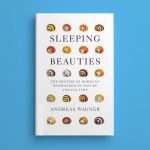
The book Sleeping Beauties looks at everything—biology, skills, ideas—that lies latent.

Until it hit, the local firefighters couldn’t conceive of something that ferocious.

Developing economies pay a steep price for that sweet treat.

Used disposable diapers can be added to concrete without killing its strength.
Advances in DNA sequencing mean privacy can be violated accidentally.
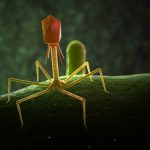
The viruses are engineered to damage essential E coli. genes.
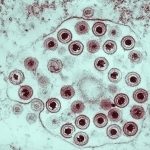
Don’t be alarmed: They only infect plankton.

We don’t need new gadgets; we need to use antibiotics more sparingly.

A new book asks hard questions about whether we’ve thought through life in space.

A new book argues Flat Earth beliefs provide a guide to conspiratorial thinking.
New book details how some attitudes changed less than their justifications.
Bacteria evolve drug resistance more readily when antidepressants are around.

Climate change has coffee growers searching for alternative crop strains.
Rare microbes form two branches of a supergroup, a classification above kingdoms.

In Germany, opposition to wind farms correlated with conspiratorial thinking.

A parasite associated with bold behavior is also associated with pack leadership.
A new book explores 3 capabilities that are here now, whether we’re ready or not.