By the time Sony unveiled the PlayStation 4 at last night’s press conference, the rumor mill had already basically told us what the console would be made of inside the (as-yet-nonexistent) box: an x86 processor and GPU from AMD and lots of memory.
Sony didn’t reveal all of the specifics about its new console last night (and, indeed, the console itself was a notable no-show), but it did give us enough information to be able to draw some conclusions about just what the hardware can do. Let’s talk about what components Sony is using, why it’s using them, and what kind of performance we can expect from Sony’s latest console when it ships this holiday season.
The CPU
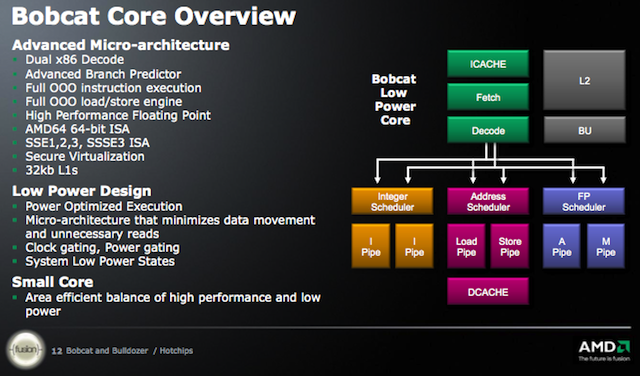
We’ll get started with the components of most interest to gamers: the chip that actually pushes all those polygons.
The PS4 eschews expensive custom chips like the Cell in favor of one of AMD’s accelerated processing units (APUs). This APU shares surface-level similarities with the chips you can pick up for your desktop from Newegg or Amazon, but the details are very different: it combines eight CPU cores based on AMD’s Jaguar architecture and a GPU capable of 1.84 TFLOPS of raw performance on the same die.
The choice to go with an AMD CPU makes sense for a few reasons—the company’s chips don’t have the best x86 performance, but they’re generally considered to be “good enough” for most tasks, and it’s also likely that Sony could extract a better price out of the small and troubled AMD relative to the still-dominant Intel. The company’s experience in high-performance graphics also can’t be discounted; Intel’s graphics products have improved at an impressive pace over the last few years, but they still don’t have what it takes to power a high-end game console.


 Loading comments...