A federal magistrate judge in Chicago recently denied the government’s attempt to force people in a particular building to depress their fingerprints in an attempt to open any seized Apple devices as part of a child pornography investigation.
This prosecution, nearly all of which remains sealed, is one of a small but growing number of criminal cases that pit modern smartphone encryption against both the Fourth Amendment protection against unreasonable search and seizure, and also the Fifth Amendment right to avoid self-incrimination. According to the judge’s opinion, quoting from a still-sealed government filing, “forced fingerprinting” is part of a broader government strategy, likely to combat the prevalence of encrypted devices.
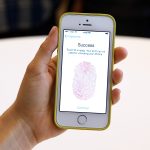
Last year, federal investigators sought a similar permission to force residents of two houses in Southern California to fingerprint-unlock a seized phone in a case that also remains sealed. In those cases, and likely in the Illinois case as well, the prosecutors’ legal analysis states that there is no Fifth Amendment implication at play. Under the Constitution, defendants cannot be compelled to provide self-incriminating testimony (“what you know”). However, traditionally, giving a fingerprint (“what you are”) for the purposes of identification or matching to an unknown fingerprint found at a crime scene has been allowed. It wasn’t until relatively recently, however, that fingerprints could be used to unlock a smartphone.
In a 14-page opinion and order, which was published on February 16 but only began to circulate amongst privacy lawyers and legal scholars on Twitter on Wednesday, Judge M. David Weisman wrote that while investigators did have probable cause to search a particular home, “these limitations do impact the ability of the government to seek the extraordinary authority related to compelling individuals to provide their fingerprints to unlock an Apple electronic device.”


 Loading comments...