
Mere days after the high-profile launch of Google’s social media service Buzz, the company has made modifications to its functionality in hopes of appeasing privacy critics. Over the weekend, Google apologized on its blog for causing some of the initial concerns over Buzz and vowed to continue making improvements based on user feedback. The most significant of those are already in place, though the move highlights Google’s somewhat arrogant assumptions about what its users would be willing to share with the world right out of the gate.
Gmail and Google Buzz product manager Todd Jackson first wrote that in just two days after Buzz’s launch, the service had facilitated more than 9 million posts and comments, including more than 200 posts per minute from mobile devices. Despite this, there have been numerous “suggestions” made to Google (as we have learned, some more civil than others) on how to improve privacy on Buzz and—more importantly—user control of it.
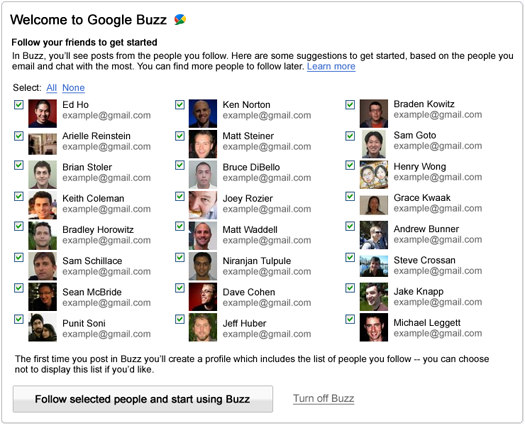
No longer does Buzz automatically follow a handful of your most frequent contacts—instead, it suggests to you people you might want to follow, letting the user make the decision instead of Google. This came after heavy criticism sparked by a woman whose secret Google account was auto-followed by her abusive ex-husband who did not previously know how to find her (she wrote a widely-linked blog post on the topic last week, but it has since been hidden from the public). Even people like myself, who maintain an intentionally public presence, were taken by surprise by the auto-follow feature at Buzz’s launch—auto-suggest will be much more accepted among the social media user base.
Google also said that it no longer automatically connects users’ public Picasa Web Albums and Google Reader shared items to their Buzz accounts. (The justification for doing this initially was that the information was already public, so Google naturally assumed that you would want to blast that information everywhere at all times.) Now, the user gets to decide whether he or she automatically buzzes things shared on those services.

 Loading comments...