After launching on a Falcon 9 rocket in August 2022, the Korean Pathfinder Lunar Orbiter slid into orbit around the Moon last month. This was South Korea’s first lunar probe, and among its chief objectives was surveying the polar regions of the Moon for resources such as water ice.
One of the six instruments carried by the half-ton satellite was a hyper-sensitive camera built by NASA called ShadowCam. The camera was designed with maximum sensitivity to light, such that it could provide images of permanently shadowed regions of the poles—which is to say, capture images of things that are inherently very dark.
Earlier this week, the ShadowCam team released its first image, which reveals a wall and the floor of Shackleton Crater near the south pole of the Moon. At first glance, there’s nothing remarkable about the photo. It looks a lot like… the Moon.
However, what you’re actually looking at is an area of the Moon that lies in total darkness. Here is a photograph taken by NASA’s Lunar Reconnaissance Orbiter in 2009, shortly after it reached the Moon. That black area on the left of the photo? That’s the region of Shackleton Crater imaged by ShadowCam. Yeah, it’s pretty phenomenal.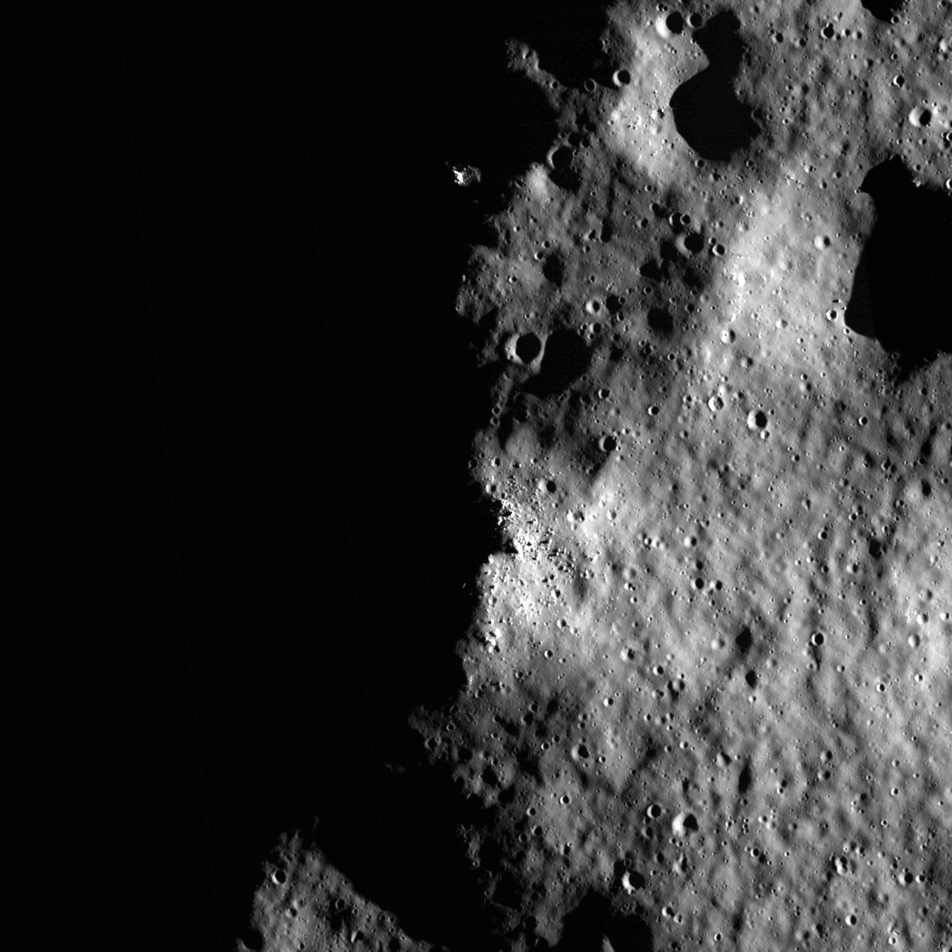
There are a few ways to lighten darker images. A camera can take a longer exposure to gather more photons, it can have a much wider lens opening, or it can use a higher ISO setting. ISO stands for International Organization for Standardization and basically is a setting for light sensitivity. A higher ISO setting makes for a brighter image, but increasing ISO comes with a cost. At higher settings in a darker location, an image quickly becomes noisy or grainy.

 Loading comments...