NASA announced Wednesday that it will send, not one, but two spacecraft to Venus this decade as part of its efforts to ramp up exploration of the closest planet to Earth.
The decision was hailed by scientists who study Venus and have felt neglected by a space agency decidedly more interested in Mars. NASA has not sent a robotic spacecraft to Venus since the launch of the Magellan orbiter in 1989. Launched by space shuttle Atlantis, Magellan made a controlled entry into the Venusian atmosphere in 1994 after collecting reams of data that have tantalized scientists ever since.
“The Venus community is absolutely elated and excited and wants to just get to work and see this happen,” said Venus researcher Ellen Stofan, the Smithsonian Under Secretary for Science and Research, in an interview. “We all are so hungry for data, for moving the science forward. A lot of us worked in this field since Magellan. We’ve had these really fundamental science questions for so long.”
The missions, named DAVINCI+ and VERITAS, have a cost cap of $500 million apiece and were selected as part of NASA’s “Discovery” program. Two other finalists in the competition, an Io Volcano Observer and a mission to Neptune’s icy moon Triton, will be eligible for future awards.
NASA scientists said the two Venus missions were selected on their merits, scoring highest on the agency’s assessments. Although both are going to Venus, each mission is different from the other and will provide complementary data.
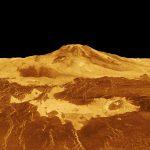
The DAVINCI+ mission will be the first NASA probe to sample the Venusian atmosphere since 1978. The space agency said DAVINCI+ will study how the atmosphere formed and evolved as well as determine whether the planet ever had an ocean. It will also carry a “descent sphere” that will plunge through the planet’s thick atmosphere, making precise measurements of noble gases and other elements to understand why Venus’ atmosphere is a runaway hothouse compared the Earth’s. This sphere will return the first high-resolution pictures of the unique geological features on Venus known as “tesserae,” which may be comparable to Earth’s continents.


 Loading comments...