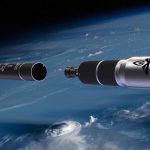
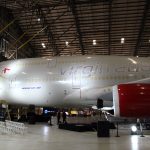
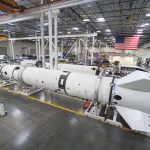
The slim white, red, and black rocket dropped into the blue sky for the first time in late May. For a few tantalizing seconds, all appeared well as the booster cleared the 747 carrier aircraft and ignited its NewtonThree engine.
The engine burned brightly in the thin atmosphere, but it was not to last. The line feeding liquid oxygen into the rocket engine breached, and, without a supply of oxidizer, the kerosene fuel would not burn. As the engine starved, the rocket was lost—and so were Virgin Orbit’s hopes of reaching orbit on its first try out.
In the wake of this letdown, company officials were upbeat, promising to move swiftly toward another launch attempt. “We took a big step forward today,” said Dan Hart, the chief executive of Virgin Orbit, hours after the rocket tumbled into the Pacific Ocean.
Left unsaid, however, is what future the company would step into. Virgin Orbit stands among more than a dozen well-funded, credible ventures in the United States and abroad seeking to develop reasonably priced rockets capable of delivering small satellites into orbit.
The challenge for Hart and his company is that one of the enabling features of this new generation of smallsat launchers is their low price. These new companies, of which Rocket Lab has been the first and only competitor to reach orbit, are promising makers of small satellites timely and low-cost rides to precise orbits. To accomplish this, they must be able to build their rockets for less and run a lean operation.
As Virgin Orbit drives toward its second launch attempt late in 2020, it is not clear whether the company will be able to pull this off. Started in 2011 by Sir Richard Branson as an offshoot of his Virgin Galactic space business, Virgin Orbit has not revealed how much it has spent to date. But industry officials estimate it has expended between $500 million to $700 million developing LauncherOne and the infrastructure to support it.





 Loading comments...