Nearly a decade ago, when Congress directed NASA to build a large rocket based upon space shuttle-era technology called the Space Launch System, the agency also quietly put on the back burner its work to develop in-space refueling technology.
It has long been rumored within aerospace circles that funding for NASA’s efforts to develop so-called propellant depots, and the capability to store and transfer cryogenic rocket fuels in orbit, was curbed due to the threat it posed to the SLS rocket and its prime contractor, Boeing.
After all, if smaller, cheaper rockets could launch rocket fuel and stash it in low-Earth orbit for staged missions to the Moon or beyond, why should NASA spend $2 billion a year annually to develop the SLS rocket? Why not just use that money to buy commercial launches, starting with the Delta IV Heavy and later the Falcon Heavy, and build an exploration program around existing capabilities? It would likely be quicker and cheaper.
Now, thanks to comments on Twitter by George Sowers, a physicist in the middle of this controversy, we have confirmation of sorts. In the early and mid-2010s, Sowers was leading the advanced programs group at United Launch Alliance (ULA), the rocket company co-owned by Boeing and Lockheed Martin. Propellant depots were among the technologies he was working on. Sowers is now a professor at the Colorado School of Mines.
ULA works on depots
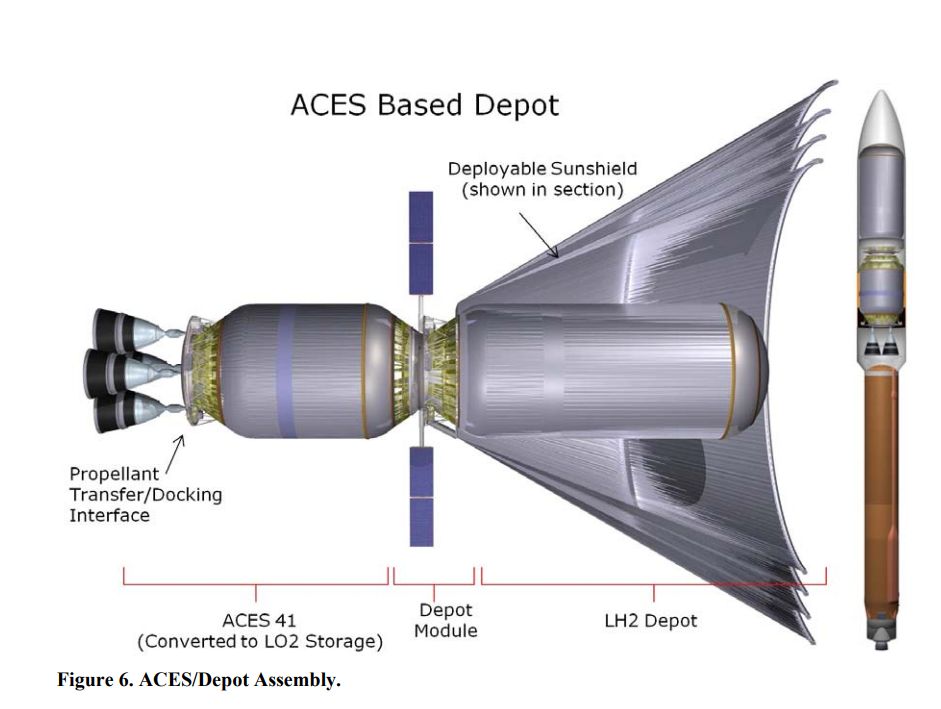
One of ULA’s chief assets was its Centaur upper stage, and the company wanted to build an innovative version that could be refueled in space, and reused, called the Advanced Cryogenic Evolved Stage, or ACES. As part of this development, in 2011, ULA proposed an in-space test of depots to NASA that would cost less than $100 million.

 Loading comments...