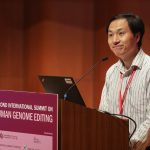
Late last year, a Chinese researcher shocked the scientific community when he announced that the first gene-edited humans had already been born. He Jiankui barreled past an emerging consensus that the technology wasn’t ready for use and, once it was, should be reserved for otherwise untreatable diseases. Instead of respecting those boundaries, He did much of his work without any clear institutional oversight.
Rather than target an incurable genetic disorder, He Jiankui focused on something for which we have both preventative measures and treatments: HIV infection. He did so by using CRISPR gene editing to damage a gene that encodes a protein that HIV uses to enter human cells; previous studies have shown that mutations in this gene protect against HIV infection. But the same mutation was already known to make humans more susceptible to other diseases, raising the question of whether the gene editing put its recipients at risk.
That question has now been answered with an emphatic “yes.” Researchers have found that adults carrying mutations in the gene see their general mortality rise by 20 percent compared to their peers.
Big data
The gene in question is called CCR5, and it encodes a receptor for immune signaling proteins. To perform that function, it has to sit on the surface of immune cells, where HIV can latch on to it and use it to take a ride into the cell’s interior, where it can continue an infection. Research found that some people who had HIV infections that progressed slowly often had mutations in CCR5, often a specific mutation called ∆32, which causes severe damage to the protein.

 Loading comments...