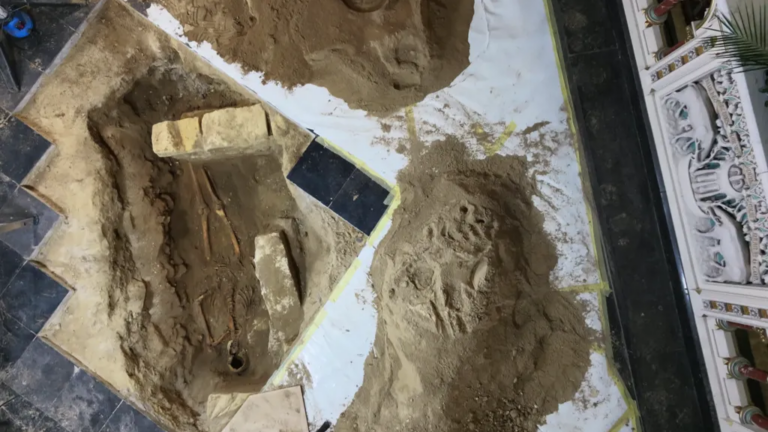
During the final two centuries of the Shang Dynasty (1600-1046 BCE) in China, thousands of people were sacrificed at the state capital of Yinxu. Some were dispatched with great fanfare, buried with rich grave goods, while others appear to have been sacrificed with extreme prejudice and mutilated after death. Now, a new study sheds some light on these victims. Simon Fraser University bioarchaeologist Christina Cheung and her colleagues reconstructed these ancient people’s’ lives by discovering what they ate and when, based on chemical signatures left in their bones.
Human sacrifice was a common ritual among the people of almost every ancient civilization, from China and Europe, to Mesopotamia and the Americas. Though archaeologists have analyzed the graves of these sacrifices, they have many questions about the victims’ lives. Were they revered and celebrated before death, or were they outcasts? Were they prisoners from far away, or were they the sons and daughters of their executioners?
Cheung and her team answered a number of these questions with a chemical analysis of the bones of 68 sacrificial victims at Yinxu, which were compared with the bones of 39 locals. All of the victims were male, and most were young.
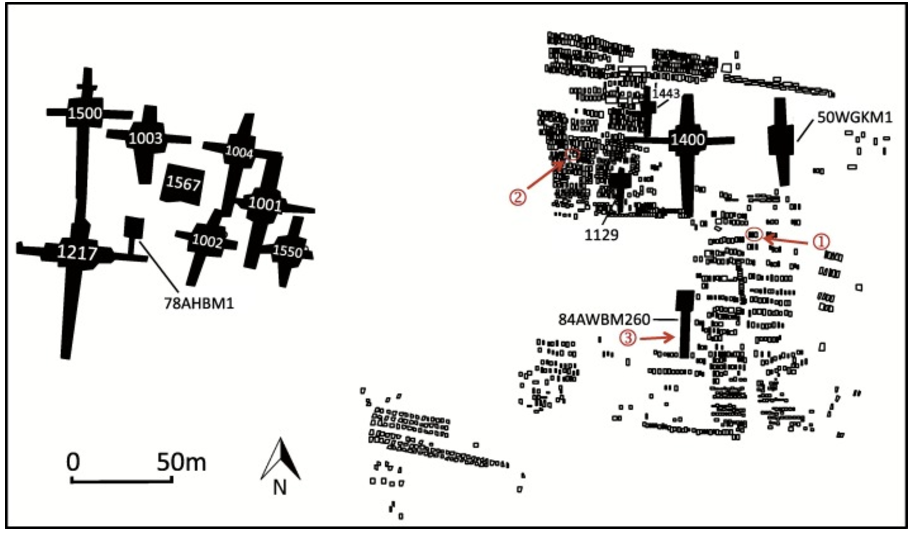
Sacrifices were buried in the royal cemetery across the Huan River from the palace. Archaeologists have been excavating at this site for almost a century, uncovering more than 3,000 sacrificial victims who appear to have been dispatched in groups of 50 to 350 at a time. In a recent paper for Journal of Anthropological Archaeology, Cheung and colleagues describe two distinct types of sacrificial victim.
In Shang, China, there were two main types of human sacrifice: rensheng (人牲) and renxun (人殉). Rensheng literally means “human offerings,” and these victims were often buried in large groups, mutilated, and with little to no grave goods. Renxun can be loosely translated as “human companions.” They were often buried with elaborate grave goods, individual coffins, and even their own rensheng.
Archaeologists typically find rensheng in mass graves that they divide into “skull pits,” “headless pits,” and “mutilated pits.” As you might guess, these are pits full of skulls, decapitated bodies, and partial bodies, respectively. Unfortunately it’s often hard to tell the difference between rensheng and renxun because there has been so much looting and excavation at Yinxu. The practice of mutilating the bodies also makes it difficult for scientists to match skulls with bodies, so they relied entirely on skeletons (headless or otherwise) to identify individuals.

 Loading comments...