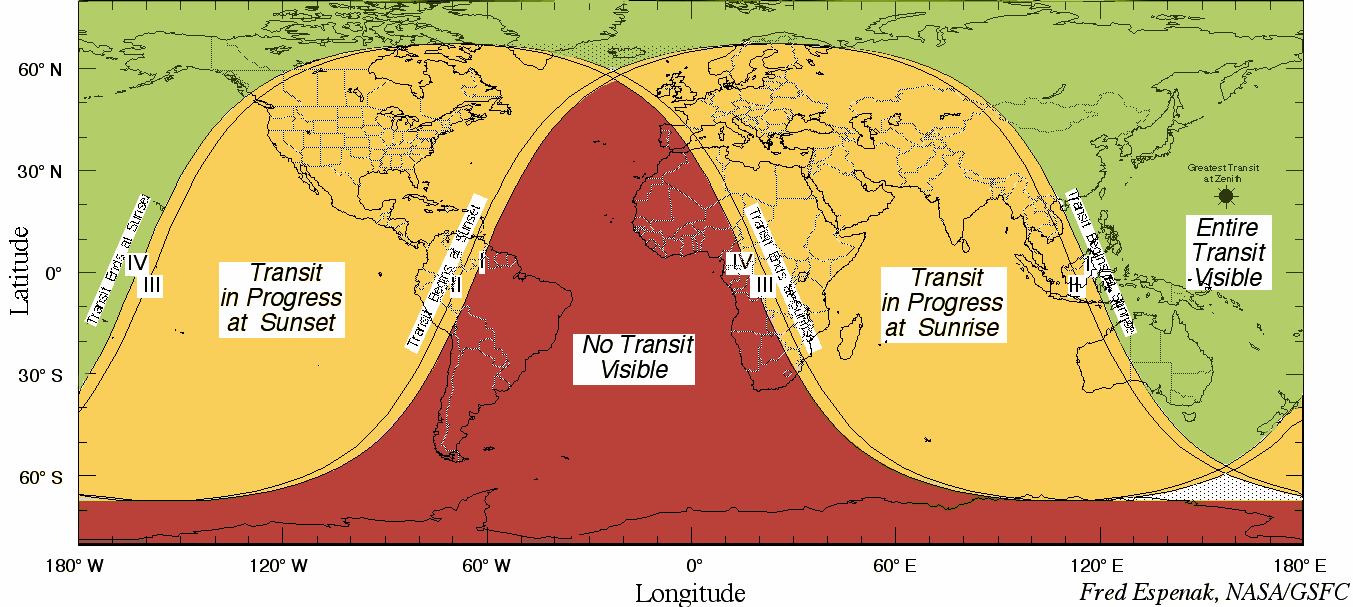
The recent annular eclipse isn’t the only event that will hide some of the Sun this year. Tuesday, June 5, the Earth will be treated to an event that will obscure far less of the Sun, but is more significant both scientifically and due to its rarity: the transit of Venus. For a short period of time tomorrow, Venus’ orbit will take it in between the Sun and Earth, casting a small shadow across the surface of the Earth. Prime viewing areas will be in North America, Europe, and parts of Africa and Asia. If this is your sort of thing, it’s not to be missed, because the next chance to see a transit won’t come around until 2117.
NASA has set up a webpage with details on the transit, and will be webcasting the event if you can’t make it to somewhere where it’s visible. If a live viewing is an option, you can find a map of local options that can help you find a place to go. As always, directly viewing the sun for any length of time should be approached with caution and done with appropriate equipment.
Past transits of Venus have had some scientific significance from very early on, since they helped astronomers refine orbital models of the Solar System and start calculating the distances between different objects within it. This year’s version, however, has taken on new significance due to our recent success in identifying exoplanets.

 Loading comments...