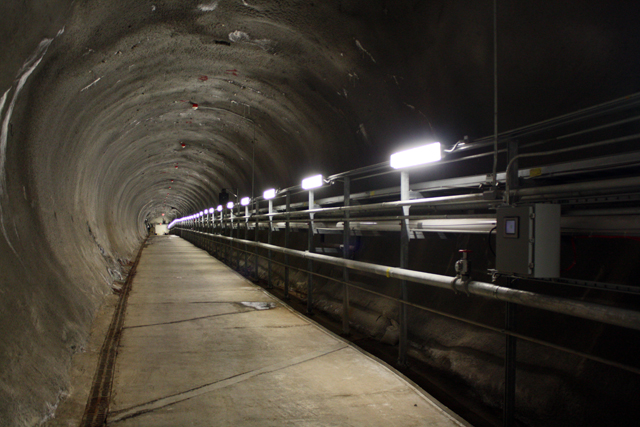
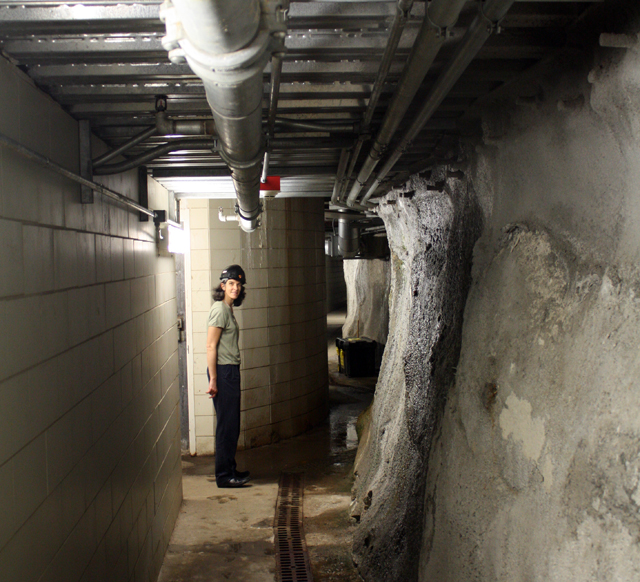
Although I was lucky enough to tour Brookhaven’s RHIC accelerator during a period of scheduled downtime, my trips to the LHC and Fermilab both took place while the particle accelerators were in operation. Given the tremendous energies involved, it meant that it was simply not safe to go anywhere near the active hardware, since that’s a sure way to pick up a healthy dose of ionizing radiation. But Fermilab had an exception to that, a place where it wasn’t just acceptable to look at working hardware, but it was actually possible to walk right through a particle beamline. The secret? The particles were neutrinos.
Neutrinos are uncharged particles and are so light that, for decades, most physicists assumed they were actually massless. As if that weren’t enough, they only interact with other matter via the weak force, which is only significant at short distances. Thus, for the most part, they generally pass through matter without incident—trillions go through your body every minute, but most of us will only have them hit anything a total of about three times in our entire lives.
They are so disinterested in interacting with matter that Fermilab is able to create a beam of neutrinos and direct them to a mine in Minnesota without losing enough of them on the way to interfere with the experiment.
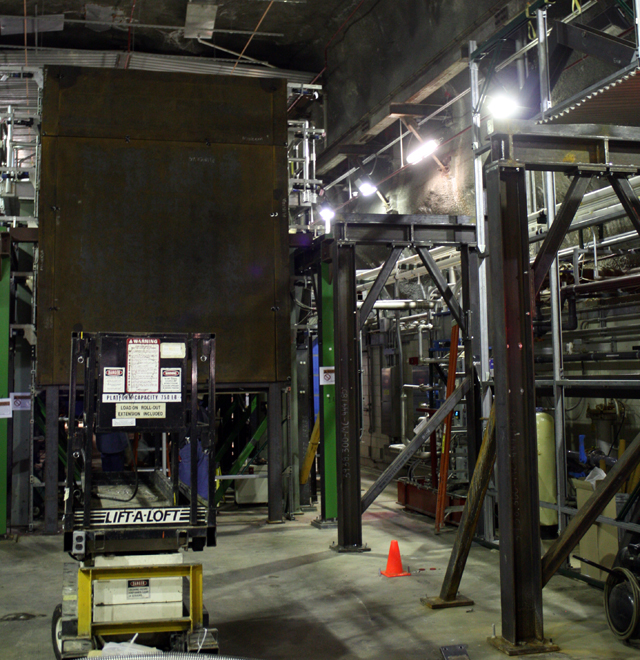
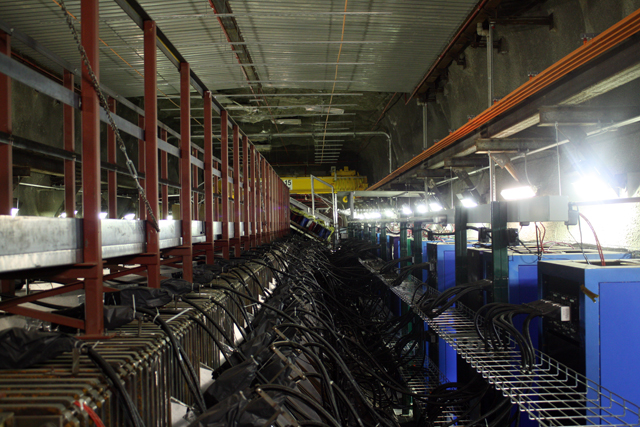
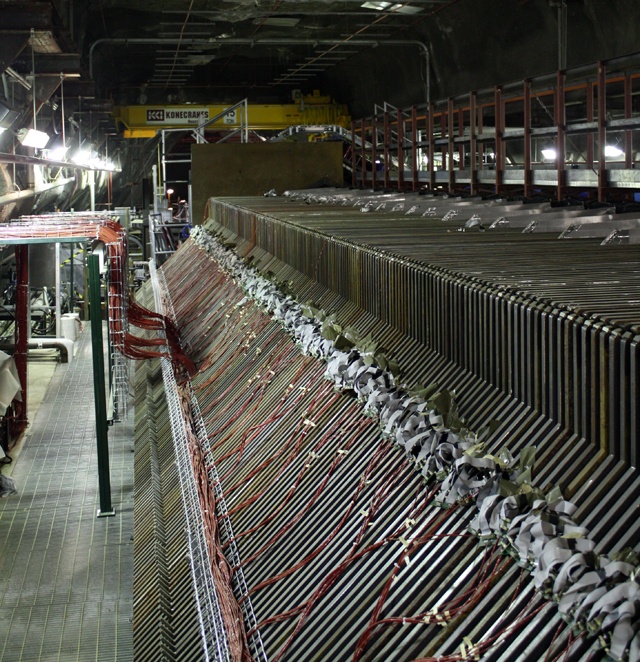
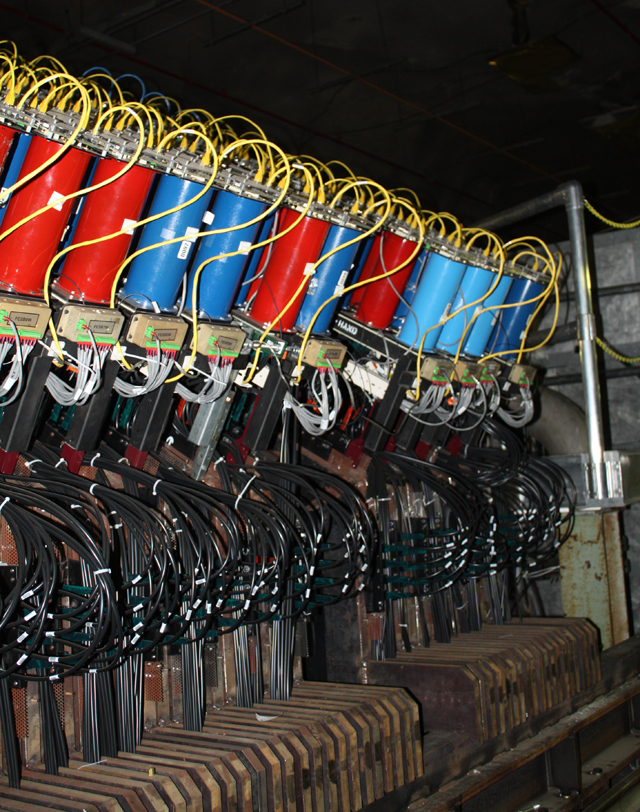
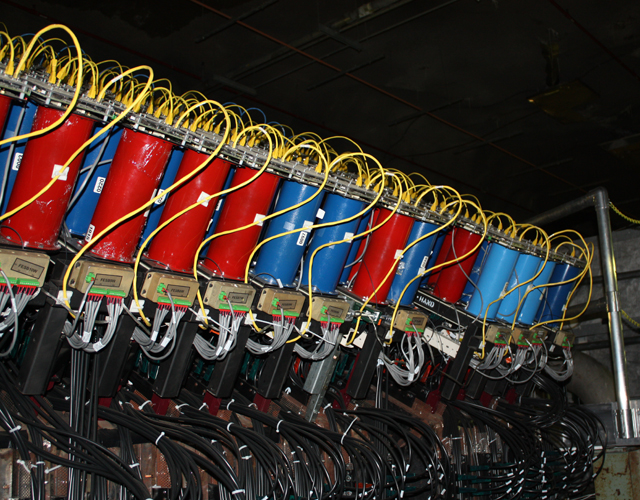
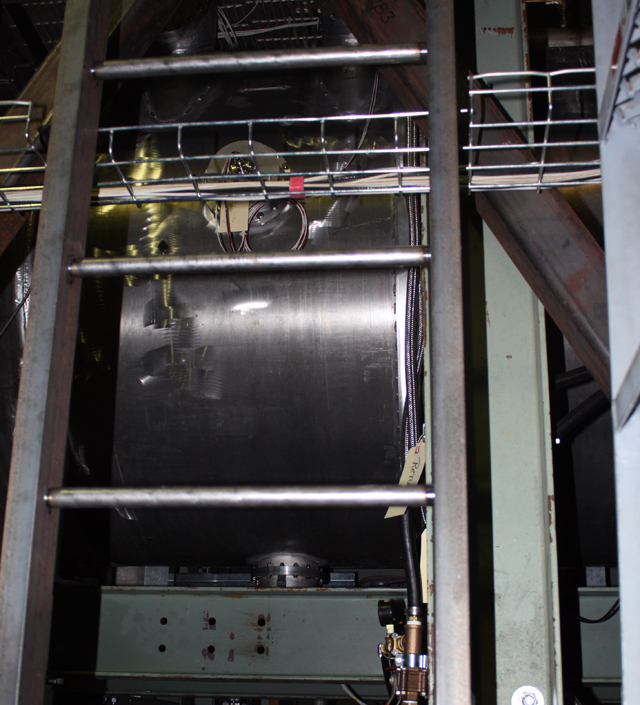
Since neutrinos aren’t interested in doing much other than shooting through the Universe at nearly the speed of light (given their extremely low mass, it doesn’t take much energy at all to get them there), how do physicists actually work with them? That’s what we’ve got the photos for.
Accelerating the neutrinos isn’t an issue, but creating a beam of them is—since they’re uncharged and not prone to much in the way of interactions, there’s no way to focus them. So the people at Fermi don’t. Instead, they focus the particles that decay into neutrinos. This starts by taking some of the protons out of the chain of accelerators that normally boosts them to high energy before their injection into the Tevatron. Instead, these protons are directed at a solid target, where they create a shower of unstable particles, many of which are charged.


 Loading comments...