Last August, academic researchers discovered a potent new method for knocking sites offline: a fleet of misconfigured servers more than 100,000 strong that can amplify floods of junk data to once-unthinkable sizes. These attacks, in many cases, could result in an infinite routing loop that causes a self-perpetuating flood of traffic. Now, content-delivery network Akamai says attackers are exploiting the servers to target sites in the banking, travel, gaming, media, and web-hosting industries.
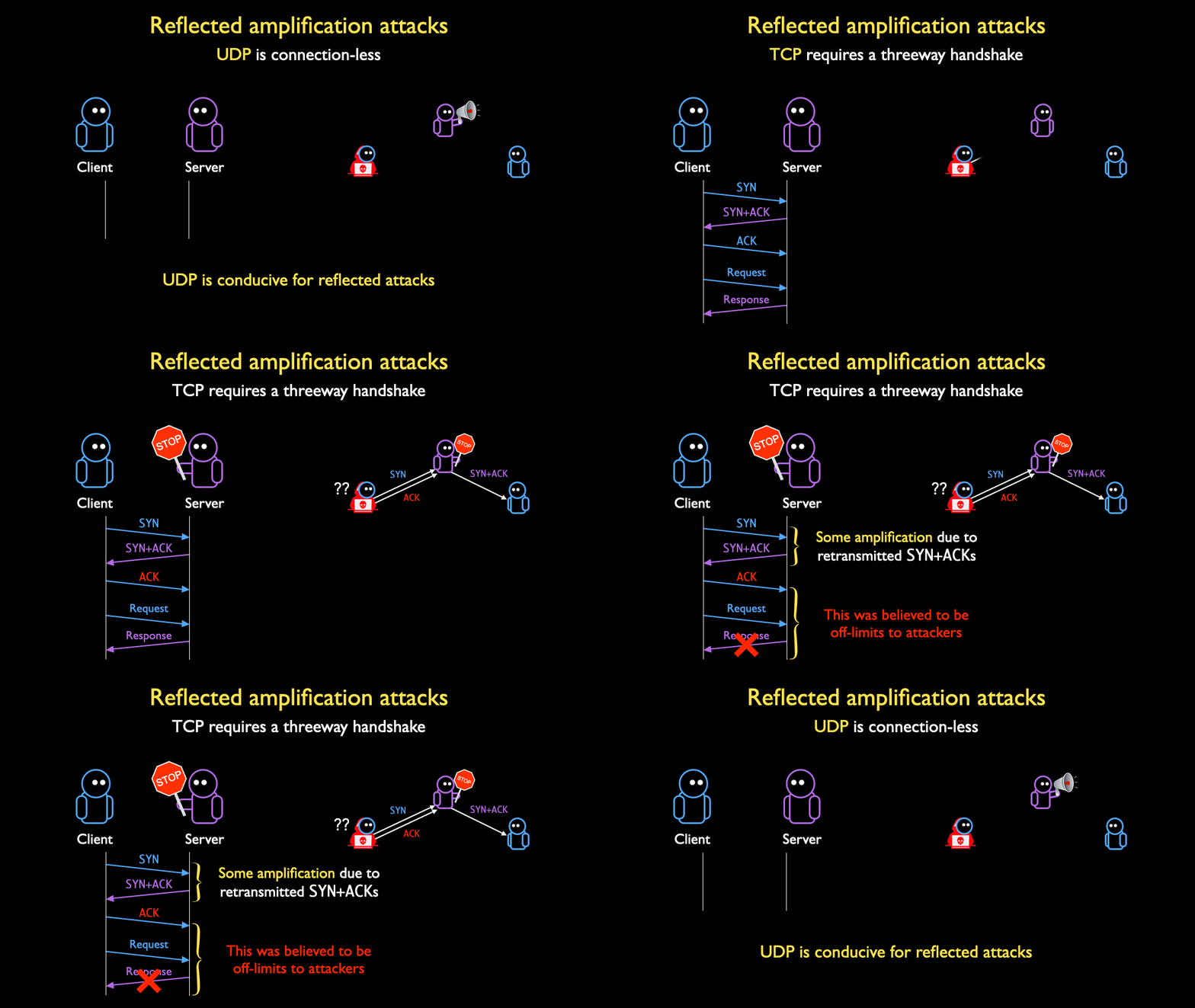
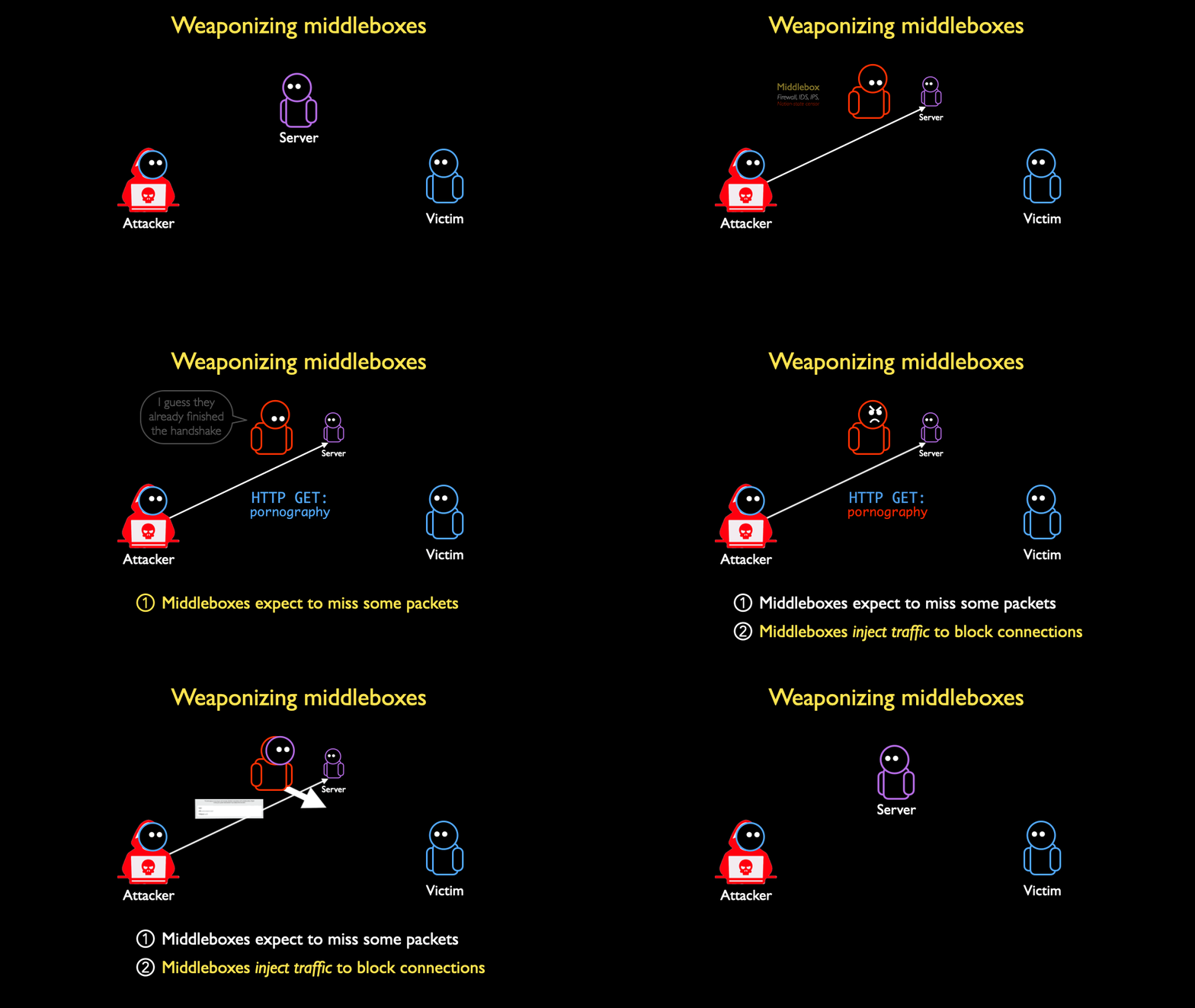
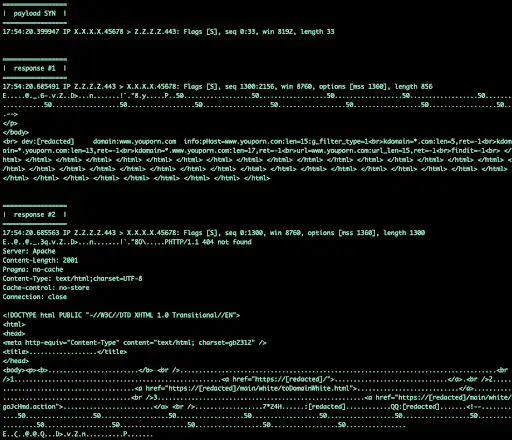
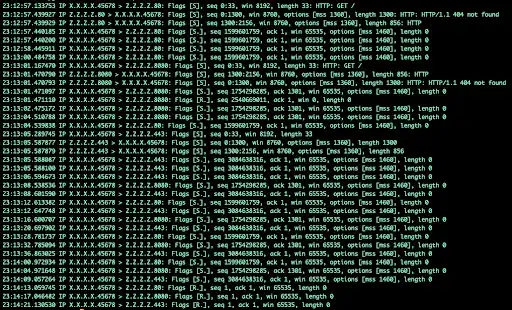
These servers—known as middleboxes—are deployed by nation-states such as China to censor restricted content and by large organizations to block sites pushing porn, gambling, and pirated downloads. The servers fail to follow transmission control protocol specifications that require a three-way handshake—comprising an SYN packet sent by the client, an SYN+ACK response from the server, followed by a confirmation ACK packet from the client—before a connection is established.
This handshake limits the TCP-based app from being abused as amplifiers because the ACK confirmation must come from the gaming company or other target rather than an attacker spoofing the target’s IP address. But given the need to handle asymmetric routing, in which the middlebox can monitor packets delivered from the client but not the final destination that’s being censored or blocked, many such servers drop the requirement by design.
A hidden arsenal
Last August, researchers at the University of Maryland and the University of Colorado at Boulder published research showing that there were hundreds of thousands of middleboxes that had the potential to deliver some of the most crippling distributed denial of service attacks ever seen.
For decades, people have used DDoSes to flood sites with more traffic or computational requests than the sites can handle, denying services to legitimate users. DDoSes are similar to the old prank of directing more calls to the pizza parlor than the parlor has phone lines to handle.




 Loading comments...