JIn case you were busy this weekend and missed it, there was a bit of craziness involving the Russian Foreign Ministry’s website, Twitter, various news outlets, and the “patriotic hacker” known as The Jester. Nothing was harmed except the credibility of several news organizations, some eardrums, and the tender feelings of some Russian officials.
If you are at all familiar with The Jester, you will know that this isn’t the first time he’s used Internet sleight-of-hand for propaganda and other purposes. In the past, he used web address shortener services and cross-site scripting to create the illusion that he had altered articles on the websites of the Malta Independent Online and the Tripoli Post. He’s also used various other tricks to mess with the minds of would-be Anonymous members. And yes, he’s launched distributed denial of service (DDoS) attacks against jihadist sites and the Westboro Baptist Church.
Last week, in the wake of the mega-DDoS attack on Dyn, after indicating he believed Russia was somehow behind the attacks, The Jester posted this message on Twitter:
#FLASH MSG ‘From Russia with Love’ – I’m Jester & I approve this message via the Russian Foreign Affairs Website >> https://t.co/K0pwcChX8N
— JΞSTΞR ✪ ΔCTUAL³³º¹ (@th3j35t3r) October 22, 2016
It was the old URL shortener trick again, taking advantage of a cross-site scripting (XSS) vulnerability in the website of the Russian Foreign Ministry. The result? This document was displayed within the Foreign Ministry site—creating the impression that The Jester had actually hacked the site:
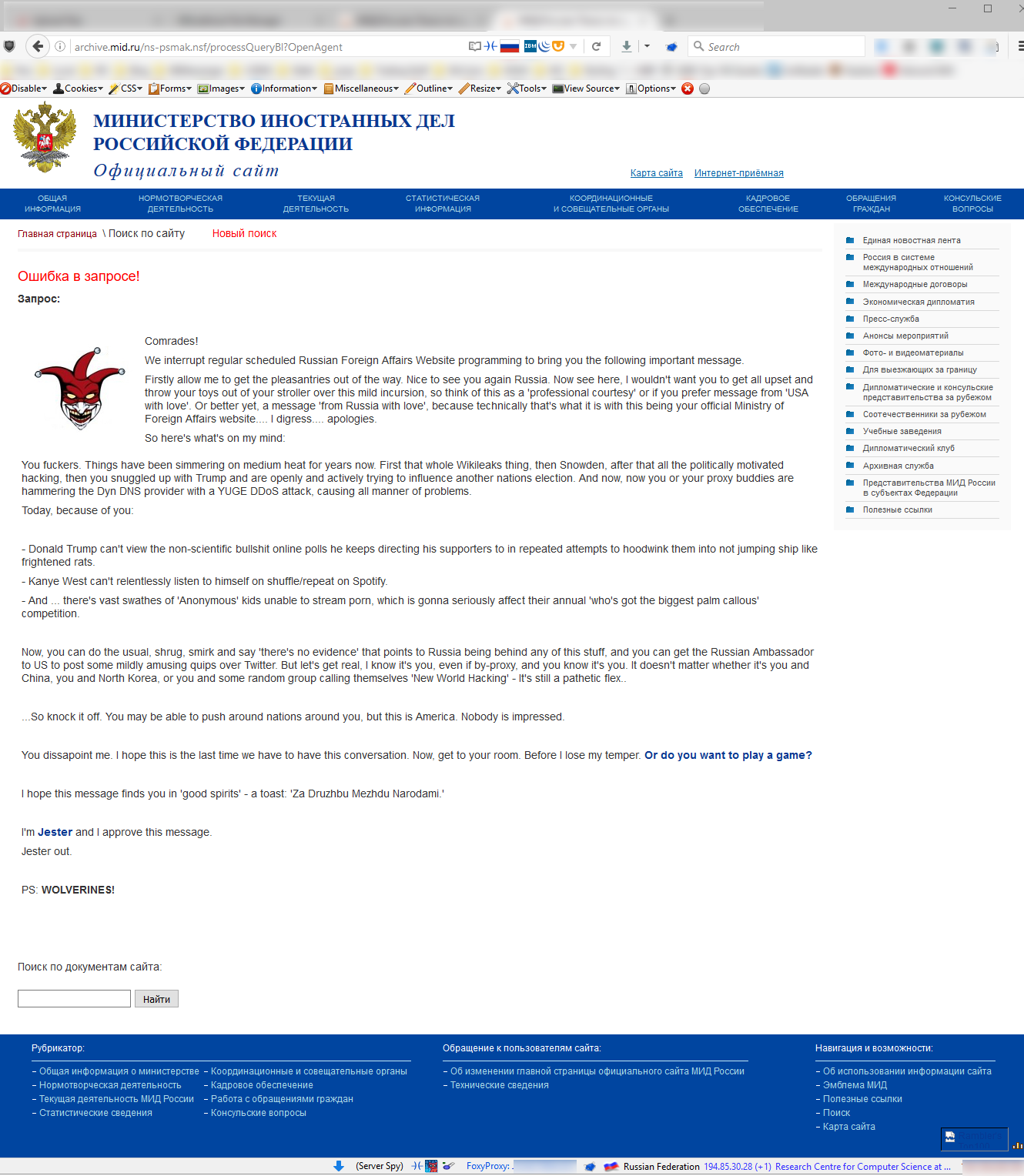
The page was also accompanied, apparently, by audio of a civil defense siren. The page no longer loads, as the Russian Foreign Ministry has blocked the vulnerability, which was in its search engine for the site’s archives. An intermediate website feeds the script to archive.mid.ru—sort of like a web-based toilet-papering of the Ministry’s site.

 Loading comments...