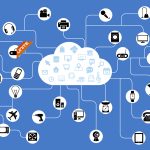
If you believe figures from the technology research firm Gartner, there will be 25 billion network-connected devices by 2020. The “Internet of Things” is embedding networked sensors in everyday objects all around us, from our refrigerators to our lights to our gas meters. These sensors collect “telemetry” and route out data to… whoever’s collecting it. “Precision agriculture,” for instance, uses sensors (on kites or drones) that collect data on plant health based on an analysis of near-infrared light reflected by crops. Sensors can do things like measure soil moisture and chemistry and track micro-climate conditions over time to help farmers decide what, where, and when to plant.
Regardless of what they’re used for, IoT sensors produce a massive amount of data. This volume and variety of formats can often defy being corralled by standard relational databases. As such, a slew of nontraditional, NoSQL databases have popped up to help companies tackle that mountain of information.
This is by no means the first time relational databases have ever been used to handle sensor data. Quite the contrary—lots of companies start, and many never leave, the comfort of this familiar, structured world. Others, like Temetra, (which offers utility companies a way to collect and manage meter data) have found themselves pushed out of the world of relational database management systems (RDBMSes) because sensor data suddenly comes streaming at them like a school of piranha.
From a trickle to a torrent of IoT data
In 2002, Temetra was a small company operating out of Ireland. It employed just five people at the time, but the company was already storing data from hundreds of thousands of water meters, analyzing flow through customers’ pipes. “Having more data allows you to do more analysis on the network,” Temetra Managing Director Paul Barry said. “As you can imagine, water utilities don’t have unlimited budgets. Say I’ve got a budget of $25 million to go fix leaks. I could spend a lot of time chasing them down. It’s much better to address the least efficient parts of the network, where I get the most bang for my buck.”


 Loading comments...