
Distributed denial-of-service (DDoS) attacks, the coordinated attacks by armies of (usually hacked and remote-controlled) PCs against websites and other online services, are like part of the Internet’s weather. And in the past, DDoS attacks were like hurricanes—they peaked and ebbed with a fairly specific seasonal pattern. The more publicly visible attacks of groups like Anonymous tend to chase headlines, and are less predictable. But the less visible ones—motivated by money rather than politics—tend to peak during the holiday shopping season, when the potential losses from having a website go down are the greatest, and companies are most likely to cave to extortion demands.
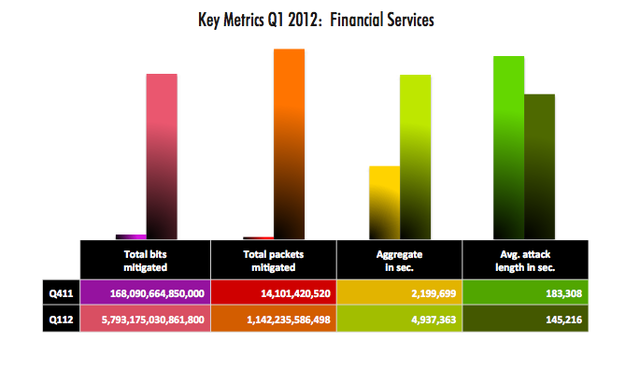
But that hasn’t been the case so far this year, according to a report by website security firm Prolexic. The number of denial-of-service attacks in the first quarter of 2012 grew 25 percent compared with the same period of 2011, and was nearly equal to the number in the last three months of last year. Not only has the number of DDoS attacks not dropped from its seasonal high, but the volume of junk traffic being created by them has spiked dramatically—the company reports that it has fended off more malicious traffic in the first three months of 2012 than it did in all of 2011—9.5 petabytes of raw data, and 408 trillion network packets.
The report, based on forensics and post-attack analysis by Prolexic’s Security Engineering and Response Team, also found that attackers are shifting to new platforms as well, increasingly creating botnets that exploit browsers, Mac OS X, and mobile phone platforms to generate their traffic. The data points to a change in focus and strategy by denial-of-service attackers as the key driver for the leap in DDoS attacks.

 Loading comments...