Skip to content
Saving the best for Last of Us

The Last Of Us Pt 1 remake review: Enough upgrades to leave us stunned

PS5 refresh redeems combat, reignites drama—but is still chained to 2013 source.

Sam Machkovech | 91
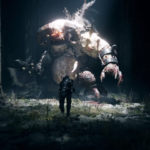
This moment from The Last Of Us Pt 1 was captured as a real-time cinematic on PlayStation 5. All images of the PS5 version were directly captured by Ars Technica, except where noted (though Sony's own supplied screens are in line with how the game looks on current-gen hardware). Credit: Naughty Dog / Sony Interactive Entertainment
Story text
A little over a decade ago, developer Naughty Dog diverged from its base of amusing, swashbuckling video games by revealing its most intense project yet: The Last of Us. The game’s first-look trailer, which premiered at E3 2012, appeared almost too good to be true.

In some ways, this new series looked like the stunning Uncharted games we’d already seen on the PlayStation 3. It was full of realistic characters, detailed environments, and convincing movie-like dialogue. But this wasn’t a shooting gallery interrupted by wild train sequences and epic climbs up mountains. Instead, TLOU appeared to host the tensest and most brutal combat ever seen on a gaming console. A camera dramatically swung around two survivors of an apocalypse, and these resource-starved protagonists tiptoed around dangerous foes (humans and zombies alike), always one low-on-ammo gun jam or wrong step away from certain doom.

One year later, the game launched to accolades and high sales figures, but it didn’t quite resemble that dramatically staged “real gameplay” trailer. The final game’s enemy AI, battle choreography, and presentation of player choices felt more video gamey than we saw in the trailer.

I remembered that old sense of disappointment while I played The Last Of Us Pt. 1, this week’s PS5 remake of the 2013 original. Honestly, there were moments while I tested this note-for-note remake where I felt adrift, enough so that I saw cracks in its handsome, “current-gen” facade. This is not a perfect remake, and it may leave both new players and Naughty Dog diehards disappointed in some respects.

But when I finally got far enough in the dark, compelling campaign to relive its jump-scare corridors and epic battles and saw the progress that had been made since 2013, I got it. TLOU Pt. 1 is a rare example of a gaming publisher pointing to a classic “bullshot” trailer, then telling a team of developers, “You get to finish the job. You get to make this look and feel like that amazing trailer.” And in enough respects, Naughty Dog has done just that.

Grotesque yet beautiful

Impressive reflection effects during a dramatic moment.
Some people love to watch the world burn… when there’s proper reflection technology involved, anyway.

As far as remakes go, TLOU Pt 1 splits the difference between “wholesale rework” and “massive touch-up.” In terms of narrative and world design, most of the original game has been preserved. Environments, conversations, puzzles, hidden collectibles, and even codes to locked safes are the same.

That sales pitch may remind you of another remake project that jumped from PS3 to PS5: Demon’s Souls. The 2009 original on PS3 remains so beloved on a mechanical level that its 2020 remake team was careful to leave combat encounters and mechanics mostly alone. But where Demon’s Souls 2020 made jaws drop with its massive visual leap, TLOU Pt 1 has a slight problem: Its source material was already ahead of its time.

Naughty Dog spent years cutting its teeth on three Uncharted games on the PS3, and the original TLOU was the console’s grotesque-yet-beautiful swan song, a game that was able to squeeze incredible environments and dramatic stories out of Sony’s famously cantankerous console. The game eventually received a native PS4 version, which merely bumped the resolution and frame rates, yet even this simple port turned out to be one of the PS4 generation’s prettier games for a few years.

So we’re not looking at something like Demon’s Souls or even Link’s Awakening as remade on the Switch—where the graphical foundation is so massively shifted that you can’t help but gawk at it. TLOU Pt 1‘s graphical leaps are impressive, but they may pass you by if you’re not constantly flipping back and forth between the original material. To make my own point, I tested the new version for hours before going back to compare, at which point I realized I was remembering the PS3 original through rose-tinted glasses. The new version’s upgrades are so organic that they appear without much fanfare, as if this is how the game originally looked.

Millisecond-long cracks in emotional armor

I can barely tell the difference between the 4K and 1440p captures I took. This one’s 4K. (Click the gallery to access a downloadable, full-res version of each image.)
Same scene, 1440p.
A scene in 4K mode.
Same scene, 1440p mode.

Take any environment from the original game, then think about how its details might be upgraded—albeit without reshaping its original building blocks—and Naughty Dog has probably built upgrades in kind. A storefront sign that was previously flat, square, and fuzzy is now carved to the exact shape of a fancy font, then touched up to appear degraded by decades of apocalyptic disrepair. Trees, plants, and grass are now thicker and react to both wind and your footsteps. Explosions and bursts of molotov cocktail flames are richer and more realistic, all while benefiting from more natural clouds of smoke. Building facades have been retooled in every conceivable way—not just with high-res textures but with entirely new balconies, fire escapes, and other geometry.

Same moment in a pre-rendered scene, PS4.
Real-time visuals, PS5.

That says nothing of the careful attention to detail in wholly redrawn elements, particularly faces and realistically animated hair. Main characters have received a lot of care, while Naughty Dog arguably devoted too much time glowing up the game’s most disposable NPCs, from townspeople to roving bandits. The biggest boosts unquestionably come during the game’s pivotal cut scenes. Think about the final conversation Tess has with Joel before they go their separate ways, then imagine how that might play out with roughly quadruple the detail in both characters’ faces (which, according to the devs, are all hand-animated, not auto-translated from facial capture). This time around, millisecond-long cracks in faces’ emotional armor betray the characters’ hidden feelings, just like you’d expect from an award-nominated film performance. That element, which can be found very often in this remaster, may be worth the price of admission alone for fans of the series’ stories.

This is maybe the most safe-for-work zombie moment I captured. It looks more like innocent necking than it does a violent biting and yanking of poor Joel’s carotid arteries.

TLOU‘s mold-infested zombies reach a new level of grotesqueness as well, though in their case, that’s as much about polygon touch-ups as it is in how the PS5 version renders darker environments. Ambient occlusion and realistic bounces of light add physicality to every human and monster alike, while interior spaces are full of dust clouds, shafts of light, and fields of particles—especially in spore-filled underground passages.

2022 version on PlayStation 5. The comparison reveals that this updated version has a more realistic amount of bounce lighting based on the room’s general lack of ambient light.
The 2014 version on PlayStation 4.
2022 version on PlayStation 5. The difference in hair, geometrical detail, and color balance is impossible to miss.
The 2014 version on PlayStation 4.

Those technology upgrades combine to make the game feel like it has real weight, which is arguably easier to appreciate in motion than in screenshots—although I’ve included a few before-and-after comparisons to show how much better TLOU Pt 1 looks with more realistic lighting and less flat, everything-is-bright illumination. One example is a scene at a history museum, where series lead Joel has to duck and crawl through wooden debris in the dead of night, relying solely on his flashlight to see what’s ahead. All of those particle effects and realistic light bounces add up to a far more tense visual experience. Crucially, these upgrades don’t make it harder to see your path; rather, they make the imminent terror of an instant-kill clicker noticing your position that much more convincing.

PS5’s increased power boosts the combat possibilities

The remaster’s newly updated combat AI is admittedly dampened by the game’s opening, tutorial-filled 90 minutes. You’ll still start this adventure sneaking up on dopey villains who stand still and stare in only one direction, all while nobody is nearby to check that they’re OK.

It’s hard to use screenshots to demonstrate good AI, but this moment is a fun one: the bad guy pops out with an “a-ha!” aim of his gun, only to notice nothing in his immediate vicinity and double back to where he came from. (Sequence provided by Sony.)
Same sequence, only now the previous guy has a buddy, and they’re moving toward what they think is their target. (Sequence provided by Sony.)

I will admit, the holy-whoa scripted moments in the E3 2012 trailer are not easy to replicate, but TLOU Pt 1 gets a lot closer. Naughty Dog appears to have a brute-force answer to the old game’s AI problems: simply pour more if-then conditions into these enemies’ brains, then let the increased power of PS5 juggle all of the possibilities. If you kill a human, other baddies are now more likely to call out, wonder why their ally doesn’t reply, and move toward his/her last known position with their guard up. When enemies know something is awry, they’ll gesture to each other to flank, forcing players to react or scramble more quickly. And when Joel and Ellie truly get the slip on their foes by using a sneaky path, the bad guys realistically miss the memo and intelligently scatter to cover as much ground as possible.

Infected/zombie AI is understandably dumber; that fits the game’s tone, and this game’s infected-filled sequences were built for simpler enemies and creepier conditions. Yet even here, TLOU Pt 1 does a better job using sound cues and clearly visible enemy reactions to teach players how to move and when they’re pushing the limits of, say, being spotted from afar. (Those kinds of signals look and feel better in battles against humans, as well.)

These tweaks contribute to much more refreshing encounters across the board. I used to dread larger fights against human forces in TLOU, but the remake makes me feel more like my decisions as a player are respected—and that I always have a reasonable path to surviving a tough fight, even if that path requires slowing down or waiting for the perfect opportunity to strike or sneak.

Running up stairs like they’re made of invisible gelatin

What’s more, both modes offer seemingly identical graphic settings for elements like shadow resolution and level-of-detail pop-in, and Naughty Dog’s own upscaling method makes 1440p look crisp enough. We wholeheartedly recommend that option, which can even run at an unlocked rate above 60 fps if your set supports higher frame rates and the HDMI 2.1 version of VRR. Graphical upgrades and smarter enemies make this version of TLOU the best one yet, but those updates fail to address an issue at this game’s core: TLOU was originally designed for the PlayStation 3, and at its worst, TLOU Pt 1 still feels like a PlayStation 3 game.

This is most evident whenever anyone takes their sweet time to complete a task, which was originally used to mask a PS3-era load of textures and assets. Hold on, slow down, now. Ellie needs to be boosted to a high platform, or Joel needs to exert for 10 seconds to open a gate, or the adventuring party needs to crawl through a tight corridor. Similarly, a ton of the game’s progress occurs in painfully tight indoor spaces, while outdoor regions are inevitably closed off with fences, locked doors, and massive tangles of trees and foliage. As a result, the game constantly slams its foot on the brakes every time its graphics begin to charm with upgraded environs and incredibly realistic lighting effects.

I’m positive that the PS5 could lean on its blistering PCI-e 4.0 storage protocol to render wide-open environments on a more regular basis, but Naughty Dog elected to port the original locked-down regions from PS3, then fill them to the brim with handsome effects. The game would have benefited from some creative revisions on that front, even if the resulting game still looks and feels like an across-the-board upgrade. Similarly, I would have liked for some of the battlegrounds to lean less on the “Oh, hey, look at all this chest-high debris” cliche of the Xbox 360 and PS3 generation. TLOU Pt 2 did well to move past that sort of thing; I wish TLOU Pt 1 would have gotten the same love.

There’s also the matter of the uncanny valley effect feeling more intense when the game looks this good. Certain PS3-era issues have made their way to PS5, from glitching character collisions (which occasionally means Joel gets stuck in corners, blocked by an absent-minded companion) to the weird way that the game’s heroes walk on stairs (their feet don’t actually touch the stairs but rather glide over them, as if they’re running up and over invisible gelatin). These moments yank me out of the belief that I’m in the middle of a movie-like experience, which stinks.

One other nitpick: I would have liked for Naughty Dog to let players transfer existing save files, even if only from the PS4 version, as a token of gratitude to anyone who has already collected the original game’s hidden trinkets. Again, these have been placed identically, so their discovery won’t require new sleuthing for series vets, yet they count as currency to unlock cool bonuses in the game’s “extras” menu. Most of this menu’s concept art, 3D character models, and other neat behind-the-scenes content must be purchased with points, which are accrued by finding stuff lying around in the game (Firefly Pendants, letters, documents).

The best exception is a series of DVD-styled commentary tracks that play over the non-interactive cinema scenes and are hosted by original game director Neil Druckman and voice actors Troy Baker and Ashley Johnson. These are simply unlocked by reaching their respective moments in the campaign, then replaying them in a menu, and they’re surprisingly illuminating. If you can’t watch them on PS5, cross your fingers that they find their way to YouTube one way or another.

Enough serious upgrades to merit a thumbs-up

Really cool audio accessibility options here.
Permadeath is the opposite of “accessibility,” but it’s certainly here for you.

If you enable “dialogue rumble,” any voices—and their intensity—are conveyed by the DualSense gamepad’s precise vibrations. This is really cool in action, although if you enable it, you may want to disable other in-game rumbles, as they can overlap in confusing ways. (Hey, Sony: Any chance you can port this deaf-friendly dialogue-vibration system to a streaming video service like Netflix?) Players must also beat the primary campaign at least once to unlock a few cool bonuses, including a dedicated speedrunning mode, visual filters (including a trippy wireframe-like option), and gameplay modifiers. The latter menu includes wacky tweaks like unlimited ammo, one-touch melee kills, and exploding arrows. I wish I could have imported an old save file, then immediately played through this remake with unlimited exploding arrows. Ah well.

Just like the PS4 remaster, this package includes Left Behind, a single-player DLC campaign, which itself has been fully touched up just as the original campaign has. Unlike the PS4 remaster, however, TLOU Pt 1 does not include any form of multiplayer. Naughty Dog has spent years teasing a multiplayer mode for the series, ever since TLOU Pt 2 shipped without such a mode, and we honestly have no clue if or when it might arrive.

The optional commentary track during this cut scene clarifies a detail I’d never noticed before. Makes it doubly pretty, honestly.

Ultimately, TLOU Pt. 1 is equal parts impressive and inessential. It is the best version yet of an easily recommended PlayStation-exclusive adventure, and it’s ideal for the select niche of people who somehow own a PS5 and haven’t played the original. (That demographic gap could grow in the coming year, especially as HBO’s TLOU TV series inches toward a premiere sometime in 2023.) There are obvious points where Naughty Dog could have advanced certain game design decisions to make the game feel more modern, yet the most emotionally engaging stuff—the combat and the combative narrative highlights—has been spared no expense.

The good

  • Top-to-bottom visual refresh means no stone was left unturned—or untouched by an amazing new lighting-and-shadow system.
  • Overhauled cinematics are now rendered in real time and vastly outpace the pre-rendered scenes on PS3. (This time, you’ll cry.)
  • Upgrades to enemy AI and battle scenarios finally have us thrilled about this game’s combat.
  • Accessibility features make the game as approachable as possible.
  • Unlockable behind-the-scenes goodies include a revealing “director’s commentary” option.

The bad

  • PS3’s hardware limitations remain intact: too many cramped hallways and pauses for loading times.
  • Despite some QOL tweaks, Naughty Dog skipped a few too many opportunities to improve dated elements.
  • Still no sign of a modern multiplayer mode to build upon the PS3 original.

The ugly

  • On a rare occasion, running up those (gelatin-lined) hills to make a deal with the (glitchy-animation) gods.

Verdict: If you have the bandwidth to play this emotionally brutal adventure one more time, or if it’s new to you, TLOU Pt 1 is the best version yet. If you need more than upgraded combat to put you over the top, wait for a sale.

Ars Technica may earn compensation for sales from links on this post through affiliate programs.

Listing image: Naughty Dog / Sony Interactive Entertainment

91 Comments