Mark Cerny explained that prior console generations put a strain on developers to get up to speed with how to maximize a console’s potential. (Note here that he’s being pretty generous about the archaic architecture that plagued the PS3.)
Mark Cerny explained that prior console generations put a strain on developers to get up to speed with how to maximize a console’s potential. (Note here that he’s being pretty generous about the archaic architecture that plagued the PS3.)PlayStation
To that end, Cerny alleges that developer ramp-up time for newer PlayStation consoles has been shrunk significantly.
PlayStation
To that end, Cerny alleges that developer ramp-up time for newer PlayStation consoles has been shrunk significantly.
PlayStation
Look, a PS4 hard drive. not drawn to scale.
PlayStation
Look, a PS4 hard drive. not drawn to scale.
PlayStation
To that end, Cerny alleges that developer ramp-up time for newer PlayStation consoles has been shrunk significantly.
PlayStation
Look, a PS4 hard drive. not drawn to scale.
PlayStation
Cerny’s promises regarding PS5 seek speed.
PlayStation
Cerny explains that patch download files don’t have to be placed in certain places for the sake of game-load efficiency. This effectively reduces the time required to download and patch PS5 game updates, Cerny says.
PlayStation
Hiding load times with narrow paths through mountains will be a thing of the past, Cerny says.
The PS5 doesn’t need a generational leap in RAM if the SSD doubles as “virtual” RAM in some capacity.
PlayStation
One PS5 stat was confirmed today: “825GB” of accessible game-install space on the PS5’s SSD.
PlayStation
A deeper dive into what you can expect on top of the PS5’s SoC silicon, including an emphasis on the Kraken on-the-fly compression system.
PlayStation
Sony’s expandable memory plan: you can buy and insert a standard M2 SSD into your PS5… if its bandwidth meets or exceeds a 5.5GB/sec threshold. Cerny warns fans not to buy M2 drives for a PS5 just yet, due to current market factors.
PlayStation
PlayStation 5 lead system architect Mark Cerny revealed a bevy of details about the upcoming console in a livestreamed presentation today, promising the system’s built-in SSD would be able to load content 100 times faster than the old spinning hard drive system on the PS4. The increased loading speeds enabled by SSDs are “really… the key to the next generation [of consoles],” he said.
While the PS4 hard drive can achieve speeds of 100MB/s for data laid out in an ideal form, time spent “seeking” across the head of the hard drive means effective load speeds are closer to 20 seconds per GB, or 50MB/s, Cerny said. For the multi-gigabyte content of today’s games, Cerny said that means “load times can get pretty grim… [players have to] wait for the game to boot, wait for the game to load, wait for the level to reload every time you die, and wait for… ‘fast travel.’”
Using the SSD on the PS5, by contrast, Cerny says developers can load 2GB of data in just 0.27 seconds, two orders of magnitude faster than the PS4. That 5.5GB/s speed is faster than the 2.4GB/s loading quoted by Microsoft earlier this week for the upcoming Xbox Series X.
The extra speed is nice for generally shortening load times, Cerny said, but “giving the game designer freedom” was the bigger consideration. On previous hardware, developers often had to chop a game world up with elevator rides or add in windy passages so players wouldn’t need to “see” more than could be loaded in a short time (a “giant distraction for a team that just wants to make their game,” as he put it). On the PS5, Cerny says, loads are now so fast that developers can load everything new a player needs to see during the split second as that player turns around in the game.
That also means the PS5 can make more efficient use of its 16GB of RAM, Cerny said. Since developers can fill that RAM as needed, rather than needing a loading buffer to cover the next 30 seconds or so of expected gameplay assets, more of the RAM ends up in “active” use over time. That means there’s less need for a “massive intergenerational increase in size” for the PS5’s RAM setup, Cerny said.
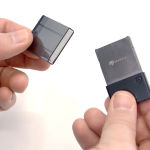
To expand that fast storage, Sony isn’t following the lead of Microsoft’s proprietary “card” format. But that doesn’t mean PS5 owners can just plug in any old SSD, either. Instead, the PS5 will support “certain M2 SSDs” available on the open market, but only if they meet the PS5’s internal 5.5GB/s spec.
Cerny says he expects high-end PCIe 4.0 drives to hit this standard within the year. Those drives will also have to fit in the space allotted inside the PS5, which is no guarantee given the heat sinks and fans built into some of these SSD models. Sony will be conducting benchmarking and compatibility tests on multiple drives before the PS5 launch, but confirmation of the first SSD drives that are officially PS5 compatible will “likely be a bit past that [launch].”
Variable clock rates
This explainer about PS5 backwards compatibility includes a curious amount of empty space. We wonder what other PlayStation generations might sneak into the PS5 in the future, as rumored. For now, just PS4 (in “normal” and “pro” modes as options).
This explainer about PS5 backwards compatibility includes a curious amount of empty space. We wonder what other PlayStation generations might sneak into the PS5 in the future, as rumored. For now, just PS4 (in “normal” and “pro” modes as options).PlayStation
Yes, PS5 ray tracing is coming.
PlayStation
Yes, PS5 ray tracing is coming.
PlayStation
The AMD architecture used in the PS5 is arranged differently than… other possible configurations. Cerny insists that PS5’s use of fewer processor cores than an unnamed rival will deliver superior game performance.
PlayStation
The AMD architecture used in the PS5 is arranged differently than… other possible configurations. Cerny insists that PS5’s use of fewer processor cores than an unnamed rival will deliver superior game performance.
PlayStation
Yes, PS5 ray tracing is coming.
PlayStation
The AMD architecture used in the PS5 is arranged differently than… other possible configurations. Cerny insists that PS5’s use of fewer processor cores than an unnamed rival will deliver superior game performance.
PlayStation
Cerny says a mere 36 CUs on the PS5’s SoC, thanks to larger transistor space used overall, is equivalent to 58 CUs found on the PS4’s silicon die.
PlayStation
It took 40 minutes for Cerny to confirm the basic numbers: 10.3 teraflops in all, along with a CPU up higher than the originally expected frequency of 3.2GHz.
PlayStation
[Update 1:58pm ET] On previous console hardware, Cerny said Sony had to guess what the maximum power consumption might be for a set of GPU/CPU frequency cycles, then design a fan that could accommodate that level of heat. If they got that estimate wrong, it could lead to excess fan noise or even system shut downs.
For the PS5, Cerny said Sony is using a completely new setup where the level of electrical power remains constant and the frequency of the CPU and GPU varies based on need. That means no more guessing about the “maximum” power and cooling needed. Intel smart-chip technology also allows this system to redirect power from the CPU to the GPU when the latter needs it, leading to benefits that can be “quite large.”
Cerny said the GPU will be capped at a 2.23GHz cycle, which can generate a maximum of 10.3 teraflops on 36 AMD RDNA2 compute units. That’s a bit lower than the 12.155 teraflops Microsoft is touting for its Xbox Series X GPU. The PS5 CPU will be capped at a 3.5GHz speed, and Cerny said he expects that chip to spend most of its time at that maximum.
Introducing “Tempest 3D Audio Tech”
Cerny says his team is still working on one heck of a holy grail: virtual surround sound via conventional stereo speakers. It’s not ready as of today’s presentation, but if they pull this off, it’s one of PS5’s potential biggest differentiations from Xbox Series X.
PlayStation
Cerny says his team is still working on one heck of a holy grail: virtual surround sound via conventional stereo speakers. It’s not ready as of today’s presentation, but if they pull this off, it’s one of PS5’s potential biggest differentiations from Xbox Series X.
PlayStation
PS5’s “Tempest” audio engine at work. Looks simple, right?
PlayStation
PS5’s “Tempest” audio engine at work. Looks simple, right?
PlayStation
This crazy rig is how Sony measures individual users’ HRTF measurement in their labs. Cerny didn’t confirm whether this dozens-of-speakers rig will be sold in stores…
This crazy rig is how Sony measures individual users’ HRTF measurement in their labs. Cerny didn’t confirm whether this dozens-of-speakers rig will be sold in stores…
PS5’s “Tempest” audio engine at work. Looks simple, right?
PlayStation
This crazy rig is how Sony measures individual users’ HRTF measurement in their labs. Cerny didn’t confirm whether this dozens-of-speakers rig will be sold in stores…
Sony is clearly obsessed with sound for PS5. This is the beginning of its explainer of a very personal way people hear sound: head-related transfer frequency, or, HRTF.
PlayStation
Cerny spent a significant amount of the event’s time explaining why Sony was so focused on 3D audio. He even mentioned the classic horror series Dead Space to make his point.
PlayStation
The final PS5 innovation Cerny highlighted in today’s presentation is the system’s 3D audio system, which he stressed is being designed to work regardless of the player’s audio hardware setup. The “Tempest 3D Audio Tech” Sony has created to enable this relies heavily on the head-related transfer function (HRTF), a measure of how each specific human ear deduces audio positions based on frequency and intensity of various directional sounds.
Special hardware can use those HRTFs to convert various in-game audio sources into the equivalent that sounds most like a specific directional source, Cerny said. This is a computationally expensive process, though, which requires its own dedicated hardware on the PS5 as well as algorithms that are still being refined in academic settings.
The quality of the results of that process also depends greatly on getting an HRTF that closely matches the specific individual ear shape of the player. Using a multi-speaker setup and microphones in the ear canal, Sony has been measuring these HRTFs for dozens of different ear shapes in its own studios. Cerny says the PS5 will launch with the ability to choose from among five “default” HRTF patterns synthesized from those measurements, with a simple test to determine which one works best for you.
Cerny said that implementing this 3D audio solution for all types of home audio hardware is “a multi-year, multi-step process” that won’t be complete when the PS5 launches. The 3D audio simulation for headphones—which is more straightforward due to distinct control of what each ear hears when—is “almost done,” Cerny said. For standard TV speakers, though, Sony is currently working to expand the “sweet spot” where the head can sit for “virtual surround sound” to simulate audio from any direction, even behind you.
Kyle Orland has been the Senior Gaming Editor at Ars Technica since 2012, writing primarily about the business, tech, and culture behind video games. He has journalism and computer science degrees from University of Maryland. He once wrote a whole book about Minesweeper.




 Loading comments...