AMD’s Ryzen 7000 launch is bigger than just the processors. The processor architecture is changing, but it’s also being accompanied by changes to everything from the chipset to the physical socket that the chips plug into. The last time this many things changed at once was back in 2017, when the first-generation Ryzen chips originally launched.
So we’re publishing two Ryzen pieces today. One is a look at the actual chips’ performance and power efficiency, located here. This one will focus on all the other changes, including the ones that will be with us long after Ryzen 7000 is old news.
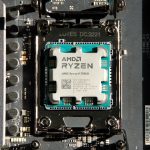
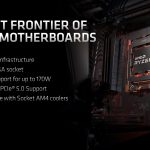
We’ll split this piece up into four parts that cover the four major components of the Ryzen 7000 launch: 1) the Zen 4 CPU core, 2) the on-chip I/O die that supports the CPU’s non-CPU features and handles internal connectivity, 3) the 600-series chipsets that handle most external connectivity, and 4) the physical AM5 socket that will outlive all of the other components by a few years.
Zen 4 CPU, in brief


AMD promises roughly 29 percent faster single-core CPU performance in Zen 4 relative to Zen 3, which the tests in our review more or less back up. A little under half of this increase comes from architectural improvements that boost Zen 4’s instructions-per-clock (IPC) count, while the rest comes from clock speed boosts. Clocks for Ryzen 5000 processors all peaked just short of 5 GHz, while Ryzen 7000’s CPUs all boast peak clock speeds well above 5 GHz.
On the architecture front, AMD says that Zen 4 is a refinement of Zen 3 rather than a ground-up redesign. Many of the building blocks of Zen 3 are still present: eight-core Core Complex Dies (CCDs) made from one eight-core Core Complex (CCX), which shares a large 32MB cache among all eight CPU cores (or six, in the 7600X and 7900X). Ryzen CPUs consist of either one or two CCDs and an I/O die (IOD), linked with AMD’s Infinity Fabric interconnect.



 Loading comments...