While Apple’s app store is heavily regulated, the Google Play Store has mostly lived its life under Google’s laissez-faire attitude. As long as you didn’t get caught by Google’s malware scanning, your app was free to do just about anything.
But lately, Google’s hands-off approach seems to be changing. The company tried to restrict Android’s powerful accessibility APIs only to accessibility apps, but after a power user revolt, Google is currently rethinking that plan.
The Play Store’s biggest change is coming in 2018, though. Recently Google announced it will start setting a minimum API level that new and updated apps will be required to use. Basically, Google will stop accepting old app code from developers. The move won’t harm support for devices running old versions of Android, but it will require developers to adopt new Android features and restrictions as they come out.
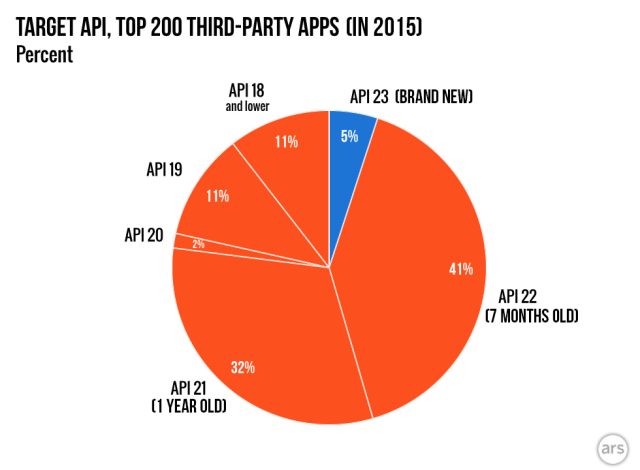
Every new version of Android comes with a new API level, which changes how the app framework functions, adding new features, new restrictions, and new security measures. Currently, developers can opt out of these changes by just using an old API level, but soon they will be forced to target recent API levels. This will accelerate Google’s Android changes throughout the app ecosystem, rather than having to wait years and years for it to happen naturally through Android’s incredibly ineffective OS update program.
All Android apps must set two API levels internally: first is the “minimum” API level, which determines the oldest Android version the app will run on, and then there’s the “target” API level, which is the highest version of Android that the app is aware of. Every new version of Android bumps the API level up one version, and currently Android 8.1 is on API level 27. When Google changes the way the Android app framework works, it doesn’t want to break old apps, so it locks this functionality behind a new target API level.



 Loading comments...