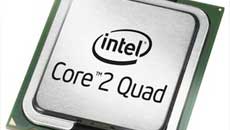
If you’ve got even a passing interest in the subject, you’re undoubtedly aware that true progress in general-purpose x86 multicore programming has been slow and uncertain. Intel and AMD may have made the technology affordable—a quad-core system could easily have cost thousands of dollars just five years ago, compared to the low hundreds today—but software development has lagged well behind the pace with which we’ve seen new multicore chips.
A new report from Gartner suggests we’re fast approaching a time when top-end servers simply won’t be able to use all of the additional cores they’re being handed. Recent comments at the Multicore Expo echo the business analysis firm’s claim—expect multicore processor growth to zoom well beyond what the market needs. Gartner analyst Carl Claunch doesn’t pull any punches.
“Looking at the specifications for these software products, it is clear that many will be challenged to support the hardware configurations…accelerating in the future,” said Carl Claunch, vice president and distinguished analyst at Gartner. “The impact is akin to putting a Ferrari engine in a go-cart; the power may be there, but design mismatches severely limit the ability to exploit it.”
I agree with Mr. Claunch and Gartner’s central thesis insomuch as I agree that a 32-socket server built on 32-core processors would be a monstrosity; most businesses would be hard-pressed to take full advantage of that much power in a single server. With all due respect to Mr. Claunch and Gartner, however, I think the firm has completely misread the shape of the long-term semiconductor market.
 Loading comments...