Beyond hybrids
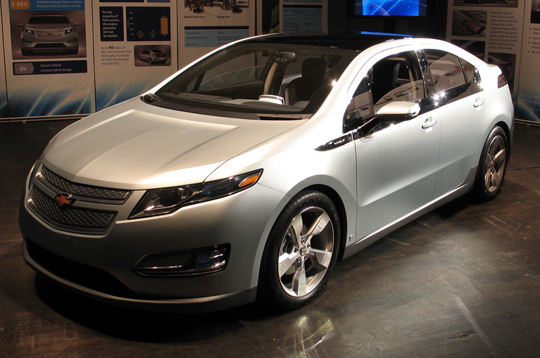
The invitation contained one obvious hint that the target audience was a bit different than the typical invitees to a New York City tech event: it offered free parking to drivers. Last night, General Motors held a press event with an audience that included reporters that serve a range of audiences, including car junkies, the green community, and general technology enthusiasts. The focus: a car that should appeal to all of them, one that the company has bet its future on. After killing off the electric car in its EV1 incarnation, GM hopes to resurrect it in the form of the Chevy Volt.
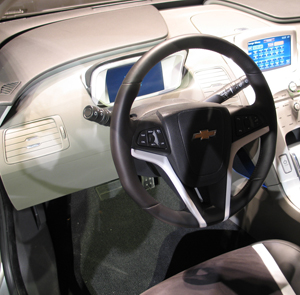
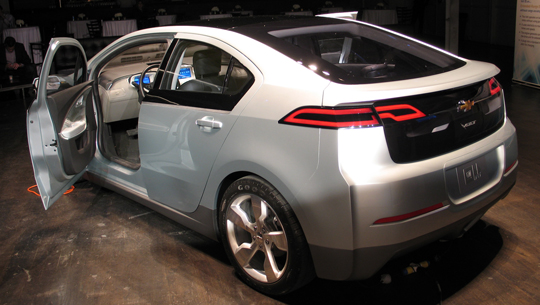
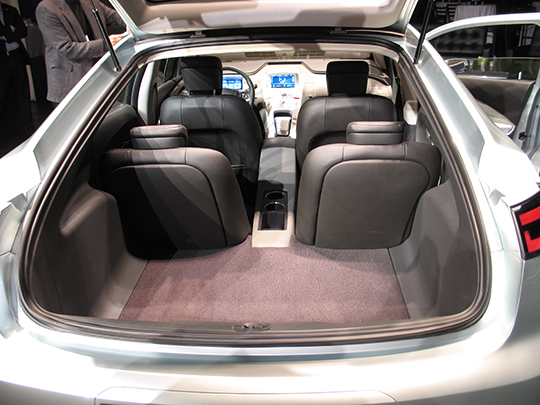
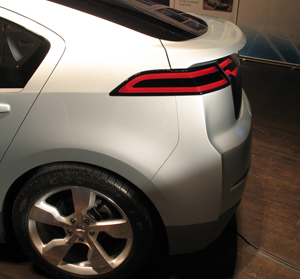
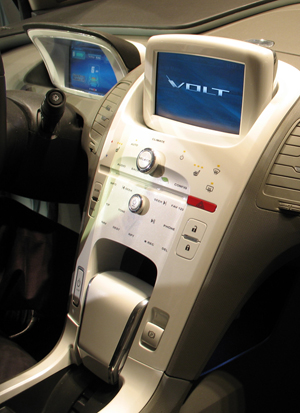
After having shown a concept model at auto shows that was basically a construct put together out of parts of existing vehicles, GM claims that what we saw last night was supposed to be the final design that would actually make it to market. The car was nonfunctional—as one of the engineers said, they have more important things to do with the batteries than ship them to New York—but intended to give a real impression of what a buyer might actually drive off the lot sometime in the next few years. GM has tackled the Volt project with a mix of marketing, engineering, and technology development. Last night's event provided a little of all of them, but we'll focus primarily on the latter two.
The Volt vs. the hybrids
GM is adamant that people recognize the Volt for what they consider it to be: despite the presence of a flex-fuel engine, this is an electric vehicle, not a plug-in hybrid. This has a lot of interesting consequences, but one of them is simply that it radically changes the driving experience. Unlike internal combustion engines, electric motors have full torque even at their lowest speeds. Hybrids have this to a certain degree, but they have a relatively low-output motor and make up for the difference by kicking in their gasoline engine as needed. That feature of hybrids, which the GM staff were happy to call "jarring," won't happen with the Volt. Its engine simply doesn't ever directly interact with the driveshaft, but is instead used to power a generator.

 Loading comments...