
Unlike a recent hypersonic missile test, officials didn't immediately confirm Friday's flight was a success.
See full article...
See full article...
... Biden? Because the launch in the photograph at the top of the article was in December 2024. This has little to do with Trump except that he founded the "Space Force" many years ago, but in any case this was an army launch.Sure are glad we voted in the anti-war president...
/s
Hey, that's not true! He also has handlers.What US friends? Mango Mussolini wants the US to be just as friendless as him, he only has accomplices and marks.
Ahh, missed the date. Fair enough.... Biden? Because the launch in the photograph at the top of the article was in December 2024. This has little to do with Trump except that he founded the "Space Force" many years ago, but in any case this was an army launch.
I mean Trump sucks but let's not go into hysteria at all times please. It is as ludicrous as the "THANKS OBAMA" that right-wing people were doing in 2008-2016, blaming Obama when like, a tornado ripped through town.
Hi, you've reach the US government, if you need help please press 1, please note if we have not received your offerings of gold, land, or Trump loyalty for the month we will not be able to help you. If you have not signed a blood oath, we will not be able to help you, lastly even if you've done these things we reserve the right to not help you. Thank you for calling.New Zealand space program assisting our US allies. We hope that such support stands us in good stead if ever we need to likewise ask for help from our US friends. (These days it's hard to know).
Is that the official name of his poop disposal guy?Hey, that's not true! He also has handlers.
Incorrect.You didn't note the biggest division, USAF is in charge of all fixed wing aircraft, Army has all rotor wing aircraft. Again, a somewhat arbitrary decision by Generals.
Not entirely rigidly followed: Army has small prop planes for reconnaissance, Marines have helicopters and V22,. USAF doesn't want the Army ground support mission of the A10. Etc.
So these are entirely different from the ‘glide bomb’ things that the Russians are either throwing at extremely random civilian targets in Ukraine or have discovered can’t hit the broad side of a barn and are using as pure terror bombardment?It's still a weird spending choice from my perspective - for a weapon like this to be worthwhile using (over eg some stealthy subsonic cruise missile or B-21 or whatever) you need a very high value target that needs to be hit right now.
Alternatively wait for The Donald to post hi-res screen shots on Trump Social."The Pentagon has a long-standing policy of not publicizing hypersonic missile tests before they happen, except for safety notices for civilian airplanes and ships downrange."
I'm sure Pete will tell me about it if I ask to be in his Signal group.
Interesting that it’s the Army not Air Force who is testing the thing
Yes, this makes no sense. The various branches compete, don't cooperate well, and if DOGGIE was a real thing we'd be down to just three: USAF, USN+USMC, USArmy.
- The Navy is in charge of fixed-wing aircraft that can fly off a carrier strike group (CSG). That includes Orions, Hawkeyes, and some obsolete aircraft.
- Rotary wing craft aren't flown by the navy. They're flown by the USMC. MH-60, etc.
- On fixed runways on land the USAF flies the majority of aircraft (fixed or rotary wing)
- The Amy has its own fixed-wing and rotary-wing - see MOS 135A.
- The Space Farce is a made-up DJT-1 thing where he turned USAF space missions into its own thing.
- The Coast Guard (just think of the song YMCA only in dress whites) has no aircraft
- National Guard (NoGos) of the states don't have their "own" aircraft in that they don't own the aircraft, do get to fly some aircraft, and are so hands off they aren't trusted by the other branches.

Field missile, no different than field artillery.Interesting that it’s the Army not Air Force who is testing the thing
Not sure how useful that particular capability will be, since the US is actively working on abandoning all its bases in Western Europe (and has publicly announced that it is no longer providing security guarantees for NATO)
Or a high value target that has modern point defense. Stealth is only so good and radars can still target them at close range. It's a lot harder to hit something that's coming in at Mach 5+, especially if it's maneuvering and you only pick it up after it comes over the local radar horizon.It's a bit of both. The US has indeed being working on this for quite a while, but it's been a very low priority because it was obvious the weapons were going to be very expensive and very niche. The more recent perception that they were behind and the focus swinging back to peer/near peer stuff seem to have been the reasons for the resources being thrown at this now.
It's still a weird spending choice from my perspective - for a weapon like this to be worthwhile using (over eg some stealthy subsonic cruise missile or B-21 or whatever) you need a very high value target that needs to be hit right now.
Ground launch ground attack? That’s the same as artillery. Army role.Interesting that it’s the Army not Air Force who is testing the thing
And the Coast Guard has prop planes unless they got rid of all of them.There is a lot factually wrong here. The coast guard does have rescue helicopters (CH-60s I think). The navy does also have helicopters on their carriers, and they say NAVY. The Navy also flies F-18 super hornets and F-35s, which I wouldn’t call obsolete.
Hypersonic arms race
Weapons physicists have been stating for a number of years now that "hypersonic weapons are mediocre" and if you look into the actual physics of these weapons they are a cost burden but hyped up by the media and of course the weapons industry to be "glorified death fireworks that fly at Mach 20".
Physics = headaches
Wasn't an arbitrary decision about helicopters. When helicopters were first made practical, around the Korean War, the Air Force was focused on nuclear war. Numerous generals in the Air Force never particularly wanted the close air support or tactical transport missions - generals like LeMay figured the 'real' war would be bombers and ballistic missiles, and that everything else was just support or a distraction. The Strategic Air Command's (SAC) leadership figured WWIII would be over in about 30-45 days. Given the state of the technology of the time, SAC figured it would take that long for them to drop every U.S. nuclear gravity bomb on a Soviet target. Even fighter aircraft were viewed within the context of nuclear war. Plenty of Air Force generals figured there were only two 'real' roles left for fighters: escorting bombers and air defense of the U.S. homeland.You didn't note the biggest division, USAF is in charge of all fixed wing aircraft, Army has all rotor wing aircraft. Again, a somewhat arbitrary decision by Generals.
Not entirely rigidly followed: Army has small prop planes for reconnaissance, Marines have helicopters and V22,. USAF doesn't want the Army ground support mission of the A10. Etc.
Remind me which emoji is used for hypersonic?"The Pentagon has a long-standing policy of not publicizing hypersonic missile tests before they happen, except for safety notices for civilian airplanes and ships downrange."
I'm sure Pete will tell me about it if I ask to be in his Signal group.
The US has had hypersonic weaponry since the Cold War. It was developed and shuttered like a large number of other space weaponry to adhere to geopolitical norms. When China and Russia decided to cross those lines and pretend to military supremacy, the US merely began to deploy long hidden technologies it had in reserve. It isnt a secret after Putin launched the first space based weapons platform the US military launch cadence shot through the roof.So, was the U.S. going to develop this anyways or did Putin's boasting about Russia's hypersonic weapons (real or not) way back when make this happen? If it's the latter, it appears his boasting is biting him in the...back, and it's not the first time Russia (and the former USSR) had done this to itself.
From my knothole, the USAF bought into helicopters for two reasons: mission support, and their contribution to special ops. During my tenure, I ran into a lot of the former: range support, missile field transportation, Capitol Area VIP taxi. All UH-1s, to my direct experience just a collection of parts flying in formation, all shaking in different vectors.Wasn't an arbitrary decision about helicopters. When helicopters were first made practical, around the Korean War, the Air Force was focused on nuclear war. Numerous generals in the Air Force never particularly wanted the close air support or tactical transport missions - generals like LeMay figured the 'real' war would be bombers and ballistic missiles, and that everything else was just support or a distraction. The Strategic Air Command's (SAC) leadership figured WWIII would be over in about 30-45 days. Given the state of the technology of the time, SAC figured it would take that long for them to drop every U.S. nuclear gravity bomb on a Soviet target. Even fighter aircraft were viewed within the context of nuclear war. Plenty of Air Force generals figured there were only two 'real' roles left for fighters: escorting bombers and air defense of the U.S. homeland.
That being said, there were generals in the USAF who recognized the value of helicopters and smaller fixed-wing transports like the CV-2 - militarized version of the de Havilland DHC-4 Caribou, capable of taking off in a mere 1,020 feet and could carry 32 troops or 2 Jeeps or equivalent cargo space and weight.
The big disagreement was about how to employ the air assets. The Army wanted assets that were assigned to Army units and responsive to the needs of those units - e.g., aircraft assigned to the 82nd flew missions in support of the 82nd, and aircraft assigned to the 101st flew missions in support of the 101st. The Air Force wanted air assets to be assigned to separate air units and employed how Air Force commanders thought best for an overall war effort - e.g., if the 82nd and the 101st both wanted missions flown then Air Force commanders would decide how to respond to those requests...so maybe the 82nd got everything it wanted and the 101st only got some of what it wanted. Or neither got all of what they wanted because the Air Force decided that the needs of the war were better filled in a different way. This last is key - the Army envisioned tactical aviation effectively functioning like mechanical cavalry, and the Air Force envisioned aircraft used as a separate part of a war effort.
This disagreement was largely created as a result of the Korean War. Close air support between the Army and Air Force was a very lengthy endeavor. The prescribed procedure was for an Army forward controller to radio the headquarters of the Army division to which he was attached, which would pass along the strike request to corps headquarters, which in turn would relay it to the Army-Air Force Joint Operations Center, which operated alongside an Air Force Tactical Air Control Center. The TACC would then order an airfield to supply the appropriate aircraft, which would contact the TACC on the way to the target and be handed off to an airborne or ground-based forward controller for actual strike coordination. It often took an hour or more between the call for the support and bombs striking targets.
Contrast that to the Navy and Marine Corps system. Due to their experiences with amphibious landings in WWII, the Marines used close air support as a substitute for artillery - artillery was often one of the last things landed, and naval gunfire support might be too risky due to the distances between friendly and enemy units. Thus, the Marine Corps system was one of forward air controllers communicating directly with pilots overhead. This system also kept aircraft loitering over the battlefield and waiting for support calls rather than on the ground (or deck of the carrier) until a call was made. The Air Force considered loitering aircraft too inefficient.
The Army, and the Air Force after it was established, had not considered close air support a substitute for artillery. This worked in the European theater during WWII, but was not a recipe for success in a fast-moving and close-quarters battle environment like Korea (or, later, Vietnam).
When the Marines entered the Korean War the Air Force wanted the air assets of 1st Marine Aircraft Wing put under Air Force control. The Marines, politely for Marines, told the Air Force to go fuck themselves. I vaguely remember reading that MacArthur himself ultimately made the call to let the 1st MAW stay with the 1st Marine Division.
Early helicopters had limited payload, range, and speed. The Air Force was not particularly interested in them...but didn't want the Army to have them. Same with small fixed-wing tactical reconnaissance aircraft and tactical support aircraft. So the Army was said "hey, y'all aren't willing to be too helpful to us, so we'll just do it ourselves" and was buying and using the things. This culminated in the Johnson-McConnell agreement of 1966 when the Army agreed to give up its fixed-wing tactical airlift aircraft and the Air Force agreed to let the Army have rotary-wing aircraft for intratheater transport and fire support.
In regards to one of your other statements - the Marines also have fighter jets. The Marines fly the F-18 and the F-35. In fact, one of the biggest albatrosses around the neck of the F-35 design is the Air Force and Navy versions see performance compromises because the 'common' fuselage means their versions have design components necessary for that stupid VSTOL fan the Marines insisted on having.

Hypersonic flight is an unforgiving environment, where the outer skin of glide vehicles must withstand temperatures of 3,000° Fahrenheit.
The launch phase of these “hypersonic missiles” is a two stage solid fuel rocket that is indistinguishable from an IRBM launch until you see the glide vehicle hitting the atmosphere and maneuvering. Of course it would totally be possible to put a nuclear weapon on a glide vehicle too, so it doesn’t actually make a difference that it isn’t a standard ballistic warhead design.Maybe because hypersonics can be used with conventional warheads without the adversary kicking off WW3, unlike with re-entry vehicles launched on ballistic missiles with depressed trajectories. If I see a mass IRBM launch with trajectories possibly ending at my major cities, I would think it was a nuclear strike in progress.
lol, ummm, no.New Zealand space program assisting our US allies. We hope that such support stands us in good stead if ever we need to likewise ask for help from our US friends. (These days it's hard to know).
It doesn’t matter if they turn it all around tomorrow, the US’ only interest is self interest, they’ve made it clear at this point.If political winds change down the road and the US decides it wants to be helpful again. I doubt Europe will say no unless they have a missile of their own.
Even if we go full defeatist and assume Trump isn’t leaving office. His plans change by the end of the week. So, who knows?
Long story short the lifespan of this weapon will outlive Trump.
No, it isn't.Question: is "ballistic missile" a tautology?
Russian ones actually exist and have been successfully battle-tested against best adversarial AA.Russia's hypersonics are significantly inferior to both the U.S. and Chinese efforts—assuming the U.S. does successfully operationalize theirs, and I see no reason they would not be able to.
Right. It’s not like we aren’t good at this stuff.So, was the U.S. going to develop this anyways or did Putin's boasting about Russia's hypersonic weapons (real or not) way back when make this happen? If it's the latter, it appears his boasting is biting him in the...back, and it's not the first time Russia (and the former USSR) had done this to itself.
No, it isn't.
Some missiles fly most of their envelope under their own power and actively maneuvering. E. g. an anti-air missile, or cruise-missiles (which are basically jet-powered drone planes).
Some missiles are designed to fly mostly unpowered, these are ballistic ones. Most ballistic missiles have long been hypersonic, however, they fly out of atmosphere most of the time.
The whole kerfuffle is about powered hypersonic cruise missiles.
Russian ones actually exist and have been successfully battle-tested against best adversarial AA.

Then what's this:Yes, this makes no sense. The various branches compete, don't cooperate well, and if DOGGIE was a real thing we'd be down to just three: USAF, USN+USMC, USArmy.
- The Navy is in charge of fixed-wing aircraft that can fly off a carrier strike group (CSG). That includes Orions, Hawkeyes, and some obsolete aircraft.
- Rotary wing craft aren't flown by the navy. They're flown by the USMC. MH-60, etc.
- On fixed runways on land the USAF flies the majority of aircraft (fixed or rotary wing)
- The Amy has its own fixed-wing and rotary-wing - see MOS 135A.
- The Space Farce is a made-up DJT-1 thing where he turned USAF space missions into its own thing.
- The Coast Guard (just think of the song YMCA only in dress whites) has no aircraft
- National Guard (NoGos) of the states don't have their "own" aircraft in that they don't own the aircraft, do get to fly some aircraft, and are so hands off they aren't trusted by the other branches.
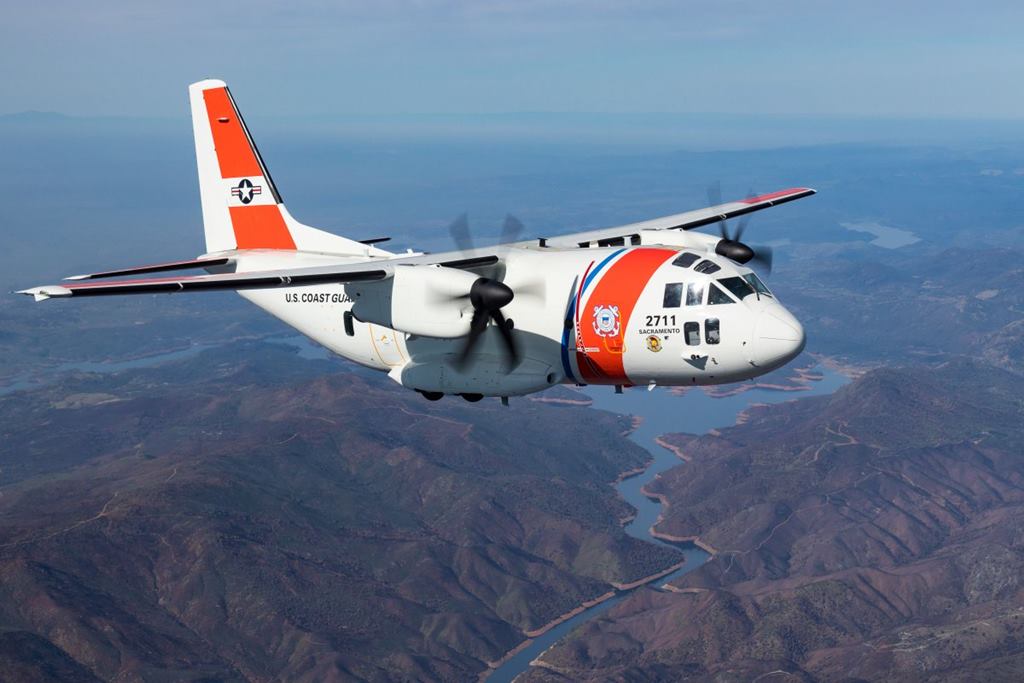
Uh, every destroyer has a seahawk helicopter for ASW, that’s navy. They have special features like the winch down landing system compared to the land based variants, and can drop light torpedoes as well as perform recon and SAR.Yes, this makes no sense. The various branches compete, don't cooperate well, and if DOGGIE was a real thing we'd be down to just three: USAF, USN+USMC, USArmy.
- The Navy is in charge of fixed-wing aircraft that can fly off a carrier strike group (CSG). That includes Orions, Hawkeyes, and some obsolete aircraft.
- Rotary wing craft aren't flown by the navy. They're flown by the USMC. MH-60, etc.
- On fixed runways on land the USAF flies the majority of aircraft (fixed or rotary wing)
- The Amy has its own fixed-wing and rotary-wing - see MOS 135A.
- The Space Farce is a made-up DJT-1 thing where he turned USAF space missions into its own thing.
- The Coast Guard (just think of the song YMCA only in dress whites) has no aircraft
- National Guard (NoGos) of the states don't have their "own" aircraft in that they don't own the aircraft, do get to fly some aircraft, and are so hands off they aren't trusted by the other branches.
E
P.S. I love Palindromes, but when the Canal is invaded by the US, how does the subject line change? Our Manchurian president and his DOGGIE friend have created more global distrust, financial disruption, but hey, go burn some books and please Republicans who can't read.

We already have the US billionaire prepper bunkers. Come on over and I'll give you a guided tour.lol, ummm, no.
That’s not how this works.
they won’t shake your hand when they arrive to colonise your country.
The satellites that can pick up ICBMs launching can also pick up hypersonic weapons launching, as they all launch with good sized rocket boosters. Hypersonic weapons take longer to be visible from ground stations near the target, but if you see the launch they would usually take longer to arrive than an ICBM of same range.I'm not sure whats worse.
At least with ICBM's (likely with a nuclear payload) launching from the USSR in the 80's we knew we had 40-45 minutes warning to at least bend over and kiss your ass goodbye. Now with hypersonic weapons we know about it until it strikes on target, lol.
So these are entirely different from the ‘glide bomb’ things that the Russians are either throwing at extremely random civilian targets in Ukraine or have discovered can’t hit the broad side of a barn and are using as pure terror bombardment?


