
NuqneH! Saluton! A linguistic anthropologist studies those who invent new tongues.
Read the whole story
Read the whole story
Something I learned when I visited Turkey around '97 is that Mustafa Kemal Atatürk rreplaced the Arabic alphabet with the Latin alphabetd in 1928.
It is mindblowing that the entire country shifted to a new written form of their language, and relatively recently.
Something I learned when I visited Turkey around '97 is that Mustafa Kemal Atatürk rreplaced the Arabic alphabet with the Latin alphabetd in 1928.
It is mindblowing that the entire country shifted to a new written form of their language, and relatively recently.
Something I learned when I visited Turkey around '97 is that Mustafa Kemal Atatürk rreplaced the Arabic alphabet with the Latin alphabetd in 1928.
It is mindblowing that the entire country shifted to a new written form of their language, and relatively recently.
1928 was a long time ago - what percentage of the Turkish population were literate then? Most of the world is above 90% now, but even in Western Europe, it was barely 10% in 1828. A lot happened then, industrialisation, social changes, and eventually universal schooling. I don't know enough about Turkey to know how significant that change was.
There is precedent - European countries changed from the Roman numeral scheme to the Arabic one about 500 years ago, because it enabled complex mathematics which were simply unthinkable using Roman numerals. Only the educated elite noticed of course; 500 years ago most people were subsistence farmers with no use for calculus.
Perhaps Turkey thought they'd be better off teaching their kids to write in English, giving them access to lots of knowledge? Was English the lingua franka of science in 1928, or is that more recent?
Uzbekistan started replacing cyrillic with latin alphabet in 1992. I think some other former USSR countries have done likewise. This sort of thing requires a _long_ transition period though.Something I learned when I visited Turkey around '97 is that Mustafa Kemal Atatürk rreplaced the Arabic alphabet with the Latin alphabetd in 1928.
It is mindblowing that the entire country shifted to a new written form of their language, and relatively recently.
Something I learned when I visited Turkey around '97 is that Mustafa Kemal Atatürk rreplaced the Arabic alphabet with the Latin alphabetd in 1928.
It is mindblowing that the entire country shifted to a new written form of their language, and relatively recently.
1928 was a long time ago - what percentage of the Turkish population were literate then? Most of the world is above 90% now, but even in Western Europe, it was barely 10% in 1828. A lot happened then, industrialisation, social changes, and eventually universal schooling. I don't know enough about Turkey to know how significant that change was.
There is precedent - European countries changed from the Roman numeral scheme to the Arabic one about 500 years ago, because it enabled complex mathematics which were simply unthinkable using Roman numerals. Only the educated elite noticed of course; 500 years ago most people were subsistence farmers with no use for calculus.
Perhaps Turkey thought they'd be better off teaching their kids to write in English, giving them access to lots of knowledge? Was English the lingua franka of science in 1928, or is that more recent?

Transitioning to a Latin-derived form of alphabet had less to do with any particular language, but rather the commonality of a relatively standardized form of glyphs/phonetic relationships that had developed all over the world. While learning languages in a polyglot world will always be challenging, at least starting off with a fundamentally similar alphabet eases some of the difficulty. Doubtless, the push for modernization accounted for that -- with a Latinized alphabet, anyone needing to learn Turkish didn't have to simultaneously learn a new character set to read and write, and likewise, future Turkish generations would be able to adapt to many other languages while still using a familiar alphabet.Something I learned when I visited Turkey around '97 is that Mustafa Kemal Atatürk rreplaced the Arabic alphabet with the Latin alphabetd in 1928.
It is mindblowing that the entire country shifted to a new written form of their language, and relatively recently.
1928 was a long time ago - what percentage of the Turkish population were literate then? Most of the world is above 90% now, but even in Western Europe, it was barely 10% in 1828. A lot happened then, industrialisation, social changes, and eventually universal schooling. I don't know enough about Turkey to know how significant that change was.
There is precedent - European countries changed from the Roman numeral scheme to the Arabic one about 500 years ago, because it enabled complex mathematics which were simply unthinkable using Roman numerals. Only the educated elite noticed of course; 500 years ago most people were subsistence farmers with no use for calculus.
Perhaps Turkey thought they'd be better off teaching their kids to write in English, giving them access to lots of knowledge? Was English the lingua franka of science in 1928, or is that more recent?
AFAIK, German was much more prevalent in scientific discourse before WWII than it is today. But I could be wrong.
Everything is of course relative but with electronic media and smartphones I think you could do it faster now than before, it takes relatively little effort to make a reader flip between old and new or show it side by side. All applications that support translation could just get a "Language (Latin)" in addition to "Language (Cyrilic)". And you could get a lens for your smartphone, just hold it up to a sign and it'll remind you what new signs used to be in the old writing and translate old signs for those that don't know them. Though in a transition phase you'd probably use "bilingual" signs with the old writing in a smaller font. I'd much rather be in charge of that than say a conversion to the metric system.Uzbekistan started replacing cyrillic with latin alphabet in 1992. I think some other former USSR countries have done likewise. This sort of thing requires a _long_ transition period tough.
Transitioning to a Latin-derived form of alphabet had less to do with any particular language, but rather the commonality of a relatively standardized form of glyphs/phonetic relationships that had developed all over the world. While learning languages in a polyglot world will always be challenging, at least starting off with a fundamentally similar alphabet eases some of the difficulty. Doubtless, the push for modernization accounted for that -- with a Latinized alphabet, anyone needing to learn Turkish didn't have to simultaneously learn a new character set to read and write, and likewise, future Turkish generations would be able to adapt to many other languages while still using a familiar alphabet.Something I learned when I visited Turkey around '97 is that Mustafa Kemal Atatürk rreplaced the Arabic alphabet with the Latin alphabetd in 1928.
It is mindblowing that the entire country shifted to a new written form of their language, and relatively recently.
1928 was a long time ago - what percentage of the Turkish population were literate then? Most of the world is above 90% now, but even in Western Europe, it was barely 10% in 1828. A lot happened then, industrialisation, social changes, and eventually universal schooling. I don't know enough about Turkey to know how significant that change was.
There is precedent - European countries changed from the Roman numeral scheme to the Arabic one about 500 years ago, because it enabled complex mathematics which were simply unthinkable using Roman numerals. Only the educated elite noticed of course; 500 years ago most people were subsistence farmers with no use for calculus.
Perhaps Turkey thought they'd be better off teaching their kids to write in English, giving them access to lots of knowledge? Was English the lingua franka of science in 1928, or is that more recent?
AFAIK, German was much more prevalent in scientific discourse before WWII than it is today. But I could be wrong.
To a point, at least. Because the pronunciation rules of some languages may deviate in... unexpected ways from the "standard" letter-to-phenome relationships as defined in Latin to the alphabet. Spanish, and Italian adhere rather well to the Roman-derived phenomes assigned to the letters. French, however, diverges with nasals and silent or near-silent consonants -- yet does so generally with regularity and consistency; it's a new set of rules to apply to a well-known alphabet. Then along comes Welsh.
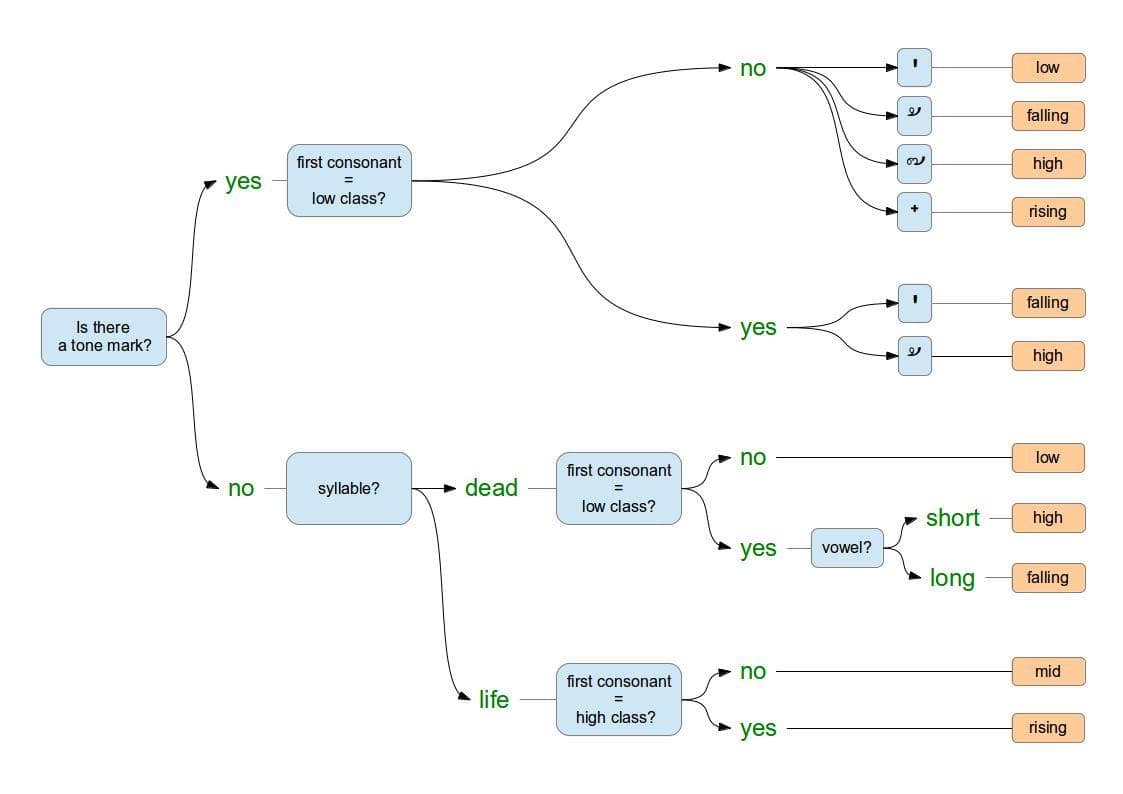
The ancient and semi-mythical Klingon original ruler Sa'r'an Rhra'p is said to have given them the language.
I think I read that somewhere.
Everything is of course relative but with electronic media and smartphones I think you could do it faster now than before, it takes relatively little effort to make a reader flip between old and new or show it side by side. All applications that support translation could just get a "Language (Latin)" in addition to "Language (Cyrilic)". And you could get a lens for your smartphone, just hold it up to a sign and it'll remind you what new signs used to be in the old writing and translate old signs for those that don't know them. Though in a transition phase you'd probably use "bilingual" signs with the old writing in a smaller font. I'd much rather be in charge of that than say a conversion to the metric system.Uzbekistan started replacing cyrillic with latin alphabet in 1992. I think some other former USSR countries have done likewise. This sort of thing requires a _long_ transition period tough.
Something I learned when I visited Turkey around '97 is that Mustafa Kemal Atatürk rreplaced the Arabic alphabet with the Latin alphabetd in 1928.
It is mindblowing that the entire country shifted to a new written form of their language, and relatively recently.
Perhaps Turkey thought they'd be better off teaching their kids to write in English, giving them access to lots of knowledge? Was English the lingua franka of science in 1928, or is that more recent?
The ancient and semi-mythical Klingon original ruler Sa'r'an Rhra'p is said to have given them the language.
I think I read that somewhere.
So, the ancient Klingons learnt language from clingfilm (Saran Wrap)?! That sounds a lot like the origin story of the Cat from Red Dwarf...
https://en.wikipedia.org/wiki/Plastic_wrap
https://en.wikipedia.org/wiki/Cat_(Red_Dwarf)
Something I learned when I visited Turkey around '97 is that Mustafa Kemal Atatürk rreplaced the Arabic alphabet with the Latin alphabetd in 1928.
It is mindblowing that the entire country shifted to a new written form of their language, and relatively recently.
Vietnam did this too. The country officially shifted from Chinese characters to the Latin alphabet in 1910.
For some, the language is very, very strongly tied to their culture and identity. Here in Norway we already understand Swedish and Danish - not surprising since the three nations put together has a population roughly the size of Florida. But even so within Norway there's a divide between a Danish-influenced "bokmål" and a variation that's supposedly a more true reconstruction called "nynorsk". So that's two official written languages, each with their separate vocabulary and grammar spread across 5 million people despite the linguistic distance of dialects.So, the language debate in Turkey is complex and -strangely- still a politically loaded topic in Turkey.
"Me too. Are you Reformed Baptist Church of God, Reformation of 1879, or Reformed Baptist Church of God, Reformation of 1915?"
He said: "Reformed Baptist Church of God, Reformation of 1915."
I said: "Die, heretic scum," and pushed him off.

Pah, Welsh! There's so much overlap it's only a little weird, substituting a few letter sounds. You just have to remember a few rules and you can switch from one to the other easily. Cyrillic is where things get interesting for users of the Latin alphabet.To a point, at least. Because the pronunciation rules of some languages may deviate in... unexpected ways from the "standard" letter-to-phenome relationships as defined in Latin to the alphabet. Spanish, and Italian adhere rather well to the Roman-derived phenomes assigned to the letters. French, however, diverges with nasals and silent or near-silent consonants -- yet does so generally with regularity and consistency; it's a new set of rules to apply to a well-known alphabet. Then along comes Welsh.
As a computer programmer, I believe a language that does not change the way you think is not worth learning. When you design a new language, do you do so with an ideology in mind? Do you think you can or should try to influence its users?
You mention the Superman language having a linguistic distinction between biological and technological. To me that seemed like a strange thing to hardwire into a language, because the distinction seems fuzzy when we get into engineered biology. Was there an ideology behind that choice? (The other obvious examples would be how the language deals with gender, and 1984's attempt to restrict thinking by making certain concepts harder to express.)

The Ottoman Empire collapsed in 1918. It had been rotting for centuries and the pervious 100 years it had been proped up by various European powers to keep the Russians out. The strain of entering WW1 finished it off. Ataturk was an Ottoman army officer who won fame during the gallipoli campaign. He gained power from the provisional government and his supporters stoned to death the last Grand Vizer, the Great Great Grandfather of the current British Prime Minister. Atatürk created a national state for Turks our of the wreckage of the Islamic Ottoman Empire. The change of Alphabet was a deliberate action to suppress the Islamic past. The new Turkish state carried out ethnic cleansing of non Turkish minorities inside the territory it controlled.Something I learned when I visited Turkey around '97 is that Mustafa Kemal Atatürk rreplaced the Arabic alphabet with the Latin alphabetd in 1928.
It is mindblowing that the entire country shifted to a new written form of their language, and relatively recently.
1928 was a long time ago - what percentage of the Turkish population were literate then? Most of the world is above 90% now, but even in Western Europe, it was barely 10% in 1828. A lot happened then, industrialisation, social changes, and eventually universal schooling. I don't know enough about Turkey to know how significant that change was.
There is precedent - European countries changed from the Roman numeral scheme to the Arabic one about 500 years ago, because it enabled complex mathematics which were simply unthinkable using Roman numerals. Only the educated elite noticed of course; 500 years ago most people were subsistence farmers with no use for calculus.
Perhaps Turkey thought they'd be better off teaching their kids to write in English, giving them access to lots of knowledge? Was English the lingua franka of science in 1928, or is that more recent?
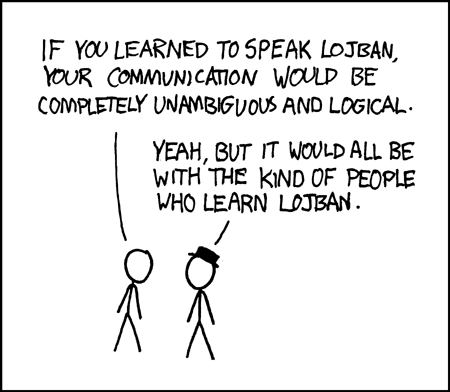
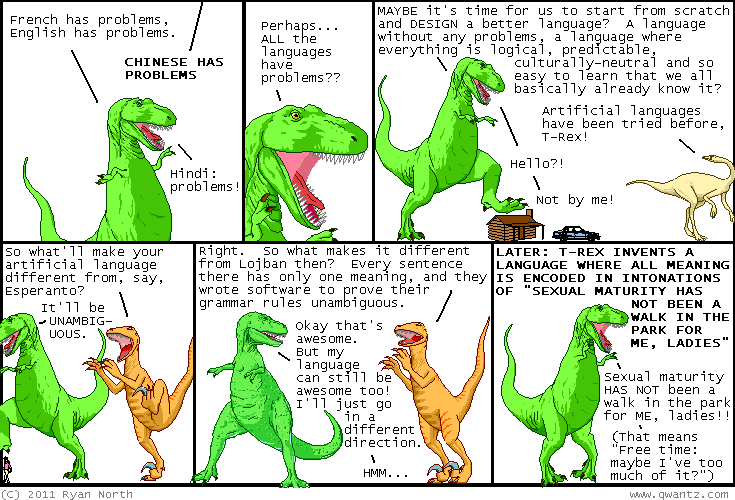
Not sure how you can talk about invented language without the granddaddy of them all, Lojban. A language designed around logic.
https://en.wikipedia.org/wiki/Lojban
https://mw.lojban.org/index.php?title=L ... lang=en-US
Not sure how you can talk about invented language without the granddaddy of them all, Lojban. A language designed around logic.
https://en.wikipedia.org/wiki/Lojban
https://mw.lojban.org/index.php?title=L ... lang=en-US
How the heck is that the Grandaddy when Esperanto predates it by about a 100 yeara????
Something I learned when I visited Turkey around '97 is that Mustafa Kemal Atatürk rreplaced the Arabic alphabet with the Latin alphabetd in 1928.
It is mindblowing that the entire country shifted to a new written form of their language, and relatively recently.
Perhaps Turkey thought they'd be better off teaching their kids to write in English, giving them access to lots of knowledge? Was English the lingua franka of science in 1928, or is that more recent?
They didn't switch to English - Atatürk pushed through reforms to switch alphabet, not language.
Something I learned when I visited Turkey around '97 is that Mustafa Kemal Atatürk rreplaced the Arabic alphabet with the Latin alphabetd in 1928.
It is mindblowing that the entire country shifted to a new written form of their language, and relatively recently.
Perhaps Turkey thought they'd be better off teaching their kids to write in English, giving them access to lots of knowledge? Was English the lingua franka of science in 1928, or is that more recent?
They didn't switch to English - Atatürk pushed through reforms to switch alphabet, not language.
I was thinking quicker than I was typing, and inadvertently conflated some things. I know they didn't change their language, I just meant that using the same alphabet ought to make it easier to translate foreign works. I speak a little French, and a few words of German and Spanish. I can understand, or at least make an educated guess at the foreign languages on the back of products sold in many countries - but only those which use the same alphabet. I don't even know where to start with Chinese or Arabic, for example.
For some, the language is very, very strongly tied to their culture and identity. Here in Norway we already understand Swedish and Danish - not surprising since the three nations put together has a population roughly the size of Florida. But even so within Norway there's a divide between a Danish-influenced "bokmål" and a variation that's supposedly a more true reconstruction called "nynorsk". So that's two official written languages, each with their separate vocabulary and grammar spread across 5 million people despite the linguistic distance of dialects.So, the language debate in Turkey is complex and -strangely- still a politically loaded topic in Turkey.
Needless to say, they're all absolutely getting steamrolled by English, including loanwords and expressions infiltrating our own language but the debates... it's like two men trying to drown each other even though their boat is sinking in the middle of the ocean. They're like the butt of the joke about the religious bridge jumper:
"Me too. Are you Reformed Baptist Church of God, Reformation of 1879, or Reformed Baptist Church of God, Reformation of 1915?"
He said: "Reformed Baptist Church of God, Reformation of 1915."
I said: "Die, heretic scum," and pushed him off.
Personally I think we'd do fine without it - it's not like the US, Australia etc. fail to have their own culture and identity distinct from England even though they use English. But it's not a hill I plan to die on.
 ). But it's not a hill I plan to die on, either.
Not sure how you can talk about invented language without the granddaddy of them all, Lojban. A language designed around logic.
https://en.wikipedia.org/wiki/Lojban
https://mw.lojban.org/index.php?title=L ... lang=en-US
How the heck is that the Grandaddy when Esperanto predates it by about a 100 yeara????
Well granddaddy in another way then. I think lojban structurally is more interesting
For some, the language is very, very strongly tied to their culture and identity. Here in Norway we already understand Swedish and Danish - not surprising since the three nations put together has a population roughly the size of Florida. But even so within Norway there's a divide between a Danish-influenced "bokmål" and a variation that's supposedly a more true reconstruction called "nynorsk". So that's two official written languages, each with their separate vocabulary and grammar spread across 5 million people despite the linguistic distance of dialects.So, the language debate in Turkey is complex and -strangely- still a politically loaded topic in Turkey.
Needless to say, they're all absolutely getting steamrolled by English, including loanwords and expressions infiltrating our own language but the debates... it's like two men trying to drown each other even though their boat is sinking in the middle of the ocean. They're like the butt of the joke about the religious bridge jumper:
"Me too. Are you Reformed Baptist Church of God, Reformation of 1879, or Reformed Baptist Church of God, Reformation of 1915?"
He said: "Reformed Baptist Church of God, Reformation of 1915."
I said: "Die, heretic scum," and pushed him off.
Personally I think we'd do fine without it - it's not like the US, Australia etc. fail to have their own culture and identity distinct from England even though they use English. But it's not a hill I plan to die on.
In a way, what happened in Norway is comparable to what happened in Turkey after 1928. In Turkey, the state started eliminating the Arabic and Persian words and then "inventing" new words. Over time, this meant, highly educated people started using a slightly different language. Everybody still understood each other, but using the "new words" was a way of signaling status. And it was not only status, it was also political. So, the conservatives insisted on using the "old words". And that created some division within the society. If I understand it correctly, the bokmål/nynorsk debate was at its height during the 70s where being proud of one's dialect was the main outcome. I think this is a good thing because it works against elitism. And since more or less everybody understands each other, having two written forms does not seem to create tension (yeah, I'm looking at you Valle). So, the results in Turkey and Norway was in opposite directions when it comes to equality. But they also diverge from each other in some other ways (because the "old language" in Turkey was not what was spoken in villages, it was the language of the palace; "riksmål", if you like
I think the only problem with having so many dialects is that it's not easy to learn the language. There are so many variations all of which are correct and that causes confusion. For immigrants, this means falling back to English (either words or full sentences) more frequently.
I'm a bit undecided about English wiping it all. I mostly agree with you. It would also make a lot of things much easier. For example, mobility in Europe is limited mostly because of language. It's not easy for a doctor, a lawyer or a teacher to migrate from Netherlands to Norway. That would not be a problem if English was the official language in whole of west Europe. Apart from the possible nationalistic push-back, we would certainly lose some cultural artifacts, but as you say, it's possible to keep parts of the culture. Also, the influence would be two ways. English would also "borrow" from these other languages. I think English needs the word "dugnad" and that would only happen if official language of Norway was English
My kids and I are big Dune fans, which may have led to our ‘house language’ that only we understand.
It’s fun, and it’s useful.
All of my kids are trained in martial arts - a lot - and 2 are/were military. We have used our hyperlocal dialect tactically.
Now in some cases, we’ll use a phrase…in English…that means something very specific. We were at a giant medieval fair a few years ago, and some actual Nazi Youth clowns showed up. Looked at the boys and oldest girl (actual G.I. Jane still in the Navy) and said “Pop quiz”.
This means this is a fight we’re trained for, find the leader or instigator, and talk them down or TAKE THEM DOWN, as needed.
OTOH, “smorking the pleerb” is all us, and only for us. We never translate if overheard.
So maybe not an invented language so much as what I said…a hyperlocal version of English.
Still fun and useful.
Do you have any reliable source for that assumptive percentage? I myself do not have reliable numbers at hand, but remembering my studies in history of English, I would doubt very much that the litteracy rate was lower than half of the populace after the introduction of the printing press. Even in the ancient Roman empire, litteracy was more common than uncommon among the "common" people. In Western Europe, the literacy rate dropped severely after the Western Roman empire collapsed, because our region was cut off of the papyrus supply chain and Western Europe could only write on parchment (slaughter one pig to only get like 20 pages) which only very rich people could afford, but after the invention of paper and the printing press with moving letters, th litteracy rate increased again.[...]
1928 was a long time ago - what percentage of the Turkish population were literate then? Most of the world is above 90% now, but even in Western Europe, it was barely 10% in 1828. [...]
TIL smörgåsbord (originally Swedish)Hygga has recently become popular (largely due to an IKEA advert, but that doesn't really matter), perhaps in time dugnad will join our language too - smorgasbord did long ago!
Do you have any reliable source for that assumptive percentage? I myself do not have reliable numbers at hand, but remembering my studies in history of English, I would doubt very much that the litteracy rate was lower than half of the populace after the introduction of the printing press. Even in the ancient Roman empire, litteracy was more common than uncommon among the "common" people. In Western Europe, the literacy rate dropped severely after the Western Roman empire collapsed, because our region was cut off of the papyrus supply chain and Western Europe could only write on parchment (slaughter one pig to only get like 20 pages) which only very rich people could afford, but after the invention of paper and the printing press with moving letters, th litteracy rate increased again.[...]
1928 was a long time ago - what percentage of the Turkish population were literate then? Most of the world is above 90% now, but even in Western Europe, it was barely 10% in 1828. [...]
I have not studied the middle east, but I could imagine that Koran schools during the 19th century taught common children to read old arabic as they do today.
The Romanian language (the Eastern Romance language of Romania) shifted from the cyrillic to the latin alphabet in 1862 accompanied with the introduction of newly formed words to "deslavify" and "reromanise" the language through the already established school system - and it worked. (sometimes prescriptivist can accomplish something - not very often, though)
Being a native Berlin German who went to museums of the history of schooling (e.g. the "Guthenbergmuseum" in Thuringia) as a child, I expect to be true, as long as those museums did not lie, that at least in Prussia (one of the most important German states before "Germany" was a thing), all common children born to common parents went to state-owned, state-paid schools for their education and all learned to write, and analyse Goethe, and basic mathematics.
What seems interesting about Atatürk's shift to the latin alphabet is his insistence on the separation of state from religion.
To learn Klingon or Esperanto: What invented languages can teach us

Something I learned when I visited Turkey around '97 is that Mustafa Kemal Atatürk rreplaced the Arabic alphabet with the Latin alphabetd in 1928.
It is mindblowing that the entire country shifted to a new written form of their language, and relatively recently.


