
You are using an out of date browser. It may not display this or other websites correctly.
You should upgrade or use an alternative browser.
You should upgrade or use an alternative browser.
Surface Pro 11 and Laptop 7 review: An Apple Silicon moment for Windows
- Thread starter JournalBot
- Start date
I think it's fairly obvious that ARM is the future of Windows on laptops/tablets, even pro workstation-class laptops. That future might not be here quite yet, but these devices are a clear signal that it's coming in a matter of months, not years.Sure, if Microsoft also pays the development costs.
ARM PC sales are virtually non-existent. Maybe this wave of ARM PCs will change that but it's too soon to see whether third time's the charm.
Right now HP can eat the cost of developing and maintaining a second set of drivers for ARM, but some niche manufacturer of a device that might only sell a few thousand units might not be able to justify the cost of additional staff for coding, QA, support.
But without driver enforcement from Microsoft, these devices will always be seen as subpar in enterprises and studios.
Upvote
-12
(6
/
-18)
Of course, quite a bit of reporting is being done to benchmark and compare performance of translated vs native code. Does anyone know if anyone has done any benchmarking on JIT languages like Java, .Net, Python, etc on SDX?
I should go see if anyone has done Minecraft Java Edition benchmark comparisons - that seems like a good potential testbed for comparing Java performance, and maybe GPU performance.
I should go see if anyone has done Minecraft Java Edition benchmark comparisons - that seems like a good potential testbed for comparing Java performance, and maybe GPU performance.
Upvote
1
(2
/
-1)
Sure, why not? You really think wanting to use an off the shelf solution for SCM is somehow equivalent to what Nadella is pushing for? Especially when he created Git BECAUSE THEY CHANGED THE LICENSE TO FUCK EVERYONE OVER?
How the hell are these things even remotely comparable? One does actively bad things. The other made a practical engineering decision like 15 years ago that you think is unideal. What kind of ideologically purity bullshit is that?
Again, I don't like Linus, I'm not some mouth breathing sycophant who defends his abusive, dickish behavior. But be fucking real.
You wrote:
Linus is a prick but if I had to pick between the two to give lots of power, I think it's pretty fucking obvious who would abuse it more.
It's not the guy who wants Everything Everywhere to be open source (all at once)
Neither Nadella or Torvalds wants "Everything Everywhere to be open source" (or at least Torvalds never said or worked towards that).
Upvote
8
(8
/
0)
Post content hidden for low score.
Show…
As far as the devs are concerned, for the vast majority of apps supporting both is going to be almost invisible; a checkbox in an IDE or a line of XML in a project file somewhere, and the pipeline will just dump out both at the end. So far as I know, Microsoft doesn't have a "universal binary" format that packages both into a single executable* like Apple does, so the later steps of the process (packaging, storage, delivery, etc.) will need to be done for both versions, and of course there's a user confusion issue.This. How difficult is it to support two separate platforms for the developers? At least with Apple you knew that the x86 burden would go away with time. How many devs are going to be willing to support both platforms indefinitely?
* Microsoft does have something called a Hybrid binary, which is a weird chimera of code architectures, pre-JITTed emulation chunks and the like that even Microsoft struggles to explain the nature and purpose of. But if Windows/ARM starts being a "real thing," I'd be surprised if they didn't pretty much just copy the Apple route and build them both into a single package.
Upvote
13
(14
/
-1)
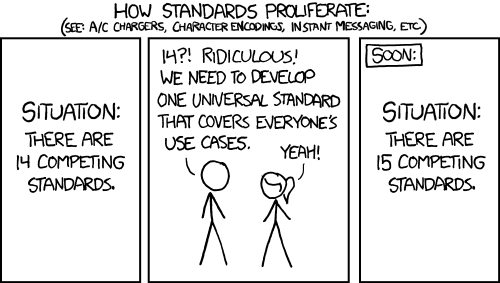
If Linux Torvalds want to make a third (or twentieth) Linux based userspace/complete OS, he can.
Upvote
0
(8
/
-8)
When the M1 came to the Mac, Apple was all in. No more Intel. Apple Silicon was the future. Microsoft still seems to be trying to cover all the bases.
Apple deciding ARM or bust meant there was no turning back. It had to work. Emulation had to be perfect and perform well. Early reports from the first M1 machines showed the machines performed better in emulation than many systems did natively. Developers were given the resources needed. And it was understood that this was the direction.
That commitment is what made Apple Silicon so amazing. It wasn’t merely as good as Intel. It was way better. Apple having the iPhone for their futzing around helped. They could keep improving and refining the design until it was ready for the Mac. Poor Microsoft could only futz around on Windows PCs where all the shortcomings were front and center.
Until Microsoft makes the same commitment, their ARM systems are always going to be on a second tier. Yeah, you could get the ARM PC, but wouldn’t you prefer a real one with Intel Inside instead?
Right now, the best you can say about ARM PCs is that they’re pretty good and way better than the previous ARM models. That’s really not enough.
Apple deciding ARM or bust meant there was no turning back. It had to work. Emulation had to be perfect and perform well. Early reports from the first M1 machines showed the machines performed better in emulation than many systems did natively. Developers were given the resources needed. And it was understood that this was the direction.
That commitment is what made Apple Silicon so amazing. It wasn’t merely as good as Intel. It was way better. Apple having the iPhone for their futzing around helped. They could keep improving and refining the design until it was ready for the Mac. Poor Microsoft could only futz around on Windows PCs where all the shortcomings were front and center.
Until Microsoft makes the same commitment, their ARM systems are always going to be on a second tier. Yeah, you could get the ARM PC, but wouldn’t you prefer a real one with Intel Inside instead?
Right now, the best you can say about ARM PCs is that they’re pretty good and way better than the previous ARM models. That’s really not enough.
Upvote
2
(20
/
-18)
i don't follow the development of OSes and APIs.. i know that generally speaking Windows has supported a lot of backwards compatibility over the years.. and Linus' personal opinion is "DO NOT BREAK USER SPACE" .. so what's with the hate on either of them for long term support?
Standard Internet nerd rage I would say

Upvote
9
(9
/
0)
DaveSimmons
Ars Legatus Legionis
That remains to be seen. Microsoft has tried to make it the year of ARM on PCs twice before and failed They don't have total control over hardware like Apple so ARM needs to compete with AMD and intel on price, performance, features, compatibility where with Apple they could simply stop selling intel devices.I think it's fairly obvious that ARM is the future of Windows on laptops/tablets, even pro workstation-class laptops. That future might not be here quite yet, but these devices are a clear signal that it's coming in a matter of months, not years.
A smaller company can't easily afford to spend the money to add ARM drivers based on hope. If ARM is 5-10% of the PC market then it might be cheaper to lose a few sales than to support it.
Upvote
9
(10
/
-1)
Same reason they try not to pour money into Windows development: it would be very hard to meaningfully grow their market share so they maximize profits by investing as little as possible. What they do spend on is mostly aimed at other markets that they could conceivably grow into (AI, cloud services, etc).Is Qualcomm a reliable enough partner that Microsoft would put all their eggs in that basket? They would need to feel sure that new chips would continue to give good performance.
I wonder why MS hasn't poured money into their own chips.
Upvote
0
(4
/
-4)
Not defending MS against the indefensible bloatware, but I will say that once you uninstall the junk (it's actually not even installed; it's like shortcuts that will install it on first-run), it doesn't come back. There's about fifteen minutes worth of chores after installation/first-run that involves getting rid of the Candy-Crush-like junk and turning off the data collection, but in my experience with W11 so far, none of that garbage has returned. You get some nasty dark patterns during the big upgrades that try to trick you into reenabling telemetry and the like, but you just need to be careful.I'm glad PCs have (mostly) caught up with Apple Silicon. I just wish I could get a version of Windows without ads and superfluous notifications. Does upgrading to W11 Pro eliminate the ads. Even on my PC with a "clean" install, I get sponsored apps.
I actually think it's more respectful than iOS these days, which keeps larding up Settings with ads forevermore. Again, not a defense but it is manageable.
Upvote
-1
(15
/
-16)
The whole point of Windows is that it's the only OS that supports damn-near everything, and Microsoft doesn't dictate what hardware to support, but rather works with partners to support the hardware they're bringing to market.When the M1 came to the Mac, Apple was all in. No more Intel. Apple Silicon was the future. Microsoft still seems to be trying to cover all the bases.
Apple deciding ARM or bust meant there was no turning back. It had to work. Emulation had to be perfect and perform well. Early reports from the first M1 machines showed the machines performed better in emulation than many systems did natively. Developers were given the resources needed. And it was understood that this was the direction.
That commitment is what made Apple Silicon so amazing. It wasn’t merely as good as Intel. It was way better. Apple having the iPhone for their futzing around helped. They could keep improving and refining the design until it was ready for the Mac. Poor Microsoft could only futz around on Windows PCs where all the shortcomings were front and center.
Until Microsoft makes the same commitment, their ARM systems are always going to be on a second tier. Yeah, you could get the ARM PC, but wouldn’t you prefer a real one with Intel Inside instead?
Right now, the best you can say about ARM PCs is that they’re pretty good and way better than the previous ARM models. That’s really not enough.
Microsoft is never going to simply stop supporting x86-64 as long as there are vendors releasing competitive hardware using it.
Upvote
44
(44
/
0)
Post content hidden for low score.
Show…
Fair enough, but I think this is a strange argument again because if 165 debuted four years ago with M1-style performance (if not efficiency), then Intel, all things being consistent, would have evolved it at the usual 10-15% rate per year where it would still be a poor comparison for Qualcomm in 2024.Which is my point; Intel has improved dramatically in 4 years, which is the only reason Qualcomm's showing isn't as impressive.
(Unless you're proposing that both Intel and Qualcomm released these chips four years ago, which fine, would be impressive. But neither of them did.)
Upvote
3
(5
/
-2)

That's the driver/device support. OS support tends to be significantly longer on Windows. My old Surface Book 1 is still getting updates Windows 10, and it's what, 9 years old? It's been "out of support" for a while. Windows 10 support ending is what will finally kill it, but 10 years is a pretty solid run.6 years is pretty bad. Google will support the relatively inexpensive Pixel 8a for a year longer than that.
AFAIK Intel supported things for longer as well. For example, Ivy Bridge launched April 29, 2012 and Intel's last graphics driver for that platform was released on October 23, 2020. That's a bit over 8 years.
Past performance is not an indication of future performance, but it's not like these devices will stop getting Wndows updates after 6 years. It's not really analogous to Android updates, which release new major versions far more frequently than Windows does and break compatibility with devices more often.
Upvote
18
(18
/
0)
Umm, Linux would like to have a word about supporting damn-near everything. . .The whole point of Windows is that it's the only OS that supports damn-near everything, and Microsoft doesn't dictate what hardware to support, but rather works with partners to support the hardware they're bringing to market.
Microsoft is never going to simply stop supporting x86-64 as long as there are vendors releasing competitive hardware using it.
But otherwise, your point is well taken.
Upvote
3
(6
/
-3)

OrangeCream
Ars Legatus Legionis
It's tough to make my point clear:Fair enough, but I think this is a strange argument again because if 165 debuted four years ago with M1-style performance (if not efficiency), then Intel, all things being consistent, would have evolved it at the usual 10-15% rate per year where it would still be a poor comparison for Qualcomm in 2024.
(Unless you're proposing that both Intel and Qualcomm released these chips four years ago, which fine, would be impressive. But neither of them did.)
1: Qualcomm's Snapdragon Elite X is impressive because it's competitive with both the x86 and Apple contemporary parts. Others are arguing it's disappointing because it's only competitive and not mindblowing
2: Apple's M1 was mindblowing because it was unmatched in the high efficiency, high performance, arena in 2020; had Meteor Lake been released in 2020 then the M1 would merely be competitive, just like the Elite X is today. Obviously Elite X wouldn't be available in 2020 being as it's existence is predicated on the M1; and u165 would probably be a simple monolithic pCore only design in 2020
3) It doesn't need to beat the M3/M4 to be successful. They don't have to outrun the bear, only the other hikers. Just having a competitive part means industries that value temperature or battery life have a solution currently not yet met by Intel or AMD (though reviews need to bear this out)
Upvote
32
(38
/
-6)
A few key things that set this Windows-on-ARM attempt apart:That remains to be seen. Microsoft has tried to make it the year of ARM on PCs twice before and failed They don't have total control over hardware like Apple so ARM needs to compete with AMD and intel on price, performance, features, compatibility where with Apple they could simply stop selling intel devices.
A smaller company can't easily afford to spend the money to add ARM drivers based on hope. If ARM is 5-10% of the PC market then it might be cheaper to lose a few sales than to support it.
- Apple has already shown the way, and as Apple goes, so goes the entire laptop industry (Apple multi-touch trackpads prompted Windows Precision trackpads, MacBook Air prompted Intel Ultrabook, and on and on).
- Choosing an ARM laptop no longer requires significant compromises for everyday computing tasks, and also delivers significant benefits (mainly in battery life and AI workloads/features).
- Microsoft is going all-in on ARM with the devices they do control, namely the Surface lineup, which is hugely popular.
Upvote
7
(16
/
-9)
DaveSimmons
Ars Legatus Legionis
Problems crop up when your app uses third-party libraries that don't yet support ARM builds. Libraries for compression, encryption, image manipulation, OCR, low-level I/O, etc.As far as the devs are concerned, for the vast majority of apps supporting both is going to be almost invisible; a checkbox in an IDE or a line of XML in a project file somewhere, and the pipeline will just dump out both at the end. So far as I know, Microsoft doesn't have a "universal binary" format that packages both into a single executable* like Apple does, so the later steps of the process (packaging, storage, delivery, etc.) will need to be done for both versions, and of course there's a user confusion issue.
* Microsoft does have something called a Hybrid binary, which is a weird chimera of code architectures, pre-JITTed emulation chunks and the like that even Microsoft struggles to explain the nature and purpose of. But if Windows/ARM starts being a "real thing," I'd be surprised if they didn't pretty much just copy the Apple route and build them both into a single package.
It might be easy-ish for those third-party developers to add ARM support, but until they do your own app won't build.
There's also cost in building, additional QA, deployment, training the support staff. I'm not saying it's hard it's just not free. For a smaller company the extra costs can hurt.
Upvote
13
(13
/
0)
It just hit me that I thought you were arguing the converse (I.e. that Qualcomm would be seen more favorably if Intel released 165 four years early). But now I realize you meant that transitively M1 would have been seen as “less impressive” (merely as competitive) as 165, in a similar way to how X Elite is seen today.It's tough to make my point clear:
1: Qualcomm's Snapdragon Elite X is impressive because it's competitive with both the x86 and Apple contemporary parts. Others are arguing it's disappointing because it's only competitive and not mindblowing
2: Apple's M1 was mindblowing because it was unmatched in the high efficiency, high performance, arena in 2020; had Meteor Lake been released in 2020 then the M1 would merely be competitive, just like the Elite X is today. Obviously Elite X wouldn't be available in 2020 being as it's existence is predicated on the M1; and u165 would probably be a simple monolithic pCore only design in 2020
3) It doesn't need to beat the M3/M4 to be successful. They don't have to outrun the bear, only the other hikers. Just having a competitive part means industries that value temperature or battery life have a solution currently not yet met by Intel or AMD (though reviews need to bear this out)
I apologize for misreading this argument (I kept thinking “how does a 165 in 2020 make X Elite look better??”) but I see now you mean it would normalize the M1’s impressive debut and make the X Elite less disappointing (if we were to compare the two cases).
At any rate this was kind of difficult for me to follow you, but yes I think I see your point and agree that such a conditional would’ve normalized expectations better for Qualcomm.
Upvote
20
(20
/
0)
DaveSimmons
Ars Legatus Legionis
A Google search claims Surface has 11% market share for laptops and < 3% share of all PCs shipped.A few key things that set this Windows-on-ARM attempt apart:
- Apple has already shown the way, and as Apple goes, so goes the entire laptop industry (Apple multi-touch trackpads prompted Windows Precision trackpads, MacBook Air prompted Intel Ultrabook, and on and on).
- Choosing an ARM laptop no longer requires significant compromises for everyday computing tasks, and also delivers significant benefits (mainly in battery life and AI workloads/features).
- Microsoft is going all-in on ARM with the devices they do control, namely the Surface lineup, which is hugely popular.
So 97% of the PC hardware market is not under their direct control, while Apple controls 100%.
It's way too soon to tell how well ARM will succeed. Will it be 3% or 33%? We don't know. I'm not claiming ARM will fail, I'm just saying it is far from a sure thing.
Upvote
-1
(5
/
-6)
Best bit of the day, sir[...] and so now it sits beside my HP iPaq and the other detritus from my history with technology.
Upvote
4
(4
/
0)
TwoKiloBalls
Ars Praetorian
The end of x86 just got closer, and for the first time feels a little real.
Maybe, but Intel and AMD products are about to hit the market also and the leaked benchmarks of the Intel products seem impressive.
Upvote
9
(9
/
0)
warfare-guilder
Ars Centurion
I dislike Microsoft even more than Apple, but the Surface's commitment to repairability is worth many kudos.
Upvote
19
(21
/
-2)
warfare-guilder
Ars Centurion
Contrary to Linux, Windows has a rather stable driver API + values backwards compatibility, so even un-updated drivers would last much longer than for Android. Most new versions of Linux require new drivers. Almost no new version of Windows does.
The sad situation on Android is a perfect storm of Linux requiring driver updates, and Qualcom not providing them. Just one needs to be solved - if only Linux devs cared a bit more about users...
This is true on the face of it, but not the whole truth.
Upvote
-5
(0
/
-5)
Yup. It's competitive, regardless of which benchmarks win or lose against the Air.This is a strong entry.
Apple's dominance in single-core performance is truly remarkable. It's not even close.It is clear comparing the single to multi core benchmarks that they are throwing more cores at the problem to keep up on benchmarks, but this is definitely "good enough".
Upvote
14
(17
/
-3)
onlysublime
Ars Tribunus Militum
The thing that always held back the windows on arm initiative was the weak phone processors that were available. Microsoft had no options out there. Their SQ1 processor was a modified Qualcomm 855 processor (modified to be more appropriate for a PC including PCIe, etc. etc.). For comparison, the 855 was the same slow processor in the original Surface Duo barely running at adequate speeds on Android. The SQ3 in the Surface Pro 9 was based on the 888 processor.
Buying Nuvia and getting the main architects behind the Apple M processors was the best thing Qualcomm could have ever done.
My Surface Pro 11 has been amazing. Windows feels snappy like a desktop. Comparing it to the Surface Pro 9 with Alder Lake makes the SP9 look sad. Even simple things like watching Youtube or using Microsoft Word could get the Intel to ramp up and fans to come on that don't happen on the SP11. And my i7 16GB/256GB SP9 would have weird sluggishness at odd times.
I am feeling a bit of the compatibility pain as Adobe InDesign doesn't work yet (it comes this month, July) and Adobe Illustrator doesn't either (also July). But for the most part, things have been seamless. Even Lightroom Classic in emulation runs better on my SP11 than LRC on my SP9. I do note that emulation drains the battery much more than native. I was just sitting in Clip Studio Paint with a file open, but I wasn't actually doing anything because I was watching Netflix on the TV. And the battery was going down faster than I anticipated.
But my printers installed without hassle (my work printer, Canon C5535i and home Canon Pixma Pro 100 and Epson ecotank). And the accessories I have work as well.
Buying Nuvia and getting the main architects behind the Apple M processors was the best thing Qualcomm could have ever done.
My Surface Pro 11 has been amazing. Windows feels snappy like a desktop. Comparing it to the Surface Pro 9 with Alder Lake makes the SP9 look sad. Even simple things like watching Youtube or using Microsoft Word could get the Intel to ramp up and fans to come on that don't happen on the SP11. And my i7 16GB/256GB SP9 would have weird sluggishness at odd times.
I am feeling a bit of the compatibility pain as Adobe InDesign doesn't work yet (it comes this month, July) and Adobe Illustrator doesn't either (also July). But for the most part, things have been seamless. Even Lightroom Classic in emulation runs better on my SP11 than LRC on my SP9. I do note that emulation drains the battery much more than native. I was just sitting in Clip Studio Paint with a file open, but I wasn't actually doing anything because I was watching Netflix on the TV. And the battery was going down faster than I anticipated.
But my printers installed without hassle (my work printer, Canon C5535i and home Canon Pixma Pro 100 and Epson ecotank). And the accessories I have work as well.
Upvote
18
(20
/
-2)
I'm curious as to whether Microsoft have made improvements to power management for ARM? Modern Standby / Connected Standby on Intel has been a suboptimal experience for many users with regards to sleeping, waking and remaining cool in standby. My experience with ARM on Windows 8 with the Surface RT was also disappointing, with the machine often failing to charge or get more than a few hours of standby.
By comparison, my Mac sleeps when it's expected, wakes up instantly, and gets days in standby.
By comparison, my Mac sleeps when it's expected, wakes up instantly, and gets days in standby.
Upvote
12
(12
/
0)
onlysublime
Ars Tribunus Militum
All my printers work with no hassle. I clicked on Add Printer, they were detected and drivers installed. Maybe you should investigate a bit before making a snap judgment.Oof! No manufacturer/custom printer drivers and no colorimeters/spectrophotometers is a great way to have a product be largely irrelevant to photographers. Color management is about more than screen calibration and many wouldn't trust manufacturer profiles for that to be accurate on principle anyway. It might resign it to intake-only use. It might make video a non-starter for some too, but I bet that's a bit less color-critical since the audience has a profiled screen statistically never.
It would probably be worth Microsoft's time to pay out to get drivers developed cooperatively with manufacturers for critical bits of hardware for high-visibility creative industries, if only for the halo effect Apple benefits from.
Upvote
-8
(6
/
-14)
i don't follow the development of OSes and APIs.. i know that generally speaking Windows has supported a lot of backwards compatibility over the years.. and Linus' personal opinion is "DO NOT BREAK USER SPACE" .. so what's with the hate on either of them for long term support?
The worry about OS updates comes from the Android side where the ARM/Qualcomm version (so basically all of it) generally gets really poor support because Qualcomm doesn't provide drivers after a very short time after release and the particular architecture of the Linux kernel means that, by and large, you need to compile the driver into the kernel and for that driver to comply to entirely new interfaces for each version. For good reasons, people don't want to be permanently stuck on what might be the equivalent of Windows RT.
Windows should be much more robust in that case because it has a far more modular kernel architecture that compartmentalizes drivers behind long term stable interfaces. So it's very likely that in ten years you may be able to run Windows 13 on one of these (performance notwithstanding) with the existing drivers, at worst missing the likes of SPECTRE mitigation that shouldn't matter too much outside of cloud hardware.
Upvote
10
(11
/
-1)
warfare-guilder
Ars Centurion
When the M1 came to the Mac, Apple was all in. No more Intel. Apple Silicon was the future. Microsoft still seems to be trying to cover all the bases.
Apple deciding ARM or bust meant there was no turning back. It had to work. Emulation had to be perfect and perform well. Early reports from the first M1 machines showed the machines performed better in emulation than many systems did natively. Developers were given the resources needed. And it was understood that this was the direction.
And plenty of stuff broke, and will be broken forever. Microsoft is a significantly more responsible platform holder than Apple.
Upvote
-18
(14
/
-32)
God forbid that to use someone else's source code, you abide by the terms of their license.Open source is great, it's GPL that is the cancer.
You don't have to use the gpl... Unless you choose to use gpl'ed code from someone else, then your code won't be GPL'ed.
GPL isn't cancer. You just make your choices about what code to use.
Last edited:
Upvote
14
(21
/
-7)
While it's nice to see more competition in the cpu space, this isn't a magical fix for windows battery life. The primary problem with battery life on windows isn't the cpu or gpu, it's the os and software. As I type this in task manager visual studio has had a cpu core pegged for approaching 45 min. I went to lunch and came back and one core was just sitting at 100% use.
The battery life benchmarks with no apps on the machine other than a browser and a couple standalone benchmark apps are pointless. They will not tell you much about the actual experience you will have once you install whatever software you use. Let's see how it does with the pile of adobe background processes, or running VS, or office, or whatever else people use to do work on the machine.
The battery life benchmarks with no apps on the machine other than a browser and a couple standalone benchmark apps are pointless. They will not tell you much about the actual experience you will have once you install whatever software you use. Let's see how it does with the pile of adobe background processes, or running VS, or office, or whatever else people use to do work on the machine.
Upvote
-7
(7
/
-14)
Would you be able to test it playing Civilization VI? If so how well?
I ask, because this game can play on the IPad, Macbook and windows devices in one way or another. (though I'm not sure if it's ARM native on the MacOS version or not.)
I ask, because this game can play on the IPad, Macbook and windows devices in one way or another. (though I'm not sure if it's ARM native on the MacOS version or not.)
Upvote
3
(3
/
0)

Unfortunately, I'm worried that it may be an Osbourne situation and/or an OS/2 situation. Osbourne died because they announced a better version was coming so nobody bought the current one and opted to wait. I'm in the same boat... I don't particularly want this one but the next one I might given potential improvements. If we all wait then no one buys ARM and then there won't be much of an incentive to make another. OS/2 died because they were better at Windows than Windows. So all the developers just kept developing for Windows figuring that OS/2 would run it just fine. So if we get good/great emulation with Prism, then there's no reason to target ARM which means there may not be a reason to buy it, either (and sacrifice some other things like gaming... which I think more than a few people don't care about gaming but as hard as reviewers are hammering gaming as if it's the end-all, be-all metric, that will turn people off it).I’m really rooting for this & following closely (not the AI stuff though). I look forward to seeing how ARM on Windows progresses over the coming 1-2 years as software/applications catch up & get optimized.
Upvote
9
(10
/
-1)

Anticipat3
Smack-Fu Master, in training
If all you do is browse the web, watch videos, listen to music, play casual games, edit Office documents, and sync files between systems, you have basically nothing to worry about here.
The same thing could have more or less been said about Windows RT machines, and we know how that turned out: they were returned in droves when customers discovered what they couldn't do. The list of uncertainties and disqualifiers is still just far too long:
- The translation layer isn't good enough to have any confidence that all your programs will run. People will return it if it doesn't work with their apps, or the translation layer performance is poor.
- Nearly a total lack of peripheral support -- a significant number of people will return it just because it doesn't work with peripherals they already own (See: Windows Vista).
- No Thunderbolt ports -- this is a huge turnoff to anyone that already has a Monitor + TB Hub for docking, along with anyone else has a need for faster ports. There will be people that just assume a new computer in this price range has it, and return it when they discover it's missing.
- Compared to a M3 Pro MBP, which is right in the same price range, you're getting something like half of the single threaded performance, 3/4 of the multi threaded performance, only 1/3 the GPU performance, and about 1/2 to 2/3 the SSD speed. Combined with the subpar translation layer, there will be people that return it just because it "feels slow."
- There isn't a passively cooled model, so "silent/fanless," a huge selling point for MacBook Air, isn't available. And of course if it were, the performance would be even worse.
- The history of failed attempts and short support for ARM Windows devices gives serious cause for concern about longevity and future support.
I'll be shocked if it sells well and the return rates are low.
Upvote
9
(22
/
-13)
I don't fully agree with all your conclusions, but I think you're right that by marking Intel Macs as EOL Apple gave developers no good choice but to build for ARM.When the M1 came to the Mac, Apple was all in. No more Intel. Apple Silicon was the future. Microsoft still seems to be trying to cover all the bases.
Apple deciding ARM or bust meant there was no turning back. It had to work. Emulation had to be perfect and perform well. Early reports from the first M1 machines showed the machines performed better in emulation than many systems did natively. Developers were given the resources needed. And it was understood that this was the direction.
That commitment is what made Apple Silicon so amazing. It wasn’t merely as good as Intel. It was way better. Apple having the iPhone for their futzing around helped. They could keep improving and refining the design until it was ready for the Mac. Poor Microsoft could only futz around on Windows PCs where all the shortcomings were front and center.
Until Microsoft makes the same commitment, their ARM systems are always going to be on a second tier. Yeah, you could get the ARM PC, but wouldn’t you prefer a real one with Intel Inside instead?
Right now, the best you can say about ARM PCs is that they’re pretty good and way better than the previous ARM models. That’s really not enough.
"Your app will run as a second class citizen on any new Mac" is persuasive. It would be equally persuasive for Windows, but can't happen of course.
Last edited:
Upvote
11
(11
/
0)
Yes, Apple made choices. It was never a technology limitation (well, perhaps they couldn't get Vulkan/OpenCL to be as performant because of something about their architecture).Most impressive is how out of the gate Qualcomm supports both Vulkan and OpenCL in addition to DirectX. There is no excuse of Apple not to reciprocate other than control.
I don't know how performance is with it, but MoltenVK is a thing that exists, and maybe that's good enough if it gets you about the same performance as a native implementation?
Upvote
8
(8
/
0)
I bought a Snapdragon X Elite Surface Laptop 7 and have been using it exclusively since it arrived. I've been happy with it. Battery life is great and compatibility hasn't been a big issue so far. The only app I haven't been able to install is the driver package for my printer (Brother MFC-J880DW). The generic one in windows seems to work well enough though so I can still print and scan.
Upvote
13
(13
/
0)