
You are using an out of date browser. It may not display this or other websites correctly.
You should upgrade or use an alternative browser.
You should upgrade or use an alternative browser.
Louisiana’s coastal wetlands will disappear—it’s just a matter of when
- Thread starter JournalBot
- Start date
The invasive animal Nutria also cause extreme damage to marshlands. I ate some in S. America, tasty.
One person started a dog treat company made from them.
https://www.nola.com/news/environment/a ... 0c4f2.html
One person started a dog treat company made from them.
https://www.nola.com/news/environment/a ... 0c4f2.html
Upvote
39
(41
/
-2)
>Coastal Louisiana is currently home to 15,000 square kilometers of marshland, a critical ecosystem held together by a complex, interlocking set of processes. The tide washes in; plants grow and die; sediment is brought in by rivers and builds up. If the system changes—for instance, if sea levels rise rapidly—the marsh changes, too.
One big issue is manmade.
Flood control measures prevent river sediment from spreading out over the entire region so that it can overcome natural subsidence.
>The wetlands of Louisiana were built by the sediment carried by the mighty Mississippi River. The state’s coastal wetlands can neither be rebuilt nor sustained, over the long term, without sediment from the river. Period. The closing of distributary channels like Bayou Lafourche, and levees built for flood control and channel projects for navigation pinned the river in place, cutting off the flow of sediment to much of Louisiana’s coast. Over time, the lack of sediment, sinking land and rising seas, canals and other factors have contributed to wide-scale land loss.
http://mississippiriverdelta.org/the-mi ... #_section3
If you look at the satellite images of areas into which the sediments are still allowed to flow, in the link above, wetlands are building up.
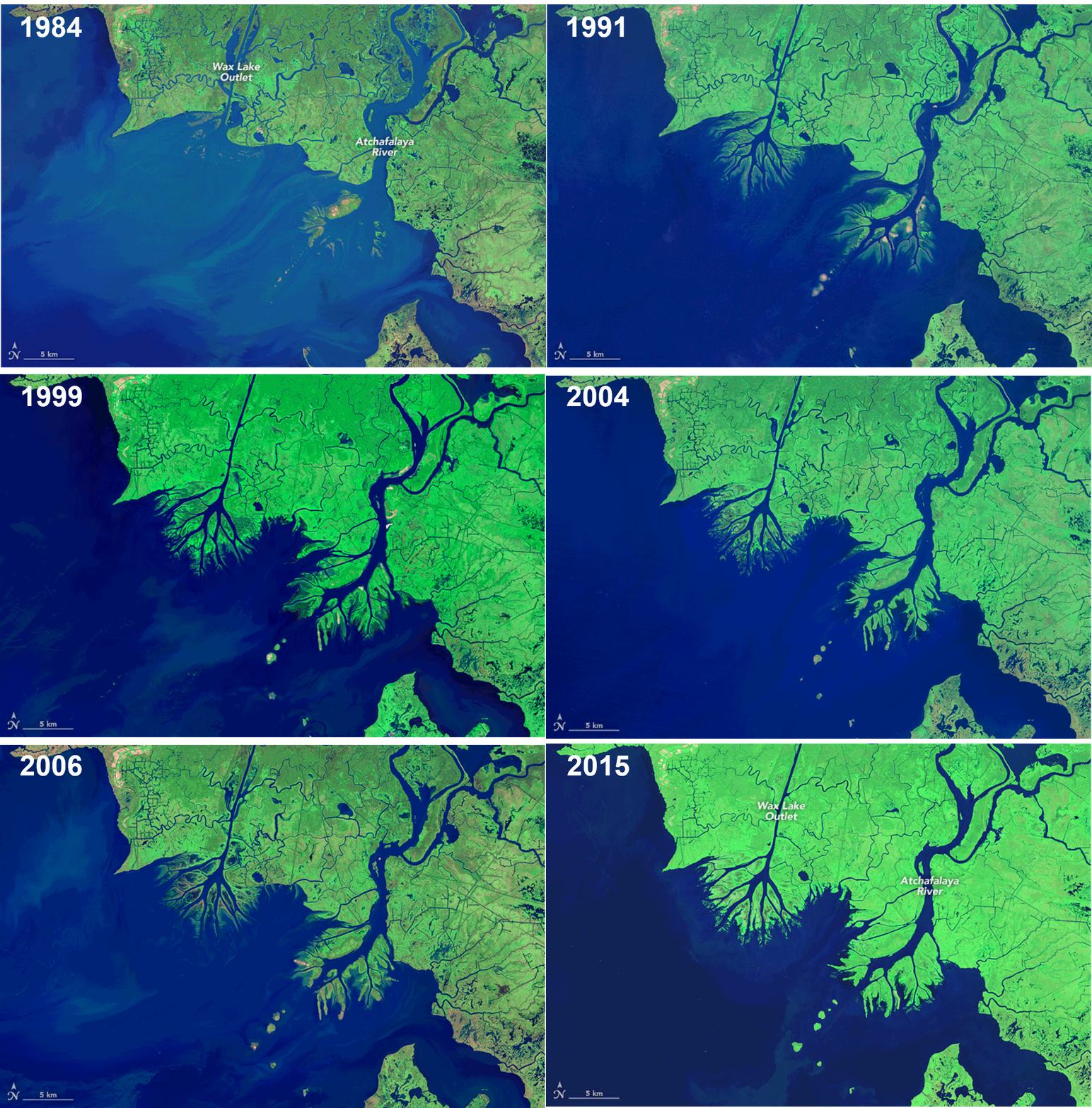
There is a movement to divert the river back into the traditional wetlands so that the sediments can help them recover.
One big issue is manmade.
Flood control measures prevent river sediment from spreading out over the entire region so that it can overcome natural subsidence.
>The wetlands of Louisiana were built by the sediment carried by the mighty Mississippi River. The state’s coastal wetlands can neither be rebuilt nor sustained, over the long term, without sediment from the river. Period. The closing of distributary channels like Bayou Lafourche, and levees built for flood control and channel projects for navigation pinned the river in place, cutting off the flow of sediment to much of Louisiana’s coast. Over time, the lack of sediment, sinking land and rising seas, canals and other factors have contributed to wide-scale land loss.
http://mississippiriverdelta.org/the-mi ... #_section3
If you look at the satellite images of areas into which the sediments are still allowed to flow, in the link above, wetlands are building up.
There is a movement to divert the river back into the traditional wetlands so that the sediments can help them recover.
Upvote
82
(83
/
-1)
The invasive animal Nutria also cause extreme damage to marshlands. I ate some in S. America, tasty.
One person started a dog treat company made from them.
https://www.nola.com/news/environment/a ... 0c4f2.html
Also, the oil companies cut all those channels through the wetlands for easy access to off shore oil wells and on shore refinaries, which allows the tides access into areas where the fresh water plants (whose roots hold the wetlands together) are vulnerable to the salt.
Once those plants die, the tides really can start to erode things.
Those Nutria are eating those same plants in addition to digging everything up to hell and back.
Upvote
75
(76
/
-1)
The invasive animal Nutria also cause extreme damage to marshlands. I ate some in S. America, tasty.
One person started a dog treat company made from them.
https://www.nola.com/news/environment/a ... 0c4f2.html
Also, the oil companies cut all those channels through the wetlands for easy access to off shore oil wells and on shore refinaries, which allows the tides access into areas where the fresh water plants (whose roots hold the wetlands together) are vulnerable to the salt.
Once those plants die, the tides really can start to erode things.
Those Nutria are eating those same plants in addition to digging everything up to hell and back.
They are an issue here in Maryland also. Though slightly less.
Only two things you can hunt without a hunting license in Maryland are Groundhogs and Nutria. Also only two of the three animals you can hunt year round. Coyotes are the other one, but you've gotta have a hunting permit for them.
Never hunted a nutria and don't live within easy reach of where I could (nor do I own a boat). Good to know they are tasty. Though I'd do so more research. I've also heard guys say ground hogs are tasty. Yet I think the opinion is still about 20:1 that they are dog food.
Then again I also know plenty of people who won't touch squirrel and I think they are tasty (especially fried/cooked in a little EVOO and rosemary).
So there is that.
For the wetlands, its my understanding in terms of sediment build up, what's going on is that the flow is localized so those areas are building up, but if the proper volume and generalized flow in to the delta as well as the coast in general from other rivers was allowed, the same level of build up would not be occurring.
Also that generally there is much more loss most places which isn't remotely offset by where it is building up. Though it raises a question in my mind if sediment build up is localized and concentrated, is it possible to save a small slice of wetlands at least?
I am guessing the answer is no.
Upvote
21
(22
/
-1)
I am going to preface this comment by stating that I am in NO WAY attempting to make any political or policy based commentary.
With that said, every time I read something like this, I am amazed that our planet, given enough time, has produced a species that is capable of altering the environment on a global scale, literally.*
*this statement does assume that the sea level rise mentioned in the article is in fact due to some form or forms of "man made" climate change
With that said, every time I read something like this, I am amazed that our planet, given enough time, has produced a species that is capable of altering the environment on a global scale, literally.*
*this statement does assume that the sea level rise mentioned in the article is in fact due to some form or forms of "man made" climate change
Upvote
29
(30
/
-1)
The invasive animal Nutria also cause extreme damage to marshlands. I ate some in S. America, tasty.
One person started a dog treat company made from them.
https://www.nola.com/news/environment/a ... 0c4f2.html
Nutria rats and wild hogs in North America: the ultimate in ethical carnivorism
Upvote
39
(39
/
0)
The invasive animal Nutria also cause extreme damage to marshlands. I ate some in S. America, tasty.
One person started a dog treat company made from them.
https://www.nola.com/news/environment/a ... 0c4f2.html
Nutria rats and wild hogs in North America: the ultimate in ethical carnivorism
The nutria were brought into the states as fur animals to raise for fur coats and escaped into the wild.
Perhaps it's time to say that invasive species destroying entire ecosystems can be made into ethical fur coats.
I know the Cajuns in Louisiana would be happy to hunt them if they got paid per pelt.
Upvote
43
(45
/
-2)
I am going to preface this comment by stating that I am in NO WAY attempting to make any political or policy based commentary.
With that said, every time I read something like this, I am amazed that our planet, given enough time, has produced a species that is capable of altering the environment on a global scale, literally.*
*this statement does assume that the sea level rise mentioned in the article is in fact due to some form or forms of "man made" climate change
Greed is the greatest force in the universe, no doubt.
Upvote
20
(21
/
-1)
The invasive animal Nutria also cause extreme damage to marshlands. I ate some in S. America, tasty.
One person started a dog treat company made from them.
https://www.nola.com/news/environment/a ... 0c4f2.html
Nutria rats and wild hogs in North America: the ultimate in ethical carnivorism
The nutria were brought into the states as fur animals to raise for fur coats and escaped into the wild.
Perhaps it's time to say that invasive species destroying entire ecosystems can be made into ethical fur coats.
I know the Cajuns in Louisiana would be happy to hunt them if they got paid per pelt.
The last I read is the bounty is $6 an animal.
A poster mentioned canals dredged by oil companies. A few years ago I watched an interview of a cajun talking about the canals as they rode through them. It really angers me they are allowed to destroy the environment and walk away.
Back than we bought 2 sacks of oysters off the dock for $35. I ended up giving most away, way to much for 1 person. Shucks.
I would joke, it's better to be a smoker in Chalmette, that way your air is filtered.
Upvote
27
(27
/
0)
The invasive animal Nutria also cause extreme damage to marshlands. I ate some in S. America, tasty.
One person started a dog treat company made from them.
https://www.nola.com/news/environment/a ... 0c4f2.html
Also, the oil companies cut all those channels through the wetlands for easy access to off shore oil wells and on shore refinaries, which allows the tides access into areas where the fresh water plants (whose roots hold the wetlands together) are vulnerable to the salt.
Once those plants die, the tides really can start to erode things.
Those Nutria are eating those same plants in addition to digging everything up to hell and back.
They are an issue here in Maryland also. Though slightly less.
Only two things you can hunt without a hunting license in Maryland are Groundhogs and Nutria. Also only two of the three animals you can hunt year round. Coyotes are the other one, but you've gotta have a hunting permit for them.
Never hunted a nutria and don't live within easy reach of where I could (nor do I own a boat). Good to know they are tasty. Though I'd do so more research. I've also heard guys say ground hogs are tasty. Yet I think the opinion is still about 20:1 that they are dog food.
Then again I also know plenty of people who won't touch squirrel and I think they are tasty (especially fried/cooked in a little EVOO and rosemary).
So there is that.
For the wetlands, its my understanding in terms of sediment build up, what's going on is that the flow is localized so those areas are building up, but if the proper volume and generalized flow in to the delta as well as the coast in general from other rivers was allowed, the same level of build up would not be occurring.
Also that generally there is much more loss most places which isn't remotely offset by where it is building up. Though it raises a question in my mind if sediment build up is localized and concentrated, is it possible to save a small slice of wetlands at least?
I am guessing the answer is no.
Here's an exploration into the issues.
http://mississippiriverdelta.org/enough ... nas-coast/
Upvote
12
(12
/
0)
Michael Schnieders
Ars Scholae Palatinae
>
One big issue is man made.
You are correct, however, I would restate it to say that “The MAIN issue is man made.”
There is a direct correlation between the action of the Corps of Engineers and the depletion of fresh sediment deposition. I am not claiming the the Corps. is a bad entity, our understanding of the complicated processes of a stable ecosystem has improved over the years. The problem is the inability for government bureaucracy to adapt and alter policies to correct for actions and policies based off of bad understanding of how nature works.
Upvote
34
(34
/
0)
C.M. Allen
Ars Tribunus Angusticlavius
>
One big issue is man made.
You are correct, however, I would restate it to say that “The MAIN issue is man made.”
There is a direct correlation between the action of the Corps of Engineers and the depletion of fresh sediment deposition. I am not claiming the the Corps. is a bad entity, our understanding of the complicated processes of a stable ecosystem has improved over the years. The problem is the inability for government bureaucracy to adapt and alter policies to correct for actions and policies based off of bad understanding of how nature works.
Even if governments COULD pivot quickly, vested interests would stonewall any attempts made that might negatively impact their profit margins. Because the almighty dollar is the only thing America truly worships.
Upvote
41
(42
/
-1)
Post content hidden for low score.
Show…
Has anymore made a map of what this could look like (which includes highways/cities/etc)?
As someone who grew up in South Louisiana, I'm curious as to what's being predicted and the practical impact of it - what will be underwater.
As someone who grew up in South Louisiana, I'm curious as to what's being predicted and the practical impact of it - what will be underwater.
Upvote
11
(11
/
0)
It’s been doing that since the start. This is just the first time a world-changing species writes down what it’s doing.I am going to preface this comment by stating that I am in NO WAY attempting to make any political or policy based commentary.
With that said, every time I read something like this, I am amazed that our planet, given enough time, has produced a species that is capable of altering the environment on a global scale, literally.*
*this statement does assume that the sea level rise mentioned in the article is in fact due to some form or forms of "man made" climate change
Upvote
24
(24
/
0)
The invasive animal Nutria also cause extreme damage to marshlands. I ate some in S. America, tasty.
One person started a dog treat company made from them.
https://www.nola.com/news/environment/a ... 0c4f2.html
Nutria rats and wild hogs in North America: the ultimate in ethical carnivorism
The nutria were brought into the states as fur animals to raise for fur coats and escaped into the wild.
Perhaps it's time to say that invasive species destroying entire ecosystems can be made into ethical fur coats.
I know the Cajuns in Louisiana would be happy to hunt them if they got paid per pelt.
They didn't escape in appreciable numbers, they were intentionally released in the 1940s when the United States fur industry took a dive:
https://www.anstaskforce.gov/spoc/nutria.php
Upvote
25
(25
/
0)
julesverne
Ars Scholae Palatinae
"The researchers found that when the sea rose at less than 2mm per year, the sites survived as marshes. When sea levels rose at more than 3mm per year, most of the marshes gradually drowned over a period of centuries. And when sea-level rise increased past 6mm per year, the marshes drowned rapidly and completely, taking less than 50 years to do so."
Just for context, sea level rise averaged 1.5 mm/yr last century. In 2000 it was 3.2mm/ yr. and 2016 3.4mm/yr. Experts regard further acceleration as inevitable.
https://ocean.si.edu/through-time/ancie ... level-rise
Just for context, sea level rise averaged 1.5 mm/yr last century. In 2000 it was 3.2mm/ yr. and 2016 3.4mm/yr. Experts regard further acceleration as inevitable.
https://ocean.si.edu/through-time/ancie ... level-rise
Upvote
31
(31
/
0)
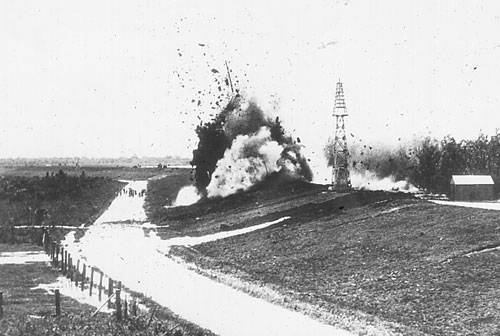
- Remove unneeded artificial dams (they trap sediments)
- Remove unneeded artificial levees
Yes, this will result in widespread flooding and re-creation of wetlands. That's the idea.
Just as important:
- Reintroduce beavers all over the watershed (they mitigate flooding and massively improve biodiversity much in the way we don't)
Upvote
25
(25
/
0)

>
One big issue is man made.
You are correct, however, I would restate it to say that “The MAIN issue is man made.”
There is a direct correlation between the action of the Corps of Engineers and the depletion of fresh sediment deposition. I am not claiming the the Corps. is a bad entity, our understanding of the complicated processes of a stable ecosystem has improved over the years. The problem is the inability for government bureaucracy to adapt and alter policies to correct for actions and policies based off of bad understanding of how nature works.
The Corps of Engineers was the one entity at least theoretically capable of taking the larger picture into account. However, they capitulated to the upstream communities who benefit from the flood control and don't give even the slightest of thoughts to the impact downstream. Even after it became clear how devastating flood control was to Louisiana, the Corps just kept right on building.
Upvote
17
(18
/
-1)
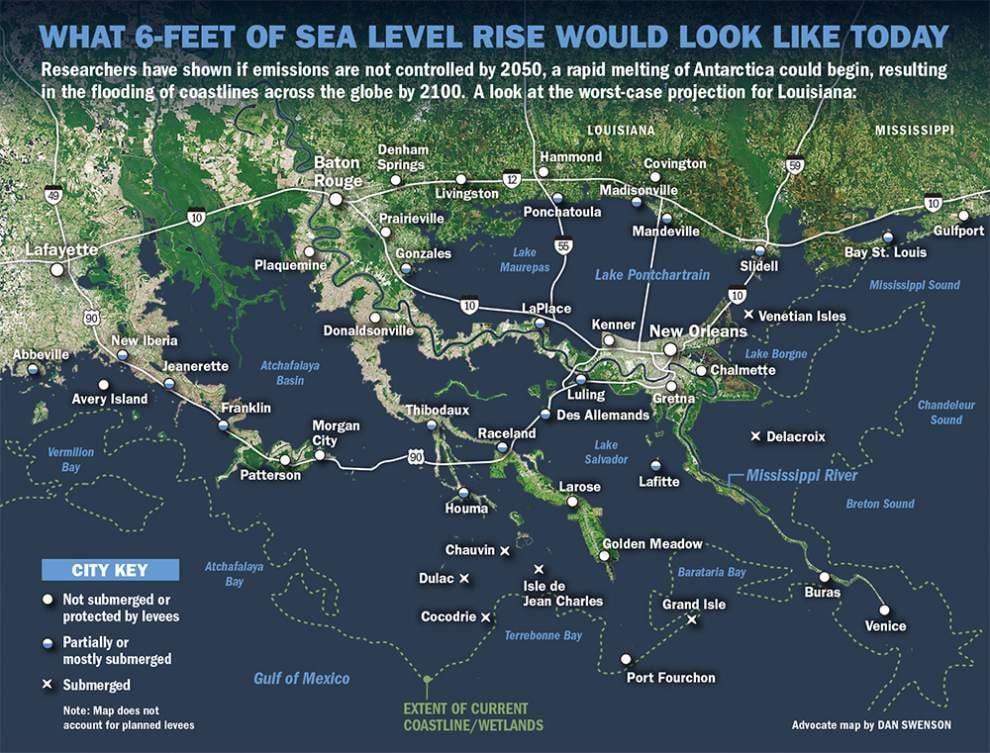
Has anymore made a map of what this could look like (which includes highways/cities/etc)?
As someone who grew up in South Louisiana, I'm curious as to what's being predicted and the practical impact of it - what will be underwater.
Here are a few images that might be helpful:

Upvote
34
(34
/
0)
- Remove unneeded artificial dams (they trap sediments)
- Remove unneeded artificial levees
Yes, this will result in widespread flooding and re-creation of wetlands. That's the idea.
Just as important:
- Reintroduce beavers all over the watershed (they mitigate flooding and massively improve biodiversity much in the way we don't)
Removing dams releases a huge amount of trapped sediments.
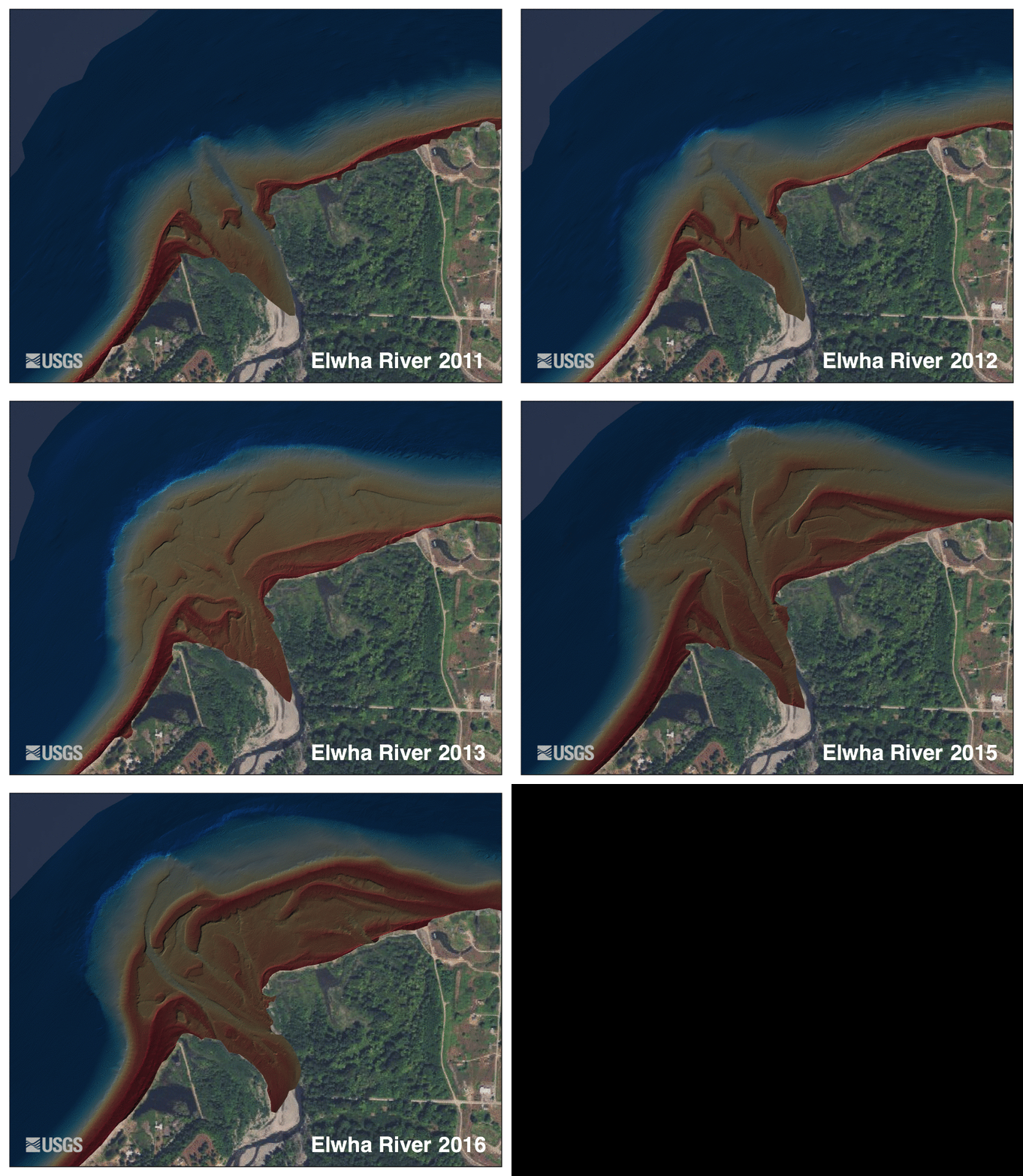
https://therevelator.org/elwha-dam-removal/
Upvote
19
(19
/
0)
- Remove unneeded artificial dams (they trap sediments)
- Remove unneeded artificial levees
Yes, this will result in widespread flooding and re-creation of wetlands. That's the idea.
Just as important:
- Reintroduce beavers all over the watershed (they mitigate flooding and massively improve biodiversity much in the way we don't)
Removing dams releases a huge amount of trapped sediments.
https://therevelator.org/elwha-dam-removal/
Wouldn’t that be a good thing with respect to maintaining the marshes for a bit longer?
Upvote
13
(13
/
0)
Voyna i Mor
Ars Tribunus Angusticlavius
I am going to preface this comment by stating that I am in NO WAY attempting to make any political or policy based commentary.
With that said, every time I read something like this, I am amazed that our planet, given enough time, has produced a species that is capable of altering the environment on a global scale, literally.*
*this statement does assume that the sea level rise mentioned in the article is in fact due to some form or forms of "man made" climate change
Both bacteria and the green plants had enormous ecological impact. You are only here because of what bacteria did to the atmosphere, and you are only able to post this, ultimately, because green plants obligingly converted carbon dioxide to carbon and hydrocarbons and then got covered in sediment.
Upvote
28
(28
/
0)

beausoleil
Ars Centurion
Has anymore made a map of what this could look like (which includes highways/cities/etc)?
As someone who grew up in South Louisiana, I'm curious as to what's being predicted and the practical impact of it - what will be underwater.
As someone else who grew up in South Louisiana, here's a start:
Sea level rise analysis by Climate Central
Notice the change in how the banks of Bayou Teche will be subject to flooding with 2°C vs 4°C. And you thought all the spring flooding last year in the Youngsville and St. Martinville area was bad? We'll see how our great-grandkids feel...
Upvote
16
(16
/
0)

One consequence that hasn't been mentioned is hurricanes. Those wetlands help buffer the mainland against storm surge and hurricane winds. Once they are gone, things will get even worse in that part of the world come hurricane season.
Though it is politically unpalatable, the only real choice in this is to move the US Navy yards over to Slidell, shift the Mississippi to the Atchafalaya, and let the region go back to nature. Even if we don't do it, Mama Nature will at some point in the not-too-distant future. By doing it on our schedule, we at least maintain some control over the process.
Though it is politically unpalatable, the only real choice in this is to move the US Navy yards over to Slidell, shift the Mississippi to the Atchafalaya, and let the region go back to nature. Even if we don't do it, Mama Nature will at some point in the not-too-distant future. By doing it on our schedule, we at least maintain some control over the process.
Upvote
31
(31
/
0)
> Removing dams releases a huge amount of trapped sediments.
Exactly. That's the idea.
The undamming of the Elwha is such a fantastic success story. The documentary about it is one of my go-to videos when I need some consolation in the face of human ecological incompetence.
https://www.youtube.com/watch?v=2yM5m5-1-I0
Exactly. That's the idea.
The undamming of the Elwha is such a fantastic success story. The documentary about it is one of my go-to videos when I need some consolation in the face of human ecological incompetence.
https://www.youtube.com/watch?v=2yM5m5-1-I0
Upvote
20
(20
/
0)

ThatGuyFromEarth
Ars Praetorian
The invasive animal Nutria also cause extreme damage to marshlands. I ate some in S. America, tasty.
One person started a dog treat company made from them.
https://www.nola.com/news/environment/a ... 0c4f2.html
Nutria was tasty? Hmm... Sounds nutritious too.
Sounds like it could be a good snack product... “NutriaSnax ™... The 100% swamp rat snacks that are both Nutritious and Tasty! Put a little rat in your snacks today!”
Megh... could use some work... Would definitely need a “Spicy Cajun” version.
Upvote
11
(11
/
0)

The invasive animal Nutria also cause extreme damage to marshlands. I ate some in S. America, tasty.
One person started a dog treat company made from them.
https://www.nola.com/news/environment/a ... 0c4f2.html
Nutria rats and wild hogs in North America: the ultimate in ethical carnivorism
The nutria were brought into the states as fur animals to raise for fur coats and escaped into the wild.
Perhaps it's time to say that invasive species destroying entire ecosystems can be made into ethical fur coats.
I know the Cajuns in Louisiana would be happy to hunt them if they got paid per pelt.
The last I read is the bounty is $6 an animal.
A poster mentioned canals dredged by oil companies. A few years ago I watched an interview of a cajun talking about the canals as they rode through them. It really angers me they are allowed to destroy the environment and walk away.
Yep. I've been in some of those canals. They're all over. And then they move inland barges (oil drilling rigs designed for shallow water) all over to drill. My dad used to work on one back in the 70s and 80s. If you do a search on "canals in louisiana created by oil companies" there are a number or articles where people are saying that the canals should be filled in to save the coast. From some of the headlines, it looks like they have filled some in (probably not enough to matter, yet).
Upvote
11
(11
/
0)
I am going to preface this comment by stating that I am in NO WAY attempting to make any political or policy based commentary.
With that said, every time I read something like this, I am amazed that our planet, given enough time, has produced a species that is capable of altering the environment on a global scale, literally.*
*this statement does assume that the sea level rise mentioned in the article is in fact due to some form or forms of "man made" climate change
Both bacteria and the green plants had enormous ecological impact. You are only here because of what bacteria did to the atmosphere, and you are only able to post this, ultimately, because green plants obligingly converted carbon dioxide to carbon and hydrocarbons and then got covered in sediment.
That's a damned good point, and I'm ashamed that I didn't think of that first, lol. But this is part of the reason I come to Ars! We've got one of the best and brightest communities on the Web, today.
Upvote
7
(7
/
0)
I'm think the Mississippi Delta and the delta of the Mississippi river refer to 2 separate things, and this article is talking about the latter and not the former.
Upvote
14
(14
/
0)
I'm originally from Hattiesburg, MS - a "large" metro about one-hour inland from the coast.
People have been talking about this for years. We'd often go fishing out of Bay St. Louis.
I recall visiting a fish camp in early August 2005 (just before Katrina) that had a Louisiana land loss projection map. I don't remember how far out the estimates were, but I can say that this has been on the minds of at least some of the residents for many years.
People have been talking about this for years. We'd often go fishing out of Bay St. Louis.
I recall visiting a fish camp in early August 2005 (just before Katrina) that had a Louisiana land loss projection map. I don't remember how far out the estimates were, but I can say that this has been on the minds of at least some of the residents for many years.
Upvote
3
(3
/
0)
Iphtashu Fitz
Ars Tribunus Militum
Once those plants die, the tides really can start to erode things.
It doesn't even take the plants dying. The act of simply cutting new channels alters the flow of water so drastically that it immediately triggers unexpected erosion.
My grandparents had a house on a river in New England where I spent most of my summers growing up in the 70's. There was a concrete sea wall between the beach and their yard, and as a 5-year-old (or thereabout) I could stand on the beach and rest my arms on top of that wall. So it was probably about a 3 foot drop from the yard to the sand. At some point prior to that, developers had built up a neighborhood on the opposite bank of the river, and as part of that dredged a new canal to it. If you drew a line down that canal and extended it you'd see that it lined up almost perfectly with our stretch of beach.
Over the years we lost a LOT of that beach to erosion, and if you look at things like Google Maps these days it's pretty clear that it was due to that canal being dredged and the subsequent change in how the tides flowed in and out of that area. You could see how the volume of water flowing through that canal would flow out and scour out a long stretch of the shore where our house was. We tried for years to prevent the erosion by building sand groins along our beach and it helped a bit, but it was still a losing battle. By the time the house was sold I was an adult in my 20's and I could no longer rest my arms on top of that wall like I could as a kid. In fact we'd lost so much sand to erosion that at that point I could stand on the beach, reach my hand up, and barely touch the top of the wall.
Our neighbors had much more of a defeatist attitude and never really tried to protect their stretch of the beach in any significant way. Their stretch of the sewall was undermined the last time I was there. It looks like the wall was roughly 10 feet tall.
Upvote
9
(9
/
0)
OK, Just Nit picking:
The Mississippi Delta is in Western Mississippi alongside the river, technically it is an alluvial plain.
https://en.wikipedia.org/wiki/Mississippi_Delta
The Mississippi River Delta is in Southern Louisiana.
https://en.wikipedia.org/wiki/Mississippi_River_Delta
I was wondering what horrible new disaster was looming over where I live, but it is the same old USACE disaster 300 miles south.
The Mississippi Delta is in Western Mississippi alongside the river, technically it is an alluvial plain.
https://en.wikipedia.org/wiki/Mississippi_Delta
The Mississippi River Delta is in Southern Louisiana.
https://en.wikipedia.org/wiki/Mississippi_River_Delta
I was wondering what horrible new disaster was looming over where I live, but it is the same old USACE disaster 300 miles south.
Upvote
6
(6
/
0)
There are a couple of very notable events (like the Great Oxidation Event). I guess one could argue that it was not a single species, though. But yeah, living things have been shaping this planet for quite a long time.It’s been doing that since the start. This is just the first time a world-changing species writes down what it’s doing.I am going to preface this comment by stating that I am in NO WAY attempting to make any political or policy based commentary.
With that said, every time I read something like this, I am amazed that our planet, given enough time, has produced a species that is capable of altering the environment on a global scale, literally.*
*this statement does assume that the sea level rise mentioned in the article is in fact due to some form or forms of "man made" climate change
Upvote
6
(6
/
0)
John McPhee's book Control of Nature talks in part about how manmade changes to the Mississippi have affected (decreased) deposition of sediment. Also in that book he explains how the river would, if left to its own devices, switch to a channel through the Atchafalaya Swamp.
I found it a fascinating book and it changed how I think about our relationship to the natural world. (It was also what got me to explore Heimay in Iceland, which was an unforgettable trip.)
I found it a fascinating book and it changed how I think about our relationship to the natural world. (It was also what got me to explore Heimay in Iceland, which was an unforgettable trip.)
Upvote
7
(7
/
0)
The invasive animal Nutria also cause extreme damage to marshlands. I ate some in S. America, tasty.
One person started a dog treat company made from them.
https://www.nola.com/news/environment/a ... 0c4f2.html
Nutria rats and wild hogs in North America: the ultimate in ethical carnivorism
Yeah I've been waiting for wild hogs to show up in Maryland. Mind you I do NOT want them here. I don't really eat pork (I do like bacon, but pretty much never buy bacon. My wife hates pork and I know its not healthy).
But if you look at maps of where invasive hogs are, they are through most of Virginia, a bit in West Virginia and even a bit in southern PA. But oddly none showing in Maryland.
Just like Mountain Lions are supposedly not in Maryland at all. But strangely every year a few trail cam pictures of Mountain Lions in Maryland show up as well as the occasional eye witness report. One from about 2 miles of me even (wasn't a bobcat, not with a 3 foot tail!). Department of Natural Resources keeps denying it or IIRC in a couple of cases have stated it was only a migrating cougar. Not endemic.
If they were endemic, DNR would have to (by law) manage the species and spend biologist resources on them. They don't particularly want to invest the couple hundred thousand out of their budget to try to do that. So, still no mountain lions in the state (HA!)
I will admit, one introduced species I want to make its way over to me is Sika deer. They were introduced in the 1920s and established themselves on the Eastern Shore. Slowly migrating a bit further afield every year. DNR finally admitted last year that one harvested on the Western shore was in fact on the Western shore when harvested (there had been a report or two of that for about the last 5-6 years).
So getting closer to me.
They are tasty. A bit fattier than white tail deer. They are actually related to elk and not deer. They bugle during the October Roar (that's what its called, not a rut like for deer). Missed a couple chances over the years to harvest one when I've been hunting on the Eastern Shore. IIRC the estimated Maryland Sika Deer herd is around 5000-6000. That is compared to the estimated whitetail herd of about 300,000-400,000. Their habitat does overlap and there is some competition for resources. So wider spread if likely not great ecologically. Enough issues with not having sufficient hunting pressure on WT in a lot of the state.
Though Sika like Marshier environments than WT usually does and are excellent swimmers.
They are about 70% of the size of a WT and about 80% of the weight (they tend to be beefier in the torso than a WT of similar size).
Upvote
2
(5
/
-3)
The Corps of Engineers was the one entity at least theoretically capable of taking the larger picture into account. However, they capitulated to the upstream communities who benefit from the flood control and don't give even the slightest of thoughts to the impact downstream. Even after it became clear how devastating flood control was to Louisiana, the Corps just kept right on building.
The biggest reason that the ACE keeps things as they are is the preotection of river shipping to/through New Orleans and Baton Rouge. The Mississippi River was on track to naturally change course, and shift down the Atchafalaya. This would lead to the old channel through New Orleans/etc becoming unnavigable to the ships that currently use it.
(At least, as I understand it)
Upvote
9
(9
/
0)