
You are using an out of date browser. It may not display this or other websites correctly.
You should upgrade or use an alternative browser.
You should upgrade or use an alternative browser.
How do you test vaccines when there’s no control population?
- Thread starter JournalBot
- Start date
Head Pirate
Ars Tribunus Militum
No worries, we have an ever growing pool of unvaccinated controls!
Upvote
38
(39
/
-1)

I had no idea there was such a thing as a pneumonia vaccine. I guess I better add that to the list of things I need to do as I approach 60.
At this point in my life, becoming autistic would be a relief.
/s
At this point in my life, becoming autistic would be a relief.
/s
Upvote
14
(20
/
-6)
No worries, we have an ever growing pool of unvaccinated controls!
EXACTLY, we will know soon enough how incredibly effective they are!
*facepalm*
Upvote
13
(14
/
-1)
truthyboy15
Ars Tribunus Angusticlavius
according to republicans they don't work at all and i would wager their going to ban them next.
Upvote
-13
(10
/
-23)

No worries, we have an ever growing pool of unvaccinated controls!
EXACTLY, we will know soon enough how incredibly effective they are!
*facepalm*
Actually the Spokane, WA outbreak of mumps is probably going to be a good case study once someone writes it up. Many affected have had the vaccine.
I suspect that it's a a real world example of how inoculation rates need to be higher than the herd immunity rates otherwise a less than 100% effective vaccine won't achieve that effect.
Upvote
22
(22
/
0)

according to republicans they don't work at all and i would wager their going to ban them next.
I'm a pretty left-wing and see a ton of antivax stuff coming from liberals. Don't forget that the Green party candidate and Robert Kennedy Jr. are both foam-at-the-mouth anti-vaxxers.
It's really a pretty bi-partisan thing. Liberals claim some conspiracy about "big pharma" and conservatives claim "big government" is forcing them.
Upvote
45
(47
/
-2)

It's already accepted by the CDC that a vaccination rate of 95% or better provides adequate protection for a population base. It's when it drops below that rate that the social effects drop off (sometimes alarmingly fast).No worries, we have an ever growing pool of unvaccinated controls!
EXACTLY, we will know soon enough how incredibly effective they are!
*facepalm*
Actually the Spokane, WA outbreak of mumps is probably going to be a good case study once someone writes it up. Many affected have had the vaccine.
I suspect that it's a a real world example of how inoculation rates need to be higher than the herd immunity rates otherwise a less than 100% effective vaccine won't achieve that effect.
It's thought that a rate as low as 88%-90% will see significant outbreak "pockets". 67% or less amounts to no herd protection at all (and that assumes the vaccine is at least 100% effective - which none are). This means vaccination rates that are substantially higher than 67%, but still below 90% can provide little to no herd immunity effects, depending on population density.
From what I've been reading, in some places, the herd immunity rate is as low as 83%-87% for most childhood diseases. Those who invest hundreds of dollars in a vaccine shot for bird flu are in for a nasty surprise, too, if only a few can get the shots.
Diseases are tricky. And, frankly, I wonder how long it will be before such vaccinations are no longer able to work at all (for anyone even in a high herd immunity community). Evolution finds a way, if any survivors are left. Much like not finishing a round of antibiotics, one wonders if viruses can adapt to overcome the immune response, or hide itself from it. Looking at AIDS, I'd say it's possible. Whether or not it's likely remains to be seen.
But this whole thing explains a lot about why the elderly tend to get viral pneumonia while young children are more protected. Young children are more likely to associate mostly with other young children who are more likely to be immunized. The elderly associate with all age levels, and many of them are "healthy adults" who don't get shots for viral pneumonia strains. The "herd" with which each associate likely have vastly different levels of herd immunity.
Upvote
22
(22
/
0)
"But if a vaccine is known to be effective, it is often difficult to ethically justify denying the vaccine to a control group. That makes it really hard to see just how effective the vaccine is."
How is the vaccine known to be effective before you've done a controlled study?
How is the vaccine known to be effective before you've done a controlled study?
Upvote
-1
(8
/
-9)
"But if a vaccine is known to be effective, it is often difficult to ethically justify denying the vaccine to a control group. That makes it really hard to see just how effective the vaccine is."
How is the vaccine known to be effective before you've done a controlled study?
They use an un-vaccinated control group for the initial effectiveness study. The idea is that since we don't yet know whether the vaccine is effective it is ethical to give it to one group of people and not to another. Once we know that a particular vaccine is effective, the ethical imperative changes.
It may take several follow-up studies to determine exactly how effective the vaccine is when given to various sub-populations (children, elderly, etc.) and how its effectiveness changes under various circumstances. These are the studies for which some other mechanism than an un-vaccinated control group is required.
Upvote
20
(20
/
0)

"But if a vaccine is known to be effective, it is often difficult to ethically justify denying the vaccine to a control group. That makes it really hard to see just how effective the vaccine is."
How is the vaccine known to be effective before you've done a controlled study?
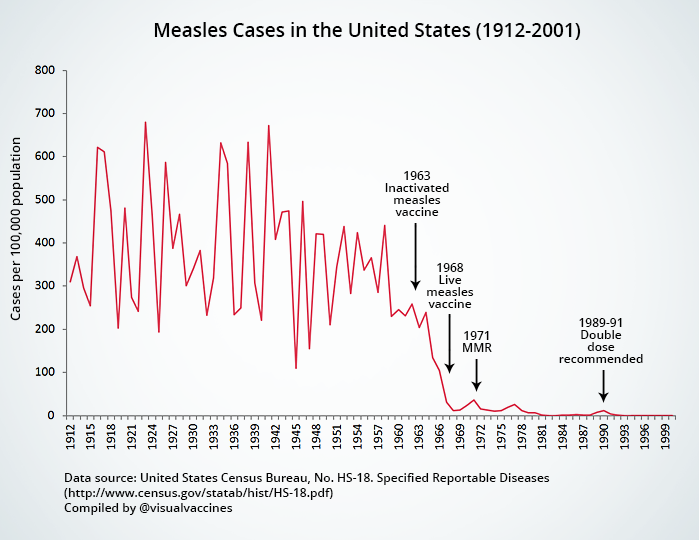
Time series.
Upvote
18
(18
/
0)
Post content hidden for low score.
Show…

Interesting approach. Though of course it would require special diligence to be sure the factors used were actually related to the effectiveness.
Upvote
6
(6
/
0)
I think it already is happening with some diseases. The effectiveness of the whooping cough (pertussis) vaccine is suspect. There have been some large scale outbreaks in populations that were vaccinated. One advantage of this method is it can be used retrospectively to analyze effectiveness of vaccines already given some time in the past.It's already accepted by the CDC that a vaccination rate of 95% or better provides adequate protection for a population base. It's when it drops below that rate that the social effects drop off (sometimes alarmingly fast).No worries, we have an ever growing pool of unvaccinated controls!
EXACTLY, we will know soon enough how incredibly effective they are!
*facepalm*
Actually the Spokane, WA outbreak of mumps is probably going to be a good case study once someone writes it up. Many affected have had the vaccine.
I suspect that it's a a real world example of how inoculation rates need to be higher than the herd immunity rates otherwise a less than 100% effective vaccine won't achieve that effect.
It's thought that a rate as low as 88%-90% will see significant outbreak "pockets". 67% or less amounts to no herd protection at all (and that assumes the vaccine is at least 100% effective - which none are). This means vaccination rates that are substantially higher than 67%, but still below 90% can provide little to no herd immunity effects, depending on population density.
From what I've been reading, in some places, the herd immunity rate is as low as 83%-87% for most childhood diseases. Those who invest hundreds of dollars in a vaccine shot for bird flu are in for a nasty surprise, too, if only a few can get the shots.
Diseases are tricky. And, frankly, I wonder how long it will be before such vaccinations are no longer able to work at all (for anyone even in a high herd immunity community). Evolution finds a way, if any survivors are left. Much like not finishing a round of antibiotics, one wonders if viruses can adapt to overcome the immune response, or hide itself from it. Looking at AIDS, I'd say it's possible. Whether or not it's likely remains to be seen.
But this whole thing explains a lot about why the elderly tend to get viral pneumonia while young children are more protected. Young children are more likely to associate mostly with other young children who are more likely to be immunized. The elderly associate with all age levels, and many of them are "healthy adults" who don't get shots for viral pneumonia strains. The "herd" with which each associate likely have vastly different levels of herd immunity.
Upvote
9
(9
/
0)
THAT is the question. The other thing they don't know is the long time side effects of the current vaccination schedule (myself and fam all take all vaccinations we are recommended btw)."But if a vaccine is known to be effective, it is often difficult to ethically justify denying the vaccine to a control group. That makes it really hard to see just how effective the vaccine is."
How is the vaccine known to be effective before you've done a controlled study?
When I asked a medical professional about this, they asked me if we should wait 30 years for the side effects to be known. My counter question is "What are you going to do if there are large scale mental or immunal side effects for the vaccinated population? In theory you could be poisoning everyone."
The fact is they do not know the answer to that question and it will be a while before anyone knows.
Upvote
-15
(3
/
-18)
Really well.Article":2qsiqpdb said:How well do vaccines work?
Upvote
18
(20
/
-2)
Head Pirate
Ars Tribunus Militum
"But if a vaccine is known to be effective, it is often difficult to ethically justify denying the vaccine to a control group. That makes it really hard to see just how effective the vaccine is."
How is the vaccine known to be effective before you've done a controlled study?
Time series.
In fairness, that's bad science. That's correlation, and that doesn't equal causality.
For example, that is the EXACT SAME LOGIC used to show that as the number of children getting vaccinated increased, so did reported cases of autism.
You can't say correlation isn't good enough to prove something you don't want to be true, but it is good enough to prove something you do want to be true or your no better than someone who says fossils are not good enough to prove the earth is old.
The good news ... we do have a control. We have a lot of controls, in fact. We have micro level controls in the people that can't get vaccines for medical reason (who, no shock, get measles at a rate higher then the vaccinated public). We have countries were vaccination very greatly over small geographical differences (like India, where a population center with a 99%+ vaccination rate lives double digit miles from a population centers with lower then 20% vaccination rates). We could also simply bread mice for 3 or 4 generations (to get a nice control), split them into two groups, vaccinate half in one group and no one in the other, and introduce measles to both groups.
Upvote
-8
(6
/
-14)
according to republicans they don't work at all and i would wager their going to ban them next.
I'm a pretty left-wing and see a ton of antivax stuff coming from liberals. Don't forget that the Green party candidate and Robert Kennedy Jr. are both foam-at-the-mouth anti-vaxxers.
It's really a pretty bi-partisan thing. Liberals claim some conspiracy about "big pharma" and conservatives claim "big government" is forcing them.
So the one thing that unites everybody and is truly multi-partisan is the anti-vaccine movement. Great.
Upvote
13
(14
/
-1)
"But if a vaccine is known to be effective, it is often difficult to ethically justify denying the vaccine to a control group. That makes it really hard to see just how effective the vaccine is."
How is the vaccine known to be effective before you've done a controlled study?
At least with drug trials, sometimes during the course of the study the medication being prescribed is so obviously effective and the disease so onerous that the study gets concluded early and gets fast-tracked for approval.
Upvote
6
(6
/
0)
[url=https://arstechnica.co.uk/civis/viewtopic.php?p=32791049#p32791049:2u6j4nxa said:joshv[/url]":2u6j4nxa]"But if a vaccine is known to be effective, it is often difficult to ethically justify denying the vaccine to a control group. That makes it really hard to see just how effective the vaccine is."
How is the vaccine known to be effective before you've done a controlled study?
Exactly what I was worried about! So where are the controls? I'd sure like to see data on them!
If you are really going to study the effectiveness of the typical vaccines then prepared to be appalled. I know because I did. Terms of anti-vax etc. are just propanda and fake news efforts but don't take my word for it.
Upvote
-13
(0
/
-13)
[url=https://arstechnica.co.uk/civis/viewtopic.php?p=32792541#p32792541:1fiv0f2l said:Head Pirate[/url]":1fiv0f2l]"But if a vaccine is known to be effective, it is often difficult to ethically justify denying the vaccine to a control group. That makes it really hard to see just how effective the vaccine is."
How is the vaccine known to be effective before you've done a controlled study?
Time series.
In fairness, that's bad science. That's correlation, and that doesn't equal causality.
For example, that is the EXACT SAME LOGIC used to show that as the number of children getting vaccinated increased, so did reported cases of autism.
You can't say correlation isn't good enough to prove something you don't want to be true, but it is good enough to prove something you do want to be true or your no better than someone who says fossils are not good enough to prove the earth is old.
The good news ... we do have a control. We have a lot of controls, in fact. We have micro level controls in the people that can't get vaccines for medical reason (who, no shock, get measles at a rate higher then the vaccinated public). We have countries were vaccination very greatly over small geographical differences (like India, where a population center with a 99%+ vaccination rate lives double digit miles from a population centers with lower then 20% vaccination rates). We could also simply bread mice for 3 or 4 generations (to get a nice control), split them into two groups, vaccinate half in one group and no one in the other, and introduce measles to both groups.
And the staggering rates of autism in Amish people...
Upvote
-13
(0
/
-13)

[url=https://arstechnica.co.uk/civis/viewtopic.php?p=32792941#p32792941:w5x3w937 said:nutela[/url]":w5x3w937][url=https://arstechnica.co.uk/civis/viewtopic.php?p=32791049#p32791049:w5x3w937 said:joshv[/url]":w5x3w937]"But if a vaccine is known to be effective, it is often difficult to ethically justify denying the vaccine to a control group. That makes it really hard to see just how effective the vaccine is."
How is the vaccine known to be effective before you've done a controlled study?
Exactly what I was worried about! So where are the controls? I'd sure like to see data on them!
If you are really going to study the effectiveness of the typical vaccines then prepared to be appalled. I know because I did. Terms of anti-vax etc. are just propanda and fake news efforts but don't take my word for it.
So, you 've studied "the effectiveness of the typical vaccines" and you were "appalled". Now could you provide some of your "studies"?
Upvote
13
(13
/
0)
[url=https://arstechnica.co.uk/civis/viewtopic.php?p=32792541#p32792541:ztkjji89 said:Head Pirate[/url]":ztkjji89]"But if a vaccine is known to be effective, it is often difficult to ethically justify denying the vaccine to a control group. That makes it really hard to see just how effective the vaccine is."
How is the vaccine known to be effective before you've done a controlled study?
Time series.
In fairness, that's bad science. That's correlation, and that doesn't equal causality.
For example, that is the EXACT SAME LOGIC used to show that as the number of children getting vaccinated increased, so did reported cases of autism.
You can't say correlation isn't good enough to prove something you don't want to be true, but it is good enough to prove something you do want to be true or your no better than someone who says fossils are not good enough to prove the earth is old.
The good news ... we do have a control. We have a lot of controls, in fact. We have micro level controls in the people that can't get vaccines for medical reason (who, no shock, get measles at a rate higher then the vaccinated public). We have countries were vaccination very greatly over small geographical differences (like India, where a population center with a 99%+ vaccination rate lives double digit miles from a population centers with lower then 20% vaccination rates). We could also simply bread mice for 3 or 4 generations (to get a nice control), split them into two groups, vaccinate half in one group and no one in the other, and introduce measles to both groups.
In this case correlation is powerful enough to consider it a proof cause there's no other explanation for the decline of measles cases other than vaccination. In the autism case the proof is thin, cause a) people report it more often and b) our understanding of what autism is has changed.
Upvote
8
(9
/
-1)
[url=https://arstechnica.co.uk/civis/viewtopic.php?p=32792941#p32792941:2vqn2bpa said:nutela[/url]":2vqn2bpa][url=https://arstechnica.co.uk/civis/viewtopic.php?p=32791049#p32791049:2vqn2bpa said:joshv[/url]":2vqn2bpa]"But if a vaccine is known to be effective, it is often difficult to ethically justify denying the vaccine to a control group. That makes it really hard to see just how effective the vaccine is."
How is the vaccine known to be effective before you've done a controlled study?
Exactly what I was worried about! So where are the controls? I'd sure like to see data on them!
If you are really going to study the effectiveness of the typical vaccines then prepared to be appalled. I know because I did. Terms of anti-vax etc. are just propanda and fake news efforts but don't take my word for it.
So, you 've studied "the effectiveness of the typical vaccines" and you were "appalled". Now could you provide some of your "studies"?
"I've read about it on a couple of blogs and websites!"
Upvote
14
(14
/
0)
peoplepeople
Seniorius Lurkius
according to republicans they don't work at all and i would wager their going to ban them next.
I'm a pretty left-wing and see a ton of antivax stuff coming from liberals. Don't forget that the Green party candidate and Robert Kennedy Jr. are both foam-at-the-mouth anti-vaxxers.
It's really a pretty bi-partisan thing. Liberals claim some conspiracy about "big pharma" and conservatives claim "big government" is forcing them.
So the one thing that unites everybody and is truly multi-partisan is the anti-vaccine movement. Great.
The glass is half full: One thing that is truly multi-partisan is the pro-vaccine movement.
Upvote
10
(10
/
0)
peoplepeople
Seniorius Lurkius
[url=https://arstechnica.co.uk/civis/viewtopic.php?p=32792541#p32792541:knzyi61q said:Head Pirate[/url]":knzyi61q]"But if a vaccine is known to be effective, it is often difficult to ethically justify denying the vaccine to a control group. That makes it really hard to see just how effective the vaccine is."
How is the vaccine known to be effective before you've done a controlled study?
Time series.
In fairness, that's bad science. That's correlation, and that doesn't equal causality.
For example, that is the EXACT SAME LOGIC used to show that as the number of children getting vaccinated increased, so did reported cases of autism.
You can't say correlation isn't good enough to prove something you don't want to be true, but it is good enough to prove something you do want to be true or your no better than someone who says fossils are not good enough to prove the earth is old.
The good news ... we do have a control. We have a lot of controls, in fact. We have micro level controls in the people that can't get vaccines for medical reason (who, no shock, get measles at a rate higher then the vaccinated public). We have countries were vaccination very greatly over small geographical differences (like India, where a population center with a 99%+ vaccination rate lives double digit miles from a population centers with lower then 20% vaccination rates). We could also simply bread mice for 3 or 4 generations (to get a nice control), split them into two groups, vaccinate half in one group and no one in the other, and introduce measles to both groups.
In this case correlation is powerful enough to consider it a proof cause there's no other explanation for the decline of measles cases other than vaccination. In the autism case the proof is thin, cause a) people report it more often and b) our understanding of what autism is has changed.
Hypothesis: Measles has assimilated the population and caused us to filter the symptoms out of our awareness and attribute the results to other causes.
Upvote
-8
(1
/
-9)
[url=https://arstechnica.co.uk/civis/viewtopic.php?p=32792541#p32792541:cwc5dfnd said:Head Pirate[/url]":cwc5dfnd]"But if a vaccine is known to be effective, it is often difficult to ethically justify denying the vaccine to a control group. That makes it really hard to see just how effective the vaccine is."
How is the vaccine known to be effective before you've done a controlled study?
Time series.
In fairness, that's bad science. That's correlation, and that doesn't equal causality.
For example, that is the EXACT SAME LOGIC used to show that as the number of children getting vaccinated increased, so did reported cases of autism.
You can't say correlation isn't good enough to prove something you don't want to be true, but it is good enough to prove something you do want to be true or your no better than someone who says fossils are not good enough to prove the earth is old.
The good news ... we do have a control. We have a lot of controls, in fact. We have micro level controls in the people that can't get vaccines for medical reason (who, no shock, get measles at a rate higher then the vaccinated public). We have countries were vaccination very greatly over small geographical differences (like India, where a population center with a 99%+ vaccination rate lives double digit miles from a population centers with lower then 20% vaccination rates). We could also simply bread mice for 3 or 4 generations (to get a nice control), split them into two groups, vaccinate half in one group and no one in the other, and introduce measles to both groups.
And the staggering rates of autism in Amish people...
Who vaccinate, but not at the same rate as the "English" population. (There's no religious reason they can't.) And for whom the actual rate of autism is unknown because of a lack of targeted studies. And, who have a limited genetic pool and knowing that autism is strongly inherited if the rates are lower (of which we simply don't know) it could be due to genetics.
Upvote
11
(11
/
0)

Interesting article. It makes sense to draw comparisons from a lot of sources when one source/group can't provide enough information.
Given that it's able to be applied retrospectively I wonder whether we could gain new insights from other, similar, types of medical studies from the last 100 years that previously had traditional control groups?
Small pet peeve, I am fairly certain this needs to be the verb (affect) rather than the noun (effect).
Given that it's able to be applied retrospectively I wonder whether we could gain new insights from other, similar, types of medical studies from the last 100 years that previously had traditional control groups?
...including assessing how tobacco control programs effect smoking rates...
Small pet peeve, I am fairly certain this needs to be the verb (affect) rather than the noun (effect).
Upvote
1
(1
/
0)
sURFNmADNESS
Ars Tribunus Militum
Vaccines have received bad press since a change in the law in 1986. Kids vaccinations under the new law could be combined without have CDC or other government body test and approve. Test was to happen by the manufacturer and then provide results to government. Reagan did not like this when he signed the law in 1986. He even made a note in the margin of the law in hopes someone would go back and redo this part of the law later. It has never been touched.
http://www.nytimes.com/1986/11/15/us/re ... uries.html
Other doctors have come forward and said that a small child's immune system is not fully ready to handle vaccines until 3-5 yrs old. However, most public schools require all shots to be administered before entry to school, which is usually just before 5 yrs old. We might just be administering too soon.
http://www.nytimes.com/1986/11/15/us/re ... uries.html
Other doctors have come forward and said that a small child's immune system is not fully ready to handle vaccines until 3-5 yrs old. However, most public schools require all shots to be administered before entry to school, which is usually just before 5 yrs old. We might just be administering too soon.
Upvote
-9
(0
/
-9)
Vaccines have received bad press since a change in the law in 1986. Kids vaccinations under the new law could be combined without have CDC or other government body test and approve. Test was to happen by the manufacturer and then provide results to government. Reagan did not like this when he signed the law in 1986. He even made a note in the margin of the law in hopes someone would go back and redo this part of the law later. It has never been touched.
http://www.nytimes.com/1986/11/15/us/re ... uries.html
None of your claims is actually supported by the link you provided
Other doctors have come forward and said that a small child's immune system is not fully ready to handle vaccines until 3-5 yrs old. However, most public schools require all shots to be administered before entry to school, which is usually just before 5 yrs old. We might just be administering too soon.
And what is the basis for their claim? Is it something they believe or is it something they can show to be true?
Upvote
6
(6
/
0)
Vaccines have received bad press since a change in the law in 1986. Kids vaccinations under the new law could be combined without have CDC or other government body test and approve. Test was to happen by the manufacturer and then provide results to government. Reagan did not like this when he signed the law in 1986. He even made a note in the margin of the law in hopes someone would go back and redo this part of the law later. It has never been touched.
http://www.nytimes.com/1986/11/15/us/re ... uries.html
Other doctors have come forward and said that a small child's immune system is not fully ready to handle vaccines until 3-5 yrs old. However, most public schools require all shots to be administered before entry to school, which is usually just before 5 yrs old. We might just be administering too soon.
What do you mean by "fully ready to handle vaccines"? And, who are these "other doctors"? Care to clarify?
Upvote
6
(6
/
0)
Head Pirate
Ars Tribunus Militum
[url=https://arstechnica.co.uk/civis/viewtopic.php?p=32792541#p32792541:2vvdrz5t said:Head Pirate[/url]":2vvdrz5t]"But if a vaccine is known to be effective, it is often difficult to ethically justify denying the vaccine to a control group. That makes it really hard to see just how effective the vaccine is."
How is the vaccine known to be effective before you've done a controlled study?
Time series.
In fairness, that's bad science. That's correlation, and that doesn't equal causality.
For example, that is the EXACT SAME LOGIC used to show that as the number of children getting vaccinated increased, so did reported cases of autism.
You can't say correlation isn't good enough to prove something you don't want to be true, but it is good enough to prove something you do want to be true or your no better than someone who says fossils are not good enough to prove the earth is old.
The good news ... we do have a control. We have a lot of controls, in fact. We have micro level controls in the people that can't get vaccines for medical reason (who, no shock, get measles at a rate higher then the vaccinated public). We have countries were vaccination very greatly over small geographical differences (like India, where a population center with a 99%+ vaccination rate lives double digit miles from a population centers with lower then 20% vaccination rates). We could also simply bread mice for 3 or 4 generations (to get a nice control), split them into two groups, vaccinate half in one group and no one in the other, and introduce measles to both groups.
In this case correlation is powerful enough to consider it a proof cause there's no other explanation for the decline of measles cases other than vaccination. In the autism case the proof is thin, cause a) people report it more often and b) our understanding of what autism is has changed.
Completely untrue.
I can show almost 100% correlation between people kissing and being in love, but my theory that kissing someone will cause you to fall in love with them is still wrong.
I can show almost 1 for 1 correlation between lower income and lower grades at school. But we should still question my "Why poor people are just stupid" paper.
I'm not at all saying vaccination doesn't work. It dose, and we can do REAL science to show that. I'm just saying that looking at correlation as proof for things we want to believe makes us really bad scientists, because there are a lot of examples were strong correlation is misleading, especially in the case of indirect correlation (when the correlation you are observing has 1:1 correlation with something else you are not observing, with is really the cause)
Upvote
-3
(3
/
-6)
peoplepeople
Seniorius Lurkius
Interesting article. It makes sense to draw comparisons from a lot of sources when one source/group can't provide enough information.
Given that it's able to be applied retrospectively I wonder whether we could gain new insights from other, similar, types of medical studies from the last 100 years that previously had traditional control groups?
...including assessing how tobacco control programs effect smoking rates...
Small pet peeve, I am fairly certain this needs to be the verb (affect) rather than the noun (effect).
Cognac, you're right, "affect" is the right choice for the quote, but "effect" can be a verb also. You can "effect a change" meaning "make it happen". And "affect" can be a noun too

Upvote
-1
(0
/
-1)

"But if a vaccine is known to be effective, it is often difficult to ethically justify denying the vaccine to a control group. That makes it really hard to see just how effective the vaccine is."
How is the vaccine known to be effective before you've done a controlled study?
At least with drug trials, sometimes during the course of the study the medication being prescribed is so obviously effective and the disease so onerous that the study gets concluded early and gets fast-tracked for approval.
indeed.
There are different levels of testing when developing vaccines.
https://www.cdc.gov/flu/professionals/v ... nessqa.htm
My impression is that the efficacy they're talking about here is at the highest level, as in how well does a vaccine prevent illness at large in populations, how well does it reduce or eradicate, how well does it work when all the other complex factors that are in play when addressing infections at a national or global level.
Upvote
1
(1
/
0)
peoplepeople
Seniorius Lurkius
[url=https://arstechnica.co.uk/civis/viewtopic.php?p=32792541#p32792541:xptooq28 said:Head Pirate[/url]":xptooq28]"But if a vaccine is known to be effective, it is often difficult to ethically justify denying the vaccine to a control group. That makes it really hard to see just how effective the vaccine is."
How is the vaccine known to be effective before you've done a controlled study?
Time series.
In fairness, that's bad science. That's correlation, and that doesn't equal causality.
For example, that is the EXACT SAME LOGIC used to show that as the number of children getting vaccinated increased, so did reported cases of autism.
You can't say correlation isn't good enough to prove something you don't want to be true, but it is good enough to prove something you do want to be true or your no better than someone who says fossils are not good enough to prove the earth is old.
The good news ... we do have a control. We have a lot of controls, in fact. We have micro level controls in the people that can't get vaccines for medical reason (who, no shock, get measles at a rate higher then the vaccinated public). We have countries were vaccination very greatly over small geographical differences (like India, where a population center with a 99%+ vaccination rate lives double digit miles from a population centers with lower then 20% vaccination rates). We could also simply bread mice for 3 or 4 generations (to get a nice control), split them into two groups, vaccinate half in one group and no one in the other, and introduce measles to both groups.
In this case correlation is powerful enough to consider it a proof cause there's no other explanation for the decline of measles cases other than vaccination. In the autism case the proof is thin, cause a) people report it more often and b) our understanding of what autism is has changed.
Completely untrue.
I can show almost 100% correlation between people kissing and being in love, but my theory that kissing someone will cause you to fall in love with them is still wrong.
I can show almost 1 for 1 correlation between lower income and lower grades at school. But we should still question my "Why poor people are just stupid" paper.
I'm not at all saying vaccination doesn't work. It dose, and we can do REAL science to show that. I'm just saying that looking at correlation as proof for things we want to believe makes us really bad scientists, because there are a lot of examples were strong correlation is misleading, especially in the case of indirect correlation (when the correlation you are observing has 1:1 correlation with something else you are not observing, with is really the cause)
OTOH, it maybe simply be that the your kissing study wasn't extended long enough. Perhaps there is a kissing threshold above which 97% of subjects meet the criterion for being in love, within a standard deviation of +/- 1.32%
Upvote
3
(3
/
0)
"But if a vaccine is known to be effective, it is often difficult to ethically justify denying the vaccine to a control group. That makes it really hard to see just how effective the vaccine is."
How is the vaccine known to be effective before you've done a controlled study?
Time series.
Ah, so correlation proves causation? This is the point of controlled studies, to remove confounding variables. You cannot claim efficacy based on broad based population statistics. You can make some statistical claims to lack of harm, and you might suspect (perhaps very strongly) that there is a causal linkage.
Until you've shown a causal linkage with a controlled study, I don't know why your suspicions of efficacy, however strong, would make a properly controlled study unethical. It could be that something else caused the dramatic drop in cases, coincident with the arrival of a vaccine, and that the vaccine is a net neutral, or even a detriment if it has some side effects and no positive effects. Or perhaps the story is more complicated - maybe the vaccine did cause a significant drop in the prevalence of the disease, but that there are significant side effects not captured in your simple graph. This is why conduct controlled studies. They are hard to do, and they can take a long time, thus making them expensive. I can understand why pharmaceutical companies would look for shortcuts.
Note, I am no vaccine skeptic. I think most vaccines are safe and effective, and I hope that this belief is based on solid scientific evidence (controlled clinical studies of efficacy).
I am no vaccine skeptic, but I just wonder
Upvote
-1
(2
/
-3)
Actually, you might be able to cross it off your list of things to do:[url=https://arstechnica.co.uk/civis/viewtopic.php?p=32790763#p32790763:3lldwnl7 said:nononsense[/url]":3lldwnl7]I had no idea there was such a thing as a pneumonia vaccine. I guess I better add that to the list of things I need to do as I approach 60.
"Their analysis showed that the introduction of the pneumonia vaccine resulted in significant declines in hospitalizations for pneumonia among children, but it did not make a difference in hospitalizations among 65-79 year olds."
That's one less thing to worry about. Now, if only you could remember what the other things were...
Upvote
3
(3
/
0)
There's more to the world of vaccinations than just the introduction of one vaccine in the USA. This massive drop in infection rates is seen time and time again, in every country, with vaccine introductions staggered across several decades, and with many different diseases. Some diseases have made minor comebacks when local vaccination rates have fallen (polio, measles). People have hypothesised that the sudden and dramatic reductions in diseases in modern times were just due to better hygiene, better diet, the introduction of clean water supplies or sanitation, and while those things undoubtedly help reduce the spread of disease the theory doesn't stand up to scrutiny. Some diseases do just disappear of their own accord, too ("the sweats" in medieval Europe, for example). But when you add up all the evidence it's difficult to come to any conclusion other than vaccines work. Some are less effective than others, some don't provide lifelong protection, and a few have a risk of side effects, but they are seen to work and there's solid theory as to why they work. Sometimes when you see a correlation it actually is showing you cause and effect.[url=https://arstechnica.co.uk/civis/viewtopic.php?p=32795545#p32795545:3p7tua1s said:joshv[/url]":3p7tua1s]"But if a vaccine is known to be effective, it is often difficult to ethically justify denying the vaccine to a control group. That makes it really hard to see just how effective the vaccine is."
How is the vaccine known to be effective before you've done a controlled study?
Time series.
Ah, so correlation proves causation? This is the point of controlled studies, to remove confounding variables. You cannot claim efficacy based on broad based population statistics. You can make some statistical claims to lack of harm, and you might suspect (perhaps very strongly) that there is a causal linkage.
Until you've shown a causal linkage with a controlled study, I don't know why your suspicions of efficacy, however strong, would make a properly controlled study unethical. It could be that something else caused the dramatic drop in cases, coincident with the arrival of a vaccine, and that the vaccine is a net neutral, or even a detriment if it has some side effects and no positive effects. Or perhaps the story is more complicated - maybe the vaccine did cause a significant drop in the prevalence of the disease, but that there are significant side effects not captured in your simple graph. This is why conduct controlled studies. They are hard to do, and they can take a long time, thus making them expensive. I can understand why pharmaceutical companies would look for shortcuts.
Note, I am no vaccine skeptic. I think most vaccines are safe and effective, and I hope that this belief is based on solid scientific evidence (controlled clinical studies of efficacy).
I am no vaccine skeptic, but I just wonder
Before mass vaccinations are introduced there are small trials done to show the vaccination is safe and effective and the benefits are worthwhile, and mass vaccinations are often phased in one region at a time. So it's not entirely true to say that there are no controls: the controls just aren't as good as we'd like.
It would be interesting to know if long term, double-blind, randomised, controlled trials have ever been done on vaccines in animal populations. Medical ethics prevents it in humans, at least with serious ailments, but it seems likely that it must have been done with farm animals...
Upvote
1
(3
/
-2)
Vaccination with a highly effective vaccine will still give you protection even if you're the only person in your neighbourhood who got the shots. Unfortunately most vaccines aren't 100% effective. Whooping cough vaccine, for example, is only about 80% effective, protects only for a few years, and even if you're vaccinated you can still spread the disease without developing symptoms yourself. I had this one in childhood even though I had been vaccinated.[url=https://arstechnica.co.uk/civis/viewtopic.php?p=32790993#p32790993:3jtvkzg7 said:Fatesrider[/url]":3jtvkzg7]It's already accepted by the CDC that a vaccination rate of 95% or better provides adequate protection for a population base. It's when it drops below that rate that the social effects drop off (sometimes alarmingly fast).No worries, we have an ever growing pool of unvaccinated controls!
EXACTLY, we will know soon enough how incredibly effective they are!
*facepalm*
Actually the Spokane, WA outbreak of mumps is probably going to be a good case study once someone writes it up. Many affected have had the vaccine.
I suspect that it's a a real world example of how inoculation rates need to be higher than the herd immunity rates otherwise a less than 100% effective vaccine won't achieve that effect.
It's thought that a rate as low as 88%-90% will see significant outbreak "pockets". 67% or less amounts to no herd protection at all (and that assumes the vaccine is at least 100% effective - which none are). This means vaccination rates that are substantially higher than 67%, but still below 90% can provide little to no herd immunity effects, depending on population density.
From what I've been reading, in some places, the herd immunity rate is as low as 83%-87% for most childhood diseases. Those who invest hundreds of dollars in a vaccine shot for bird flu are in for a nasty surprise, too, if only a few can get the shots.
Diseases are tricky. And, frankly, I wonder how long it will be before such vaccinations are no longer able to work at all (for anyone even in a high herd immunity community). Evolution finds a way, if any survivors are left. Much like not finishing a round of antibiotics, one wonders if viruses can adapt to overcome the immune response, or hide itself from it. Looking at AIDS, I'd say it's possible. Whether or not it's likely remains to be seen.
But this whole thing explains a lot about why the elderly tend to get viral pneumonia while young children are more protected. Young children are more likely to associate mostly with other young children who are more likely to be immunized. The elderly associate with all age levels, and many of them are "healthy adults" who don't get shots for viral pneumonia strains. The "herd" with which each associate likely have vastly different levels of herd immunity.
The elderly are probably more prone to pneumonia than the young because their immune systems are weaker. The old have problems fighting off disease and infections of all kinds and generally heal more slowly than the young, too. Kids spend so much time rolling around in filth that if they didn't have top notch immune systems they'd be dead by tea time.
Interestingly, in the 1918 Spanish flu pandemic the over-65s fared much better than the young. The hypothesis is that the Spanish flu was similar to a less lethal strain which had been circulating a few decades earlier. The youngsters' immune systems had never seen it and many were killed before they could respond, whereas the old timers' immune systems had a head start. I now make sure I get my winter flu shot every year!
Upvote
1
(1
/
0)
RogerLustig
Seniorius Lurkius
Moopig wrote: "The hypothesis is that the Spanish flu was similar to a less lethal strain which had been circulating a few decades earlier. The youngsters' immune systems had never seen it and many were killed before they could respond, whereas the old timers' immune systems had a head start. "
That's one hypothesis. Another involves cytokine storms, i.e., the immune system losing control of how many immune cells to activate, cause to reproduce, etc. That is, it loses control of the feedback loop. And is most dangerous in those with the strongest immune systems!
Either way, getting the flu shot is a good idea.
That's one hypothesis. Another involves cytokine storms, i.e., the immune system losing control of how many immune cells to activate, cause to reproduce, etc. That is, it loses control of the feedback loop. And is most dangerous in those with the strongest immune systems!
Either way, getting the flu shot is a good idea.
Upvote
1
(1
/
0)
- Status
- Not open for further replies.