
Has anyone bought a SB Audigy card in the last decade?

JohnCarter17

Ars Praefectus
5,836
Subscriptor++
So over at Toms is this review of a new SB Audigy FX Pro 7.1 card. Its been ages since I thought about sound cards.

https://www.tomshardware.com/pc-com...digy-fx-pro-a-decent-upgrade-for-analog-audio

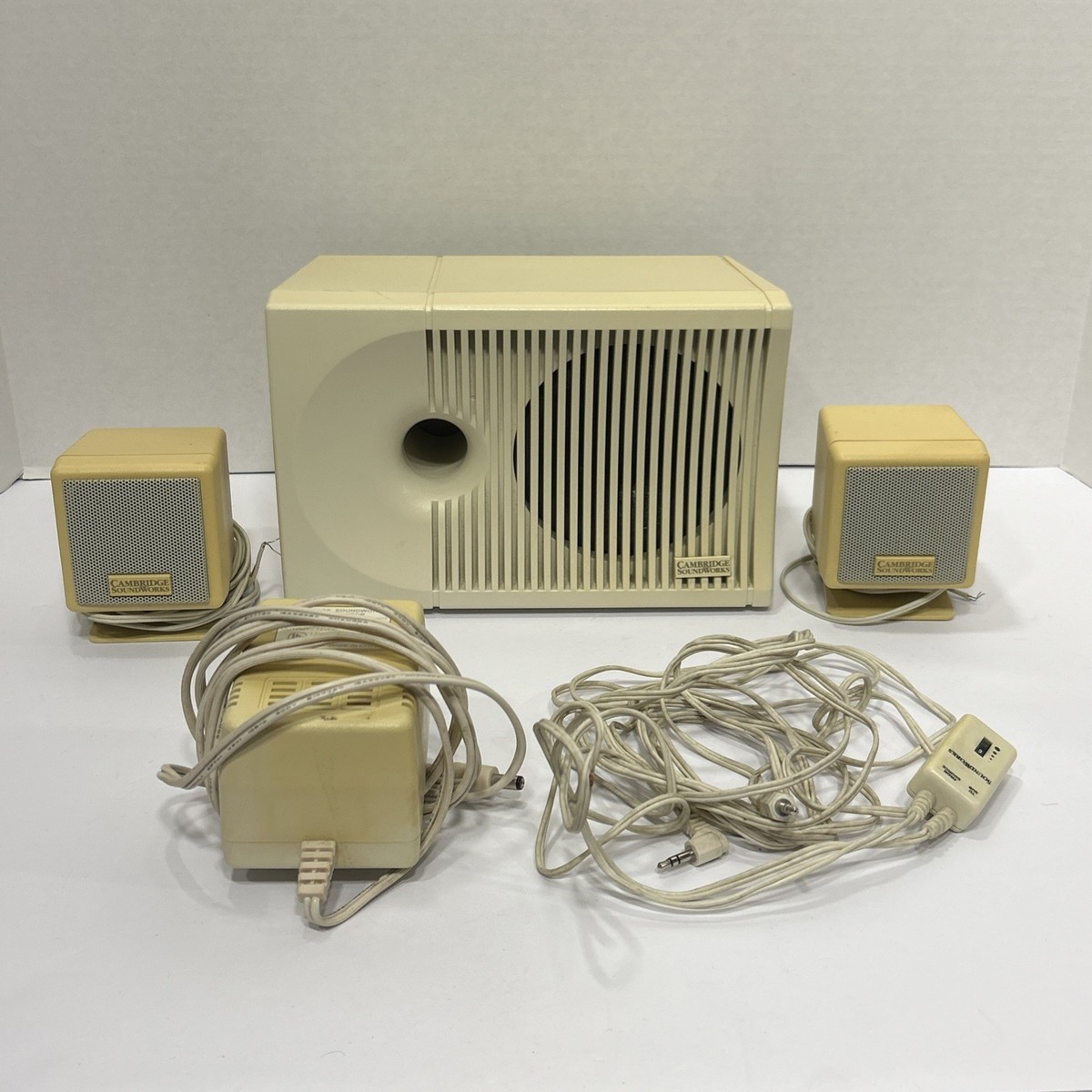
So that mostly brings back memories. I have been building PCs and gaming since 1992 or so. I definitely purchased 2-3 SB cards in the old days. Originally for sound output to desktop speakers for gaming and music. At one point I did have a 5.1 SB speaker system. After that failed (I forget what part), I ended up getting Cambridge Soundworks PC system.
s-l1200.jpg


I have been really happy with the Cambridge Soundworks speakers I have purchased and still rock a pair of Center channels as mains for one system in the living room.

Later, I found I care more about quality sound for music listening over game surround sound. So I currently rock a pair of bookshelves (ELAC 5.2), driven by a medium+ stack of Schiit (Bifrost, Lokius, Freya) going through a Parasound amp. Fed from USB out of the PC/Mac Studio.


Is there anyone out there that would look twice at this new SB card?
Is there that strong a case for 7.1 in PC Games?
Movies I would think might be the case if one used their PC as the primary consumer of movies.
 

FinallyAnAccount

Ars Tribunus Militum
1,568
Subscriptor
I had those EXACT speakers, but I bought the set with rears as well (with fairly tall tripod stands. It was actually the best sound I had until many years later, but the cords were an absolute pain in the tail.

Also enjoyed numerous Sound Blaster (and I think one Turtle Beach) sound cards to go with it, but they were always just a bit fussy.
 
  • Like
Reactions: Doomlord_uk

SportivoA

Ars Tribunus Militum
1,791
It's getting close to a decade since I picked up my discrete card used. Other than the costs of gestures at the rest of a PC, it's the only reason I wouldn't really downsize the build. Since I don't expect to ever go surround sound, relying on onboard audio or adding an external DAC/amp (headphone) would probably be my play sometime in the future.

And my 2.1 system hasn't been plugged in since I moved into this apartment... It's black plastic/wood and scuffed, so not quite as vintage as the pictured set!
 

richleader

Ars Legatus Legionis
21,955
Ever since Windows Vista came out, Windows sound has been entirely generated by your CPU: a soundcard can mess with that sound in various ways that you like or don't like (and can convert it to analog in ways that you like or don't like), but the sound is entirely generated on a level that sits below the sound card (or your video card as well in the case of your HDMI out for sound).

DACs are likewise mostly a solved problem and your keyboard or monitor's USB sound device can typically dodge interference signals better than even a dedicated sound card can sitting within your case. My keyboard's headphone jack supplies enough power for my headphones so it's perfectly fine as a line out and is as good as any dedicated soundcard would be in the same situation since all the audio is typically probably 1/100th of a percent of a portion of one of your CPU cores.
 

Oddabe19

Ars Tribunus Angusticlavius
6,830
Subscriptor
It's getting close to a decade since I picked up my discrete card used.

Yeah, same here, I used to buy Creative cards, but I guess the last one I bought was about 10 years ago now. Maybe longer. On-board for me now.

I still rock my 24 year old Creative 5300 5.1 speakers though. Those things are awesome. I only use 2.1 of them though now.
 

pauli

Ars Legatus Legionis
38,002
Moderator
Fancy sound cards loaded with outputs and inputs were compelling products when drivers made a difference and digital interfaces were expensive.

Digital interfaces are no longer expensive, and sound card drivers no longer make a difference.

Need better than onboard sound? USB DAC.
Need more outputs than a DAC? A cheap receiver, they're all fine.
Need better inputs than a USB headset? Consumer interfaces are affordable and easy to use.
 

diGitaljeZus

Seniorius Lurkius
2
Subscriptor
I'm old-school regarding PCs in general and have utilized some form of sound card in my PCs for nearly 30 years. I currently have a Soundblaster Audigy AE-5 driving a pair of HD 550s using the built-in amplifier passing the sound through unmodified and it sounds quite good. No issues to speak of in Windows. This particular PC was built last year and is primarily used for gaming. The sound card came over from my previous PC built in roughly 2019.

Other posters have already mentioned the DAC. That's the route I'd go if my sound card died tomorrow.
 

Distraction

Ars Praetorian
425
Subscriptor
I had some flavor of Sound Blaster Audigy about a decade ago as well. I quit using it because they never released a Win 10 driver, and the Win 7 one would intermittently produce an ear-popping burst of noise at max volume. I did find a site with 3rd party drivers that made that happen less often, but I couldn’t eliminate it completely. I gave up and have been using on-board sound ever since. I was disappointed at the time because I thought the positional audio while wearing headphones was superior. I’m kind of curious whether that would still be the case.
 
I thought the positional audio while wearing headphones was superior. I’m kind of curious whether that would still be the case.

1. That exact audio implementation doesn't exist anymore. Developers just buy WWise or some other sound solution off the rack and then it just sends the code to windows that runs it. No one takes any chances and basically everything sounds the same now.

2. You can run Dolby Atmos from the Windows store to try to superjuice positionality in headphones. Sometimes it works, sometimes it doesn't.
 

Paladin

Ars Legatus Legionis
33,620
Subscriptor
I have a Sound Blaster GC7 USB DAC with mixer features. Got it on ebay for under $50 ($150 retail I think) so I am pretty happy with it. It is miles better sound quality than the on board audio on my Dell Optiplex at the office and it drives my R0DE headphones very well.

Last PCIe soundcard I had was a Xonar of some kind and it turned out to be a weird USB host card with a soundcard wired into it and it was a massive pain to get to work right. If you didn't install and update the drivers in the right order it would have tons of crackling and latency and distortion. Very terrible design. Even Windows update would occasionally load a new USB hub driver for it an break it.
 

xcmt

Ars Praefectus
5,760
Subscriptor
I used a Sound Blaster Z for a long time. I want to note that, when it worked, I loved this thing. There was something about the way it downmixed 5.1/7.1 into my headphones that just felt right. I could hear everything happening on the map in any shooter game, with pinpoint precision and clarity, a kind of audio high I haven't matched since. DTS and Dolby are but pale imitations. But the drivers were absolute hell to keep up with. Every time there was a major Windows update this card was dead in the water, with zero official support, until some anonymous user on a fan forum got around to updating the unofficial driver suite for modern day compatibility.

Eventually I got a cheap external stereo DAC and never looked back. I don't have driver issues anymore, but also I'm stuck with raw stereo and no implementation of spatial audio has felt quite the way the SB card did. So while I'm spared the headache, I don't get the same kind of gaming immersion that I used to.
 

Paladin

Ars Legatus Legionis
33,620
Subscriptor
You would think that with the advent of object oriented positional audio in home (and professional) theater, it would be feasible to have the same on a PC or console game with at minimum a 4.1 type speaker setup or headphones with a couple of extra positional drivers and some software trickery. I swear they were going to release that stuff 'any day now' a few years ago...
 
^ huh, you can do that now. The WWise middleware (or whatever) will calculate that data (in the least interesting way possible) and send it to your videocard which will output all of that via HDMI to your AV receiver which will break it out for your speakers. It works. It's ok-ish. (And it's certainly better than having bundles of colored cables going to cheap powered computer speakers)

The problems:

* good positional audio isn't about realism or math, it's about art. It's often hard to hear where a gun shot comes from in real life. In art, whether a movie or a game, you want it hand placed in a particular spot so as many people as possible agree where that sound came from.

* headphones with mulitple drivers were actually good at that because it's not about realism, it's about forcing something. But they failed the audiophile sniff test (three drivers are always going to be worse than 1 driver at the same total price point) and had wire bundles so they failed pretty hard. I bought a set for my dad and they're in a box somewhere.

* garbage in, garbage out. You could boot up Skyrim at launch and go into 3rd person mode and spin the camera and listen as the sound of a waterfall moved around your room in real time. Or hear arrows clink behind you in Dark Souls. This is fine. But it's not the same as the hard mode stuff people were trying 10 years before that. (What was that generation of ATI cards that had some sort of echo feature for calculating sound?)

To be honest, I think the most impressive atmos[tm] I've ever heard from a video game was Salt and Sanctuary, an indie side scroller, when set to stereo on my PC but Atmos on my receiver: it literally sounded like there was water dripping down the walls of my office and I couldn't even detect what speakers were putting it out, it was like background radiation or something. It was amazing and pure wizardry.
 

redleader

Ars Legatus Legionis
35,893
You would think that with the advent of object oriented positional audio in home (and professional) theater, it would be feasible to have the same on a PC or console game with at minimum a 4.1 type speaker setup or headphones with a couple of extra positional drivers and some software trickery. I swear they were going to release that stuff 'any day now' a few years ago...
Isn't that what A3D did? It was surprisingly convincing, especially with headphones. Problem was the Windows 2000 drivers never really worked so you were stuck with Windows 98/ME.
 
  • Like
Reactions: Paladin

Paladin

Ars Legatus Legionis
33,620
Subscriptor
Isn't that what A3D did? It was surprisingly convincing, especially with headphones. Problem was the Windows 2000 drivers never really worked so you were stuck with Windows 98/ME.
Yeah, it was very well received from what I remember, and then Creative bought them out and never used it again as far as I know. :(
 

Paladin

Ars Legatus Legionis
33,620
Subscriptor
^ huh, you can do that now. The WWise middleware (or whatever) will calculate that data (in the least interesting way possible) and send it to your videocard which will output all of that via HDMI to your AV receiver which will break it out for your speakers. It works. It's ok-ish. (And it's certainly better than having bundles of colored cables going to cheap powered computer speakers)

The problems:

* good positional audio isn't about realism or math, it's about art. It's often hard to hear where a gun shot comes from in real life. In art, whether a movie or a game, you want it hand placed in a particular spot so as many people as possible agree where that sound came from.

* headphones with mulitple drivers were actually good at that because it's not about realism, it's about forcing something. But they failed the audiophile sniff test (three drivers are always going to be worse than 1 driver at the same total price point) and had wire bundles so they failed pretty hard. I bought a set for my dad and they're in a box somewhere.

* garbage in, garbage out. You could boot up Skyrim at launch and go into 3rd person mode and spin the camera and listen as the sound of a waterfall moved around your room in real time. Or hear arrows clink behind you in Dark Souls. This is fine. But it's not the same as the hard mode stuff people were trying 10 years before that. (What was that generation of ATI cards that had some sort of echo feature for calculating sound?)

To be honest, I think the most impressive atmos[tm] I've ever heard from a video game was Salt and Sanctuary, an indie side scroller, when set to stereo on my PC but Atmos on my receiver: it literally sounded like there was water dripping down the walls of my office and I couldn't even detect what speakers were putting it out, it was like background radiation or something. It was amazing and pure wizardry.
Agreed that the intention and effort and execution make the difference. I guess that was my point that the technology should be relatively accessible since so many games feature 3D modeled environments and occlusion and stuff has been well solved for ages. It's probably just a business/marketing issue where it is very hard to tell people that the best and most immersive audio gaming experience is waiting for them if they only build their entire living room around it... and they're like, "Dude, I'm on a Nintendo Switch on a bus."
 

-Locke-

Ars Scholae Palatinae
660
Subscriptor
Yeah, it was very well received from what I remember, and then Creative bought them out and never used it again as far as I know. :(
First Creative sued Aureal for patent infringement which despite the court ruling in Aureal's favor crippled them financially. Then Creative bought them for the sole purpose of ending any counterclaims
 
https://en.wikipedia.org/wiki/AMD_TrueAudio

Amd 200 series in 2013: took me three tries to work out what to google. /facepalm

I've always been in a love/hate relationship with Thief games and they were promising A3d type sound reflections off of materials at the time but only if you bought a halo AMD card. According to the wiki it's been folded into modern pipelines but I'm calling BS on it doing anything because I can't imagine devs wanting more variables to deal with on PCs when their middleware is the one thing they don't have to worry about.
 
  • Like
Reactions: Baenwort

MikePellegrini

Smack-Fu Master, in training
37
Subscriptor++
I wouldn't by a Soundblaster product over on-board audio. I did, however, buy an eVGA NuAudio card. I use it mainly for listening to music. Looking at eVGAs website, sadly, it doesn't look like they're still making them. I bought the card when it came out in around 2019.

I've got a pair of Sonus Faber Sonetto II speakers and a B&W ASW1000 sub powered by an older Onkyo TX-SR705 receiver (it handles 32 bit 192kHz inputs in stereo). I use JRiver Media Center to play music using an ASIO driver (ASIO4all v2). Media Center resamples WAV files and outputs 2 channel 44.1 kHz audio into 192 kHz 32 bit over an optical connection. I've got 300+GB of music, mainly WAVs, most at CD quality (1411 kHz) but some at 2116 kHz. I've also got a fair bit of stuff at master audio quality (4800-5000+ kHz), FLACs and WAVs. They sound fantastic!

I use Corsair headphones for gaming, with the on-board (Realtek WASAPI ) audio.

Does it make any difference in listening? Ha! I dunno. I tell myself it does. My listening room is problematic - it's too small for really good stereo (abt 10X12).

My MB is a Gigabyte Aorus Elite AX Z790 and has decent sound. I did this build maybe a couple years ago and had the card, so I installed it in the new comp. Would I buy a new sound card after this one dies? I might. Depends what's on the market then.

I will say the ASIO driver makes a big difference. I've tried WASAPI and different Windows (direct sound) drivers and the difference is readily apparent.
 
  • Like
Reactions: Doomlord_uk

RandomZero

Ars Praefectus
3,535
Subscriptor++
It has to be about 10 years since I used one too. I've either used onboard or something external since. Currently I'm using a Roland Bridge Cast. It's nice to have physical volume and mute controls with apps mapped to different channels. Plus with this one, all the settings and what not are stored and done on the device itself, instead of having to rely on some windows app that may or may not work right to do everything.
 

NervousEnergy

Ars Legatus Legionis
11,565
Subscriptor
I use an AE7 (got it for $50 from Ebay), but that's only because the onboard audio drives the bass shaker setup, and the software has to see two cards. External USB sound was discouraged at the time due to lag, but the latest shaker kits use a USB sound integrated amp to drive the shakers so I suppose that's a solved issue.

The AE7 sounds great (line output to a THX AAA 789 amp driving HE6se cans), but I wouldn't bet that I could tell the difference to onboard audio. Having both devices makes setting up the shakers dead simple, though.
 
Fond memories of listening to the South Park album on a set of those Cambridge Soundworks speakers (but also the 4.1 version), I think using .... Sonique as the audio player? Going back a while now :unsure: I've always been a fan of CL sound cards but nowadays just rock a pair of KEF LSX II's and a USB DAC for headphones (or Logitech G Pro wireless headset if needing a mic)
 

w00key

Ars Tribunus Angusticlavius
9,118
Subscriptor
I will say the ASIO driver makes a big difference. I've tried WASAPI and different Windows (direct sound) drivers and the difference is readily apparent.
Eh, is it not just different volume? Exclusive mode / ASIO locks out the mixer service that allows multiple programs to say boop at the same time, giving you bit perfect output, but in reality the difference is below noise level.

Maybe on extremely shitty drivers this is an issue but definitely not a case even on Realtek.


Even a mismatch in sample rate like mixer running on 44.1 khz and audio file on 48 khz it's not a big deal really. Used to be, just works now.