
You are using an out of date browser. It may not display this or other websites correctly.
You should upgrade or use an alternative browser.
You should upgrade or use an alternative browser.
European astronauts call for development of a crewed spacecraft
- Thread starter JournalBot
- Start date
D
Deleted member 349585
Guest
There's no need for ESA and Arianespace to spend billions of euros duplicating Falcon 9 and Dragon. Starship will make these vehicles obsolete within the next 5 years. The only launch vehicles flying then will be Russian and Chinese for military missions. All other launches of 100t cargos and humans will be done via Starship. It's too late for the Europeans to compete with Starship.
While I'm not thrilled by how late to the game Europe is, I think it a bit arrogant to lionize SpaceX to the point of dismissing the possibility of an alternative. SpaceX is indeed right now light-years ahead of anyone else, I don't dispute that. But your take is fairly reductive and frankly bordering on insulting.
Upvote
9
(12
/
-3)
That's just paper. NATO didn't have jurisdiction for the same reason to conduct missions in Afghanistan either. Until it did.Huh - didn't know that. Oh well France, you're on your own.Nope - NATO wouldn't be involved.
https://www.nato.int/cps/en/SID-ECAE8DB ... _17120.htm
Article 5 & 6 limit the geographical area covered and it stops at the tropic of Cancer.
Upvote
8
(10
/
-2)
I can see the ESA eventually developing its own human crewed space flight technology.
I do not believe it will happen in the first half of this century though.
The Ariane Next program, modeled in some ways after the Falcon 9, shows promise & progress.
https://en.m.wikipedia.org/wiki/Ariane_Next
In addition to Ariane Next, the ESA would need to build a space vehicle with the capabilities of the Crew Dragon.
Edit; grammar
I do not believe it will happen in the first half of this century though.
The Ariane Next program, modeled in some ways after the Falcon 9, shows promise & progress.
https://en.m.wikipedia.org/wiki/Ariane_Next
In addition to Ariane Next, the ESA would need to build a space vehicle with the capabilities of the Crew Dragon.
Edit; grammar
Upvote
3
(3
/
0)
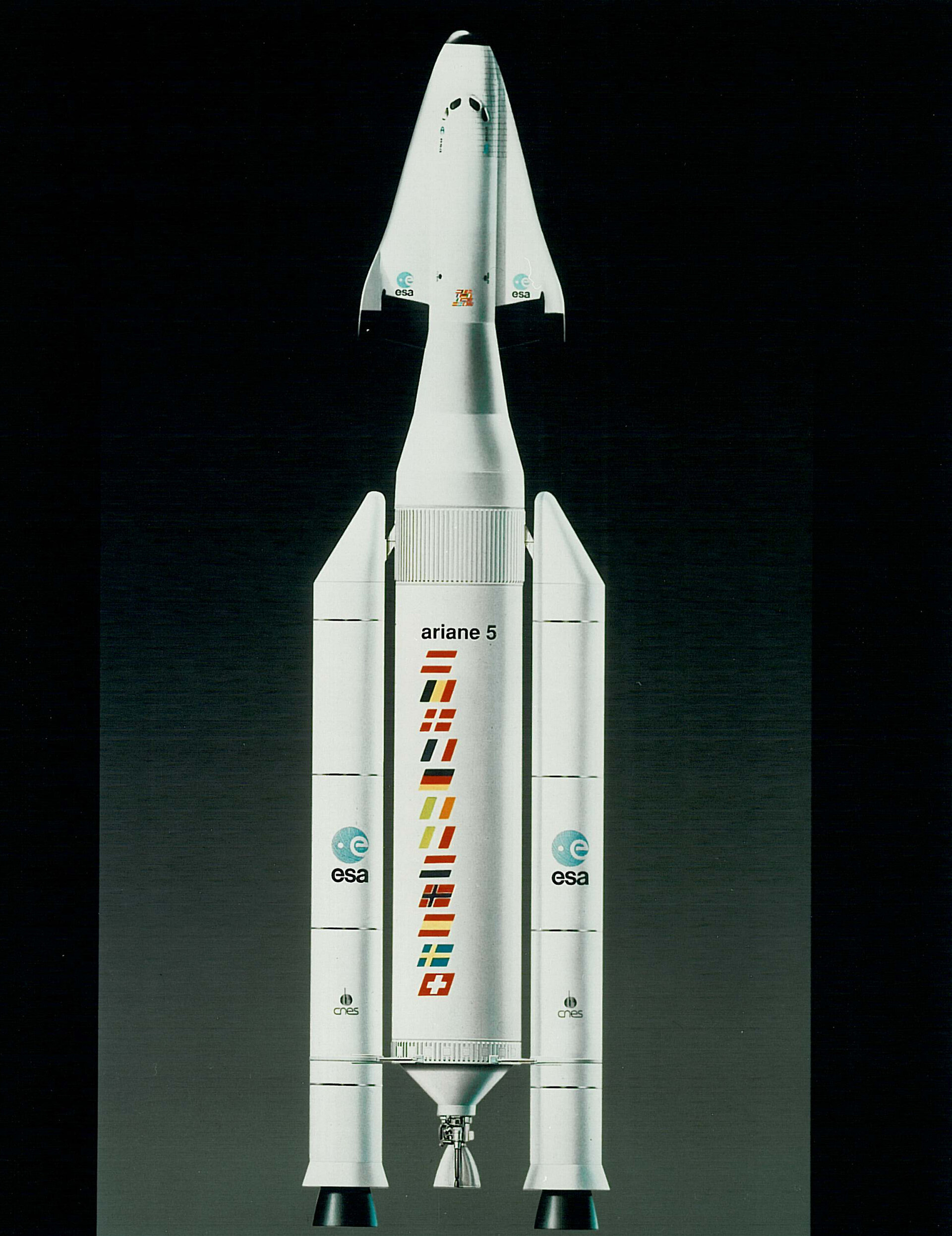
Starship currently does not have a worked out launch abort system.I was always super disappointed that the Hermes project was abandoned. It was a space plane that was supposed to ride on top of the Ariane 5 rocket. I'm not sure who the decision maker was between ESA or Arianespace but they never followed through with it.
They later missed the train on reusable rockets so badly that I'm wondering if it's even possible to catch up. As it stands, I'm not sure they have the resource to develop both in parallel, and I would wager reusable rockets will take priority over crew vehicles.
There's no need for ESA and Arianespace to spend billions of euros duplicating Falcon 9 and Dragon. Starship will make these vehicles obsolete within the next 5 years. The only launch vehicles flying then will be Russian and Chinese for military missions. All other launches of 100t cargos and humans will be done via Starship. It's too late for the Europeans to compete with Starship.
It is being discussed but being able to abort a launch, while keeping a crew alive, has not been tested yet.
https://www.nasaspaceflight.com/2022/02 ... city-mars/
Considering that, Starship is not going to make Crew Dragon obsolete within the next 5 years.
Upvote
11
(12
/
-1)

normally butters
Ars Praefectus
It's the Starlink competitors who aren't chomping at the bit to fly SpaceX, but not all of them are taking this approach. SES is launching the O3b mPOWER constellation on Falcon 9. That's 11 two-ton satellites in MEO, launched three at a time, with the first three launches in 2022. This service competes directly with Starlink in lucrative markets including cruise ships. SES has proven themselves time and again to be among the most forward-thinking satellite operators when it comes to launch service, and if I had to guess the first third-party satellite operator to launch on Starship, I'd have to say, probably SES.I'm sure Elon is chomping at the bit to sell Starship flights to a StarLink competitor...
Upvote
13
(14
/
-1)
I’m not saying it was a bad decision, just that it seems that NASA never took a replacement seriously. If they had looked into a replacement earlier than they did, who knows where they would be today, even with SpaceX.Can’t say I blame them. I always thought it was ridiculous when the United States ditched the space shuttle before having an alternate way to get to space, and instead paid money to another country to get our astronauts to orbit.
Not ditching the Space Shuttle when we did (well beyond their intended life at that point) would almost certainly have meant more dead astronauts.
There were plans for Orion and Ares to replace the Shuttle <snicker>. When those didn't pan we had run out of time. The choice was stop flying the shuttle or kill more astronauts. I think the correct choice was made (eventually).
The program for a replacement began seven years prior to the Shuttle. Almost 20 years later Orion and SLS (which is a zombie version of Ares) still isn't flying so not sure starting earlier would have helped.
What would have helped would have been adequately funding toward a clearly defined goal.
Upvote
5
(5
/
0)
blackhawk887
Ars Legatus Legionis
Huh - didn't know that. Oh well France, you're on your own.
The US would definitely start sending out the sternly worded letters though.
Upvote
7
(7
/
0)

The EU's lack of vision and ambition in human space flight has long been a disappointment for me. The EU has massive technical expertise and financing capability. Cooperation with ally USA won't be harmed if they created their own independent launch capacity. Meanwhile much weaker powers like Russia and India are pursuing human space flight. I hope the EU gets its act together and creates the capability it should have had long ago.
You know how when you go out for drinks with friends, and there is the one friend who works in finance and ends up paying the bill with his corporate card? After awhile, everyone else stops budgeting for their share, and instead spends the money on universal healthcare, green energy, etc.? Then the finance guy moves on, and his friends can't figure out how to get to the pub for their free drinks...
Upvote
7
(11
/
-4)

If someone tries to change that the United States would have something to say about that. France is a NATO member after all and the common defense would be called upon.I can't wait to see people trying to spin this as necessary for our independent access to space and not just a jobs program.
I don't think independent access to space is as frivolous as it sounds (unless I misunderstand your tone). Given the current trends in geopolitics, it makes sense for Europe to try and have their own systems, especially since the launch infrastructure already exists in Kourou.
And we all know you can take a the TGV, or drive, to Kourou and be back by dinner...
It's not the locality that matters, it's political control. Kourou is politically part of the EU, and if anyone tries to change that, France would have a few words to say about it.
Technically, no. The North Atlantic Treaty is pretty specific about what's covered. It only applies to attacks which occur in Europe and North America. Article V wouldn't be invoked by an attack on French Guiana (nor, for that matter, an attack on Hawaii.) But I'm sure the United States would have something to say about it, regardless of the Treaty. However, I think the comment was more about political issues. If the someone in the European Union suggested excluding French overseas departments, the French would have a fit.
Upvote
5
(5
/
0)
normally butters
Ars Praefectus
Ariane Next is what they should have done instead of treading water with Ariane 6. They spent so long with their head in the sand about reusability that they're probably going to lose to Peter Beck, who literally ate his hat when conceding that he was wrong about reusability. Rocket Lab will almost certainly beat them to market with Neutron, which is basically a composite version of Ariane Next. Archimedes exactly matches the specifications of Prometheus. Both reusable boosters are to be powered by seven 1MN methalox gas-generator engines, but Neutron has a more aggressive focus on dry mass reduction.I can see the ESA eventually developing its own human crewed space flight technology.
I do not believe it will happen in the first half of this century though.
The Ariane Next program, modeled in some ways after the Falcon 9, shows promise & progress.
https://en.m.wikipedia.org/wiki/Ariane_Next
In addition to Ariane Next, the ESA would need to build a space vehicle with the capabilities of the Crew Dragon.
With 8mT to LEO for Neutron and probably less for Ariane Next unless they use nine engines, neither of these launch vehicles are going to be capable of flying crew vehicles with booster recovery in their initial specifications. They'll depend on F9-like performance growth with significantly uprated engines and tank stretches to accommodate future crew transport missions. That's fine, iteration is a good thing.
The problem for Arianespace is now there's likely to be multiple part-reusable launch systems competing with Ariane Next, not just Falcon 9, even if Blue Origin never gets their act together. In the launch industry, it's totally acceptable to be second-best. Third or fourth is not the best place to be. But maybe a deal can be made. Arianespace operates Soyuz rockets, so why not Neutron rockets?
Upvote
14
(14
/
0)
SpaceX as an American company requires a launch license from the FAA (or FCC whoever decides to be the final arbiter). If the US government were to decide European astronauts cannot be launched to space as a matter of national security, said license will not appear. Granted, that's not NASA putting the kibosh on the launch. But to the Europeans it's the same outcome and same risk regardless of which governmental agency makes the decision.Sorry, but this isn't quite accurate. SpaceX has SpaceX's Crew Dragon. While seemingly pedantic, the distinction is actually rather significant.Russia has the Soyuz crew vehicle, China has the Shenzhou spacecraft, and NASA has SpaceX's Crew Dragon.
Not the whims of NASA! WRT Crew Dragon, it's SpaceX that calls the shots, not NASA. (Which is not to say that NASA couldn't, as one of SpaceX's anchor customers, bring lots of pressure to bear to get a particular outcome, but that's different from having the final say.)Otherwise, Europe will be subject to the whims of NASA, Russia, and private companies such as SpaceX, the astronauts say.
That entirely depends on the approach that they decide to take. So long as they regard being "paying customers" as a "position of weakness", then it seems certain that "repeating the mistake" of building a government bespoke launch system will wind up with precisely the same situation that they now face with Ariane 6; namely, a system that is outclassed and non-competitive on arrival."We will be paying customers in a position of weakness, repeating the mistakes of the past in other strategic domains, which left us dependent on external players for our energy requirements or Information Technology development. Our inaction would further impact European industrial competitiveness: European taxpayers’ money would be used to advance industrial competitors from abroad."
The revolution is here folks. Our friends in the EU need to decide what they want: a space program, or a jobs program. At this point, the old way is "dead space walking".
How, exactly, would ``the US government'' decide to do that? The FAA's regulatory authority comes from Congress, doesn't extend to something like that, and I've fairly sure the President can't issue an executive order telling them to overstep their authority. I suppose the President could order the State Department to ping the European astronauts and deny them entry into the United States. But it would probably take something like that, not the FAA refusing to issue a launch license.
Upvote
-1
(2
/
-3)
I’m not saying it was a bad decision, just that it seems that NASA never took a replacement seriously. If they had looked into a replacement earlier than they did, who knows where they would be today, even with SpaceX.Can’t say I blame them. I always thought it was ridiculous when the United States ditched the space shuttle before having an alternate way to get to space, and instead paid money to another country to get our astronauts to orbit.
Not ditching the Space Shuttle when we did (well beyond their intended life at that point) would almost certainly have meant more dead astronauts.
There were plans for Orion and Ares to replace the Shuttle <snicker>. When those didn't pan we had run out of time. The choice was stop flying the shuttle or kill more astronauts. I think the correct choice was made (eventually).
I am glad they decided to kill the shuttle, just wish they had actually taken a replacement more serious than they did
Congress never gave NASA enough money to build a replacement for the shuttle and run the shuttle at the same time.
Upvote
7
(7
/
0)
ESA should accept that launch is a commercial commodity and spend their money on a important payload objectives (incl a capsule if they must). Get cheap launch from SpaceX with Falcon or Starship and concentrate on what you want to do, not reinventing the wheel.
Upvote
-2
(4
/
-6)
It just as likely means the opposite. NASA's explicit mandate is to advance the state of aeronautical and astronautical technology; as soon as something becomes commercially viable and common then it arguably falls out of NASA's domain. Private industry takes over.European astronauts and aspiring astronauts also need to decide what they want. Dedicating years of their life to ESA may not be their most reliable of timely route to space. NASA faces the same situation.The revolution is here folks. Our friends in the EU need to decide what they want: a space program, or a jobs program. At this point, the old way is "dead space walking".
Here's the latest example: Anil Menon was recently selected for the latest class of NASA astronauts. He is superbly qualified, and he may fly to space someday. His wife, Anna Menon, is a director of crew operations at SpaceX. She's flying on the Polaris Dawn mission at the end of this year, beating her genuine NASA astronaut husband to space by who knows how many years, if NASA ever flies him at all.
NASA, ESA, JAXA, ISRO, and whoever wants to have a national civilian astronaut corps are going to struggle with recruitment and retention as the private human spaceflight cadence ramps up (Axiom etc.) and rapidly exceeds the number of seats on publicly-funded missions.
In the ideal scenario when NASA can finally jetison the billions wasted on SLS and Orion it could afford much larger longer missions in space both in Earth orbit and beyond. The rise of commercial space should mean a bright future for NASA astronaut corps although sadly that might not be the case.
I disagree. What NASA astronauts do in space would still be within NASA's charter. So ditching SLS and Orion and sending the astronauts up on a commercial spacecraft wouldn't be a problem. It would be like sending NASA engineers to an aeronautics conference, or from NASA Langley to NASA Ames, by buying them a ticket on United.
Upvote
5
(6
/
-1)
Cloudgazer
Ars Legatus Legionis
Huh - didn't know that. Oh well France, you're on your own.
I mean if you stop and think about it, it had to be this way - or the Falklands war would have been a whole lot shorter!
Upvote
7
(7
/
0)
I guess at some point in the future, the current value and dependency of every astronaut needing to be a jack of all trades - to run the space station and perform maintenance and upgrades etc on top of their scientific missions - gives way to sending one jack of all trades up for a stint. One who can pilot, be the space station systems specialist, EVA specialist, medic etc. With the rest of the crew learning enough (on top of their mission specialism) to get themselves out of the crap or get the hell back if that person keels over.
That is largely what NASA has now. One of the astronauts on the Dragon is designated the pilot and another the commander but they all have roles beyond the spacecraft.
Given the rather limited controls on Dragon because of how much is automated it isn't clear that a commercial pilot license would be needed for whoever is designated the "pilot" or "commander" for the spacecraft.
I am going to imagine the same will be true for a Mars crewed mission someday regardless of if run by SpaceX or NASA or a joint partnership.
I think it's interesting to look over the value of having a pilot on the Mercury, Gemini and Apollo missions. Lots of things did go wrong, and the astronauts did manage to correct the situations because of their experience as test pilots. But that was because they were test pilots. The relevant skill was the ability to deal with problems operating a complex, experimental system, and to do so quickly and correctly. Arguably, the pilot part of test pilot wasn't too relevant, and there were probably other professions which require that same skill. But, also arguably, Dragon 2 isn't an experimental system (at least not nearly to the extent that Mercury, Gemini or Apollo capsules were.) So the need for that skill is greatly reduced. The Soviets, Russians and Chinese didn't/don't fly ``pilots''. The title of the equivalent position is a flight engineer.
Upvote
13
(13
/
0)

EU should focus on developing a low-cost reusable rocket first. Once that's reasonably well advanced it makes a lot more sense to design a crew capsule for it.
Upvote
0
(2
/
-2)
There's no need for ESA and Arianespace to spend billions of euros duplicating Falcon 9 and Dragon. Starship will make these vehicles obsolete within the next 5 years. The only launch vehicles flying then will be Russian and Chinese for military missions. All other launches of 100t cargos and humans will be done via Starship. It's too late for the Europeans to compete with Starship.
I'm sure Elon is chomping at the bit to sell Starship flights to a StarLink competitor...
He'd have to. Refusing to do so would be anti-competitive and result in all sorts of lawsuits. But the earlier comment misses the whole point of this manifesto. It's arguing for an independent European launch capability for the sake of having a European launch capability. As a government vanity project and to promote and protect local industry. It's not about being cost effective or efficient.
Upvote
3
(6
/
-3)
ESA should accept that launch is a commercial commodity and spend their money on a important payload objectives (incl a capsule if they must). Get cheap launch from SpaceX with Falcon or Starship and concentrate on what you want to do, not reinventing the wheel.
Air travel is a commercial commodity. Do you know how many European countries (or countries in general) have their own, wholly or partially government owned, flag carriers?
Upvote
11
(12
/
-1)
It really is not efficient to go for a new craft. There are 3 craft now working and prepared to fly non-locals (SpaceX, Russia, and China). There is a good chance there will be 3 more soon (2 American Companies plus I think India will sell rides if they can get their craft up and running). Surely the EU can find a ride that suits them. On the other hand, If I were them, I would start negotiations with SpaceX on buying the rights to Falcon as SpaceX gets Starship running they will want to slowly divest Falcon. And Falcon is far better than Arian 5 or 6 Economically. SpaceX might even buy F9s from EU to support old contracts rather than keep the production line running (even reuseable 1st stage needs some replacement parts plus second stage). Of course, there are "Not invented here" problems. Just an idea...
Upvote
-10
(0
/
-10)

greybeardengineer
Ars Praefectus
I’m not saying it was a bad decision, just that it seems that NASA never took a replacement seriously. If they had looked into a replacement earlier than they did, who knows where they would be today, even with SpaceX.Can’t say I blame them. I always thought it was ridiculous when the United States ditched the space shuttle before having an alternate way to get to space, and instead paid money to another country to get our astronauts to orbit.
Not ditching the Space Shuttle when we did (well beyond their intended life at that point) would almost certainly have meant more dead astronauts.
There were plans for Orion and Ares to replace the Shuttle <snicker>. When those didn't pan we had run out of time. The choice was stop flying the shuttle or kill more astronauts. I think the correct choice was made (eventually).
I am glad they decided to kill the shuttle, just wish they had actually taken a replacement more serious than they did
Congress never gave NASA enough money to build a replacement for the shuttle and run the shuttle at the same time.
Not the way NASA/MSFC were going about it.
Upvote
14
(15
/
-1)
greybeardengineer
Ars Praefectus
There's no need for ESA and Arianespace to spend billions of euros duplicating Falcon 9 and Dragon. Starship will make these vehicles obsolete within the next 5 years. The only launch vehicles flying then will be Russian and Chinese for military missions. All other launches of 100t cargos and humans will be done via Starship. It's too late for the Europeans to compete with Starship.
While I'm not thrilled by how late to the game Europe is, I think it a bit arrogant to lionize SpaceX to the point of dismissing the possibility of an alternative. SpaceX is indeed right now light-years ahead of anyone else, I don't dispute that. But your take is fairly reductive and frankly bordering on insulting.
This take isn't based on an idolized view that SpaceX can do no wrong but the sad situation that no one else is doing anything right. Despite the fact that expendable launch is now clearly a burning building at best they are shuffling their feet, looking around uncomfortably and saying yeah we got a few people looking at this reuse thing. Many of the rest are like:

Upvote
17
(20
/
-3)
Had the authorizing acts said "NASA is directed to build a rocket capable of putting X tons into LEO and Y tons into TLI, in the most cost- and schedule-efficient way possible consistent with safety goals, and here is a stack of cash to make it happen", the outcome would have been very different.
Would it? Not sure it would have. Orion is a completely new vehicle. 15 years and $20B later ...
Congress is a big part of the problem but NASA also has its own internal issues when it comes to crewed spaceflight. The future is obviously things like Commercial Crew for all aspects of human spaceflight but there are thousands of people at NASA whose entire careers are built around the idea that only NASA can do that kind of stuff. It isn't everyone at NASA. No doubt there are plenty of employees which would be glad to handle that all over to commercial providers so they can focus on the more interesting stuff of what to do IN space.
Had commercial crew been contracted out solely to Boeing, it wouldn't now be considered the future of manned space flight.
I fear that even if Congress has simply directed NASA to built a rocket that could launch 50 tons towards the Moon (ie, a Saturn 5 size rocket) NASA would have ended up building something like the SLS. Instead of building a new engine they would have looked at what available. There were only three available -- The RS-68 which could not be clustered because of its ablative lining, the J-2X and the RS-25. All of them were hydrogen fueled. All of them were too small to launch on their own so solid rocket boosters were be required. A liquid booster would make more sense but ATK was never going to let that happen. Congress didn't need to mandate SLS. Between necessity and tunnel vision NASA would have made it just like they did.
Orion has been re-designed so many times it more like a quilt than a manned craft. First it was designed to be too large to launch on Atlas or Delta. Then it became too heavy to launch on Ares 1 and had to be redesigned, then re-designed again when NASA realized that a solid stage motor could be too violent for humans. Then it was re-designed again for long term missions to Mars or the asteroids. Then it had to re-designed for the SLS which has less power than the Saturn 5. No wonder it has cost so much and taken so long and, apparently, is not finished yet.
Upvote
14
(14
/
0)
I doubt ESA will build their own crewed launch vehicle as long as cheap and reliable access to space is commercially available (from SpaceX and upcoming competitors).
However, the Ariane programme was created partly in response to unacceptable conditions from NASA for launching European satellites. Something similar could obvious happen again.
Finally, the Ariane program may well owe its very existence to the difficult negotiations undertaken with NASA in connection with the launch of the two “Symphonie” experimental telecommunications satellites. The extremely harsh conditions imposed on the German and French negotiators, including an embargo on using these two satellites for any commercial purpose in particular strengthened the determination to achieve the autonomy proposed by France. European agreement was finally achieved in July 1973, following a period of intensive negotiation.
Source
However, the Ariane programme was created partly in response to unacceptable conditions from NASA for launching European satellites. Something similar could obvious happen again.
Finally, the Ariane program may well owe its very existence to the difficult negotiations undertaken with NASA in connection with the launch of the two “Symphonie” experimental telecommunications satellites. The extremely harsh conditions imposed on the German and French negotiators, including an embargo on using these two satellites for any commercial purpose in particular strengthened the determination to achieve the autonomy proposed by France. European agreement was finally achieved in July 1973, following a period of intensive negotiation.
Source
Upvote
7
(8
/
-1)
Cloudgazer
Ars Legatus Legionis
That's just paper. NATO didn't have jurisdiction for the same reason to conduct missions in Afghanistan either. Until it did.Huh - didn't know that. Oh well France, you're on your own.Nope - NATO wouldn't be involved.
https://www.nato.int/cps/en/SID-ECAE8DB ... _17120.htm
Article 5 & 6 limit the geographical area covered and it stops at the tropic of Cancer.
Huh?
The Parties agree that an armed attack against one or more of them in Europe or North America shall be considered an attack against them all
Now, I may be confused here but I'm fairly sure New York and DC are in North America.
Certainly nobody anticipated the first major attack on the US since Pearl Harbour being done by a failed state, but if you think that the NATO treaty meant it 'didn't have jurisdiction for the same reason to conduct missions in Afghanistan' - then you're going to need to quote the passage that says that.
Upvote
12
(13
/
-1)
Moreover, by riding on SpaceX vehicles, they will only enrich competitors to Europe's space industry.
And there you have it. I was curious about the urgency given that Europe has never had a crewed vehicle before and plans to build one in the past were abandoned due to cost. Why is it suddenly an issue now when EU astronauts have been dependent on either Russian or American spacecraft for 40+ years now.
Arianespace has never had an existential threat the way it does now with SpaceX.
"While Europe is still at the forefront of many space endeavors, such as Earth observation, navigation, and space science, it is lagging in the increasingly strategic domains of space transportation and exploration," the manifesto states. "Europe’s Gross Domestic Product is comparable to that of the United States’, but its joint investment in space exploration does not reach even one tenth of NASA’s."
Now this part I agree with. It has always been strange that the EU hits well below its weight class when it comes to spending on space exploration. There are however a lot more efficient ways to spend increase funding than a crewed spacecraft. If the ESA can move with new space efficiency and speed at best it is 8+ years and $5B in funding. If it is along the lines of the worst of old space then more like 15 years and $20B.
Oh come on, can you give a break to Ariane Espace for once. Boy!
Upvote
0
(0
/
0)
Post content hidden for low score.
Show…
Post content hidden for low score.
Show…
There's no need for ESA and Arianespace to spend billions of euros duplicating Falcon 9 and Dragon. Starship will make these vehicles obsolete within the next 5 years. The only launch vehicles flying then will be Russian and Chinese for military missions. All other launches of 100t cargos and humans will be done via Starship. It's too late for the Europeans to compete with Starship.
I'm sure Elon is chomping at the bit to sell Starship flights to a StarLink competitor...
He'd have to. Refusing to do so would be anti-competitive and result in all sorts of lawsuits. But the earlier comment misses the whole point of this manifesto. It's arguing for an independent European launch capability for the sake of having a European launch capability. As a government vanity project and to promote and protect local industry. It's not about being cost effective or efficient.
I'm sorry?
No, you're serious.
There are different kinds of efficiency, as some of us have found out with the supply disruptions caused by COVID and the slimming of all kinds of slack in the supply chains in the name of "efficiency". Less slack = less hysteresis = less tolerance to shocks. Private enterprise won't do it, it's up to the states to do it.
Being able to launch what you want when you want it without having to depend on other people's or countries' interests can be priceless, even if it costs a lot. See above.
Upvote
2
(3
/
-1)
Cloudgazer
Ars Legatus Legionis
There's no need for ESA and Arianespace to spend billions of euros duplicating Falcon 9 and Dragon. Starship will make these vehicles obsolete within the next 5 years. The only launch vehicles flying then will be Russian and Chinese for military missions. All other launches of 100t cargos and humans will be done via Starship. It's too late for the Europeans to compete with Starship.
While I'm not thrilled by how late to the game Europe is, I think it a bit arrogant to lionize SpaceX to the point of dismissing the possibility of an alternative. SpaceX is indeed right now light-years ahead of anyone else, I don't dispute that. But your take is fairly reductive and frankly bordering on insulting.
This take isn't based on an idolized view that SpaceX can do no wrong but the sad situation that no one else is doing anything right. Despite the fact that expendable launch is now clearly a burning building at best they are shuffling their feet, looking around uncomfortably and saying yeah we got a few people looking at this reuse thing. Many of the rest are like:
It's not clear to me. Nobody is doing it except SpaceX with the first stage booster, but do you really think that's because everybody has got their heads in the sand or could it be that they've run the numbers and found that it doesn't necessarily add up? We don't know whether or not SpaceX saves money by reusing its boosters because the costs have never been published. Maybe Falcon 9 launches would be cheaper without reuse. I have no idea and neither does anybody else who isn't in SpaceX.
On the contrary - almost everybody is at least paying lip service to some degree of first stage reuse at this point.
RL - attempting catching first stages of electron, neutron designed with first stage reuse in mind
BO - first stage reuse is absolutely essential for New Glenn
ULA - claim to be planning on recovery of first stage engines.
But sure, maybe they're all doing that to lose money because none of them actually believe that SpaceX are saving money through reuse.
Also I hear Boeing are working on an expendable passenger jet /s
Upvote
24
(24
/
0)
This comes from some material I read some time ago. The wikipedia quotes the decision as:That's just paper. NATO didn't have jurisdiction for the same reason to conduct missions in Afghanistan either. Until it did.Huh - didn't know that. Oh well France, you're on your own.Nope - NATO wouldn't be involved.
https://www.nato.int/cps/en/SID-ECAE8DB ... _17120.htm
Article 5 & 6 limit the geographical area covered and it stops at the tropic of Cancer.
Huh?
The Parties agree that an armed attack against one or more of them in Europe or North America shall be considered an attack against them all
Now, I may be confused here but I'm fairly sure New York and DC are in North America.
Certainly nobody anticipated the first major attack on the US since Pearl Harbour being done by a failed state, but if you think that the NATO treaty meant it 'didn't have jurisdiction for the same reason to conduct missions in Afghanistan' - then you're going to need to quote the passage that says that.
linkOn 16 April 2003, NATO agreed to take command of the International Security Assistance Force (ISAF) in Afghanistan, which includes troops from 42 countries. The decision came at the request of Germany and the Netherlands, the two states leading ISAF at the time of the agreement, and all nineteen NATO ambassadors approved it unanimously. The handover of control to NATO took place on 11 August, and marked the first time in NATO's history that it took charge of a mission outside the north Atlantic area.[39]
The point is, NATO needed a vote to conduct a mission in Afghanistan. Article 5 commits all member states against a mutual attack unconditionally.
When the US invoked Article 5 as a response to 9/11 eight actions were enacted officially:
On 4 October, once it had been determined that the attacks came from abroad, NATO agreed on a package of eight measures to support the United States. On the request of the United States, it launched its first ever anti-terror operation – Eagle Assist – from mid-October 2001 to mid-May 2002. It consisted in seven NATO AWACS radar aircraft that helped patrol the skies over the United States; in total 830 crew members from 13 NATO countries flew over 360 sorties. This was the first time that NATO military assets were deployed in support of an Article 5 operation.
On 26 October, the Alliance launched its second counter-terrorism operation in response to the attacks on the United States, Active Endeavour. Elements of NATO's Standing Naval Forces were sent to patrol the Eastern Mediterranean and monitor shipping to detect and deter terrorist activity, including illegal trafficking. In March 2004, the operation was expanded to include the entire Mediterranean.
The eight measures to support the United States, as agreed by NATO were:
- to enhance intelligence-sharing and cooperation, both bilaterally and in appropriate NATO bodies, relating to the threats posed by terrorism and the actions to be taken against it;
- to provide, individually or collectively, as appropriate and according to their capabilities, assistance to Allies and other countries which are or may be subject to increased terrorist threats as a result of their support for the campaign against terrorism;
- to take necessary measures to provide increased security for facilities of the United States and other Allies on their territory;
- to backfill selected Allied assets in NATO’s area of responsibility that are required to directly support operations against terrorism;
- to provide blanket overflight clearances for the United States and other Allies’ aircraft, in accordance with the necessary air traffic arrangements and national procedures, for military flights related to operations against terrorism;
- to provide access for the United States and other Allies to ports and airfields on the territory of NATO member countries for operations against terrorism, including for refuelling, in accordance with national procedures;
- that the Alliance is ready to deploy elements of its Standing Naval Forces to the Eastern Mediterranean in order to provide a NATO presence and demonstrate resolve;
that the Alliance is similarly ready to deploy elements of its NATO Airborne Early Warning Force to support operations against terrorism.
Afghanistan.
edit:
- When Article 5 was invoked NATO consented to inteligence and defense operations.
- Iraq and Afghanistan was invaded by the Coalition Forces led by the US. NATO member armies were the majority, but this was not a NATO response operation against an attack of a member state.
- At a later stage NATO officially entered the Afghan war in a humanitarian capacity, but since that was not conducted under Article 5 it lacked the geographical jurisdiction of Article 6. Now we can argue that UN resolution 1386 was the legal ground for this, but that's still outside of NATO code.
Upvote
5
(6
/
-1)
LordInternet
Ars Scholae Palatinae
ESA should accept that launch is a commercial commodity and spend their money on a important payload objectives (incl a capsule if they must). Get cheap launch from SpaceX with Falcon or Starship and concentrate on what you want to do, not reinventing the wheel.
They should just fund European startups to do what SpaceX is doing to a more serious degree not just sort of (e.g. skylon). It's hard to see why Europe can't have their own SpaceX. Put up reasonable funds for a commercial crew program that eanbles one or two crew vehicles to reach the moon. More players the better.
Maybe even compete with Starship concept, by building a Falcon Heavy grade rocket and focus on smaller vehicles with in-orbit refueling to enable deep space missions instead.
Upvote
5
(6
/
-1)
LordInternet
Ars Scholae Palatinae
In theory, the national astronaut corps could transition from being "the people who go to space" into being "the people who do government-funded scientific research in space." Depending on the nature of that research, there may be no commercial entity pushing the boundaries there. However, it does mean that you become a government astronaut if you're specifically interested in conducting that research, not just because you want to go to space.It just as likely means the opposite. NASA's explicit mandate is to advance the state of aeronautical and astronautical technology; as soon as something becomes commercially viable and common then it arguably falls out of NASA's domain. Private industry takes over.European astronauts and aspiring astronauts also need to decide what they want. Dedicating years of their life to ESA may not be their most reliable of timely route to space. NASA faces the same situation.The revolution is here folks. Our friends in the EU need to decide what they want: a space program, or a jobs program. At this point, the old way is "dead space walking".
Here's the latest example: Anil Menon was recently selected for the latest class of NASA astronauts. He is superbly qualified, and he may fly to space someday. His wife, Anna Menon, is a director of crew operations at SpaceX. She's flying on the Polaris Dawn mission at the end of this year, beating her genuine NASA astronaut husband to space by who knows how many years, if NASA ever flies him at all.
NASA, ESA, JAXA, ISRO, and whoever wants to have a national civilian astronaut corps are going to struggle with recruitment and retention as the private human spaceflight cadence ramps up (Axiom etc.) and rapidly exceeds the number of seats on publicly-funded missions.
In the ideal scenario when NASA can finally jetison the billions wasted on SLS and Orion it could afford much larger longer missions in space both in Earth orbit and beyond. The rise of commercial space should mean a bright future for NASA astronaut corps although sadly that might not be the case.
Fully agree. Ultimately the government astronaut cores will be filled with phd students and postdoctoral researchers who give lectures and tutor classes in universities whilst also going away on trips to space for research purposes.
Upvote
2
(2
/
0)
blackhawk887
Ars Legatus Legionis
There's no need for ESA and Arianespace to spend billions of euros duplicating Falcon 9 and Dragon. Starship will make these vehicles obsolete within the next 5 years. The only launch vehicles flying then will be Russian and Chinese for military missions. All other launches of 100t cargos and humans will be done via Starship. It's too late for the Europeans to compete with Starship.
While I'm not thrilled by how late to the game Europe is, I think it a bit arrogant to lionize SpaceX to the point of dismissing the possibility of an alternative. SpaceX is indeed right now light-years ahead of anyone else, I don't dispute that. But your take is fairly reductive and frankly bordering on insulting.
This take isn't based on an idolized view that SpaceX can do no wrong but the sad situation that no one else is doing anything right. Despite the fact that expendable launch is now clearly a burning building at best they are shuffling their feet, looking around uncomfortably and saying yeah we got a few people looking at this reuse thing. Many of the rest are like:
It's not clear to me. Nobody is doing it except SpaceX with the first stage booster, but do you really think that's because everybody has got their heads in the sand or could it be that they've run the numbers and found that it doesn't necessarily add up? We don't know whether or not SpaceX saves money by reusing its boosters because the costs have never been published. Maybe Falcon 9 launches would be cheaper without reuse. I have no idea and neither does anybody else who isn't in SpaceX.
To the contrary, all of SpaceX's competition is either buying into reuse, or forgoing new rocket development altogether.
Every new-design large rocket that has begun development since 2014 includes at least booster reuse: Starship, New Glenn, Ariane Next, China's 921/LM-5"lunar", and Neutron (And Terran's R, though it's debatable whether that's actually under serious development).
The lack of current flying reusable competition to Falcon 9 is entirely due to the lag between development and operation at most rocket operators. Ariane 6 and Vulcan both began development in 2014. JAXA's H3 began development in 2013. SLS started in 2010. ISRO's GSLV Mk3 and China's LM-5 and LM-7 all started in 2009 or earlier. Russia's Angara development started in 1992 (!!!).
Also, your argument implies that SpaceX knows that reuse costs more, but insists on doing it anyway for some reason... and still somehow manages to undercut everyone else by ~50% on comparable flights! That would make SpaceX both pretty stupid and extremely competent at the same time.
Upvote
21
(21
/
0)
Saying that F9 is fundamentally the same as the A4 is like saying that modern cars are fundamentally the same as horseless carriages.There's no need for ESA and Arianespace to spend billions of euros duplicating Falcon 9 and Dragon. Starship will make these vehicles obsolete within the next 5 years. The only launch vehicles flying then will be Russian and Chinese for military missions. All other launches of 100t cargos and humans will be done via Starship. It's too late for the Europeans to compete with Starship.
While I'm not thrilled by how late to the game Europe is, I think it a bit arrogant to lionize SpaceX to the point of dismissing the possibility of an alternative. SpaceX is indeed right now light-years ahead of anyone else, I don't dispute that. But your take is fairly reductive and frankly bordering on insulting.
SpaceX isn't light years ahead of anybody else. They are using liquid fuelled rockets that are fundamentally the same as they have been since the first German A4. Sure, they've taken advantage of modern materials and decades of development to make bigger, more reliable and cheaper versions of the A4 and they can reuse the first stage booster, but that is really it.
Starship is still a concept rather than a real rocket. Everybody seems so confident at how wonderful it's going to be but I'm not sure if SpaceX has even built one yet. What we have seen so far are just demonstrators not made to go into orbit and certainly not made to come back again.
Having said that: Crew Dragon is real and so far it seems reliable. If I were running ESA and I wanted a human spaceflight capability soon, I would pay SpaceX to set up a European subsidiary (perhaps a joint venture with ArianeSpace) to build and develop Dragons for Europe.
there's a lot of real hardware for Starship for "just a concept" some of which is planned to go to orbit and attempt to make it back. However reusable orbital vehicles have a longer history than boosters do, and it's not just the shuttle orbiter either. Starship will be one of the bigger ones, and have more thrust and ∆v than the others being a launch vehicle upper stage, rather than being a payload, or whatever we want to consider the Shuttle orbiter, but that doesn't change that similar has been done.
Upvote
17
(17
/
0)
blackhawk887
Ars Legatus Legionis
There's no need for ESA and Arianespace to spend billions of euros duplicating Falcon 9 and Dragon. Starship will make these vehicles obsolete within the next 5 years. The only launch vehicles flying then will be Russian and Chinese for military missions. All other launches of 100t cargos and humans will be done via Starship. It's too late for the Europeans to compete with Starship.
While I'm not thrilled by how late to the game Europe is, I think it a bit arrogant to lionize SpaceX to the point of dismissing the possibility of an alternative. SpaceX is indeed right now light-years ahead of anyone else, I don't dispute that. But your take is fairly reductive and frankly bordering on insulting.
SpaceX isn't light years ahead of anybody else. They are using liquid fuelled rockets that are fundamentally the same as they have been since the first German A4. Sure, they've taken advantage of modern materials and decades of development to make bigger, more reliable and cheaper versions of the A4 and they can reuse the first stage booster, but that is really it.
Starship is still a concept rather than a real rocket. Everybody seems so confident at how wonderful it's going to be but I'm not sure if SpaceX has even built one yet. What we have seen so far are just demonstrators not made to go into orbit and certainly not made to come back again.
Having said that: Crew Dragon is real and so far it seems reliable. If I were running ESA and I wanted a human spaceflight capability soon, I would pay SpaceX to set up a European subsidiary (perhaps a joint venture with ArianeSpace) to build and develop Dragons for Europe.
Light-years are not a good unit to measure this gap with, but SpaceX is about to be two entire generations of rockets ahead of everyone else. Once Starship reaches orbit, they will be 2 entire generations ahead.
Nobody has yet to field a Falcon competitor. Ariane doesn't plan to field a Falcon competitor until 2030. Blue Origin and RocketLab might in 2024. China may sometime in the mid or late 2020s. Russia has no money to do it, and India and Japan seem pretty happy not competing at all. So it is almost guaranteed, at this point, that SpaceX will have 2 entire generations of rockets that nobody can match for a couple of years.
Beyond that, SpaceX will have at least a decade where Starship is the only vehicle of it's type in operation.
Upvote
22
(22
/
0)
And at bare minimum, you have the cadence to consider, F9 is properly a heavy lift vehicle, though it's generally used as and grouped together with the medium lifters, for most rockets, particularly in its class, ~a dozen launches is a really good year, for Falcon, that's a very slow year normally getting at least 2 dozen.There's no need for ESA and Arianespace to spend billions of euros duplicating Falcon 9 and Dragon. Starship will make these vehicles obsolete within the next 5 years. The only launch vehicles flying then will be Russian and Chinese for military missions. All other launches of 100t cargos and humans will be done via Starship. It's too late for the Europeans to compete with Starship.
While I'm not thrilled by how late to the game Europe is, I think it a bit arrogant to lionize SpaceX to the point of dismissing the possibility of an alternative. SpaceX is indeed right now light-years ahead of anyone else, I don't dispute that. But your take is fairly reductive and frankly bordering on insulting.
This take isn't based on an idolized view that SpaceX can do no wrong but the sad situation that no one else is doing anything right. Despite the fact that expendable launch is now clearly a burning building at best they are shuffling their feet, looking around uncomfortably and saying yeah we got a few people looking at this reuse thing. Many of the rest are like:
It's not clear to me. Nobody is doing it except SpaceX with the first stage booster, but do you really think that's because everybody has got their heads in the sand or could it be that they've run the numbers and found that it doesn't necessarily add up? We don't know whether or not SpaceX saves money by reusing its boosters because the costs have never been published. Maybe Falcon 9 launches would be cheaper without reuse. I have no idea and neither does anybody else who isn't in SpaceX.
To the contrary, all of SpaceX's competition is either buying into reuse, or forgoing new rocket development altogether.
Every new-design large rocket that has begun development since 2014 includes at least booster reuse: Starship, New Glenn, Ariane Next, China's 921/LM-5"lunar", and Neutron (And Terran's R, though it's debatable whether that's actually under serious development).
The lack of current flying reusable competition to Falcon 9 is entirely due to the lag between development and operation at most rocket operators. Ariane 6 and Vulcan both began development in 2014. JAXA's H3 began development in 2013. SLS started in 2010. ISRO's GSLV Mk3 and China's LM-5 and LM-7 all started in 2009 or earlier. Russia's Angara development started in 1992 (!!!).
Also, your argument implies that SpaceX knows that reuse costs more, but insists on doing it anyway for some reason... and still somehow manages to undercut everyone else by ~50% on comparable flights! That would make SpaceX both pretty stupid and extremely competent at the same time.
Upvote
8
(8
/
0)
Assuming that the rocket development isn't itself a jobs program, it generally takes about a decade to develop a rocket, give or take, usually a bit longer, and usually with the expectation they will remain in service with only relatively minor changes for about 2 and a half decades. Ariane talking about Ariane Next before Ariane 6 has even flown yet says a lot.There's no need for ESA and Arianespace to spend billions of euros duplicating Falcon 9 and Dragon. Starship will make these vehicles obsolete within the next 5 years. The only launch vehicles flying then will be Russian and Chinese for military missions. All other launches of 100t cargos and humans will be done via Starship. It's too late for the Europeans to compete with Starship.
While I'm not thrilled by how late to the game Europe is, I think it a bit arrogant to lionize SpaceX to the point of dismissing the possibility of an alternative. SpaceX is indeed right now light-years ahead of anyone else, I don't dispute that. But your take is fairly reductive and frankly bordering on insulting.
This take isn't based on an idolized view that SpaceX can do no wrong but the sad situation that no one else is doing anything right. Despite the fact that expendable launch is now clearly a burning building at best they are shuffling their feet, looking around uncomfortably and saying yeah we got a few people looking at this reuse thing. Many of the rest are like:
It's not clear to me. Nobody is doing it except SpaceX with the first stage booster, but do you really think that's because everybody has got their heads in the sand or could it be that they've run the numbers and found that it doesn't necessarily add up? We don't know whether or not SpaceX saves money by reusing its boosters because the costs have never been published. Maybe Falcon 9 launches would be cheaper without reuse. I have no idea and neither does anybody else who isn't in SpaceX.
Upvote
16
(16
/
0)
bryanlarsen
Ars Scholae Palatinae
Saying that F9 is fundamentally the same as the A4 is like saying that modern cars are fundamentally the same as horseless carriages.There's no need for ESA and Arianespace to spend billions of euros duplicating Falcon 9 and Dragon. Starship will make these vehicles obsolete within the next 5 years. The only launch vehicles flying then will be Russian and Chinese for military missions. All other launches of 100t cargos and humans will be done via Starship. It's too late for the Europeans to compete with Starship.
While I'm not thrilled by how late to the game Europe is, I think it a bit arrogant to lionize SpaceX to the point of dismissing the possibility of an alternative. SpaceX is indeed right now light-years ahead of anyone else, I don't dispute that. But your take is fairly reductive and frankly bordering on insulting.
SpaceX isn't light years ahead of anybody else. They are using liquid fuelled rockets that are fundamentally the same as they have been since the first German A4. Sure, they've taken advantage of modern materials and decades of development to make bigger, more reliable and cheaper versions of the A4 and they can reuse the first stage booster, but that is really it.
Starship is still a concept rather than a real rocket. Everybody seems so confident at how wonderful it's going to be but I'm not sure if SpaceX has even built one yet. What we have seen so far are just demonstrators not made to go into orbit and certainly not made to come back again.
Having said that: Crew Dragon is real and so far it seems reliable. If I were running ESA and I wanted a human spaceflight capability soon, I would pay SpaceX to set up a European subsidiary (perhaps a joint venture with ArianeSpace) to build and develop Dragons for Europe.
there's a lot of real hardware for Starship for "just a concept" some of which is planned to go to orbit and attempt to make it back. However reusable orbital vehicles have a longer history than boosters do, and it's not just the shuttle orbiter either. Starship will be one of the bigger ones, and have more thrust and ∆v than the others being a launch vehicle upper stage, rather than being a payload, or whatever we want to consider the Shuttle orbiter, but that doesn't change that similar has been done.
Musk should mention the Shuttle in his standard spiel. He mentions how similar the booster reuse on SH is similar to the booster reuse on F9, but then implies that the SS second stage reuse is entirely new. If he mentions the Shuttle and possibly Dragon reuse at this point, it does two things -- make Starship reuse seem less risky and acknowledges SpaceX's biggest external customer. He can then go on to talk about how important being *rapidly* reusable is.
It's not technically wrong not mentioning the shuttle since it jettisoned the external tank, but I do think it's a mistake. Maybe if America and NASA properly acknowledged that the shuttle was a flying death trap, but they don't. It still has very positive connotations for a lot of people, and Musk should lean on that.
Upvote
3
(7
/
-4)
"We wouldn't mind riding with the Americans," they went on to say, "except that they have locked the radio station controls and all we listen to the entire ascent is commercial, slickly-produced country music with pop rock sensibilities! It doesn't even have the authenticity of Willie Nelson or Hank Williams Sr.! It really is an issue of human rights."
If I was an astronaut/passenger on any capsule, I'd have my music player of choice taped inside my suit on repeat for 'Stairway to Heaven'. Nothing else would do.
Fly Me to the Moon, Destination Moon, The Age of Aquarius, Have You Heard? It's in the Stars . . .
Upvote
1
(1
/
0)