
You are using an out of date browser. It may not display this or other websites correctly.
You should upgrade or use an alternative browser.
You should upgrade or use an alternative browser.
An update on highly anticipated—and elusive—Micro LED displays
- Thread starter JournalBot
- Start date
They have also excellent response times.
Samsung's new microLED TVs are five million times faster than your gaming monitor.
Samsung's new microLED TVs are five million times faster than your gaming monitor.
Upvote
47
(48
/
-1)
It does seem that the MicroLED industry us trying to move in a single big jump, when just maybe smaller steps would help? E.g. An LCD display with per-pixel back lighting produced by a cluster of 3 or 4 white MicroLEDs. You'd get pixel perfect lical dimming, redundancy in back lights, and proven LCD colour display. Sure, it's two layers instead of one, but it would eliminate some of the challenges for a version 1.
Upvote
47
(52
/
-5)
Given the economics, what you’re looking for in a flagship mass market device is:
Essentially it’s a high end smartwatch. There were rumors for years of Apple flirting with MicroLED for the Apple Watch before eventually dropping it. But I think the Apple Watch remains the obvious first device to take this technology into the mass market in a few years when it’s ready for prime time.
I would have loved for this story to cover whether the MicroLED manufacturing techniques “play nice” with touchscreens.
- Expensive enough to justify the premium
- Smaller the better
- Battery powered to benefit from efficiency improvements
- Used in high ambient light situations to benefit from the high brightness
Essentially it’s a high end smartwatch. There were rumors for years of Apple flirting with MicroLED for the Apple Watch before eventually dropping it. But I think the Apple Watch remains the obvious first device to take this technology into the mass market in a few years when it’s ready for prime time.
I would have loved for this story to cover whether the MicroLED manufacturing techniques “play nice” with touchscreens.
Upvote
55
(55
/
0)
$7,990 for a 75" TV is not really that out of line. High-end OLED is within striking distance of that already. And given how much Apple was able to get consumers going ga-ga over the previously little-known "mini-LED" in short order, I don't see consumer education as a real hurdle.
Upvote
46
(53
/
-7)

I hope my next tv is micro-led.
I just got an oled but I'm just waiting for the thing to burn in somewhere. The tech is just too fragile imo.
Let's hope they can get over the manufacturing humps. I think consumers would understand advertising showing the picture is as good as oled with no burn in.
Though I've seen burn in with LCD tvs so that's not even a solved problem.
I just got an oled but I'm just waiting for the thing to burn in somewhere. The tech is just too fragile imo.
Let's hope they can get over the manufacturing humps. I think consumers would understand advertising showing the picture is as good as oled with no burn in.
Though I've seen burn in with LCD tvs so that's not even a solved problem.
Upvote
-16
(10
/
-26)

RickRoyLeonPrisZhoraRacha
Ars Scholae Palatinae
Just give me a wall (think Total Recall film) of 8K panels that can display accordingly. Because, if the dystopian future is coming, we'll all be in concrete cylinders, with displays showing the "cleaning" outside...
Upvote
64
(67
/
-3)
$7,990 for a 75" TV is not really that out of line. High-end OLED is within striking distance of that already. And given how much Apple was able to get consumers going ga-ga over the previously little-known "mini-LED" in short order, I don't see consumer education as a real hurdle.
I checked a UK bog-box store and that price is around the median for 75inch OLED. It’s also definitely not six figures unless you’re pricing in cents. There are a few other things in the article that don’t make sense to me too - why is a number of smaller panels stuck together less power hungry than a larger panel?
Upvote
35
(35
/
0)
All new display technologies - frankly all technologies - suffer from the "good enough" problem - just being a superior technology isn't sufficient if the existing competition can get good enough faster than you can sort out the manufacturing details.
SED/FED died this way - LCDs were (and still are) vastly inferior to SED, yet it didn't matter because they improved enough to be good enough long before Canon (for SED) and Sony (for FED) could get to market. True Micro LED faces the same problem - OLED is improving all the time in terms of both brightness and longevity, closing the window for Micro LED.
SED/FED died this way - LCDs were (and still are) vastly inferior to SED, yet it didn't matter because they improved enough to be good enough long before Canon (for SED) and Sony (for FED) could get to market. True Micro LED faces the same problem - OLED is improving all the time in terms of both brightness and longevity, closing the window for Micro LED.
Upvote
67
(68
/
-1)
It's still pretty high. A 75" LG G4, one of the highest-end OLED screens on the market today, costs half of that when it's not on sale. I'm excited the costs are coming down but I think we still have a good 3 to 4 years left before serious commercialization. From what I hear, QDEL is making much faster progress behind the scenes - it was recently shown off running in a laptop form factor at CES.$7,990 for a 75" TV is not really that out of line. High-end OLED is within striking distance of that already. And given how much Apple was able to get consumers going ga-ga over the previously little-known "mini-LED" in short order, I don't see consumer education as a real hurdle.
What models are you seeing those prices for?I checked a UK bog-box store and that price is around the median for 75inch OLED. It’s also definitely not six figures unless you’re pricing in cents. There are a few other things in the article that don’t make sense to me too - why is a number of smaller panels stuck together less power hungry than a larger panel?
Upvote
19
(20
/
-1)
It's still pretty high. A 75" LG G4, one of the highest-end OLED screens on the market today, costs half of that when it's not on sale. I'm excited the costs are coming down but I think we still have a good 3 to 4 years left before serious commercialization. From what I hear, QDEL is making much faster progress behind the scenes - it was recently shown off running in a laptop form factor at CES.
What models are you seeing those prices for?
ah, double check, and it’s 77inch OLED I was seeing. 75 inch Samsungs are £5600. Those 2 inches seem to make a big difference.
Upvote
13
(13
/
0)
That might be a local thing. A Samsung 77" S95D is $4,600 but routinely sells for less than $4k. I also was mistaken; the LG G4 I was talking about is 77 inches as well, not 75. For some reason that's the standard agreed-upon size.ah, double check, and it’s 77inch OLED I was seeing. 75 inch Samsungs are £5600. Those 2 inches seem to make a big difference.
Upvote
14
(14
/
0)
Most expensive 77” OLED at Currys is £18,000 (lg 8k) and cheapest is Philips at £1800. There is a myriad of options available in the £2000-£3000 range from Samsung, Lg and Sonyah, double check, and it’s 77inch OLED I was seeing. 75 inch Samsungs are £5600. Those 2 inches seem to make a big difference.
Upvote
11
(11
/
0)
Samsung S95D 77” is £3,800 at a nationwide retailer (Currys)That might be a local thing. A Samsung 77" S95D is $4,600 but routinely sells for less than $4k. I also was mistaken; the LG G4 I was talking about is 77 inches as well, not 75. For some reason that's the standard agreed-upon size.
Upvote
4
(4
/
0)

I just can't get excited for this particular technology applied to TV's due to all they spyware they'll come preinstalled. On computer monitors, that will be neat.
Are their TV's right now that refuse to operate till it connects to a network?
Are their TV's right now that refuse to operate till it connects to a network?
Upvote
-5
(21
/
-26)
And that's a good concern to have. I never give my smart TVs Wi-Fi passwords and only update them once in a while using a cable. It does work without the internet, but my TV is old now.I just can't get excited for this particular technology applied to TV's due to all they spyware they'll come preinstalled. On computer monitors, that will be neat.
Are their TV's right now that refuse to operate till it connects to a network?
Upvote
30
(30
/
0)
you goddamn idiot.
Ars Scholae Palatinae
If I were debuting a product using a still-nascent technology, I would be somewhat mindful of the fact that my company's name is pronounced identically to an acronym that means "missing for no good reason".Awall
Upvote
27
(27
/
0)
I think it's more the size gap that's closing, the biggest sales pitch of micro LED was that it's tiled - you can just build 150" TVs simply by adding more tiles while LCDs/OLEDs just aren't available at that size at any price. That way you could sell to the super-luxury market and bring the overall cost down.SED/FED died this way - LCDs were (and still are) vastly inferior to SED, yet it didn't matter because they improved enough to be good enough long before Canon (for SED) and Sony (for FED) could get to market. True Micro LED faces the same problem - OLED is improving all the time in terms of both brightness and longevity, closing the window for Micro LED.
But with 98" TVs now starting to be available at not-too-crazy prices - at least compared to micro LED - you're starting to hit a size where it's just not very practical to go bigger in all but the biggest living rooms. And I wouldn't be surprised if it's possible to get to 110" or 120" TVs with "traditional" monolithic screens, that leaves just a very narrow corridor for micro LED.
Upvote
20
(20
/
0)

That is why they come with ads included. Aren’t we the lucky ones?Naturally, one of the biggest obstacles facing Micro LED adoption is cost.
Upvote
9
(9
/
0)
orangpelupa
Ars Praefectus
Not just burn in. Google for oled dead pixels corners or edges. A bunch of people got them in reddit, avs forums, etc.I hope my next tv is micro-led.
I just got an oled but I'm just waiting for the thing to burn in somewhere. The tech is just too fragile imo.
Let's hope they can get over the manufacturing humps. I think consumers would understand advertising showing the picture is as good as oled with no burn in.
Though I've seen burn in with LCD tvs so that's not even a solved problem.
In countries with proper consumer protection, LG will replace the panel for free, even outside of warranty. and people are getting newest panels.
Upvote
3
(6
/
-3)
I use a 4K LCD TV, and I don't see a reason to upgrade it. Might as well wait for 5 more years.
The difference between 4K LCD and 4K OLED HDR is night and day.
Upvote
32
(36
/
-4)
NinjaNerd56
Ars Praefectus
Primary RGB Tandem OLED
This is the way. Samsung S95F as well as ones from Panasonic and Phillips.
And if you have an OLED suffer burn in, you (a) bought the cheapest thing on Earth or (b) have no idea what a screen saver is.
This is the way. Samsung S95F as well as ones from Panasonic and Phillips.
And if you have an OLED suffer burn in, you (a) bought the cheapest thing on Earth or (b) have no idea what a screen saver is.
Upvote
-7
(7
/
-14)
Flipside79
Ars Tribunus Angusticlavius
I love my OLED TV's, you just can't beat them right now for picture quality and in situations where burn in and high natural light level isn't much of a concern. I would love to replace my TV in the living room with OLED, but the room has a wall of nearly floor to ceiling windows and is basically left on all day. Micro LED looks like a great potential option, and frankly for how long I keep my TV's, a decent premium wouldn't be too bad.
Upvote
14
(14
/
0)

Wasn’t at all clear how Samsung’s “RGB Micro LED” works.
It’s an LCD screen with a Micro LED backlight.
The current state-of-the-art for LCD is to use a blue Mini LED array as backlighting for LCD screens, with color converted for red and green pixels by quantum dots. Mini LED divides the screen into smaller zones where the backlight can be separately brightened/dimmed for each zone, allowing increased contrast (with clever processing hiding that there are multiple zones).
Samsung’s compromise is to use Micro LED technology for the backlight to allow for (1) full RGB backlight, instead of blue backlight with quantum dot conversion to red and green, (2) each brightening/dimming zone can be even smaller and (3) overall brightness can be higher. It’s a compromise because they can make the LED pixels at sizes way too big to directly transmit the image at the requisite resolution. Instead, those pixels are mixed to white and used as merely an improved backlight for an LCD panel. At the same time, it allows them to make effective use of Micro LED tech they’ve spent a lot of R&D money on, while also iterating on production processes.
It’s an LCD screen with a Micro LED backlight.
The current state-of-the-art for LCD is to use a blue Mini LED array as backlighting for LCD screens, with color converted for red and green pixels by quantum dots. Mini LED divides the screen into smaller zones where the backlight can be separately brightened/dimmed for each zone, allowing increased contrast (with clever processing hiding that there are multiple zones).
Samsung’s compromise is to use Micro LED technology for the backlight to allow for (1) full RGB backlight, instead of blue backlight with quantum dot conversion to red and green, (2) each brightening/dimming zone can be even smaller and (3) overall brightness can be higher. It’s a compromise because they can make the LED pixels at sizes way too big to directly transmit the image at the requisite resolution. Instead, those pixels are mixed to white and used as merely an improved backlight for an LCD panel. At the same time, it allows them to make effective use of Micro LED tech they’ve spent a lot of R&D money on, while also iterating on production processes.
Last edited:
Upvote
41
(41
/
0)
D
Deleted member 567875
Guest
microLED will never see the consumer market. OLED and miniLED LCD's will have reached a point where there will be no point in continuing to invest in mass manufactuing it. OLED has made massive strides in the last 3 or 4 years, and there is still A TON of room left to improve things. We're about to see OLED's that peak at 4K nits, that aren't even using blue PHOLED yet, and are still losing efficiency due to filters and conversion layers.
UV microLED is a pointless technology. It needs blue QD's to work, and blue QD's have lifetime issues worse than OLED currently.
UV microLED is a pointless technology. It needs blue QD's to work, and blue QD's have lifetime issues worse than OLED currently.
Last edited by a moderator:
Upvote
-16
(3
/
-19)
I to avoid burn-in like a plague as I tend to have displays on all the time, so oled and plasma is a no-go for me. Even LCDs yellow with age. This technology can’t come fast enough for me if they can deliver.
From a completely naive perspective - can’t an optical solution like diffuser take care of some of the defects and pitch issue for larger displays? Asking just in case anyone knows.
From a completely naive perspective - can’t an optical solution like diffuser take care of some of the defects and pitch issue for larger displays? Asking just in case anyone knows.
Upvote
4
(4
/
0)
artvandelayIIII
Ars Tribunus Militum
The headline feature for all this new display tech is always "better TVs!" which we all want. Lovely.
But every advance also brings more opportunities for marketing shit to cover every surface they can get their hands on. I already avoid a lot of the seats on my commuter train because they're directly facing big video screens with flashing ads on loop. Seems like anybody and everybody is willing to sell off every surface that can viably display advertising, and just wait till these fuckers can wrap areas in squirming advertisements. You know this is coming.
I went to a conference a couple months ago where some display design people were presenting some new stuff. They showed that dystopian scene from Bladerunner with all those building-sized screens, and their takeaway was "this seemed cutting edge in the 80s but we can do much better now!" -- entirely missing the point that that was explicitly shown as dehumanizing and alienating.
Sorry for the rant, but I find it pretty disturbing how much of our public space is geared toward hijacking our visual cortextes to jerk our attention around.
But every advance also brings more opportunities for marketing shit to cover every surface they can get their hands on. I already avoid a lot of the seats on my commuter train because they're directly facing big video screens with flashing ads on loop. Seems like anybody and everybody is willing to sell off every surface that can viably display advertising, and just wait till these fuckers can wrap areas in squirming advertisements. You know this is coming.
I went to a conference a couple months ago where some display design people were presenting some new stuff. They showed that dystopian scene from Bladerunner with all those building-sized screens, and their takeaway was "this seemed cutting edge in the 80s but we can do much better now!" -- entirely missing the point that that was explicitly shown as dehumanizing and alienating.
Sorry for the rant, but I find it pretty disturbing how much of our public space is geared toward hijacking our visual cortextes to jerk our attention around.
Upvote
66
(66
/
0)
Just wait for the retinal scanners from Minority Report.The headline feature for all this new display tech is always "better TVs!" which we all want. Lovely.
But every advance also brings more opportunities for marketing shit to cover every surface they can get their hands on. I already avoid a lot of the seats on my commuter train because they're directly facing big video screens with flashing ads on loop. Seems like anybody and everybody is willing to sell off every surface that can viably display advertising, and just wait till these fuckers can wrap areas in squirming advertisements. You know this is coming.
I went to a conference a couple months ago where some display design people were presenting some new stuff. They showed that dystopian scene from Bladerunner with all those building-sized screens, and their takeaway was "this seemed cutting edge in the 80s but we can do much better now!" -- entirely missing the point that that was explicitly shown as dehumanizing and alienating.
Sorry for the rant, but I find it pretty disturbing how much of our public space is geared toward hijacking our visual cortextes to jerk our attention around.
Upvote
17
(17
/
0)
Post content hidden for low score.
Show…
I have a 54" plasma for which I paid $1500 in 2010. I went to it straight from an old school 27" CRT. I see no reason to replace it until it fails.I use a 4K LCD TV, and I don't see a reason to upgrade it. Might as well wait for 5 more years.
Upvote
13
(14
/
-1)

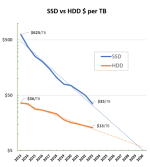
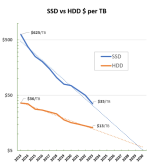
Can we please stop advancing shit? It's just making everything more expensive. SSDs have been around forever with no sign of being as cheap as HDD. There are barely any USB4 specific devices and the port is treated as a premium instead of just replacing current USB 3.2. We're going to see $10,000 GPUs base within 5 years. OLED screens are already expensive as all hell. Please no more. Nothing is worth it anymore.
I'll just leave these here...
Attachments
Upvote
83
(84
/
-1)

Statistical
Ars Legatus Legionis
While Micro LED could address some of OLED's limitations, it doesn't have the recognition of OLED in the consumer market. Any company releasing Micro LED consumer products will have to educate shoppers about the benefits of the display technology and why it's better than OLED or even cheaper options. As such, much of the Micro LED industry is still focusing on “highly differentiating applications,” Virey said, like making specialized transparent displays for cars or advertising, very large commercial screens, and augmented reality (AR).
It is also hillarious that this is a problem of their own making. Cough cough Samsung. LCD manufacturers spent 20 years coming up with all kinds of bogus branding/naming to confuse the public between LCD and OLED. Now they have a (theoretically) superior tech and suffer from the very mine field they created.
Upvote
61
(61
/
0)

That's what she saidah, double check, and it’s 77inch OLED I was seeing. 75 inch Samsungs are £5600. Those 2 inches seem to make a big difference.
/oblig
Upvote
-8
(6
/
-14)

But ...The difference between 4K LCD and 4K OLED HDR is night and day.
Which one is night and which one is day? That is the $$$ question.
Upvote
10
(12
/
-2)
SSDs have gotten so cheap. HDDs just have to keep getting larger for the same price to fill in where SSDs are too expensive, otherwise we'd drop HDDs immediately.Can we please stop advancing shit? It's just making everything more expensive. SSDs have been around forever with no sign of being as cheap as HDD. There are barely any USB4 specific devices and the port is treated as a premium instead of just replacing current USB 3.2. We're going to see $10,000 GPUs base within 5 years. OLED screens are already expensive as all hell. Please no more. Nothing is worth it anymore.
The first SSD I bought was ~$100 for 128GB. The first 1TB SSD I bought was $300. Those were SATA SSDs which would be considered meh today. Recently I picked up a 512GB SATA SSD for $30 and a blazing fast 2TB NVME drive for a bit over $100. And that's 100 ~2012 dollars vs 100 2025 dollars. For 16x the storage and something like 10x the performance.
The same with OLED. It wasn't that long ago that a 55" OLED was tens of thousands of dollars. Now you can get even bigger OLEDs and they're just typical premium TV prices, a few grand.
Last edited:
Upvote
28
(31
/
-3)
Post content hidden for low score.
Show…