Skip to content
Carbon + silicon

What do you get when you combine an iPad and an e-bike?

The Urtopia Carbon is a decent bike that tries to do a lot with its software.

John Timmer | 128
Image of a bicycle with an unusual frame.
The Carbon's design is striking, lacking a full seat tube. Credit: John Timmer
Story text

As I was trying to figure out how to position the Urtopia Carbon e-bike so it could get enough signal to join my Wi-Fi network and download new firmware, I took a moment to ponder what would have happened if Apple had taken a tiny fraction of the money it has reportedly spent on its rumored electric car project and diverted it into making an e-bike instead. What would years of experience with mobile computing, hardware/software integration, maps and voice commands, and more mean for a bike?

Urtopia is clearly trying to make software one of the Carbon’s differentiating features, but the company is still in the learning stages. There are some interesting ideas in the software, and it’s hosted on a pretty solid e-bike platform. But the package needs a bit more refinement and integration.

The bike

The Carbon’s design is something that only became possible with the advent of carbon fiber frames, and it’s certainly a striking bike. In theory, the joints between the different sections of the tube could be engineered to provide enough flex to absorb some shocks. But the Carbon is probably the stiffest e-bike I’ve ever tested. (I also may have made the ride a bit bumpier by inflating the tires too much, since I was unable to find any indication of what the preferred pressure was.)

Image of a bicycle.
Including a storage bag designed for the frame is a nice touch. Too bad it sits where the water bottle holder would go.
Including a storage bag designed for the frame is a nice touch. Too bad it sits where the water bottle holder would go. Credit: John Timmer

While the bike looks cool, there are some downsides. The water bottle holder must attach to the near-horizontal piece under the seat post, meaning that standard holders won’t work—you have to buy one from Urtopia. The lack of a full-length seat tube also puts a hard limit on the length of the seat post. I would have appreciated another couple of inches between me and the pedals, though the bike wasn’t nearly as uncomfortably short as my last ride was. The seat post also integrates the rear lights, so it can’t be replaced with an off-the-shelf part.

Similar complaints apply to the handlebars, which are part of a single piece that attaches to the fork—they integrate both the front light and a display screen. While not custom, the drive train is unusual in that the cranks turn a belt rather than a chain. But you don’t notice anything unusual about the belt when pedaling, and it’s nice to not worry about a chain’s maintenance issues. Since the bike is limited to a single gear, you don’t need to make the belt work with different gearing.

The bike’s battery latches into the down tube and can be released with a key for charging separately from the bike (the bike’s frame has a hole that allows the charging cable to plug into the same port while the battery is installed). The most notable thing about the battery is how light it is, which contributes significantly to the overall bike weight: less than 15 kg (about 30 pounds), by far the lightest e-bike I’ve ridden so far. The flip side is that the battery holds only 360 Watt-hours. While Urtopia rates this as good enough for a minimum of 50 km (about 30 miles), riding the Carbon was the first time I experienced a bit of range anxiety when taking an e-bike out partly charged.

Rounding out the stats is a 250 W rear motor that generates 35 Newton-meters of torque. It’s capped at assisting you at up to 32 km/hour (20 mph), and the torque was generally enough to get the bike up most inclines without problems, though it did struggle on some steeper and longer rises.

The front and rear lights are decent, though the front lights are pointed down toward the road in front of you—they exist more to help you see what you’re about to hit than to ensure you’re seen by drivers. The bike also comes with turn signals, which you can toggle using a rocker switch on the handlebars. The feature works by projecting light downward at the ground, and aside from being of questionable utility in the daylight, it’s probably even less useful in the US, which is home to monster SUVs that make it difficult for drivers to see the pavement within a quarter of a mile of their front bumper.

Overall, it’s a decent bike, but the riding experience isn’t anything to write home about. The unusual part comes from the software, and there’s much to say.

A smarter e-bike?

Every e-bike I’ve tested has come with a clamped-on LCD screen for displaying information like bike speed and battery charge level. The Carbon’s screen is an array of LED dots, and it’s integrated into the handlebars. The dots are spaced so widely that, despite its size, the display has the lowest resolution of anything I’ve seen on a bike. That said, it’s fine for speed and battery level, and Urtopia has managed to do some pretty clever things with it, in part by including some reasonable processing power on the bike.

When turning on the Carbon for the first time, the screen displays a QR code that lets Urtopia’s phone app mediate secure Bluetooth pairing. The next step is using the app to configure the power button, which also serves as a thumbprint reader—a setup that should make the bike somewhat less prone to theft, should anyone realize its function before trying to pedal off. The app also managed the process of getting the bike onto my WiFi network to do a firmware upgrade.

Image of an oval shaped screen with small bright dots.
The refresh rate on the on-board display, which uses LED dots, was slow enough that my camera didn’t capture the whole thing. Still, you get the idea.
The refresh rate on the on-board display, which uses LED dots, was slow enough that my camera didn’t capture the whole thing. Still, you get the idea. Credit: John Timmer

Another interesting feature is voice recognition. Hold down the power button for a few seconds and you can give the bike a voice command. While I haven’t found a full list of commands, they include toggling the lights, turning the bike on and off, and putting it into sleep mode. Some of these functions can also be achieved with the right combination of button presses, but if you can’t remember what the necessary combination is, voice commands are a convenient backup.

One of the more sophisticated features is triggered by using the directional signals, at which point a proximity sensor checks for any object that is behind you in the direction you’ll be turning. That’s a great safety feature, although, in my testing, it mostly picked up parked cars during right turns. One amusing aspect: When it detects something, a voice alert suggests that you “pay attention to the behind.” (The company tells me the detection is a bit too sensitive, so an update to the phone app now allows you to disable the feature until a firmware adjustment is available.)

When not speaking, the bike provides haptic feedback, vibrating the handlebars to let you know it has recognized your actions, whether they’re button presses or voice commands.

All of this takes the bike in the direction of portable electronics, though Urtopia still has some work to do to smooth out the rough edges. Its phone app has preferences for both the app itself and the on-bike display, but it doesn’t clearly distinguish between the two. I discovered this when I realized that the bike defaulted to displaying stats in kilometers per hour. Switching to miles, which I have a better intuitive grasp of, actually caused the number representing the speed to go up instead of down, leading me to wonder what units the Carbon was using instead of miles.

Image of a bike seat with lights below it.
The bike’s seat post contains its rear light and directional system.
The bike’s seat post contains its rear light and directional system. Credit: John Timmer

The firmware update fixed this issue, and later updates tweaked other aspects of the bike’s behavior. (One even added a game that could be played on the bike’s display, although I didn’t test it.) Meanwhile, updates to the smartphone app added the ability to look at every ride you’ve taken, tracked by the bike’s on-board GPS—Urtopia touts this feature as providing anti-theft utility, especially when coupled with the ability to use your phone to play alert sounds on the bike.

One downside is that many of the most sophisticated features require that the bike’s onboard cellular SIM be active, something that costs $29 per year.

The ride

Image of a bicycle perched on an overpass.
Bikes over cars! The Carbon fits the bill of an urban commuter bike.
Bikes over cars! The Carbon fits the bill of an urban commuter bike. Credit: John Timmer

I’m not a fan of single-gear pedaling, especially on bikes that are somewhat small for me, and the Carbon was no exception. That said, the gearing was in a decent zone; it was easy to get the bike started, and it can be pedaled at a reasonable speed even with the electrical assist off. I wouldn’t want to do a long ride with a dead battery, but I could definitely manage if the bike ran out of charge within a few miles of my home, as long as any hills could be avoided. The bike’s light weight helps here.

With the electric assist on, the bike is excellent; it’s easy to get to its maximum speed and keep it there at the top level of assist. When set at the lowest level, you’ll have to do a bit of work to move at high speeds. The bike had enough torque to easily power through gradual slopes or short hills. As such, it mostly avoided what I’d call “uphill death spirals.”

As mentioned above, the frame is solid, and the tires aren’t as fat as we’ve seen on some other e-bikes, so the ride can be a bit bumpy. The tires did, however, handle a section of gravel trail with ease.

Who’s this for?

The Carbon requires a fair bit of assembly, more so than some other e-bikes. You should either be comfortable with that or factor in the cost of some time in a bike shop to the purchase price. In a nice touch, Urtopia included all the tools needed in a bag designed to strap into the frame, providing you with some on-bike storage after the bike is assembled. Oddly, however, some basic things like a kickstand cost extra, though frequent sale specials often include such accessories.

Viewed strictly as a single-gear e-bike, the Urtopia Carbon is the best I’ve ridden. It may not have the range of some other e-bikes, but its light weight and decent gearing makes it reasonable to contemplate finishing rides without the electric assist. That weight also makes it a good choice for people who have to carry the bike up stairs to store it or those who want to use it with a car rack.

Image of an application's screen.
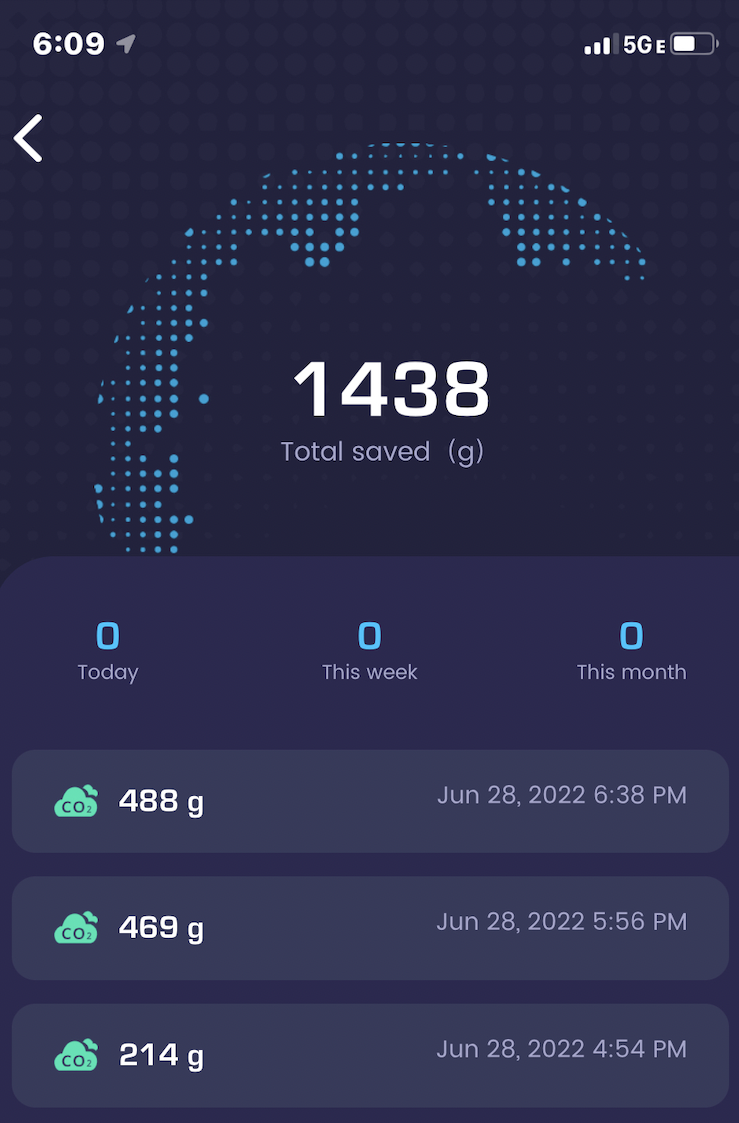
Among its many features, the bike’s software calculates how much carbon you’ve avoided emitting by skipping a car ride. Credit: John Timmer

All that said, it’s certainly possible to find lightweight e-bikes that cost a lot less than the $2,800 that Urtopia asks for the Carbon. That means the software needs to be a big selling point to make up for that difference. And I’d say the experience is mixed.

There were some ideas that were clearly brilliant, like the QR code that displayed when the bike was first turned on. Others felt more like a work in progress. The voice commands were handy, but I mostly used them when I couldn’t remember the right button combination to accomplish the same thing—and talking to my bike in public felt weird.

At the moment, I’d say the software doesn’t offer enough to be a big selling point. But both the app and the firmware received at least two updates in the time I had the bike, so the features may have changed by the time you read this.

If all you’re looking for out of an e-bike is a somewhat easier ride, software will never be worth it. But I started reviewing these things because I was fascinated with how technology created and diversified an entirely new product category. I’m naturally prone to value good e-bike software, if for no other reason than it feeds that fascination.

In the end, some of the ideas here left me excited about the potential of e-bikes. Imagine a bike that keeps track of how much force you exert on a ride and integrates with your fitness tracker. Or one that checks your location and matches its level of assist to local regulations.

For now, though, Urtopia is just offering a good e-bike experience with some hints at that potential future.

Ars Technica may earn compensation for sales from links on this post through affiliate programs.

Listing image: John Timmer

Photo of John Timmer
John Timmer Senior Science Editor
John is Ars Technica's science editor. He has a Bachelor of Arts in Biochemistry from Columbia University, and a Ph.D. in Molecular and Cell Biology from the University of California, Berkeley. When physically separated from his keyboard, he tends to seek out a bicycle, or a scenic location for communing with his hiking boots.
128 Comments