The National Highway Traffic Safety Administration on Thursday officially signed off on a new self-driving vehicle from the delivery startup Nuro. It’s a historic move; Nuro says it’s the first time NHTSA has exempted a self-driving vehicle from regulatory requirements that apply to conventional vehicles.
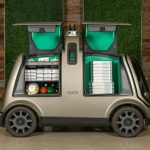
Nuro’s new delivery vehicle, the R2, looks a lot like its predecessor, the R1. Nuro has partnerships with Walmart, Domino’s, and Kroger, and it has been using R1 robots to deliver groceries, pizza, and other products in the Phoenix and Houston areas since late 2018. But the R2 comes with some key improvements. The cargo area is significantly larger without increasing the overall size of the vehicle. And the R2—unlike the R1—has the ability to heat and cool the compartments to keep products at the perfect temperature.
The R2 is also notable for the features it doesn’t have.
Cars in the US are governed by a fat book of NHTSA regulations called the Federal Motor Vehicle Safety Standards. These rules govern everything from the strength of the brakes to the inclusion of airbags and back-up cameras. Car companies must certify that they comply with these standards before they can introduce a new car onto the market.
But not all of the requirements make sense for a self-driving car. For example, the FMVSS requires cars to have side mirrors that are useless to self-driving software. The FMVSS requires a car to have a windshield, which makes no sense for a small vehicle that only carries cargo.
So Nuro asked NHTSA to allow it to deviate from the standard in three ways. It wants to eliminate the mirrors and replace the windshield with what Nuro’s CEO describes as a “specially designed panel at the vehicle’s front that absorbs energy, better protecting pedestrians.”


 Loading comments...