France’s toughest-in-the-world Internet disconnection law has yet to start cutting off P2P pirates, but the “Hadopi” law has been on the books long enough to see how its provisions are altering behavior. According to a team of French researchers, online copyright infringement is down on P2P networks—but it’s up in areas that the law doesn’t cover, such as online streaming and one-click download services like Rapidshare.
In fact, since the law was passed, total infringing behavior has actually increased by three percent.
Whack that mole
Researchers affiliated with the University of Rennes in France’s Brittany region have just released a paper (French PDF) based on 2,000 phone surveys with Brittany residents. The survey found that 15 percent of P2P users have already stopped using such networks, even though Hadopi has yet to start sending out its warning letters and disconnection notices.
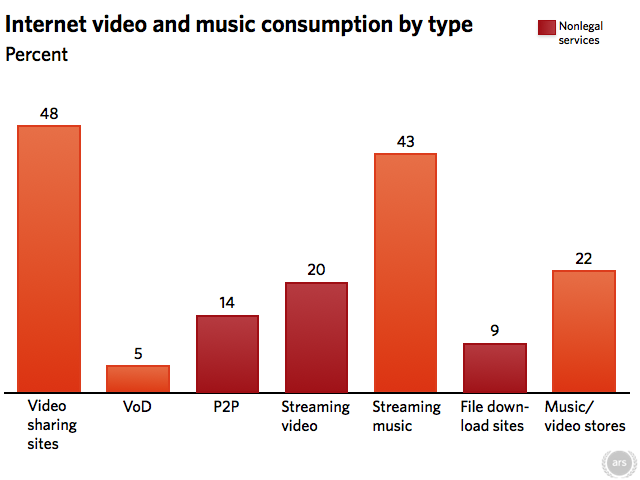
Good news for rightsholders? Perhaps, as these numbers will certainly skyrocket once the actual penalties are in place. But, in a sign of how the situation is likely to develop later this year, the researchers found that two-thirds of those former P2P users simply migrated to illegal streaming sites and HTTP-based download services.
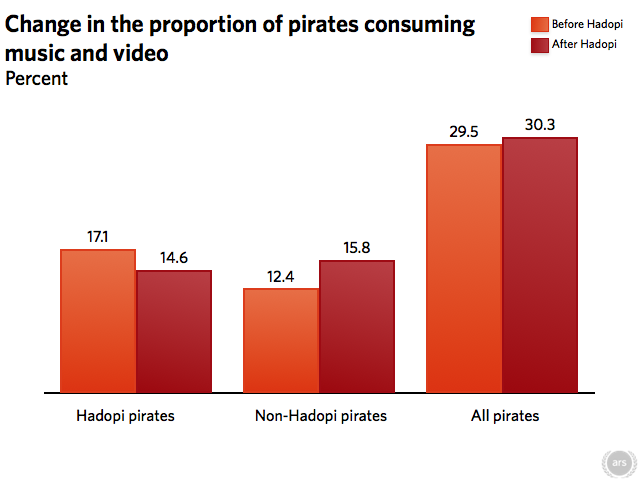
In other words, Hadopi is the first step in a game of Whack-a-Mole; even as it beats down P2P use, most users transition to similarly illicit services that the “graduated response” regime doesn’t touch. The one bit of good news here for rightsholders is that such services are more centralized than P2P networks, and pressure can be more easily brought to bear on a company like Rapidshare than on a distributed network of users.

 Loading comments...