Google has hopped on the WiFi positioning bandwagon by adding support for an undisclosed database of WiFi network locations to its Gears Geolocation API. Google said on its Code Blog that the service for laptops "securely locate[s] users to within 200m accuracy" and Google's Mobile Blog said the improvement is immediately available for BlackBerry users who download an updated Google Maps for Mobile application. It will soon be rolled out to other platforms, including the Google-backed Android.
Google Gears is a plugin or add-on for several browsers, and one built into Google's Chrome beta, that allows web applications to continue running when offline. The Geolocation API adds several calls related to position. Previously, Google focused on mobile devices, using the cellular base station information that phones must collect to maintain seamless voice service in order to triangulate on a location using a database Google had assembled. (The API is under consideration at the W3C as an informal proposal, but it's already been picked up by The Mozilla Foundation, too.)
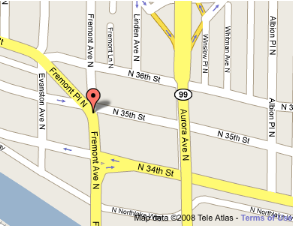
I've been pinpointed
In any browser, Gears prompts a web surfer about whether he or she wants to reveal the computer or device's current location to a web site the first time that site requests it. Google says the API doesn't record user location, and company asserts it isn't storing location information tied to an IP address or other identifying information.
A Google spokesperson explained via e-mail that WiFi data was drawn from "multiple data sources," not licensed, but declined to identify the sources. Skyhook Wireless confirmed to Ars that its own WiFi Positioning System (WPS) wasn't what Google relies on. Skyhook's system is used by the iPhone's Location Service (including in the Maps software powered by Google Maps), and was just incorporated into Symbian 9.5 for developers.